How Can Delhi Police Stoop So Low That They Filed A SC/ST Case On A Female In Revenge & Retaliation
The Central Question Is Why This Complaint Of SC/ST Act Was Filed Only After The Sexual Harassment Complaint Was Filed?

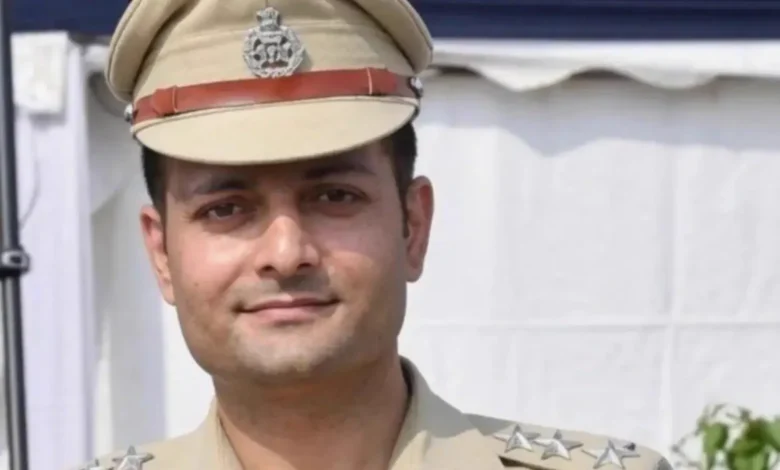
A woman journalist alleges sexual harassment by a serving police officer. Days later, the same officer’s caste-abuse complaint lands three journalists in a criminal case. With the Supreme Court intervening to protect the journalist from coercive action, Delhi Police faces an uncomfortable question: is it investigating a serious complaint against its own officer with the same urgency with which it has pursued the officer’s allegations against his accusers?
An investigative examination of the October 3 protest, the October 13 counter-FIR, the ten-day reporting gap alleged in court proceedings, the questions surrounding the treatment of both complaints, and the urgent need for independent investigation and accountability.
There are moments when a police department’s credibility is tested not by the number of FIRs it registers, the number of people it detains, or the authority it projects in public, but by one simple question: Can it investigate an allegation against one of its own officers without allowing institutional loyalty, professional hierarchy or the instinct for self-defence to overshadow the search for truth?
The controversy surrounding Assistant Commissioner of Police Vivek Bhagat has placed that question squarely before Delhi Police.
A woman journalist alleged sexual harassment and inappropriate touching by Bhagat during a protest in Delhi on October 3, 2026. Subsequently, Bhagat accused the journalist and two others of caste-based abuse, humiliation, defamation and obstruction of official duties. A criminal case was registered on his complaint under provisions of the Scheduled Castes and the Scheduled Tribes (Prevention of Atrocities) Act, 1989, and the Bharatiya Nyaya Sanhita, 2023.
The FIR against the journalists was registered on October 13, according to reporting by The Indian Express and Hindustan Times. The New Indian Express reported on October 15 that the journalist’s separate complaint concerning alleged sexual assault had been transferred to the Crime Branch and remained under inquiry.
On October 15, the Supreme Court directed that no coercive action be taken against the woman journalist before it and considered whether an independent committee should examine allegations of sexual violence against women journalists. The Court did not declare the counter-FIR false, nor did it determine that Bhagat had committed sexual harassment. The intervention was an interim protective measure, not a final judgment on either allegation.
Yet the chronology is sufficiently serious to demand answers from Delhi Police.
When a woman makes a complaint against a police officer, an inquiry begins. When that officer makes a complaint against her, a criminal case follows. What safeguards ensure that this difference in procedural outcomes does not become a difference in justice?
That is the question Delhi Police must answer. It cannot be answered by pointing to the FIR and declaring the matter settled.
An FIR records an allegation; it does not certify its truth. A police officer’s rank does not make his account infallible. And the invocation of a powerful statute, however important its purpose, does not place the evidence beyond examination.
The institution that commands the public to trust its procedures must be prepared to explain those procedures when its own conduct comes under scrutiny.
October 3: The incident that now demands an independent reconstruction
The reported incident took place during a protest near Jantar Mantar against Chief Election Commissioner Gyanesh Kumar. Bhagat was deployed on law-and-order duty near Buta Singh Roundabout.
According to the counter-FIR as reported by The New Indian Express, Bhagat alleged that at approximately 2:30 p.m., the journalist made derogatory remarks about his Megh or Meghwal caste while referring to his nameplate and questioning his appointment as an ACP.
His complaint attributes caste-based remarks to the journalist and states that he initially ignored them and continued performing his official duties.
The journalist, on the other hand, alleged that Bhagat touched her inappropriately and manhandled her while police personnel were handling and detaining protesters. Bhagat has denied the sexual-harassment allegations, according to the reporting.
These are serious and conflicting allegations. They must be examined separately, without allowing either complaint to predetermine the outcome of the other.
But the sequence raises a question that cannot be avoided.
The alleged incident of caste-based abuse took place on October 3. The FIR on Bhagat’s complaint was reportedly registered on October 13. The journalist’s challenge to that FIR subsequently raised concerns about the ten-day interval between the alleged incident and its reporting, as well as the speed with which the police registered the counter-case once the information was supplied.
According to the petition described by Hindustan Times, the complainant’s legal team argued that the FIR was registered within approximately half an hour of information being supplied, even though the journalist’s separate allegations had not resulted in the registration of an FIR at that stage.
These are assertions presented in legal proceedings, not findings of a court. A ten-day delay does not by itself establish that an allegation is false, and prompt registration does not by itself establish that it is malicious.
Nevertheless, the contrast raises legitimate questions about the police’s response to the two complaints.
When did Bhagat first report the alleged caste-based abuse? Why was the information reported when it was? What material was available at the time of registration? What steps had already been taken concerning the journalist’s complaint? Who made the relevant procedural decisions, and on what recorded basis?
Delhi Police should answer those questions from contemporaneous records rather than asking the public to accept that the sequence requires no explanation.
A citizen alleging abuse by a police officer should not have to wonder whether the institution will investigate the complaint with the same determination it displays when a police officer becomes the complainant.
That concern is not a verdict against Bhagat. It is a test of the institution he serves.
ACP Vivek Bhagat: A serious complaint against a police officer cannot be answered merely by filing a counter-case
The central concern is not that Bhagat has no right to complain. He does.
If casteist abuse occurred, he is entitled to an impartial investigation and appropriate protection under the law. A journalist cannot escape legal accountability by invoking press freedom, just as a police officer cannot escape scrutiny by invoking his uniform.
The concern is what happens when the person who alleges sexual harassment subsequently becomes the subject of a criminal complaint initiated by the same officer.
That sequence creates a reasonable need to examine whether the counter-complaint is supported by independent evidence and whether the possibility of retaliation has been properly investigated.
The answer cannot be that the counter-case must be genuine because an ACP filed it. Nor can it be that the case must be false because it followed the journalist’s allegations.
Both conclusions would be premature.
What is required is a meticulous examination of the chronology, the contemporaneous records, the available video footage, the accounts of witnesses and the officer’s own statements about when he heard the alleged remarks and what he did afterwards.
According to the published account of his complaint, Bhagat said he ignored the alleged remarks at the time and continued his duties. Investigators should examine that account alongside the subsequent reporting of the incident, any communications made by him, the available evidence and any explanation for the timeline.
Why was the complaint made when it was? What evidence supports the precise words attributed to the journalist? Who independently heard the alleged exchange? What circumstances support the allegation that the remarks were made in public view? Were any recordings preserved before the dispute became a public controversy?
These are entirely legitimate investigative questions.
If the evidence supports Bhagat’s allegations, it should be placed before the appropriate legal authority. If it does not, the police must not allow the existence of an FIR to substitute for proof.
And if the investigation establishes that the complaint was knowingly fabricated to injure the journalist, the officer must face the consequences prescribed by law.
The fact that a complainant is an ACP should increase the public’s expectation of procedural integrity, not diminish its right to demand it.
A police officer is entrusted with the authority to enforce the law. That authority carries a corresponding responsibility to exercise public power fairly. Where allegations against an officer and counter-allegations against his accusers arise from the same episode, the demand for independence becomes more urgent, not less.
Delhi Police must demonstrate that this case will be decided by evidence rather than by rank.
Delhi Police’s credibility problem: Why does the handling of the two complaints require such close scrutiny?
The public controversy did not begin with the counter-FIR in isolation. It arose after the journalist alleged sexual harassment by a serving police officer.
The counter-FIR subsequently named the journalist and two others, alleging caste-based abuse, obstruction of public duties and defamation. The police transferred the complaints to the Crime Branch, according to The Indian Express.
A transfer may be an appropriate administrative step. However, transferring a complaint to another unit within the same police organisation does not automatically resolve questions about institutional independence.
The issue is not that every Crime Branch investigation is necessarily compromised. The issue is that when the allegations concern the conduct of a serving police officer, the investigation must be structured so that conflicts of interest are identified and managed, the evidence is independently examined and the reasoning behind important procedural decisions can withstand scrutiny.
Delhi Police should disclose, to the extent permitted by law, the current status of both complaints and the steps taken in each.
It should explain when the journalist’s complaint was received, what preliminary action was taken, why the complaint followed the particular procedural route adopted, and whether the evidence warranted registration of an FIR under the applicable law.
It should similarly explain what evidence supported registration of the counter-FIR, why the alleged caste-based remarks were reported when they were, and what material was available to investigators before the case was registered.
That is basic institutional accountability.
The public should not have to reconstruct the decisions of a police department from fragmented media reports and submissions made by opposing lawyers. Where the sequence has generated a reasonable apprehension of unequal treatment, the answer must be a clearer and more credible process.
A police force that insists upon accountability from citizens must be able to account for itself.
Otherwise, the exercise of police power risks appearing less like the neutral administration of law and more like an institution defending its own credibility through the very machinery whose fairness is being questioned.
The latter impression is profoundly damaging—even before any court determines whether misconduct actually occurred.
The Supreme Court’s intervention: An uncomfortable question for Delhi Police
On October 15, the Supreme Court directed that no coercive action be taken against the woman journalist whose case had come before it.
The Court was hearing a petition brought by the Network of Women in Media, India, concerning allegations of violence and sexual harassment experienced by women journalists while covering protests. During the proceedings, senior advocate Indira Jaising sought an independent mechanism to examine allegations involving police personnel.
According to The Indian Express and Hindustan Times, the Court considered whether a committee comprising predominantly or exclusively women, including former judges and senior police officers, should examine the allegations. The Court allowed suggestions concerning potential members to be submitted and stated that it was considering whether an independent committee should be constituted.
That distinction is important. As reported on October 15, the Court was considering an independent committee; the reporting does not establish that a final order constituting the committee had already been passed.
The interim protection was equally specific. It concerned the journalist before the Court and must not be misrepresented as blanket immunity for every person accused in the counter-case.
But the intervention has undeniable significance.
The journalist had alleged wrongdoing by a police officer. The officer had initiated a criminal case against her. The Supreme Court considered protection necessary while the dispute and wider allegations involving women journalists were before it.
The Court’s direction did not decide the truth of either complaint. It did, however, make it imperative that the investigation proceed without intimidation or coercive pressure inconsistent with the Court’s order.
Delhi Police should treat the intervention as an opportunity to establish the credibility of its process rather than as another procedural obstacle to be negotiated.
It should welcome independent scrutiny if directed by the Court. It should preserve evidence without delay. It should ensure that every material decision is supported by reasons and records. It should avoid any conduct that could reasonably be perceived as retaliation against a complainant.
Most importantly, it should not require a citizen to approach the highest court simply to obtain confidence that a complaint involving a police officer will be handled impartially.
The police institution’s credibility is strengthened when it submits to scrutiny. It is weakened when the need for scrutiny is treated as an affront.
Was the law applied evenly, or did the counter-FIR acquire a procedural head start?
The counter-FIR reportedly invokes provisions of the SC/ST (Prevention of Atrocities) Act alongside Sections 221, 356(2) and 3(5) of the Bharatiya Nyaya Sanhita.
Section 221 concerns obstruction of a public servant in the discharge of public functions. Section 356(2) concerns defamation, while Section 3(5) addresses joint liability where a criminal act is done by several persons in furtherance of their common intention.
The inclusion of these provisions in an FIR does not establish that their ingredients are satisfied. Every allegation must be examined against the applicable statutory requirements and the evidence collected.
The same is true of the SC/ST Act.
The Act provides important protections against caste-based atrocities. It must be enforced where the evidence and law require it. Its invocation, however, cannot settle factual disputes by itself.
Investigators must establish the words allegedly spoken, the identity and knowledge of the people involved, the circumstances in which the remarks were allegedly made, the relevant public-view requirement where applicable, and the remaining legal ingredients of each invoked provision.
The public is entitled to ask why particular provisions were applied and what factual material supports them. That is scrutiny of the exercise of statutory power, not an attack on the purpose of the statute.
There is also a critical distinction between a complaint that cannot ultimately be substantiated and a knowingly fabricated complaint.
A prosecution may fail because a witness is unreliable, the evidence is insufficient, or an essential legal ingredient cannot be proved. None of those outcomes automatically establishes malicious intent.
Conversely, a complainant cannot secure immunity from investigation into deliberate fabrication merely because the original allegation was registered under a serious statute.
The decisive issue is evidence and the legal test applicable to it.
Delhi Police should therefore make certain that the counter-case is not treated as a self-validating document. The FIR is the beginning of the investigative process, not its conclusion.
If the evidence supports the prosecution, it should proceed lawfully. If the evidence fails to support the allegations, the police must follow the law governing the appropriate closure or further action. If deliberate fabrication is established, the responsible person must face the statutory consequences.
The process must be capable of producing any of these outcomes without institutional embarrassment dictating the result.
The caste certificate issue: Verify the records, but do not replace evidence with insinuation
The authenticity of ACP Vivek Bhagat’s caste-status documentation should be addressed through the proper official process if it is material to the legal basis of the invoked SC/ST Act provisions.
The relevant certificate or official record should be verified through the competent issuing authority and the appropriate service-record channels, with the result documented in the investigation.
This must be a routine, evidence-based verification—not a presumption that the certificate is invalid simply because Bhagat has been accused of misconduct.
Neither a surname nor a public controversy establishes that a caste certificate is false. No such conclusion should be published without reliable evidence.
At the same time, where a criminal provision depends on a person’s membership of a protected community, the investigating agency must be able to identify the relevant foundational facts and show that they have been examined properly.
If the records establish the relevant status, that issue should be settled without unnecessary delay. If a material discrepancy is discovered, the competent authority must address it according to law.
But one clarification is essential: verifying caste-status documentation does not determine whether casteist remarks were made. An authentic certificate cannot prove that the alleged words were spoken, just as a dispute over documentation, if one were ever to arise, would not by itself prove that no caste-based abuse occurred.
The verbal exchange itself must be investigated independently.
That means original recordings, credible witnesses, the contemporaneous context and the consistency of the accounts must be examined. A certificate is one aspect of the applicable legal framework; it is not a substitute for evidence of the alleged act.
The rule of law demands both proper verification of foundational facts and rigorous scrutiny of the actual allegations.
Where is the independent evidence of the alleged casteist remarks?
The most direct route to the truth is not another round of competing public statements. It is the evidence.
The alleged incident took place in a public protest setting, where police officers, demonstrators, journalists and other people were present. Investigators should identify all relevant CCTV cameras covering Buta Singh Roundabout and the surrounding area and obtain the original recordings.
They should identify mobile-phone footage made by journalists, police personnel, protesters or other witnesses. The authenticity, continuity, timestamps and original files must be examined where necessary. Extracts circulated on social media must not be mistaken for the complete record of an incident.
Police duty rosters, contemporaneous log entries, official communications and the statements of personnel present at the location should be preserved and compared with the available recordings.
Investigators should establish who was present when the allegedly casteist remarks were made, who heard them directly, whether the words attributed to the journalist are consistently reported, what was happening immediately before and afterwards, and whether the allegation that the remarks were made in public view is supported by the evidence.
The accounts of witnesses should be recorded separately. If they materially conflict, those conflicts must be examined rather than concealed beneath the authority of the complainant’s office.
If the evidence supports Bhagat’s account, the investigation should say so. If the evidence contradicts it, that too must be recorded and assessed. If the available evidence is inconclusive, the authorities should not manufacture certainty to protect the reputation of the institution.
The same standard must apply to the sexual-harassment allegation. The journalist’s original complaint, the relevant recordings and any accounts of the alleged physical interaction should be examined through a separate, impartial assessment of the evidence.
The goal is not to produce one favourable narrative for Delhi Police and another favourable narrative for the journalist. It is to reconstruct what happened.
Anything less is an avoidable failure of investigation.
The allegation of sexual harassment must not disappear behind the counter-case
The most disturbing institutional possibility in this controversy is that the counter-FIR could dominate the proceedings while the original allegation against the ACP remains unresolved.
That outcome must not be allowed to occur through delay, silence or procedural inertia.
The journalist alleged inappropriate touching and manhandling during the handling of protesters. Bhagat denied the allegations. The reported procedural status of her complaint was that it had been transferred to the Crime Branch for inquiry.
The authorities must determine, under the applicable criminal law and procedure, whether the information and evidence disclose an offence requiring registration of an FIR and what further investigative steps are warranted.
A preliminary inquiry, where legally permissible and appropriate, must not become a device for indefinite inaction. Equally, the authorities must not presume the allegation true simply because it has attracted public attention.
The central question is whether the complaint was handled promptly, impartially and in accordance with the applicable legal requirements.
The police should identify the evidence collected, the witnesses examined, the status of relevant video footage and the reasons for any material delay. Where a statutory decision is required, it should be taken on the basis of the available facts and applicable law rather than institutional discomfort.
The allegations against Bhagat deserve exactly the kind of scrutiny that the police would demand in any other criminal investigation.
If the evidence establishes sexual harassment or another offence, the officer must face the legal consequences. If the evidence does not establish an offence, the investigation must reach that conclusion on a proper evidentiary basis.
Rank must neither aggravate an allegation into a proven offence nor dilute a substantiated allegation into an administrative inconvenience.
A police officer’s uniform cannot be a protective curtain against investigation.
If the counter-FIR is found to be false, action against the officer must not stop at an internal explanation
Delhi Police must also address the possibility that the counter-case could have been initiated for a purpose other than the bona fide reporting of caste-based abuse.
That possibility has not been established. It cannot be declared a fact simply because the case followed the journalist’s complaint. But the chronology makes it a legitimate question for investigators.
If a fair investigation establishes that Bhagat knowingly fabricated the caste-abuse allegations or deliberately initiated a false criminal charge with the intent and in the circumstances specified by law, the response must not be limited to a quiet departmental clarification.
The competent authorities should consider criminal proceedings under Section 248 of the Bharatiya Nyaya Sanhita, 2023, where its statutory requirements are satisfied, and any other appropriate legal remedies supported by the evidence.
Where the requirements of malicious prosecution are met, the affected person may also pursue remedies available under the applicable law. Such remedies cannot be assumed to arise automatically merely because a prosecution fails; the relevant legal requirements must be established.
The distinction matters because a false complaint is not simply an embarrassing administrative mistake when it is deliberately used to expose another person to criminal liability.
But the same principle must be applied impartially to all parties. If an investigation establishes that the journalist knowingly fabricated her sexual-harassment complaint or deliberately manufactured evidence, the appropriate proceedings should follow against her as well.
No person should enjoy immunity because of a uniform, a professional identity, a social cause or public sympathy.
The essential safeguard is that criminal liability for a knowingly false charge must rest on proof of the legally required intent and conduct—not merely on the failure to prove the original allegation.
If the evidence demonstrates retaliation, Delhi Police must not be permitted to dispose of the matter by describing it as a misunderstanding. If the evidence does not demonstrate retaliation, that conclusion should be stated on the basis of the investigation.
Accountability must depend on what the evidence establishes, not on the institutional convenience of the outcome.
Delhi Police cannot be the final judge of its own credibility
This case presents a straightforward institutional dilemma.
Delhi Police must investigate a complaint made by one of its officers against journalists who have accused him of misconduct. The officer’s allegations deserve a fair investigation. So do the allegations against him.
But the public cannot be expected to treat internal assurances of fairness as conclusive when the sequence of events itself has become a matter of dispute.
The Crime Branch transfer may be appropriate, but the authorities should identify who is supervising each investigation, whether any personnel involved in the original incident have a role in decision-making, and what safeguards are in place to prevent any conflict of interest.
The Supreme Court’s consideration of an independent committee should be taken seriously. If an independent committee is constituted by the Court or another competent authority, it should be given a clearly defined mandate and appropriate access to the relevant material, subject to applicable law.
It should be capable of examining not only what happened at the protest but also the procedural handling of the complaints, the preservation of evidence and any allegation of pressure or retaliation.
This would not mean prejudging Bhagat’s guilt. Nor would it automatically validate the journalist’s account. It would establish a credible means of testing competing claims.
That is the distinction between institutional accountability and institutional defensiveness.
A department that welcomes scrutiny can demonstrate its integrity. A department that treats scrutiny as hostility invites further doubts.
Delhi Police must decide which standard it intends to uphold.
The law already requires urgency: Delay cannot become an investigative strategy
The SC/ST (Prevention of Atrocities) Rules, 1995, provide for investigation of offences under the Act by an officer not below the rank of Deputy Superintendent of Police. Rule 7 also requires the investigation to be completed on a top-priority basis within thirty days and the report to be forwarded through the prescribed chain.
These requirements must be applied in accordance with the law. Delhi Police should clarify whether the relevant investigating officer has been appointed in compliance with Rule 7 and whether the investigation is proceeding within the prescribed framework.
The Rule does not mean that every allegation must result in prosecution. It requires the investigation to be conducted through the prescribed process and with appropriate urgency.
The sexual-harassment allegations must likewise be handled under the applicable law and procedure, with prompt evidence preservation and reasoned decisions.
A case involving competing allegations cannot be allowed to drift simply because its resolution is institutionally uncomfortable.
The public should not have to wait indefinitely for an answer to basic questions: what happened, what evidence exists, which offences are disclosed and what action is legally warranted?
Speed must never come at the expense of a fair investigation. Witnesses must be heard, evidence must be tested, the accused must have the protections available under law, and the relevant statutory requirements must be satisfied.
But procedural fairness and procedural delay are not synonyms.
Delhi Police should provide a clear timetable for the investigative steps that can lawfully be scheduled, identify any outstanding evidence and ensure that the investigation is completed without avoidable delay. The competent supervisory authorities should review compliance with the relevant statutory framework.
The objective is not a rushed conclusion. It is a timely, credible and legally sustainable one.
The government must ensure accountability, not merely manage the controversy
The controversy has implications beyond the conduct of two individuals.
When police officers are accused of misconduct while exercising public power, the government’s response is itself a test of whether accountability has practical meaning.
Reporting has indicated that Bhagat’s temporary additional DCP posting was withheld amid the allegations and that he had sought to have the charge put on hold while the matter was investigated. That administrative development should not be misrepresented as a finding of guilt. Nor should it replace the investigation.
The government must ensure that any administrative decisions are taken according to applicable service rules and based on the relevant record. It must not treat an unresolved allegation as proof of misconduct. Equally, it must not permit official rank or institutional affiliation to obstruct an impartial inquiry.
The government should require a documented account of the handling of both complaints, the preservation of relevant evidence and compliance with applicable procedural safeguards. Where a conflict of interest exists, it should be addressed through lawful and effective supervisory arrangements.
If misconduct is established, the response should be proportionate and consistent with the law. If the allegations are not established, the individual concerned must receive the benefit of a fair process.
The goal is not to create a political trophy out of an unresolved criminal complaint. The goal is to establish whether public authority was exercised lawfully.
That is what accountability means when the person under scrutiny is empowered to enforce the law against others.
What must happen next
Delhi Police and the competent authorities should now take the following steps without waiting for public pressure to escalate further.
First, preserve every relevant recording and document. This includes original CCTV footage, mobile-phone recordings, police duty rosters, contemporaneous communications, official logs and other material relevant to the events of October 3. Digital evidence should be authenticated and its chain of custody documented.
Second, investigate the two complaints on their own merits. No conclusion about the journalist’s alleged caste-based remarks should be based merely on the existence of the sexual-harassment complaint. Equally, the latter complaint must not be ignored or prejudged because Bhagat has filed a counter-case.
Third, verify the relevant caste-status records through the competent authority. If the statutory provisions invoked depend on Bhagat’s membership of a protected community, the relevant official records should be properly verified and documented. The exercise must not presume that any certificate is false.
Fourth, test the evidence of caste-based abuse. Investigators must identify witnesses, reconstruct the sequence of events, examine relevant recordings and determine whether the alleged words and circumstances satisfy the ingredients of the provisions invoked.
Fifth, disclose the procedural status of both matters to the extent permitted by law. The authorities should explain the relevant chronology, the appointment and supervision of the investigating officers, material investigative steps completed and outstanding, and the reasons for any significant delay.
Sixth, implement effective independent oversight where legally directed or warranted. The Supreme Court’s consideration of an independent committee should be followed through the judicial process. Any committee constituted should have a clear mandate, an appropriate composition and a reasonable timetable.
Seventh, act on proven misconduct. If the evidence establishes sexual harassment, caste-based abuse, deliberate fabrication, obstruction of justice or misuse of official authority, the competent authorities must initiate the proceedings warranted by law. Where the allegation of a knowingly false charge is established, the applicable criminal and other legal remedies must be considered.
Eighth, ensure speedy proceedings without sacrificing fairness. The relevant statutory timelines must be respected, unnecessary adjournments avoided, evidence properly disclosed and the rights of every party protected.
None of these demands prejudges the case. Each is necessary precisely because the allegations remain unresolved.
The final question: Whom does the law protect when the complainant is also a police officer?
The controversy surrounding ACP Vivek Bhagat is not simply an argument between a journalist and a police officer. It is a test of how the state responds when an allegation of misconduct is made against a person who belongs to the institution responsible for investigating it.
Bhagat has the right to complain if he believes he was subjected to caste-based abuse. The journalist has the right to have her sexual-harassment complaint investigated. Both have the right to a fair process. Neither has the right to dictate the result.
But the police institution has a responsibility beyond that of an ordinary complainant. It must demonstrate that official authority is not being used to secure an advantage in a personal or professional dispute.
That responsibility cannot be discharged by registering a counter-FIR and moving on. It cannot be discharged by transferring a file and leaving unanswered questions about the original complaint. And it cannot be discharged by asking the public to regard every procedural decision as correct simply because it was taken by the police.
The Supreme Court’s intervention makes the need for a credible investigation even more pressing. The Court’s interim protection for the journalist must be honoured, and the questions about the handling of both complaints must be answered through lawful, evidence-based proceedings.
If the alleged casteist remarks occurred, the law must protect Bhagat and hold the responsible person accountable. If sexual harassment occurred, the officer responsible must face the consequences under the law. If either complaint was deliberately fabricated to injure another person, the competent authorities must act against the person responsible.
These propositions are not contradictory. They are the minimum requirements of equal justice.
The real damage to Delhi Police would be not that an officer has been accused of wrongdoing. Every institution can face allegations that must be investigated. The damage would arise if the department failed to demonstrate that a complaint against its own personnel was treated with the same seriousness, independence and urgency that it expects from the public.
A police officer’s uniform is not a certificate of unquestionable credibility. An FIR is not a judicial finding. A serious statute is not a licence to bypass evidence. And an institution entrusted with coercive powers cannot demand public trust while declining to explain its own decisions.
Delhi Police must answer the questions raised by this chronology, not silence them beneath the authority of its office.
The public is not asking the police to take the journalist’s side. It is not asking the police to take ACP Vivek Bhagat’s side. It is asking the police to take the side of the evidence.
That is the one side on which a law-enforcement institution must stand.
Until both complaints have been investigated fairly, independently and without avoidable delay, every unanswered question will remain a question about the credibility of the system itself.
And a system that expects citizens to trust the law must be prepared to prove that it does not use the law selectively when the allegations point towards its own ranks.
EDITORIAL DISCLAIMER
This article is an investigative and analytical examination of publicly reported allegations, the chronology of proceedings and the need for institutional accountability. The journalist’s allegations of sexual harassment and inappropriate touching against ACP Vivek Bhagat remain allegations pending investigation and judicial determination. Bhagat’s allegations of caste-based abuse, humiliation, defamation and obstruction against the journalist and the other named persons likewise remain allegations. Registration of an FIR does not establish guilt.
As of October 15, 2026, the material reviewed for this article does not establish that any party has been convicted by a court in relation to these allegations. The Supreme Court’s direction that no coercive action be taken against the specific journalist is an interim protective order, not a final determination of the merits of either complaint. The Court’s consideration of an independent committee should not be misrepresented as a final order constituting that committee.
This article does not state as an established fact that the counter-FIR is false or malicious, or that ACP Vivek Bhagat committed sexual harassment. It calls for independent examination of the available evidence, the procedural treatment of both complaints and any allegation of retaliation.
If a competent investigation establishes that a person knowingly initiated a false criminal charge with the intent and in the circumstances prescribed by law, the authorities should consider appropriate proceedings, including under Section 248 of the Bharatiya Nyaya Sanhita, 2023, subject to the applicable statutory requirements and procedure. Any other civil or criminal remedy must likewise be assessed according to its legal requirements.
All persons concerned retain their rights under law, including the presumption of innocence, the right to a fair investigation and trial, and the right to challenge allegations and evidence through the appropriate legal process.