Top 10 Best Cloud Managed Service Providers in India in 2027
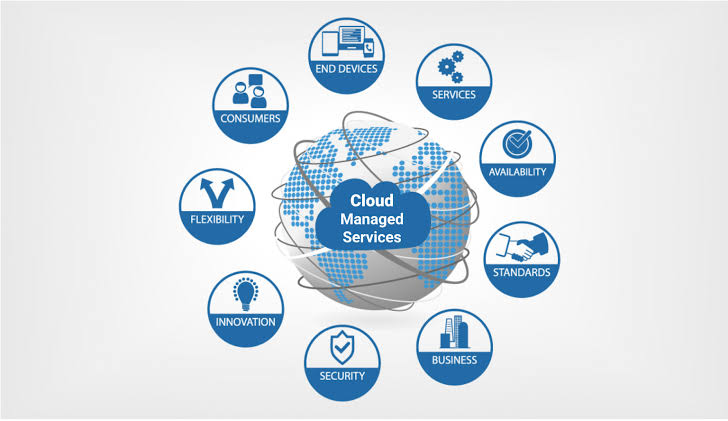
Cloud managed service providers play an important role in helping businesses manage their cloud infrastructure, applications, databases, networks and cybersecurity requirements. As Indian businesses increasingly adopt cloud computing, the demand for professional cloud management has expanded beyond basic hosting and infrastructure support. Organisations now require specialised services covering cloud migration, hybrid cloud management, multi-cloud operations, infrastructure monitoring, disaster recovery, data protection, automation, application modernisation and cloud cost optimisation.
Cloud managed service providers help businesses operate their IT environments without having to independently manage every technical component. These providers take responsibility for maintaining cloud infrastructure, monitoring workloads, managing configurations, identifying performance issues, implementing security measures and ensuring business continuity. Depending on the engagement, their services can include round-the-clock monitoring, infrastructure administration, database management, application support, DevOps, FinOps and technical assistance.
India has a diverse cloud managed services ecosystem comprising large IT consulting companies, infrastructure management specialists, data centre operators and cloud engineering organisations. Some providers specialise in AWS, Microsoft Azure and Google Cloud environments, while others offer private cloud, hybrid cloud and multi-cloud management capabilities. Several companies also combine cloud management with cybersecurity, networking, enterprise application management and disaster recovery.
The following companies are among the prominent cloud managed service providers serving Indian businesses, offering capabilities across enterprise cloud transformation, infrastructure management, cloud operations, security and technology modernisation.
1. Tata Consultancy Services (TCS)
Tata Consultancy Services (TCS) is one of India’s largest IT services and consulting companies, providing comprehensive cloud computing, infrastructure management and digital transformation services to organisations across industries. The company works with enterprises to develop cloud strategies, migrate business applications, modernise legacy infrastructure and manage complex cloud environments. Its cloud services cover enterprise cloud transformation, hybrid cloud infrastructure, public cloud adoption, application modernisation and ongoing technology operations. TCS serves customers in sectors such as banking, financial services, insurance, manufacturing, telecommunications, retail, healthcare, energy and government, where reliable IT infrastructure and continuous application availability are essential.
TCS offers cloud services through its enterprise cloud capabilities and partnerships with major technology providers, including Amazon Web Services, Microsoft and Google Cloud. These partnerships allow the company to support businesses operating across different cloud platforms and technology ecosystems. Its cloud strategy and transformation services help organisations assess their existing IT infrastructure, identify suitable workloads for migration and develop an implementation roadmap. Businesses can receive assistance with cloud architecture, infrastructure planning, workload assessment, migration execution and post-migration management. This approach is particularly useful for companies operating large data centres and legacy applications that cannot be transferred to the cloud through a straightforward migration process.
One of TCS’s important capabilities is enterprise cloud management. Managing a large cloud environment requires continuous monitoring of computing resources, storage, databases, networks, security configurations and application performance. TCS helps organisations establish operational frameworks for managing these components while maintaining business continuity. Its infrastructure services also support automation, proactive monitoring, operational efficiency and technology standardisation. Enterprises can use these services to manage complex IT environments involving on-premises infrastructure, private cloud and public cloud platforms.
TCS also provides application modernisation and cloud-native engineering services. Organisations looking to modernise older applications can receive support with application restructuring, containerisation, microservices architecture, database modernisation and cloud-native development. These capabilities help businesses improve application scalability and make software deployments more flexible. The company also supports cloud environments involving enterprise workloads and business-critical applications, where performance, availability and security are important considerations.
Another important area is cloud security and governance. As companies move sensitive business information to cloud platforms, they need appropriate access controls, security monitoring, compliance processes and data protection mechanisms. TCS helps enterprises integrate security into their cloud transformation and operational frameworks. Its services also cover infrastructure resilience and the modernisation of enterprise IT environments.
With its extensive consulting capabilities, technology partnerships and experience managing large enterprise IT operations, TCS is a prominent option for organisations looking for an integrated cloud managed services partner. Its offerings are particularly relevant to large businesses that require cloud strategy, migration, application modernisation and long-term infrastructure management under a coordinated service model.
2. Wipro
Wipro is a major Indian technology services company offering cloud transformation, cloud infrastructure management, application modernisation and enterprise technology operations. Its FullStride Cloud Services portfolio is designed to help organisations adopt, operate and optimise cloud environments. The company works with businesses at different stages of cloud adoption, from initial assessment and migration planning to application modernisation and ongoing cloud operations. Its services are relevant to organisations seeking to move away from traditional IT infrastructure and establish more flexible technology environments.
Wipro’s cloud managed services cover infrastructure operations, cloud transformation, application management, workload migration and cloud optimisation. Through its cloud capabilities, the company helps businesses assess their existing infrastructure, determine which applications should move to cloud platforms and develop appropriate migration strategies. The process can include workload discovery, infrastructure assessment, architecture planning, migration execution and post-migration support. These activities are particularly important for enterprises managing large application portfolios and multiple infrastructure environments.
A notable component of Wipro’s cloud services is Cloud Studio. It functions as an innovation and collaboration environment through which the company combines its technology platforms, intellectual property, cloud expertise and ecosystem partnerships. Cloud Studio supports cloud planning, design, deployment and optimisation. It also provides access to specialised cloud professionals and technology accelerators that help businesses simplify complex transformation projects. Its industrialised approach is intended to make cloud adoption more structured and repeatable.
Wipro also provides cloud operations services through its FullStride portfolio. These services include infrastructure and application management across virtual machines and Kubernetes environments. The company’s Enterprise Digital Operations Center supports automated and machine-learning-driven management of IT infrastructure and applications. This is relevant to businesses that need continuous visibility into cloud performance, operational issues and infrastructure availability. By using automation and monitoring capabilities, organisations can identify problems and improve the consistency of their cloud operations.
Hybrid cloud management is another important area of Wipro’s expertise. Many businesses continue to operate applications in their own data centres while gradually adopting public cloud infrastructure. Wipro supports these environments through solutions that integrate existing enterprise infrastructure with cloud platforms. Its partnerships and capabilities involving AWS, Google Cloud and VMware help businesses migrate and modernise workloads while retaining flexibility in infrastructure decisions.
The company also provides application modernisation services that help enterprises move beyond basic infrastructure migration. These services include modernising applications using cloud-native technologies, container platforms and development tools. Organisations can use such capabilities to improve deployment speed, application resilience and infrastructure flexibility. Wipro’s cloud management approach also addresses operational risk and migration complexity, which are important concerns for large businesses.
Wipro is a suitable consideration for enterprises looking for a technology partner that can combine cloud consulting, migration, managed operations and application transformation. Its broad service portfolio makes it relevant to businesses that want to modernise their IT infrastructure while maintaining consistent management across different cloud environments.
3. HCLTech
HCLTech is an established Indian IT services and technology company with extensive capabilities in hybrid cloud, public cloud, infrastructure management and enterprise technology operations. Its cloud services are designed to help businesses manage increasingly complex IT environments while improving infrastructure performance, operational efficiency and security. The company works with organisations that need support with cloud adoption, migration, modernisation, platform management and ongoing IT operations.
HCLTech’s hybrid cloud services cover public cloud platforms, sovereign cloud environments, enterprise data centres and cloud-based application infrastructure. Its public cloud capabilities include services for AWS, Microsoft Azure, Google Cloud, Oracle Cloud Infrastructure and other platforms. This allows businesses to manage workloads across different technology providers instead of depending entirely on one cloud environment. Enterprises with complex IT requirements can use these capabilities to establish a coordinated approach to infrastructure management.
CloudOps is an important part of HCLTech’s service portfolio. Cloud operations involve the continuous administration of cloud infrastructure, including virtual machines, storage, networking, databases and application environments. HCLTech supports organisations through operational management, monitoring, automation and performance optimisation. These services help businesses manage cloud resources, maintain service availability and address technical problems that could affect business applications.
The company also provides FinOps capabilities, which focus on managing and optimising cloud expenditure. Cloud infrastructure costs can increase when computing resources are over-provisioned, workloads remain underutilised or businesses fail to monitor their consumption patterns. FinOps practices help organisations understand cloud spending, improve resource allocation and establish financial accountability across technology teams. HCLTech’s services in this area are relevant to enterprises operating large public cloud environments with multiple departments and business applications.
Application and platform modernisation are additional areas of focus. Businesses running older applications may need to restructure their software architecture before moving workloads to modern cloud environments. HCLTech provides services involving DevOps, platform engineering, middleware management and application modernisation. These capabilities can help organisations adopt automated development processes, improve software deployment and manage containerised applications.
HCLTech also integrates security and cyber resilience into its cloud management approach. Cloud environments require continuous attention to identity management, access permissions, vulnerability monitoring, data protection and recovery planning. Its hybrid cloud portfolio includes cyber resilience and operational capabilities designed to strengthen enterprise infrastructure. The company also supports backup, storage, compute and data centre management requirements.
Its broader platform-based services combine hybrid cloud with enterprise networks, digital workplace, cybersecurity and service management. This integrated approach can be useful for organisations that prefer to manage multiple IT functions through a coordinated service provider rather than appointing separate vendors for every technology component.
HCLTech is particularly relevant to large enterprises looking for cloud infrastructure management combined with modernisation, FinOps, automation and cyber resilience. Its ability to support different public cloud platforms and hybrid infrastructure environments makes it a significant participant in India’s cloud managed services market.
4. Tech Mahindra
Tech Mahindra is an Indian multinational technology company offering cloud consulting, cloud transformation, infrastructure management and cloud managed services to businesses across different industries. Its cloud services are designed to help enterprises modernise their IT infrastructure, migrate applications, manage cloud environments and improve the operational efficiency of their technology systems. The company serves sectors such as telecommunications, manufacturing, banking, healthcare, retail, automotive and other industries where cloud infrastructure supports business-critical operations.
Tech Mahindra’s cloud services cover cloud strategy and roadmap development, transformation and migration, cloud managed services, cloud-native engineering and industry-specific cloud solutions. Its consulting services help organisations evaluate their existing IT environments and identify appropriate cloud adoption strategies. Businesses can receive assistance with infrastructure assessment, application discovery, migration planning, architecture design and implementation. These services are useful for organisations that need to modernise legacy infrastructure while maintaining the reliability of existing business applications.
The company offers its Managed Platform for Adaptive Cloud, known as mPAC, alongside its cloud migration frameworks and proprietary technology tools. These capabilities support enterprises during cloud migration and help establish infrastructure environments that can be managed more efficiently. Its cloud managed services also focus on infrastructure operations, security, compliance and cloud cost optimisation. This is particularly important for businesses operating large cloud environments where inefficient resource utilisation and inconsistent operational practices can increase costs.
Cloud-native engineering is another important part of Tech Mahindra’s portfolio. Modern applications increasingly use microservices, containers, orchestration platforms and automated deployment pipelines. Tech Mahindra provides services involving application modernisation, containerisation, cloud-native architecture and site reliability engineering. These capabilities help organisations improve application scalability, automate development processes and build technology systems that can respond to changing business requirements.
Cloud security and compliance are also addressed through the company’s managed cloud services. Enterprises need to maintain secure configurations, monitor infrastructure activity and establish appropriate controls for their data and applications. Tech Mahindra helps businesses incorporate these requirements into their cloud operating environments. Its cloud management capabilities can also support companies that need to coordinate different technology platforms and maintain operational consistency across their infrastructure.
Another relevant area is industry-specific cloud solutions. Different industries have distinct technology requirements. Manufacturing companies may need cloud infrastructure for industrial applications and connected devices, while financial institutions require reliable platforms for transaction processing, security and regulatory compliance. Tech Mahindra combines its cloud expertise with industry knowledge to support these specialised requirements.
The company is a relevant option for organisations seeking cloud migration, infrastructure management, application modernisation and operational cost optimisation through one technology partner. Its combination of consulting, engineering and managed services makes it suitable for enterprises undertaking large-scale digital transformation projects.
5. NTT DATA
NTT DATA is a global IT services and consulting organisation with a substantial presence in India. The company provides cloud transformation, infrastructure management, application modernisation and managed technology services to businesses across multiple industries. Its cloud capabilities cover the complete cloud lifecycle, including consulting, migration, infrastructure management, operational optimisation and ongoing technology support. Its services are relevant to enterprises that need to modernise traditional IT systems and manage business applications across hybrid and public cloud environments.
NTT DATA’s cloud services focus on helping organisations create flexible infrastructure environments while maintaining performance, security and operational reliability. Businesses can receive support with cloud strategy, architecture design, workload assessment and migration planning. These services help identify suitable workloads for cloud adoption and determine how existing applications can be migrated or modernised. The company also supports organisations that need to manage applications distributed across multiple infrastructure environments.
A key aspect of its cloud management capabilities is the integration of infrastructure and application operations. Managing only the underlying cloud infrastructure may not be sufficient when application performance depends on databases, middleware, networking and other connected components. NTT DATA provides broader cloud services that address infrastructure and application modernisation requirements. Its platform-oriented approach is intended to help businesses manage technology operations more efficiently.
NTT DATA also focuses on automation and artificial intelligence in cloud operations. AI-enabled operational capabilities can help identify unusual infrastructure behaviour, detect performance problems and improve incident management. Automated operations can reduce repetitive administrative activities and support more consistent management of complex IT environments. These capabilities are increasingly relevant to enterprises that operate large workloads across different cloud platforms.
The company offers services for organisations adopting public cloud technologies and those maintaining hybrid infrastructure. Enterprises can use its cloud capabilities to improve workload portability, modernise applications and establish more flexible technology architectures. Its broader IT services portfolio also includes infrastructure, security and digital transformation capabilities, making it possible to integrate cloud management with other enterprise technology requirements.
NTT DATA reports more than 700 clients worldwide and over 600 public-cloud IT transformation projects within its cloud services portfolio. These figures demonstrate the scale of its international cloud transformation activities. Its Indian operations benefit from the wider organisation’s global technology expertise and delivery capabilities.
For Indian enterprises, NTT DATA is a relevant choice when cloud adoption involves complex infrastructure, large application portfolios and long-term operational management. Organisations seeking cloud migration, modernisation, AI-supported operations and integrated technology services can consider its capabilities for their cloud management requirements.
6. Sify Technologies
Sify Technologies is an Indian digital infrastructure and ICT services company offering cloud computing, managed services, data centre infrastructure, networking and cybersecurity solutions. Its cloud services are designed to support businesses adopting public cloud, private cloud and hybrid cloud environments. The company has an established presence in enterprise connectivity and data centre services, allowing it to combine cloud infrastructure with networking and managed IT operations.
Sify’s cloud services include its CloudInfinit platform, hyperscale partner cloud services, advisory and migration services, multi-cloud management and content delivery solutions. Through these offerings, the company helps organisations assess their cloud requirements, select suitable infrastructure environments and manage workloads across different platforms. Its services support businesses that need to integrate existing data centre infrastructure with public cloud resources.
A major part of Sify’s offering is multi-cloud management. Businesses increasingly use different cloud platforms for separate applications, databases and operational requirements. However, managing these environments independently can create challenges involving infrastructure visibility, security, performance and expenditure. Sify’s cloud management capabilities are designed to provide a coordinated approach to managing different cloud environments. The company supports cloud adoption across AWS, Microsoft Azure, Google Cloud and its own cloud infrastructure.
Sify also provides cloud advisory and migration services. These services involve understanding an organisation’s existing IT environment, identifying workloads suitable for migration and planning the transition to cloud infrastructure. Migration projects may involve applications, databases, storage systems and business-critical workloads. Sify’s capabilities are intended to help businesses modernise their infrastructure while maintaining operational continuity.
Its cloud managed services also cover infrastructure monitoring, security, optimisation and operational management. Organisations can use these services to manage cloud resources, monitor performance and maintain infrastructure availability. The company also offers hybrid cloud managed security services, helping businesses address security requirements across their cloud and enterprise IT environments.
Another important advantage is Sify’s data centre and network infrastructure. Cloud services depend on reliable connectivity between users, applications, data centres and cloud platforms. Sify combines its cloud portfolio with enterprise networking and data centre capabilities, making it relevant to organisations that require integrated infrastructure services. This can be particularly useful for financial institutions, telecommunications businesses, healthcare organisations and large enterprises with distributed operations.
Sify has also expanded its CloudInfinit portfolio with AI-oriented infrastructure capabilities. Its newer CloudInfinit+AI offering combines hybrid cloud, bare-metal infrastructure and GPU-as-a-Service capabilities. These services address the growing requirements of businesses developing and deploying artificial intelligence applications.
Sify Technologies is a strong consideration for Indian organisations looking for a provider that combines cloud management with data centre infrastructure, enterprise connectivity, migration and security services. Its integrated infrastructure approach is particularly relevant to businesses that require hybrid cloud management and dependable connectivity.
7. Cloud4C
Cloud4C is a cloud managed services provider specialising in enterprise cloud management, application-focused infrastructure operations, hybrid cloud and multi-cloud environments. The company works with organisations that require assistance with cloud migration, infrastructure modernisation, application management, cybersecurity, disaster recovery and ongoing cloud operations. Its services cover several major cloud platforms, including AWS, Microsoft Azure, Google Cloud, IBM Cloud and Oracle Cloud.
One of Cloud4C’s key offerings is its end-to-end managed cloud services portfolio. The company supports businesses throughout the cloud lifecycle, beginning with infrastructure assessment and migration planning and continuing through deployment, monitoring, maintenance and optimisation. Its services are designed to help organisations manage infrastructure and applications through a coordinated operating model. This is useful for enterprises that do not have sufficient internal resources to manage complex cloud environments independently.
Cloud4C provides public cloud, private cloud, hybrid cloud and multi-cloud management services. These capabilities allow organisations to manage workloads across different cloud platforms while maintaining visibility into their infrastructure. Its services also include virtualisation, cloud infrastructure modernisation, network management, database administration and application operations. Businesses can use these capabilities to manage technology environments involving different operating systems, databases, middleware and enterprise applications.
Automation is a major component of Cloud4C’s service portfolio. Its Self-Healing Operations Platform, known as SHOP, is designed to support intelligent monitoring, predictive maintenance and automated incident management. The platform brings together operational tools and infrastructure information to identify anomalies and assist with remediation. Such capabilities can help enterprises reduce manual intervention, identify potential problems earlier and improve the consistency of IT operations.
Cloud4C also offers cloud security management services. These include security monitoring, managed detection and response, security operations, SIEM and SOAR capabilities. Enterprises can use these services to strengthen the protection of their cloud infrastructure, applications and business information. The company also addresses compliance requirements and data residency considerations, which are particularly important for organisations in regulated industries.
Disaster recovery and business continuity are additional areas of its expertise. Cloud4C provides backup, recovery, failover assistance, recovery planning and disaster recovery testing capabilities. Organisations can establish recovery objectives and develop procedures for restoring applications and data following infrastructure disruptions. Its managed services also include support for enterprise applications, SAP environments, databases and cloud-based business systems.
Cloud4C states that its operations are supported by more than 1,600 experts and 25 Centres of Excellence. Its portfolio also includes FinOps, managed databases, data engineering, DevOps, containerised environments and enterprise application modernisation.
The company is a relevant choice for organisations seeking specialised managed cloud services rather than only cloud infrastructure hosting. Its focus on application management, automation, security, hybrid cloud and disaster recovery makes it suitable for enterprises with complex operational requirements.
8. ESDS Software Solution
ESDS Software Solution is an Indian cloud computing and data centre services company offering managed cloud infrastructure, cloud hosting, enterprise IT management and technology solutions. Headquartered in Nashik, Maharashtra, the company provides cloud services to businesses, financial institutions, government organisations and other enterprises. Its portfolio includes public cloud, private cloud, hybrid cloud, managed services, disaster recovery and infrastructure monitoring.
One of ESDS’s important offerings is its eNlight cloud platform. The platform provides cloud infrastructure with automated resource allocation and scaling capabilities. Businesses can provision virtual machines, allocate computing resources and manage their infrastructure according to workload requirements. Its automatic vertical and horizontal scaling capabilities are intended to help organisations respond to changing computing demands without having to manually adjust every infrastructure component.
ESDS also focuses on managed cloud services for organisations that need professional assistance with infrastructure administration and maintenance. Its services include server management, cloud infrastructure monitoring, operating system administration, database management, backup management and technical support. These capabilities help businesses maintain their cloud environments while reducing the operational responsibilities placed on their internal IT teams.
Another important offering is eNlight 360, which supports infrastructure monitoring and management. The platform can provide visibility into servers, databases, networks and other IT infrastructure components. Monitoring is important for organisations that operate business-critical applications because infrastructure problems can affect application performance and service availability. Through proactive alerts and monitoring, businesses can identify technical issues and respond before they create larger operational disruptions.
ESDS also provides cloud solutions for different deployment requirements. Organisations can use public cloud environments for scalable computing, private cloud infrastructure for dedicated workloads and hybrid cloud models to combine different infrastructure environments. The company also offers specialised community cloud solutions designed around the requirements of particular sectors and enterprise groups.
Disaster recovery and backup services are another part of its portfolio. Businesses need reliable procedures for protecting important data and restoring applications when unexpected technical failures occur. ESDS provides infrastructure and managed services that support backup, recovery and business continuity requirements. These services are relevant to banking, financial services, government and other sectors where information availability is essential.
The company’s experience in supporting enterprise and institutional infrastructure requirements is reflected in its published customer case studies. For example, ESDS has described its deployment of eNlight 360 monitoring capabilities for a major private sector bank, involving more than 1,200 monitored devices and over 150 database instances. It has also published a case study involving network monitoring for the All India Council for Technical Education.
ESDS is a suitable consideration for organisations looking for an Indian cloud infrastructure provider with managed services, automated resource scaling, monitoring and data centre capabilities. Its offerings are particularly relevant to businesses that require cloud hosting and infrastructure management alongside technical support and operational monitoring.
9. Niveus Solutions
Niveus Solutions is an Indian cloud engineering and technology services company specialising in Google Cloud, infrastructure modernisation, application development, data modernisation and managed cloud services. Founded in Karnataka in 2013, the company developed its business around cloud engineering and enterprise technology modernisation. It has built specialised expertise in Google Cloud technologies and supports organisations across industries such as banking, financial services, automotive, manufacturing, media and entertainment.
Niveus provides managed cloud services designed to help organisations operate and maintain their Google Cloud environments. Its services include infrastructure monitoring, maintenance, technical support, cloud governance, billing management and consulting. Businesses using Google Cloud can receive assistance with managing infrastructure resources, resolving technical issues and maintaining the operational health of their cloud environments.
One of the company’s important capabilities is cloud infrastructure management. Cloud environments require continuous supervision because computing resources, storage, networking configurations and software components must be maintained properly. Niveus provides cloud engineering support to help businesses manage these infrastructure requirements. Its services are relevant to organisations that need experienced cloud professionals to handle daily operational responsibilities while their internal teams concentrate on business and product development.
Cloud governance is another component of its managed services. Enterprises need appropriate policies for resource provisioning, access management, infrastructure configuration and cloud expenditure. Without effective governance, cloud environments can become difficult to manage, particularly when multiple teams and applications operate within the same infrastructure. Niveus helps businesses establish cloud governance practices and conduct periodic reviews to maintain better control over their environments.
The company also provides cloud consulting and infrastructure engineering support. These services help organisations assess their existing technology environments and identify opportunities for improvement. Its engineering capabilities include application modernisation, infrastructure modernisation, platform migration, cloud-native development and cloud security. These services can be useful for businesses transitioning from traditional IT systems to modern cloud architectures.
Data modernisation is another important area of Niveus’s portfolio. Organisations increasingly require scalable data infrastructure for analytics, reporting, artificial intelligence and business intelligence applications. Niveus works with Google Cloud technologies to help businesses modernise their data platforms and develop systems capable of supporting modern data workloads.
The company’s expertise also extends to Kubernetes, containerisation, serverless technologies and CI/CD pipelines. These capabilities help organisations develop and deploy applications more efficiently. Businesses adopting cloud-native development can benefit from automated deployment processes, container orchestration and scalable infrastructure architecture.
Niveus has also developed a presence in multiple Indian cities and is part of the wider NTT DATA organisation. Its specialised Google Cloud engineering capabilities make it a relevant provider for businesses that have chosen Google Cloud as a central component of their technology strategy.
For Indian enterprises looking for Google Cloud-focused managed services, Niveus offers a combination of infrastructure management, technical support, governance, cloud consulting and application modernisation. It is particularly relevant to organisations that require specialised cloud engineering knowledge rather than a general-purpose IT outsourcing arrangement.
10. Cyfuture
Cyfuture is an Indian IT infrastructure and digital services company providing cloud computing, data centre, hosting and managed infrastructure solutions. The company has been operating in the technology infrastructure sector since 2001 and serves organisations requiring computing infrastructure, cloud platforms and enterprise IT support. Its services are relevant to businesses that want to move their applications and data from traditional infrastructure to more scalable cloud-based environments.
The company’s cloud services address different infrastructure requirements, including cloud hosting, computing resources, storage, virtualisation and infrastructure management. Businesses can use cloud infrastructure to host websites, enterprise applications, databases and other digital workloads. Managed infrastructure services are particularly useful for organisations that lack dedicated teams to supervise every aspect of their technology environment.
Cloud infrastructure management involves more than providing virtual servers. Businesses also need assistance with resource allocation, operating system administration, storage management, security configurations, network monitoring and performance maintenance. Managed service providers help organisations handle these responsibilities through technical teams and established operational processes. Cyfuture’s infrastructure and cloud service portfolio addresses several of these requirements.
Data centre infrastructure is another component of its business. Data centres provide the physical foundation for cloud computing, hosting and enterprise IT operations. They require dependable power, cooling, connectivity, physical security and infrastructure monitoring. By operating in the data centre and hosting ecosystem, Cyfuture can address requirements involving infrastructure deployment and management alongside cloud-based services.
The company also provides services associated with business continuity and infrastructure reliability. Enterprises operating websites, applications and databases need appropriate backup arrangements and technical support to minimise service interruptions. Managed infrastructure arrangements can help businesses maintain their systems, monitor technical performance and respond to infrastructure problems.
Cloud adoption also requires organisations to understand how different infrastructure configurations affect operational costs. Businesses need to select suitable computing and storage resources while ensuring that their applications have sufficient capacity. Professional cloud management can help organisations monitor resource usage, maintain infrastructure configurations and make adjustments as business requirements change.
Cyfuture is relevant to businesses looking for cloud infrastructure, hosting and managed IT services, particularly those that need support with their digital infrastructure without building every technical capability internally. Its presence in the Indian IT infrastructure ecosystem and its combination of cloud, hosting and data centre services make it a company worth considering for organisations evaluating cloud managed service providers.
For enterprises assessing Cyfuture, it is important to examine the specific cloud platform, infrastructure location, security arrangements, service-level commitments, monitoring coverage and disaster recovery capabilities included in the proposed engagement. These factors help determine whether the provider’s services are appropriate for the organisation’s operational and regulatory requirements.
Conclusion
Cloud managed services have become an important part of enterprise technology management in India. Businesses increasingly require specialised support to operate public cloud, private cloud and hybrid infrastructure while maintaining security, application performance, operational continuity and cost efficiency. Cloud migration alone does not guarantee successful digital transformation. Organisations also need ongoing infrastructure management, workload monitoring, database administration, application support, backup management and cloud security.
The ten companies covered in this list offer different combinations of cloud infrastructure, managed operations, consulting, migration, modernisation and technology support. TCS, Wipro, HCLTech and Tech Mahindra offer extensive enterprise technology and transformation capabilities. NTT DATA combines global cloud expertise with infrastructure and application management. Sify Technologies brings together cloud infrastructure, data centres and connectivity. Cloud4C specialises in application-focused managed cloud services and automation, while ESDS provides Indian cloud infrastructure and monitoring capabilities. Niveus Solutions offers specialised Google Cloud engineering, and Cyfuture operates across cloud infrastructure, hosting and data centre services.
Businesses evaluating these providers should consider their existing IT infrastructure, preferred cloud platform, workload complexity, security requirements and expected service levels. Important factors include round-the-clock monitoring, incident response, data protection, disaster recovery, cloud cost management, regulatory compliance and the provider’s ability to support future technology requirements.
The choice of a cloud managed service provider should ultimately depend on how effectively its services align with an organisation’s business objectives and infrastructure requirements. A suitable provider can help businesses reduce the operational burden of cloud management, improve infrastructure reliability, strengthen security and create a technology environment that can support long-term digital growth.