Plant Some Ganja On The Boy: The Fearful Saga Of The Indian Police Force!
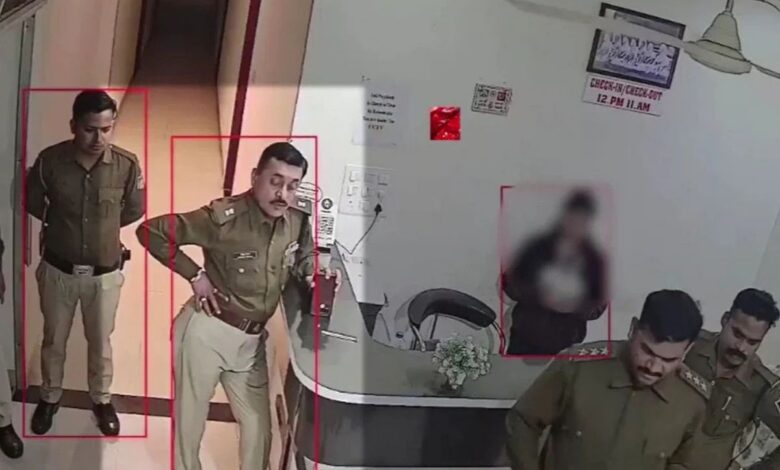
In Seoni, Madhya Pradesh, Additional Superintendent of Police Deepak Mishra is captured on hotel CCTV allegedly ordering colleagues to “plant some ganja on the boy” after an unmarried adult couple refused to unlock a phone and summon their parents. The couple insisted they were consenting adults of the same caste who intended to marry. Hotel owner Sanju Sanodiya simultaneously alleged local officers had demanded a monthly Rs 25,000 payoff and raided the premises when it was withheld. This is not isolated misconduct. It is the latest public illustration of a deeper institutional failure: police officers treating evidence as a tool of intimidation rather than truth, and citizens left to wonder whether the uniform protects them or preys on them.

How dare a senior police officer casually propose manufacturing a narcotics case against a citizen whose only “offence” was exercising adult autonomy?
How can any citizen place even residual trust in an institution that, when thwarted in moral policing or alleged extortion, reaches for the easiest criminal shortcut available under the NDPS Act? The Seoni incident of 13 November 2026 is not an aberration. It is a particularly brazen confirmation of a long, documented pattern.
According to reports based on the circulating CCTV, Additional SP Deepak Mishra, SDOP Chanchalesh Markam and TI Satish Tiwari confronted the couple at Hotel Siddhartha on Babariya Road. The woman stated they were adults, same caste, and planning marriage. Officers demanded she unlock her phone and call her parents. When she refused, Mishra is heard instructing that ganja be planted on the young man. The reported language is direct: “Plant some ganja on the boy.” Hotel owner Sanju Sanodiya alleged the raid followed his refusal to pay a monthly Rs 25,000 demanded by local officers including the TI and SDOP. Whether the full conspiracy is proven or not, the recorded suggestion of evidence fabrication is itself catastrophic.
Under the Narcotic Drugs and Psychotropic Substances Act, a “recovery” of even a small quantity can trigger arrest, extended custody, social ruin, loss of employment, and years of legal defence. The burden effectively shifts to the accused to prove the recovery was false. When the very people responsible for searching and seizing are the ones proposing to plant the substance, the process becomes a weapon. Citizens are left with a stark question: if a senior officer can casually propose framing someone on camera, how many times has the same tactic been used off-camera?
History supplies the answer. The tactic is neither new nor rare.
In 1992 in Mirzapur, Uttar Pradesh, police claimed they recovered cannabis during a raid on Bhola Tiwari’s house in Vindhyachal. Tiwari’s mother later set herself on fire and died; the family said she did so after officers assaulted her and tried to take her away. A CB-CID inquiry concluded no cannabis had been recovered and that the case was fabricated. In 2023 a court sentenced six retired policemen, including the then station house officer, to five years’ imprisonment for framing the man in a false drug case and related offences. Two other accused officers had died during the decades-long trial. Justice arrived late, after a woman’s death and a family’s destruction.
In December 2018 in Chennai, constable Ramadurai, angry after a personal quarrel, arranged for an accomplice to plant 200 grams of ganja inside the fuel-tank cover of his friend’s motorcycle and then made an anonymous tip-off. CCTV at the police station captured the planting. The intended victim was saved only because the footage existed; the accomplice was jailed and the constable became a fugitive. A uniformed officer treated a narcotics recovery as a personal revenge instrument.
In late October 2026 in Khanna, Punjab, CCTV allegedly showed ASI Sukhdev Singh entering the residence of Shiv Sena leader Mahant Kashmir Giri in plain clothes and placing a packet under a mattress. Uniformed officers then “recovered” approximately 30 grams of heroin from the same spot and arrested Giri. The family released the footage; the ASI was suspended. The episode occurred amid the state’s high-profile anti-drug campaign, undercutting official claims of clean enforcement.
In August 2024 in Mumbai, CCTV captured four Khar police personnel, including a sub-inspector, allegedly planting mephedrone on Dylan Estbeiro during a search at a farm. Estbeiro was detained and pressured. The footage went viral; the officers were suspended and an FIR eventually registered for kidnapping, wrongful confinement and related offences. Allegations later suggested the framing was linked to pressure over valuable land belonging to Estbeiro’s employer. Nearly two years later, accountability remained incomplete.
In Madurai, Madras High Court in 2025 ordered three police officers to jointly pay Rs 10 lakh compensation to a man they had pursued under the NDPS Act with fabricated evidence. The court found false documents, non-compliance with mandatory search procedures, and deliberate attempts to secure conviction “by hook or crook.” The accused had spent years in custody on the strength of a manufactured case.
These five episodes, spanning three decades and multiple states, share the same method: plant or fabricate a recovery, invoke the stringent NDPS framework, and let the process itself punish the target. Sometimes the motive is personal spite, sometimes local extortion, sometimes the need to show “results,” sometimes moral policing of adults. The common thread is the conversion of state power into private leverage.
The Seoni video is therefore not merely shocking; it is clarifying. It shows the mindset in real time. An officer of the rank of Additional Superintendent of Police, standing in a hotel lobby, treats the planting of evidence as an available option when a couple declines parental surveillance. That single recorded sentence collapses the gap between public rhetoric about “protecting society” and the private reality of how some officers actually exercise power.
Citizens are entitled to ask the obvious follow-up questions. How many recoveries never captured on camera were manufactured the same way? How many undertrials sit in jail because a planted packet was treated as gospel? How many hotel owners, shopkeepers, or young couples have quietly paid or submitted rather than risk the NDPS machinery? Trust is not restored by suspensions and inquiries after footage goes viral. Trust requires that the possibility of evidence planting be treated as an existential threat to the legitimacy of the force—prosecuted aggressively, punished severely, and culturally eliminated.
Until that happens, the question remains unavoidable: when the people sworn to prevent crime are caught proposing to invent it, who exactly is the citizen supposed to call for protection?