Labrecque Group Limited- After Central Park Sex Scandal, Amarjit Bakshi Father’s Name Appear On Panama Papers
When the father of Central Park’s founder appears as a shareholder in a British Virgin Islands company linked to Mossack Fonseca, it is not proof of crime—but it is a red flag. In an industry long plagued by questions of black money and beneficial ownership, historical offshore structures demand scrutiny. As Central Park courts homebuyers and eyes a possible IPO, the silence around Labrecque Group Limited undermines claims of transparency. Luxury real estate sells trust as much as square footage. This unresolved Panama Papers connection forces a necessary conversation about family wealth, disclosure, and accountability in India’s premium housing market.

The Panama Papers Shadow Over Central Park: Questions of Opacity in Indian Luxury Real Estate
In the glittering world of Gurugram’s luxury real estate, Central Park stands as a prominent brand associated with high-end residences, resort-style living, and the Bakshi Group’s broader conglomerate interests spanning automotive components, infrastructure, and hospitality. Its founder, chairman and managing director Amarjit Bakshi, an IIT Delhi alumnus and first-generation entrepreneur, has built a public image around quality projects such as Central Park Resorts and expansions into Dwarka Expressway, Sohna, and beyond, including recent moves toward a potential real estate IPO around 2027.
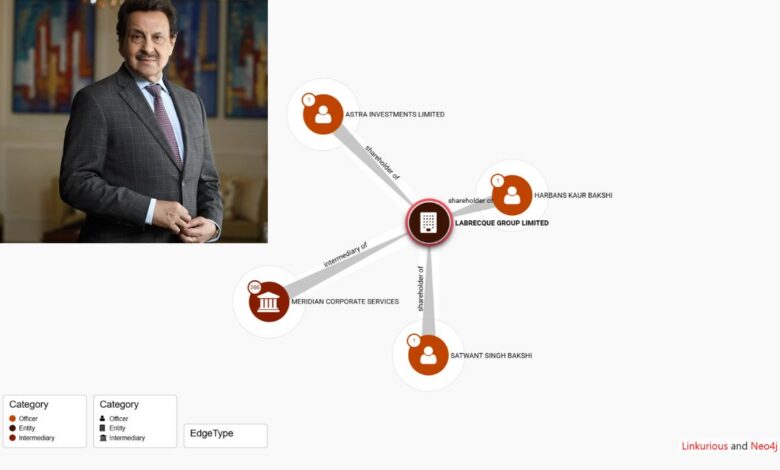
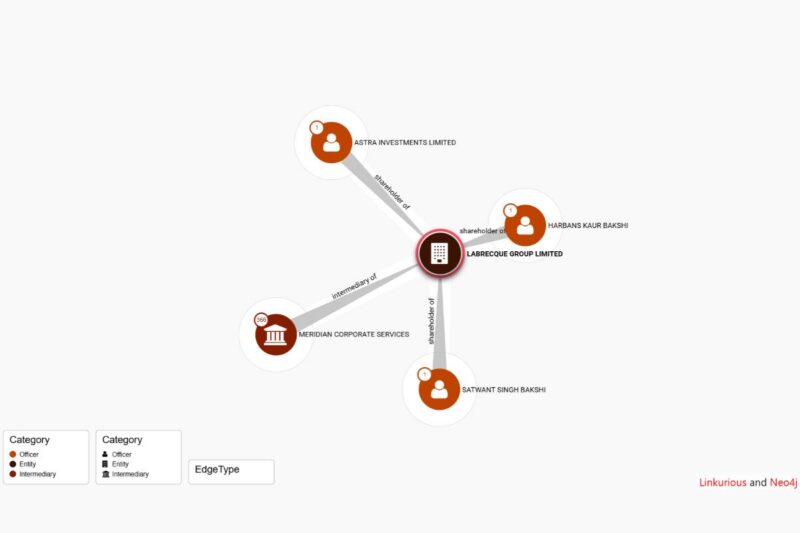
Yet a quiet entry in the International Consortium of Investigative Journalists’ (ICIJ) Offshore Leaks Database raises uncomfortable questions about the family’s historical financial structures. Satwant Singh Bakshi, identified in family notices and corporate records as Amarjit Bakshi’s father, appears as a shareholder of Labrecque Group Limited, a British Virgin Islands company.
According to the ICIJ database, the entity was incorporated on 2 July 2009, remained active, and listed Satwant Singh Bakshi and Harbans Kaur Bakshi as shareholders from 23 October 2009 until 6 November 2012, after which Astra Investments Limited took the shareholder role. The company was linked to Switzerland, with Mossack Fonseca as the agent and Meridian Corporate Services as intermediary. The Panama Papers data itself runs through 2015.
Real estate in India, particularly the luxury segment in the National Capital Region, has long been associated with concerns over black money, benami holdings, round-tripping, and weak beneficial-ownership transparency. Buyers of multi-crore apartments and villas place significant trust in the developer’s financial hygiene, project delivery track record, and corporate governance.

When the promoter family’s elders appear as shareholders in a hard-to-trace BVI company during a period that overlaps with the growth of the group’s real-estate and other businesses, it invites scrutiny about the sources and destinations of capital, the degree of separation between personal and corporate finances, and whether full beneficial ownership was always disclosed where required under Indian law.
Satwant Singh Bakshi’s own corporate footprint, visible in Indian company registries, shows long involvement in Bakshi Group-linked entities spanning engineering, estates, and development companies. The existence of parallel offshore holdings, even if later transferred, reinforces a pattern of multi-jurisdictional structuring that is common among wealthy Indian business families yet sits uneasily with the rhetoric of transparency that accompanies modern real-estate branding and IPO ambitions.
Central Park and the Bakshi Group operate in a regulatory environment that has tightened since the Panama Papers: the Black Money Act, benami prohibitions, stricter FEMA and income-tax scrutiny of foreign assets, beneficial-ownership reporting under company law, and RERA’s emphasis on developer accountability. Historical structures that predate these reforms still matter because they shape perceptions of risk and integrity.
Critics of the Indian real-estate sector often point to a broader culture in which opacity has been treated as a feature rather than a bug. Land aggregation, joint-development agreements, and high-value transactions have historically offered opportunities for layering funds. Offshore vehicles can serve as convenient nodes in such layering even when the ultimate use is legitimate. The absence of public explanation regarding Labrecque Group Limited’s purpose, assets, or eventual disposition leaves a vacuum. In an era when homebuyers, institutional investors, and potential IPO subscribers demand greater clarity, silence itself becomes a form of communication.
It is also worth noting the timing and context. The Bakshi family’s business success is real: Continental Engines and related manufacturing operations have achieved export success, and Central Park has delivered projects that command premium pricing and positive lifestyle branding. Amarjit Bakshi’s public profile emphasizes engineering discipline, customer experience, green spaces, and philanthropy. These achievements deserve recognition. They do not, however, immunize the family from questions about historical financial architecture. Luxury real estate sells not only square footage and amenities but also an implicit promise of solidity and trustworthiness. When a promoter’s parent appears in a global database of secretive companies, that promise is tested.
The Panama Papers episode, a decade later, continues to illustrate how elite financial privacy collides with democratic demands for accountability. For India’s real-estate industry, still recovering from years of delayed projects, stalled funds, and regulatory clean-ups, every residual opacity carries extra weight. Prospective buyers of Central Park properties, lenders, and future public-market investors are entitled to ask whether the group’s internal controls and disclosure practices fully address legacy offshore arrangements. Regulators, for their part, retain the tools—and the responsibility—to examine whether any Indian tax or foreign-exchange obligations arising from such entities were met.
None of this proves wrongdoing by Satwant Singh Bakshi, Amarjit Bakshi, or Central Park. It does demonstrate that the comfort of privacy available in 2009–2012 sits poorly with the expectations of 2026. In a market where trust is a core product, unresolved questions about offshore shareholding are not mere historical footnotes. They are live issues of corporate hygiene, buyer protection, and the credibility of India’s luxury real-estate narrative. Clarity, rather than silence, would better serve both the Bakshi Group’s ambitions and the broader public interest.