‘Plant Ganja In His Bag’: How Public Servants Like Police In India Are The Biggest Threat To The Common Man?
In a dark parallel to cinema’s most unflinching portraits of institutional evil, a Madhya Pradesh ASP is caught on CCTV ordering the planting of ganja on an adult man whose only offence was refusing parental surveillance. This is not a rogue act. It is the logical product of a system that treats evidence as clay, citizens as disposable, and the law as a personal weapon. Public servants sworn to protect have mutated into the most efficient predators the common Indian faces.

Remember the Tamil film Visaranai (2015). Based on real events, it shows ordinary men picked up by police, brutalised, and then systematically framed in a larger conspiracy so the force can close a high-profile case. The officers do not merely abuse power; they manufacture reality. Innocence is irrelevant. The only currency is the convenience of the uniformed machinery. The film ends not with justice but with the chilling realisation that the system protects itself first, last, and always.
Now replace the fictional lock-up with a hotel lobby in Seoni, Madhya Pradesh, in November 2026.
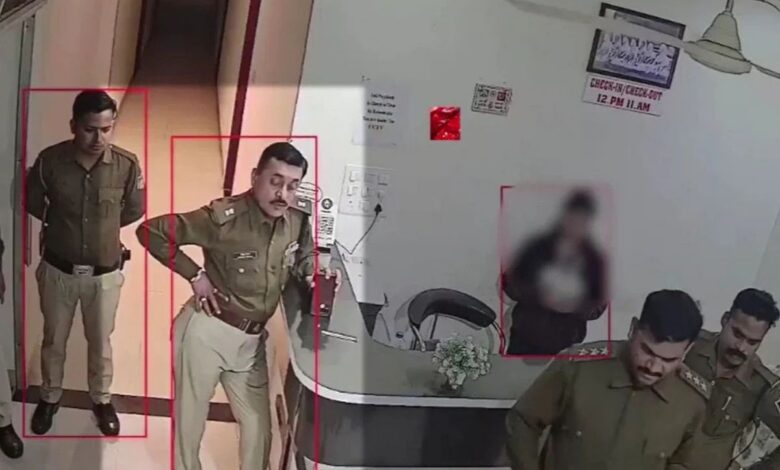
Additional Superintendent of Police Deepak Mishra is captured on CCTV allegedly instructing colleagues to plant ganja on a young man after an unmarried adult couple refuses to unlock a phone and call their parents.
The cinematic nightmare has walked out of the screen and into a district hotel. This is not “overreach.” This is institutional predation wearing the state’s badge. The alleged words, “Plant some ganja on the boy”, are not a threat whispered in anger. They are an operational order. Under the NDPS Act, a planted recovery is often enough to destroy a life. Arrest, prolonged custody, social annihilation, career death, and the crushing burden of disproving official seizure memos follow almost automatically. The couple’s “crime” (if/is not) was adult autonomy. Their refusal to perform parental obedience on police demand was met with the suggestion of manufactured narcotics evidence. That is not policing. That is the language of organised intimidation.
The hotel owner’s simultaneous allegation that local police had demanded a monthly bribe of Rs 25,000 completes the picture. When the demand was resisted, the force allegedly arrived and the couple became useful collateral. Extortion of businesses and moral policing of young adults are not separate scandals; they are twin expressions of the same unaccountable power. One junior officer is line-attached after the video explodes. Higher officers visible in the footage face slower, softer responses. The pattern is ancient and deliberate: sacrifice a lower rank, absorb the outrage, and continue.
Visaranai was disturbing because it refused the comfort of the “few bad apples” narrative. Seoni does the same in real time. The problem is not one ASP with a short temper. The problem is a culture in which senior officers feel free to discuss evidence fabrication on camera, in a public space, in front of hotel staff. That casualness is the true indictment. It reveals officers who no longer fear consequences because the system has taught them there are none that matter. Suspension and departmental inquiry are not punishment; they are theatre. Criminal prosecution for conspiracy to fabricate evidence remains rare, delayed, or diluted.
Moral policing supplies the moral alibi. Unmarried couples in hotels remain soft targets across large parts of India. Police invoke “family values,” “character,” and vague public-order concerns to justify intrusion into private adult decisions. In Seoni the officers reportedly lectured the couple about their parents while simultaneously contemplating a drug frame-up. The contradiction is grotesque and revealing: the same force that claims to protect social morality is prepared to manufacture a criminal case when that morality is not performed on demand. Consent, adulthood, and caste compatibility were irrelevant. Obedience was the only acceptable answer.
The common man has no counter-weapon. He cannot plant recoveries. He cannot dictate FIR language. He cannot command compliant witnesses. He faces a machine that controls the first narrative, the seizure memo, the initial medical and forensic paper trail. Once that machine decides he is guilty for convenience, the courts become a long, expensive, psychologically destructive ordeal rather than a reliable source of vindication. Trust collapses. People stop reporting crimes. They avoid hotels. They internalise the lesson that authority is something to be feared and appeased, never challenged.
Public servants were never meant to be predators. Yet in practice the ground-level state, police, local administration, revenue machinery, often functions as a protection racket with legal cover. The monopoly on legitimate violence and the power to create official truth are routinely converted into tools of extraction and control. The Seoni episode is simply the latest, most naked illustration. When an ASP can casually order the planting of contraband because two adults declined parental involvement, the social contract is not frayed; it is shredded.
Reforms remain mostly performative. Body cameras, mandatory video recording of searches, independent investigation of serious misconduct, and swift criminal liability for evidence fabrication exist more in reports and speeches than in consistent practice. Political protection of favoured officers continues. Until the cost of manufacturing a case becomes higher than the benefit of closing one or extracting compliance, the incentive structure will keep producing Seoni-type officers. The next hotel, the next couple, the next inconvenient citizen will face the same calculus.
Visaranai forced viewers to confront a system that treats human beings as raw material for institutional convenience. The Seoni CCTV does the same without the comfort of fiction. The biggest threat to the ordinary Indian is no longer the street criminal the police claim to fight. It is the public servant who has learned that the law is not a restraint but a toolkit, and that planting ganja is simply one of the more efficient tools available. Until that reality is named without euphemism and punished without protection, the common man remains permanently outgunned by those sworn to protect him.