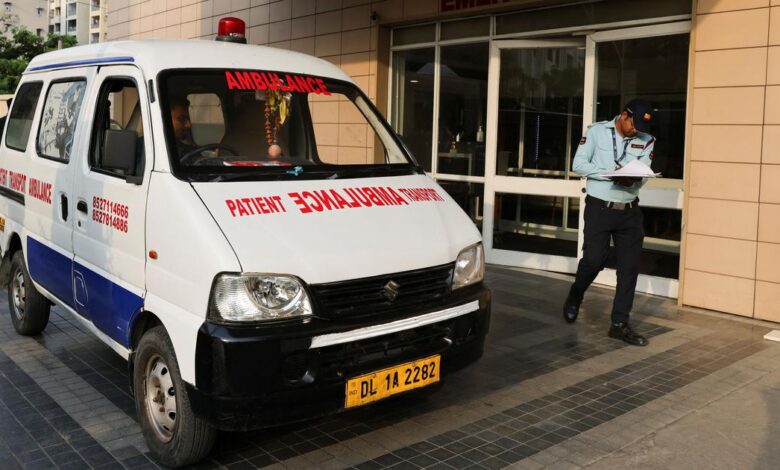
Top 10 Best Ambulance Service Providers in India in 2027
Ambulance services form the critical first link in emergency medical care across India. By mid-2026 the sector had evolved significantly under the new Operational Guidelines on National Ambulance Services released by the Union Health Ministry. These guidelines introduced uniform standards for vehicle design under AIS-125 norms, population-based fleet deployment, trained Emergency Medical Technicians, GPS-enabled command centres, infection control protocols and performance monitoring. Response times, equipment quality and accessibility improved in both urban and rural areas.
Private operators expanded alongside public-private partnerships that run the familiar 108 free emergency number. Technology integration, specialised critical-care vehicles and trained paramedic teams became defining features of leading providers. The following ranking presents ten prominent ambulance service organisations operating in India with information current as of July 2026. Each entry focuses on operational scale, equipment standards, service range, geographic reach and distinctive operational strengths.
1. GVK EMRI Green Health Services
GVK EMRI Green Health Services continues to operate the largest emergency ambulance network in the country. By July 2026 the organisation managed a cumulative fleet exceeding 17,000 vehicles across more than fifteen states and union territories under the national 108 emergency response system. The service handles tens of thousands of calls every day through centralised integrated command and dispatch centres equipped with real-time GPS tracking and structured triage protocols. Ambulances are categorised into Basic Life Support and Advanced Life Support units.
Basic units carry oxygen cylinders, suction apparatus, stretchers, basic monitoring devices and emergency medications. Advanced units add ventilators, defibrillators, syringe pumps, multi-parameter monitors and cardiac care equipment. Paramedics and Emergency Medical Technicians undergo continuous competency-based training aligned with the 2026 national guidelines. The organisation maintains dedicated training academies that emphasise both clinical skills and empathetic patient handling. Coverage extends from dense metropolitan zones to remote tribal and hilly regions, supported by specialised vehicles including boat ambulances in certain coastal and riverine areas.
Air ambulance linkages facilitate transfers from inaccessible locations. Performance dashboards monitor response times, on-scene care quality and hospital handover efficiency. The public-private partnership model ensures free emergency transport for citizens while maintaining high operational standards through government contracts and continuous quality audits. Fleet maintenance schedules and infection-prevention protocols meet the updated national requirements, contributing to consistent readiness across the extensive network.
2. Ziqitza Healthcare Limited
Ziqitza Healthcare Limited stands as one of the most established private emergency medical service providers with operations spanning twenty-eight states by mid-2026. The organisation runs a fleet of more than 3,600 ambulances and has served tens of millions of patients since inception. In several states it operates the 108 free emergency service under National Health Mission contracts while simultaneously offering the paid Dial 1298 service in major urban centres. Ambulances range from Basic Life Support vehicles suited for routine and trauma transfers to Advanced Life Support and Mobile Intensive Care Units equipped for critical patients. Standard features include oxygen delivery systems, automated external defibrillators, patient monitors, suction machines and comprehensive emergency drug kits.
Specialised services cover neonatal and paediatric transport, high-risk obstetric transfers, organ transport for transplant cases and long-distance inter-city critical-care movement. All vehicles are GPS-enabled and linked to central control rooms that operate around the clock. Paramedics receive structured training in advanced cardiac life support, trauma management and infection control.
Corporate clients, hospitals and individual citizens can access the service through dedicated helplines. Franchise models expand reach into additional districts, bringing the total network of associated ambulances and mobile medical units well beyond the core fleet. Response protocols prioritise rapid dispatch based on nearest available unit and real-time traffic data. Affordable pricing structures for private bookings sit alongside free government-mandated emergency responses, creating a dual-access model that serves both urban and rural populations effectively.
3. RED Health
RED Health has established itself as a technology-driven emergency response organisation with a strong presence across multiple cities. By July 2026 the company maintained a substantial workforce of several thousand employees and operated a growing fleet of Advanced Life Support and Basic Life Support ambulances. The service emphasises rapid response times through intelligent dispatch algorithms that factor in traffic patterns, vehicle readiness and crew availability. Ambulances carry high-end medical equipment including multi-parameter monitors, ventilators, defibrillators, infusion pumps and point-of-care diagnostic tools.
Paramedics are trained to international standards and receive ongoing simulation-based education. An integrated mobile application allows users to request assistance, track the approaching vehicle in real time and receive estimated arrival updates. Hospital coordination protocols ensure smooth patient handover with advance notification of clinical status. The organisation partners with hospitals, corporate campuses and residential communities to pre-position vehicles for faster coverage. Specialised cardiac and trauma response teams form part of the operational model.
Quality metrics focus on scene time, clinical interventions performed en route and patient outcome indicators. Expansion into additional metropolitan areas continued through 2026 with emphasis on maintaining consistent equipment standards and crew competency across the network.
4. GoAid Ambulance Service
GoAid Ambulance Service has built a multi-city presence offering a wide spectrum of medical transport options. Established earlier and expanded steadily, the organisation by mid-2026 covered major urban centres with a diversified fleet that includes standard ambulances, ICU ambulances, neonatal units, mortuary vans and air ambulance coordination. Ground vehicles feature Basic Life Support and Advanced Life Support configurations equipped with oxygen systems, cardiac monitors, defibrillators, stretchers and emergency medications.
Critical-care ambulances add ventilators, syringe pumps and advanced monitoring capabilities suitable for inter-hospital transfers of unstable patients. The service provides both emergency response and planned non-emergency patient transport. Real-time tracking and professional paramedic crews form core operational elements. Air ambulance linkages enable rapid long-distance transfers when ground transport is impractical.
Training programmes for drivers and medical staff emphasise safe patient handling, infection prevention and timely clinical decision-making. Pricing structures remain competitive for private bookings while maintaining readiness for urgent calls. Coverage of multiple metropolitan regions allows coordinated multi-city operations for patients requiring specialised hospital care in distant locations. Continuous fleet upgrades align vehicles with AIS-125 standards introduced under the national guidelines.
5. Zenzo Ambulance Service
Zenzo Ambulance Service operates an extensive networked model that aggregates independently owned and operated ambulances under a unified technology platform. By July 2026 the network encompassed more than 25,000 vetted ambulances across over 450 cities and towns. The platform promises response times under fifteen minutes in covered areas through centralised 24-hour control rooms. Service categories include Basic Life Support, Advanced Life Support and premium ICU ambulances equipped for critical care.
Standard pricing applies nationwide for defined distance bands, creating predictability for users. All participating vehicles carry GPS tracking visible both to the control room and to ambulance owners through dedicated mobile applications. Equipment standards cover oxygen delivery, defibrillators, monitors, suction units and emergency drugs, with higher-tier vehicles adding ventilators and advanced life-support systems.
The AI-supported dispatch system matches the nearest suitable ambulance to each request while monitoring live location and availability. Specialised transport options address neonatal, paediatric and long-distance needs. Continuous validation of participating operators ensures compliance with equipment and crew competency requirements. The model expands geographic coverage rapidly by integrating local operators into a single accessible network rather than relying solely on owned fleet growth.
6. Blinkit Ambulance
Blinkit Ambulance introduced a rapid-response model integrated with a quick-commerce platform, beginning operations in select areas of Gurugram and expanding within the National Capital Region. By July 2026 the service operated a dedicated fleet of dozens of ambulances with an average claimed response time near nine to ten minutes in serviceable zones. Vehicles are configured as Basic Life Support units carrying oxygen cylinders, automated external defibrillators, stretchers, vital-signs monitors, suction machines and essential emergency medications.
Booking occurs through the associated mobile application, which also suggests nearby hospitals and allows selection within a defined radius. The ambulance remains available until the patient is accepted at the chosen facility. Emergency transfers remain free of charge while non-emergency transfers attract a fixed fee that supports further expansion through an associated foundation. Paramedic training receives particular emphasis, with dedicated academy programmes focused on both clinical competence and compassionate care.
Plans announced in 2026 target progressive coverage of additional major cities over subsequent years. The model prioritises high readiness of equipped vehicles and trained crews specifically for time-critical emergencies rather than routine transport.
7. Medulance Healthcare
Medulance Healthcare has developed a technology-enabled platform connecting users with a large distributed fleet of ambulances. By mid-2026 the organisation reported extensive vehicle availability across numerous cities, combining owned and partnered units. The mobile application enables booking, real-time tracking and status updates. Service offerings span Basic Life Support, Advanced Life Support and critical-care configurations. Equipment includes oxygen systems, cardiac monitors, defibrillators, ventilators on higher-tier vehicles and full emergency drug inventories.
Trained paramedics accompany each response. The platform supports both emergency dispatch and scheduled patient transfers between homes, hospitals and diagnostic centres. Integration with hospital networks facilitates advance clinical information sharing. Fleet management tools monitor vehicle location, maintenance status and crew duty cycles. Continuous expansion of partner operators broadens geographic footprint while central technology maintains consistent user experience and quality oversight. Infection-control protocols and equipment sterilisation routines follow updated national standards.
8. BVG India
BVG India operates a substantial emergency medical response fleet concentrated in Maharashtra and Jammu and Kashmir, with more than 1,400 ambulances recorded by early 2025 and continued operations through 2026. The organisation provides both government-contracted emergency services and value-added medical response options. Vehicles include Basic Life Support and Advanced Life Support configurations equipped to national standards. Paramedics and Emergency Medical Technicians receive structured training.
Command centres coordinate dispatch with GPS tracking. The company distinguishes itself by offering additional integrated services alongside core ambulance transport, supporting comprehensive emergency management for institutional clients. Maintenance regimes and readiness protocols ensure high availability. Coverage of both urban and more challenging terrains in the operational states demonstrates adaptability. Performance under long-term government contracts reflects sustained operational reliability.
9. Apollo 1066 Ambulance Service
Apollo Hospitals Group operates the 1066 ambulance service, leveraging the clinical infrastructure and standards of its hospital network. By July 2026 the service maintained dedicated ambulances staffed by trained paramedics and linked directly to Apollo emergency departments. Vehicles carry Advanced Life Support equipment including monitors, defibrillators, ventilators and comprehensive medication kits. Response protocols emphasise rapid arrival and stabilisation aligned with hospital clinical pathways.
The helpline provides immediate access and coordinates with the nearest available unit. Integration with the hospital system allows seamless handover, electronic transfer of vital information and readiness of receiving teams. Specialised cardiac and trauma response capabilities benefit from the group’s clinical expertise. Coverage centres on cities with Apollo hospital presence while supporting inter-facility transfers within the network. Continuous training draws on hospital medical education resources, ensuring crews remain current with evolving emergency protocols.
10. StanPlus Technologies
StanPlus Technologies, closely associated with the RED Health brand in operational delivery, focuses on technology platforms that power emergency medical services. By mid-2026 the organisation supported large-scale ambulance operations through intelligent software for dispatch, tracking and resource optimisation. Partnered and managed fleets utilise Advanced Life Support and Basic Life Support vehicles equipped with modern monitoring and life-support devices. The platform enables rapid matching of available resources to emergency requests across covered urban areas.
Data analytics improve response-time performance and fleet utilisation. Training modules for paramedics and drivers form part of the service ecosystem. Expansion continues through partnerships with hospitals and civic authorities. Emphasis on software reliability, real-time visibility and clinical decision support distinguishes the operational approach within the broader emergency response landscape.
These ten organisations illustrate the range of models operating in India as of July 2026, from large public-private partnership fleets to technology-platform aggregators and hospital-linked services. Common themes include adherence to AIS-125 vehicle standards, investment in paramedic training, GPS-enabled dispatch and graded levels of medical equipment from basic to critical care. Continued implementation of the National Ambulance Services guidelines is expected to further standardise quality and improve equity of access across urban and rural geographies in the years ahead.