A Keynote Cancelled, Questions Reopened, Bill Gates, The AI Summit And The Weight Of The Epstein Files
Bill Gates’ sudden withdrawal from a high-profile AI summit in New Delhi has shifted attention from technological ambition to renewed scrutiny. As millions of pages linked to Jeffrey Epstein enter public view, questions of judgment, proximity and public trust have once again resurfaced at the intersection of power and accountability.

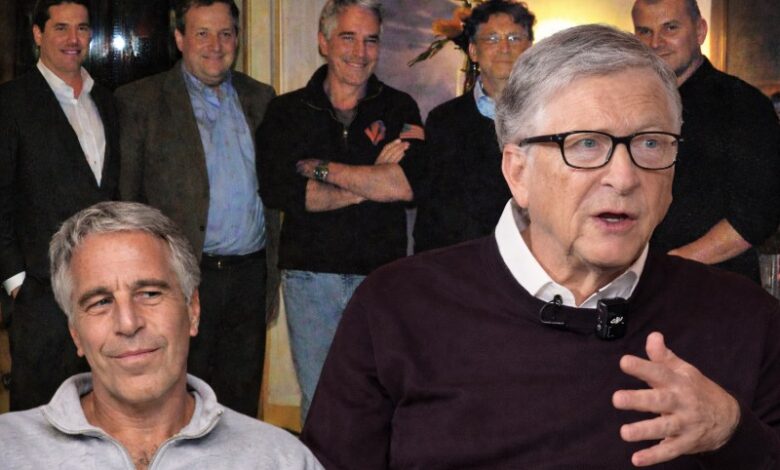
When Bill Gates withdrew from delivering his keynote address at the AI Impact Summit in New Delhi just hours before he was scheduled to speak, the official explanation was restrained and procedural. The Gates Foundation said the decision was taken “after careful consideration” to ensure that the focus remained on the summit’s priorities.
No detailed reason was provided. But the timing was impossible to ignore.
The withdrawal came as a fresh tranche of documents linked to late convicted sex offender Jeffrey Epstein entered public circulation through a U.S. Department of Justice release. Within days, few media outlets — and (massively) on social media – across the United States and Europe were parsing millions of pages – emails, logs, drafts, and correspondence – attempting to understand who appeared in the files and in what context.
Gates was among the high-profile names mentioned in media reporting surrounding the release. He has strongly denied any wrongdoing, reiterating that while meeting Epstein was a “serious error in judgment,” he had no involvement in Epstein’s crimes and never visited his island.
Yet in an era where public trust is fragile and proximity to wrongdoing carries reputational weight, the resurfacing of Epstein-related material – even in draft or unverified form – was bound to cast a shadow.
And it did.

The Summit That Was Meant to Signal India’s AI Ambition
The AI Impact Summit in Delhi was not an ordinary industry conference. It was positioned as one of the largest gatherings on artificial intelligence governance and development in the Global South. Prime Minister Narendra Modi inaugurated the event at Bharat Mandapam, underlining India’s ambition to shape global conversations around emerging technologies.
Gates’ presence was significant. For decades, he has been both a symbol of technological transformation and a key philanthropic partner in global development, including in India. His 12-minute keynote slot was scheduled among senior policymakers and industry leaders – a moment intended to reinforce the intersection of technology, development and public-private cooperation.
Earlier in the week, Gates had met leaders in Andhra Pradesh, including Chief Minister N. Chandrababu Naidu – the image of a global technology statesman engaging with India’s next-generation digital ambitions.
Instead, as the summit unfolded and speeches proceeded, the headlines shifted. It was Ankur Vora, President of Africa and India Offices at the Gates Foundation, who ultimately represented the institution on stage.
What the Epstein Files Actually Are
The renewed scrutiny stems from a recent release by the United States Department of Justice under the Epstein Files Transparency Act. The release includes millions of pages of documents connected to investigations, legal proceedings and associated correspondence involving Epstein.
It is important to be precise about what these documents represent.
They include raw material: emails, notes, drafts, logs and records accumulated over years. The presence of a name in the files does not constitute evidence of criminal conduct. Some of the documents reportedly include unsent draft emails or correspondence of uncertain authorship. Many references are contextual rather than accusatory.
Media organizations have cautioned readers against treating the trove as a definitive ledger of guilt. The files are, in many respects, an archival disclosure – not a court verdict. Yet the sheer scale of the release and the gravity of Epstein’s crimes ensure that any association, however tangential, invites renewed examination.
The Gates References and His Response
According to reporting by major outlets, the newly released documents include draft emails saved in Epstein’s account that reference Gates. The drafts reportedly contain claims about meetings and interactions. The authenticity and intent behind those drafts remain unclear, and it is not established who authored them definitively.
Gates has categorically denied any improper conduct. In interviews, he has stated that:
- He met Epstein in the context of philanthropic discussions.
- He never visited Epstein’s island.
- He never attended parties or engaged in illegal activity associated with Epstein.
- He regrets the time he spent meeting him.
That regret has been part of Gates’ public record for several years. Following earlier media reports – including extensive reporting in 2019 and 2021 – Gates acknowledged that maintaining contact with Epstein after his 2008 conviction was a serious mistake in judgment.
But judgment matters.
When powerful individuals choose to engage with controversial figures, even for purportedly legitimate purposes, they assume reputational risk. The resurfacing of any related material inevitably reopens old questions.
A Relationship Already Under Scrutiny
This is not the first time Gates’ association with Epstein has drawn attention.
Investigative reporting in previous years revealed that Gates met Epstein multiple times after Epstein had served a prison sentence for sex offenses. At the time, Gates described the meetings as misguided attempts to explore philanthropic partnerships.
The issue resurfaced during the period surrounding his divorce from Melinda French Gates in 2021, when questions were raised about the extent of those interactions.
None of those earlier reports established criminal conduct by Gates. But they reinforced a perception: that one of the world’s most influential philanthropists had exercised poor judgment in associating with a deeply compromised individual.
The latest document release does not fundamentally alter that legal reality. What it alters is public memory. In the age of digital archives, nothing truly fades.
The Weight of Timing
The Delhi summit was meant to be about the future – artificial intelligence governance, ethical frameworks, development partnerships and technological sovereignty. India is positioning itself as a key voice in shaping how AI will be regulated and deployed across emerging economies.
Gates’ absence did not derail the summit. But it changed the atmosphere.
Public events at that level are as much about symbolism as substance. A keynote address is not merely a speech; it is an endorsement of shared direction. When a speaker withdraws at the last moment amid revived controversy, it becomes part of the story – timing is everything.
The release of millions of pages of sensitive material and a high-profile public engagement abroad collided in a way that made withdrawal almost inevitable. Even if the allegations remain unproven, the distraction risk was significant.
The Gates Foundation stated it wished to keep the focus on AI priorities. Implicit in that statement is an acknowledgment that the focus had already shifted.

Scrutiny in the Post-Epstein Era
The broader question extends beyond Gates.
Epstein’s crimes were not isolated acts; they were embedded within networks of wealth, influence and access. The public outrage that followed his arrest and subsequent death stemmed not only from the crimes themselves but from the perception that powerful circles had shielded him for years.
As new files emerge, society revisits those networks.
In such an environment, proximity alone can generate scrutiny. Being named in documents – even in draft form – demands clarification. It does not equate to guilt, but neither is it trivial.
For high-profile figures, reputational accountability now extends beyond legal culpability. It includes ethical judgment, associations and decision-making patterns. This is particularly true for individuals who operate at the intersection of technology, philanthropy and global policy.
Philanthropy, Power and Public Trust
The Gates Foundation is one of the largest funders of global health initiatives in the world. Its work in India spans vaccination programs, sanitation, agricultural reform and digital public infrastructure.
Institutionally, the foundation remains distinct from any allegations concerning personal conduct. No charges have been brought against Gates in relation to Epstein’s crimes. The foundation continues its projects and partnerships.
Yet philanthropy operates on trust. When the individual at the helm faces renewed scrutiny – even if ultimately exonerated – the questions extend to institutional credibility. Donors, governments and beneficiaries assess not only outcomes but integrity.
Bill Gates has long been positioned as a global statesman of technology and health. Associations that appear careless undermine that stature, regardless of legal outcomes.
Legal Reality vs Public Perception
There is a critical distinction between legal proof and public perception.
The Epstein files are not a conviction ledger. They are an archival disclosure. The inclusion of names does not establish criminal wrongdoing. Courts, not document troves, determine guilt.
But public discourse operates differently.
In the digital era, information – contextualized or not – circulates rapidly. Draft emails, partial correspondence and ambiguous records can trigger global reactions before legal clarifications emerge.
This dynamic creates a new vulnerability for public figures: reputational consequences precede adjudication.
Gates’ decision to step back from the Delhi keynote can be read through this lens. Even if legally untroubled, the distraction factor alone was sufficient to overshadow a summit meant to focus on artificial intelligence governance.
A Summit Overshadowed
The AI Impact Summit was the fourth annual gathering aimed at addressing governance challenges in fast-evolving technologies. India’s participation signals its ambition to shape global digital norms rather than merely adopt them.
The summit itself continued uninterrupted, its panels and policy discussions proceeding as scheduled. However, the renewed scrutiny surrounding Bill Gates inevitably raised questions that extended beyond the conference halls.
That dynamic shows a broader truth: technology diplomacy does not operate in isolation. The personal reputations of prominent figures often intersect with policy platforms. When controversy intrudes, even briefly, it reshapes public focus and reframes the larger conversation.

The Last Bit, The Larger Question
Ultimately, the story is not solely about one cancelled speech.
It is about how societies confront proximity to wrongdoing within elite circles. It is about whether poor judgment by powerful individuals carries consequences beyond private regret. It is about the evolving standard of accountability in a world where archival transparency exposes historical associations.
Gates has denied any improper conduct and acknowledged that meeting Epstein was a mistake. No charges implicate him in criminal activity. Those facts matter and must remain central. But scrutiny also matters.
When millions of pages connected to one of the most notorious criminal cases of recent decades enter public view, the names that appear within them will inevitably face examination. That examination is not a verdict – it is a function of public trust. The resurfacing of the Epstein files ensures that, for Bill Gates, past associations remain part of the present conversation.