How Large Real Estate Companies Like BPTP & Raheja Builders Take the Justice System for a Ride


In India’s real-estate landscape, a grim pattern repeats with mechanical regularity. Thousands of middle-class families pour their life savings and bank loans into promised homes. Projects stall for years. Complaints pile up in police stations, RERA offices, consumer forums and high courts. Enforcement agencies eventually raid, attach assets or register FIRs. And yet the promoters of large developers frequently secure interim judicial protection, continue operations, and, in some cases, even eye public listings — while ordinary buyers remain trapped in unfinished towers, paying EMIs on non-existent flats.
Two names illustrate this cycle with particular clarity in 2025–26: Raheja Developers and BPTP Limited.
Raheja Developers: Multi-Crore Attachments Followed by Interim Protection
In late July 2026, the Enforcement Directorate’s Delhi Zonal Office provisionally attached immovable properties worth ₹782.36 crore belonging to Raheja Developers Ltd under the Prevention of Money Laundering Act. This was the third major attachment that year — after ₹1,113.81 crore in April and ₹503.48 crore in June — taking the cumulative provisional attachment to approximately ₹2,399.65 crore.
According to the ED, the company collected roughly ₹2,425.99 crore from around 4,600 homebuyers across various residential projects. Substantial portions of these funds were allegedly diverted away from construction, leaving families without possession. The probe rests on multiple FIRs registered by the Economic Offences Wing of Delhi Police on the basis of homebuyer complaints of cheating and fraud. The investigation continues against the company, its director Navin M. Raheja, and associated persons.
Within days, a Saket Court Additional Sessions Judge granted interim protection from arrest to Navin M. Raheja (Chairman) and Nayan N. Raheja (Managing Director). The court observed that non-bailable warrants have serious consequences and should not be issued mechanically; the primary object of process is to secure presence. The defence highlighted earlier cooperation in 2025 and willingness to join the investigation. The matter was listed for further hearing in September. Parallelly, the Delhi High Court sought the ED’s response on Nayan Raheja’s plea seeking to quash the 2022 ECIR.
BPTP: Decades of Complaints, Warrants, Raids — and Continued Resilience
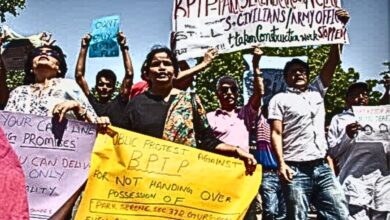
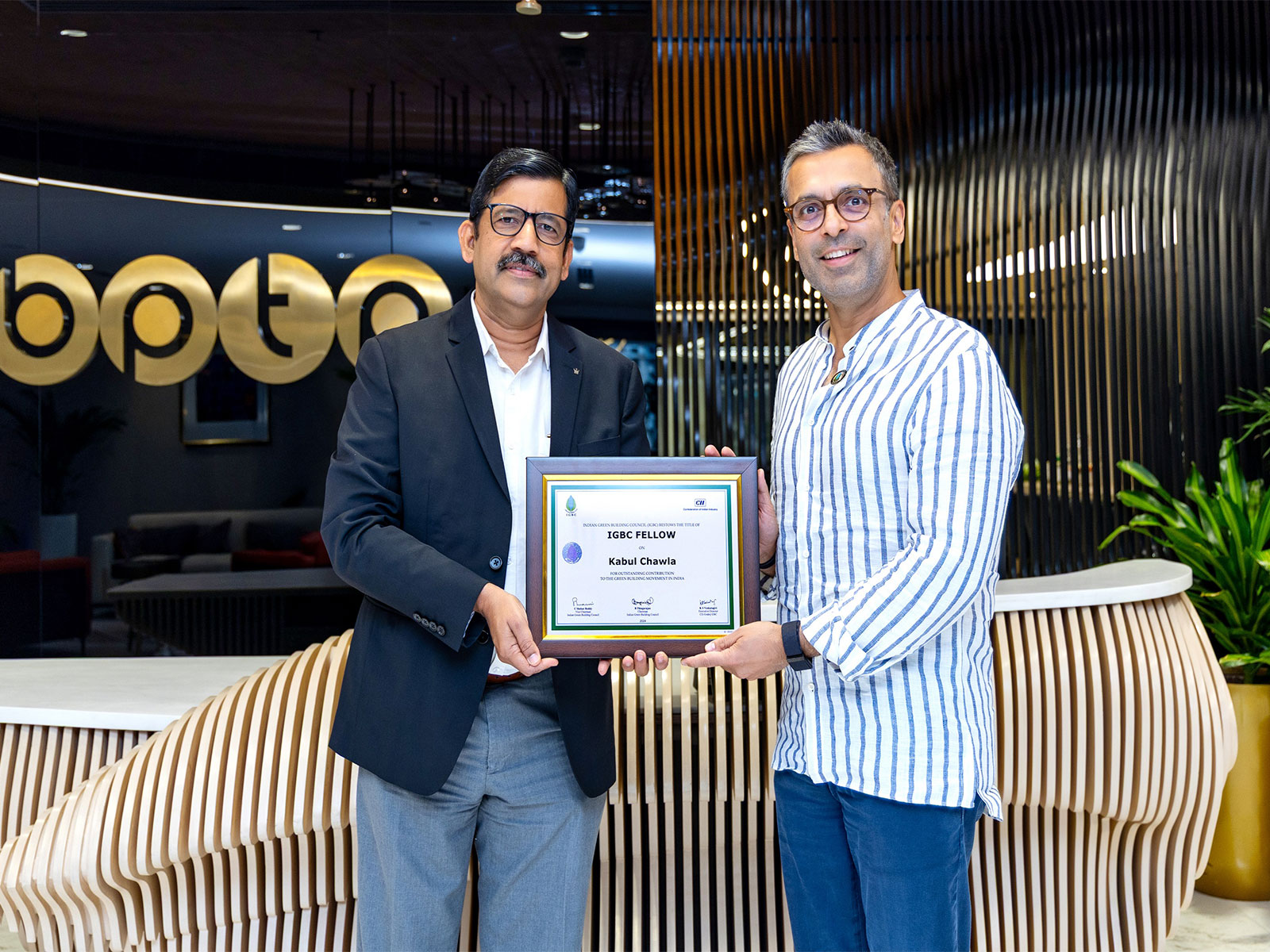
BPTP Limited, led by promoter Kabul Chawla, presents an even longer timeline of unresolved grievances. In January 2011, Faridabad Central Police Station registered an FIR on complaints from over 1,000 homebuyers in projects such as Discovery Park, Park Serene and Parklands. Buyers alleged they had paid 95–100 % of the consideration (aggregate claims around ₹400 crore) yet received no possession. Charges included cheating, criminal breach of trust, forgery and conspiracy under the IPC. A court issued a non-bailable warrant against Kabul Chawla, describing him as a flight risk; reports indicated he left the country for extended periods.
Multiple additional FIRs followed across Faridabad, Gurugram and Delhi between 2011 and 2016. CBI conducted raids on BPTP premises in 2015 and 2018, seizing ledgers that allegedly showed diversion of hundreds of crores from buyer deposits. Consumer forums, the National Consumer Disputes Redressal Commission and the Supreme Court have repeatedly criticised BPTP for decade-long delays. In one 2025 judgment, the apex court ordered refunds with 18 % interest, slamming the builder for “unjust enrichment.”
In August 2025 the Enforcement Directorate conducted multi-city searches at BPTP offices in Delhi, Noida and Faridabad, as well as the residences of Kabul Chawla and whole-time director Sudhanshu Tripathi. The raids related to alleged FEMA violations involving over ₹500 crore of foreign direct investment from Mauritius entities structured with prohibited put and swap options. Documents were seized and lockers frozen. The ED noted the existence of multiple FIRs across Delhi-NCR for non-completion of projects and diversion of funds.
In April 2026, following a Supreme Court direction, the CBI registered a regular case (RC2192026E0001) against BPTP Limited and its unknown directors/promoters, invoking charges of criminal conspiracy, cheating and provisions of the Prevention of Corruption Act. The FIR arose from homebuyer petitions alleging an unholy nexus between the builder and bank officials in the disbursement of loans without proper due diligence.
Despite this long record — hundreds of complaints, non-bailable warrants, ED raids, CBI scrutiny and repeated judicial strictures — BPTP has continued launching new projects and has actively prepared for an IPO.
How the System Is Taken for a Ride
The pattern is not accidental. It is structural.
Resource asymmetry is decisive. Large developers command the financial capacity to engage senior counsel and specialised firms that can file anticipatory bail applications, challenge ECIRs through writ petitions, seek interim protection, and prolong proceedings through adjournments and technical objections. Ordinary homebuyers, already burdened by EMIs and incomplete homes, cannot match this firepower. The result is that procedural safeguards designed to protect liberty operate with full force for those who can fully activate them, while the substantive delivery of homes or refunds remains stalled for years.
Bail is the rule, jail the exception — applied unevenly in time. Indian criminal jurisprudence correctly treats liberty as the default. Courts are reluctant to issue non-bailable warrants mechanically when the accused have appeared earlier or express willingness to cooperate. This principle is sound in isolation. Yet when applied after a decade of non-delivery and after multi-crore attachments, it produces a grotesque temporal injustice: the buyer has already suffered years of harassment; the promoter receives swift interim relief.
Institutional lethargy multiplies the advantage. RERA was created to deliver time-bound remedies. In practice many state authorities remain under-resourced. Police FIRs linger for years. Consumer and civil courts take a decade or more. By the time the ED attaches assets or the CBI registers a case, the promoters have had ample opportunity to reorganise, litigate and continue business. Time itself becomes a strategic weapon available primarily to the well-resourced.
Elite legal talent and the culture of delay. Former Chief Justice of India D.Y. Chandrachud has repeatedly criticised the culture of excessively lengthy oral arguments by high-cost lawyers that clog the apex court, the adjournment culture that turns courts into systems of perpetual postponement, and the structural inequities that disadvantage first-generation and junior lawyers against established senior chambers. While there is no verified official record of him using the exact phrase that “large companies drag court cases by hiring big lawyers,” his observations on the time-consuming practices of the legal elite form part of a consistent judicial diagnosis of how delay becomes a tool of the powerful.
Perception of influence. Across both the Raheja and BPTP sagas, homebuyer associations and investigative reports have repeatedly alleged that political and bureaucratic relationships blunt the intensity of enforcement. Whether through networks cultivated over years or the sheer economic weight of large land banks, the perception persists that large developers operate in a different enforcement climate from ordinary citizens. The ED and CBI have indeed acted — attaching nearly ₹2,400 crore in the Raheja case and conducting high-profile raids on BPTP — yet the absence of swift personal accountability for promoters keeps the suspicion alive.
The Common Citizen Pays the Price
At the end of every such cycle stand the same people: salaried employees, retired defence personnel, young couples and middle-class families who believed the glossy brochures. They continue paying EMIs on apartments that exist only on paper. They file complaints that disappear into multi-forum limbo. They watch provisional attachments of hundreds or thousands of crores that do not automatically translate into completed homes or returned money. And they see the same promoters secure interim protection, launch new projects, or prepare for IPOs.
The law of the land exists. RERA exists. The ED and CBI exist. The courts exist. Yet for large real-estate companies such as BPTP and Raheja Developers, the cumulative effect of resource asymmetry, procedural safeguards, institutional delay and elite legal capacity is that the system can be navigated — sometimes for more than a decade — while the common man is left holding the bill. Until these structural imbalances are confronted with the same seriousness with which liberty is protected, the ride will continue, and the passengers who pay the highest price will remain the ordinary citizens of this country.