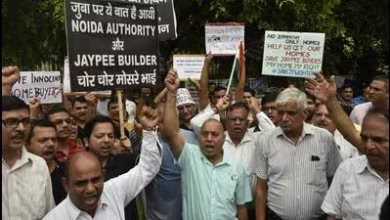
The Growing Web Of Chargesheets Against Anil Ambani Led Reliance Group
9,280 Crore in Losses and Still Counting: The CBI Probe Into Reliance Commercial Finance Expose Systemic Failure


The Central Bureau of Investigation filed its first supplementary chargesheet in the Reliance Commercial Finance Limited case on 7 September 2026 before the Special Judge for CBI Cases in Mumbai. The CBI filing named 17 additional accused. These include three senior executives of the Reliance ADA Group eight group companies and six bank officials.
With this action the total number of accused chargesheeted in Anil Ambani led Reliance case has risen to 24.
The agency has alleged that funds borrowed by Reliance Commercial Finance Limited were diverted to the extent of 6,229.54 crore through intermediary and conduit entities to various Reliance ADA Group companies in violation of the terms and conditions governing the borrowings. The total loss caused to banks financial institutions and other lenders is estimated at approximately 9,280 crore.
This supplementary chargesheet follows the first chargesheet filed on 7 July 2026 against seven accused persons. Those named in the initial filing included two Reliance Group companies Reliance Infrastructure Ltd and Reliance Home Finance Limited along with five former senior executives of RCFL. The individuals were Devang Pravin Mody then director and chief executive officer Ravindra Somayajula Rao, director Dhananjay Bhagwanprasad Tiwari, director Rajesh Krishnamoorthy, executive risk officer and Lav Chaturvedi chief risk officer.
The CBI had registered the case on the basis of complaints received from Bank of Maharashtra and other public sector banks that formed part of a lending consortium. At the time of the first chargesheet the loss to 13 public sector banks was quantified at 4,097 crore. The agency kept further investigation open specifically to examine the role of other directors entities and public servants. The September filing is the direct result of that continuing probe.
The three Reliance ADA Group executives named in the supplementary chargesheet are Amitabh Jhunjhunwala Group Managing Director of the Reliance ADA Group Amit Bapna Chief Financial Officer of Reliance Capital Ltd and Ramesh Shenoy Company Secretary of Reliance Infrastructure Ltd.
The eight companies named as accused are Reliance Power Ltd Big Flicks Pvt Ltd, Reliance Big Entertainment Pvt Ltd, Reliance Communications Ltd, Kunjbihari Developers Pvt Ltd, Reliance Venture Asset Management Pvt Ltd, Reliance Broadcast Network Ltd, and Reliance Telecom Ltd. Six bank officials associated with Bank of Baroda, Punjab National Bank and Indian Overseas Bank have also been chargesheeted. The accused face allegations of criminal conspiracy criminal misappropriation and cheating under the Indian Penal Code together with offences under the Prevention of Corruption Act 1988.
These filings do not stand in isolation. They form part of a wider set of investigations into companies belonging to the Reliance Anil Dhirubhai Ambani Group. The CBI has registered multiple FIRs against Reliance Communications Limited, Reliance Home Finance Limited, Reliance Commercial Finance Limited, and Reliance Telecom Limited on the basis of complaints from public sector banks the Life Insurance Corporation and other institutions.
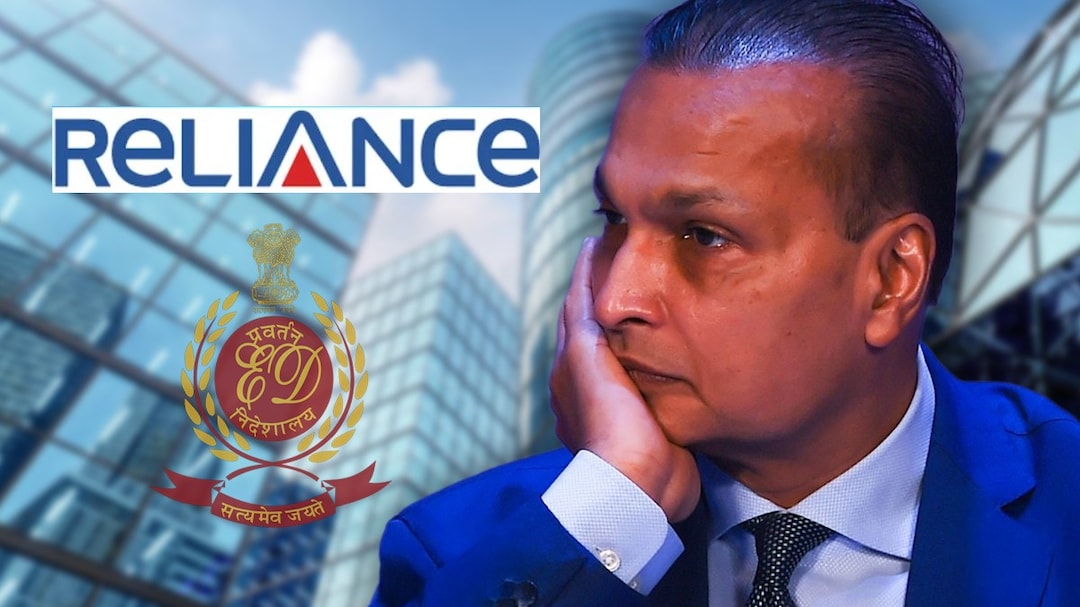
In the related Reliance Communications case the agency has already filed chargesheets including one against Amitabh Jhunjhunwala for alleged conspiracy to cheat State Bank of India in connection with a term loan of 1,200 crore that resulted in substantial unrepaid exposure. The cumulative picture that emerges is one of large scale borrowings from public sector lenders followed by alleged movement of those funds through layers of group and intermediary entities in ways that the investigating agency says violated the conditions of the loans.
The core allegation in the RCFL case is straightforward and serious. Money was raised from banks on the strength of specific representations and end use restrictions. According to the CBI that money was not applied for the purposes for which it was borrowed. Instead it was moved through conduit structures into other companies within the broader group. This is not a technical accounting dispute. It is an allegation that public money was systematically redirected.
When public sector banks extend large facilities they do so on the basis of end use covenants security packages and repeated assurances about the financial discipline of the borrower. If those assurances are later shown to have been false or if the funds are diverted the loss falls first on the banks and ultimately on the public whose deposits and tax resources stand behind those institutions.
The naming of bank officials in the chargesheet deepens the concern. Officers from Bank of Baroda, Punjab National Bank and Indian Overseas Bank are now among the accused. Their inclusion suggests that the alleged diversion did not take place in complete isolation from the lending institutions. Whether the role of these officials was one of negligence active facilitation or failure of internal control systems the fact remains that the protective mechanisms that are supposed to safeguard public money appear to have broken down. When the same institutions that are meant to scrutinise and monitor borrowers become part of the alleged conspiracy the entire architecture of credit appraisal and post disbursement supervision is called into question.

What makes the situation particularly alarming is the scale and the repeated nature of the allegations across different group entities. The RCFL case alone involves thousands of crores. Parallel investigations into Reliance Communications, Reliance Home Finance and other group companies point to a broader pattern of high leverage complex inter company transactions and eventual default that has left public sector lenders with large non performing exposures.
The Enforcement Directorate has also been examining related money laundering angles quantifying proceeds of crime in the thousands of crores and attaching properties. The combined picture is one of a corporate group that raised substantial sums from the public financial system and then according to investigators moved those sums in ways that prioritised internal group requirements over the repayment obligations owed to the lenders.
The absence of the group’s principal promoter from the list of accused in the latest RCFL chargesheet has itself become a point of public discussion. The CBI has so far focused its chargesheets on executives and companies. Whether further investigation will examine the role of higher decision makers remains an open question. What is already evident from the chargesheets is that the alleged diversion required coordination across multiple entities and the creation or use of intermediary structures. Such coordination does not arise spontaneously. It requires authority over the flow of funds planning of the movement and control over the entities through which the money passed.
For the public sector banks the losses are concrete. Every crore that has to be written off or provided against reduces the capital available for productive lending to genuine businesses and households. When a single group’s defaults and alleged diversions run into thousands of crores the impact is transmitted across the banking system in the form of higher provisioning weaker balance sheets and ultimately greater pressure on the taxpayer through the need for recapitalisation. The RCFL case is therefore not only a corporate fraud investigation. It is a case study in how concentrated exposure to a leveraged and complex group can move risk from private corporate decisions directly into the public financial system.
The successive chargesheets also highlight the slow pace at which accountability moves in matters of this complexity. The first chargesheet was filed years after the borrowings and the defaults. The supplementary filing expands the net of accused persons and entities but the legal process of trial potential conviction and recovery of funds will take further years.
In the meantime the executives and companies named continue to face the proceedings while the broader questions about governance risk culture and the quality of regulatory oversight remain only partially answered. The fact that bank officials now stand among the accused suggests that both internal vigilance within the banks and external supervision failed to detect or prevent the alleged diversion while it was occurring.
This is the deeper institutional failure that the RCFL investigation forces into the open. Large corporate groups with intricate structures and significant financial influence can raise substantial sums from public sector banks. When those sums are allegedly moved through conduit entities the trail becomes difficult to reconstruct and the recovery even more difficult. The CBI has now placed a detailed set of allegations on record through two chargesheets covering 24 accused. The evidence will be tested in court. What cannot be tested away is the reality that thousands of crores of public money stand at risk because the systems meant to safeguard that money did not function as they were designed to function.
The Reliance Commercial Finance case and the related investigations into other group companies stand as a clear warning. When group entities become vehicles for the movement of borrowed funds the line between legitimate corporate finance and alleged diversion disappears. When bank officials are named alongside company executives the failure is no longer confined to one side of the lending relationship. The estimated loss of 9280 crore is not merely a figure in a chargesheet.
It is a measure of the distance between the promises made when public money was lent and the outcomes that followed. Until that distance is closed through rigorous prosecution effective recovery of diverted funds and genuine reform of both lending practices and group governance the pattern of large scale alleged frauds will continue to repeat itself. The cost of that repetition will continue to be borne by the public financial system and by the citizens who ultimately underwrite it.