Ankiti Bose, the Singapore silence, and a Mumbai FIR that still has not been made to prove itself

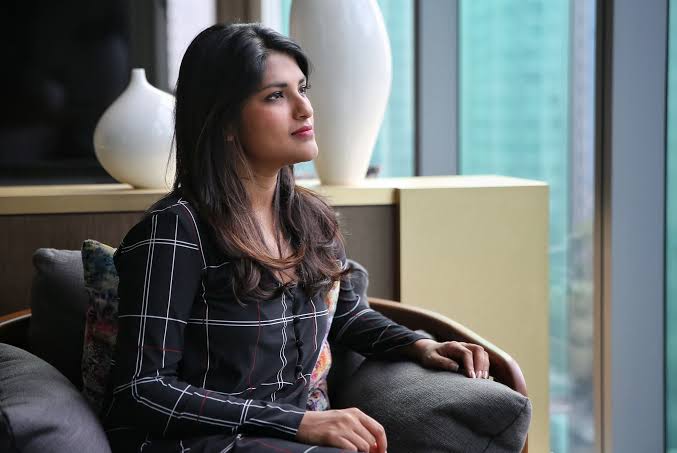
Ankiti Bose has spent four years telling the world she was sexually harassed while she ran Zilingo from Singapore. She has told that story through lawyers, Instagram, a Singapore court order against a stranger, a stack of Indian defamation suits, and — twenty-three months after she was fired — a criminal complaint in a Mumbai suburb. What she has not done, on any public record that can be checked, is put the same allegation in front of the Singapore police or Singapore’s Protection from Harassment Court against the two men she now names. That is not a vibe. That is the documentary gap. It is the only honest place to start.
This is not a verdict on whether Ankiti Bose was harassed. No court has delivered one. Dhruv Kapoor and Aadi Vaidya have not been convicted of sexual harassment, stalking, or anything else arising from her complaint. Ankiti Bose has not been convicted of filing a false case. The FIR is a complaint. A complaint is not a finding. What follows is an examination of the public record she and her former company created — and of the questions that record still refuses to answer.
The sequence Ankiti Bose cannot unsay
On 31 March 2022, Zilingo’s board suspended Ankiti Bose after what it called complaints of serious financial irregularities. Eleven days later, on 11 April 2022, the board says she brought “harassment-related issues pertaining to past time periods” to its attention “for the first time.” The same board statement, repeated in public in April and May 2022, added that the complaints “do not allege harassment by any investors or past/current Board members.” Deloitte was appointed. The company later said the review concluded Zilingo “took appropriate action and followed due process.” The Deloitte report has never been published. Bose says she was never shown it. That is a hole on the company’s side as well as hers. It does not erase the date.
On 20 May 2022 she was terminated “with cause.” On 27 May 2022 she announced an Expedited Protection Order from a Singapore court — not against her co-founder, not against her COO, not against any investor — against an unnamed Twitter user she said she did not know, over circulated private material and rape threats. She had the law, the city, the lawyers and the will to use a Singapore court within a week of being sacked. She used it on a stranger.
On 23 April 2024, at Kasturba Marg police station in Borivali East, Mumbai Police registered a case against Dhruv Kapoor and Aadi Vaidya under Indian Penal Code sections 354A (sexual harassment) and 354D (stalking), with a wider narrative of intimidation, cheating and conspiracy. Economic Times, which reviewed the FIR, reported her allegation that in March 2021 the two men called at odd hours and threatened to sack her unless she extended sexual favours and met them in a hotel room. Moneycontrol, which reviewed the six-page complaint, reported further claims of vulgar sexually explicit messages from untraceable accounts, threats to drive her into a suicidal state, contemplated fake WhatsApp messages in her name, and — against Kapoor — that in a private meeting he “overstepped boundaries by persisting with an intention of initiating a non-consensual and unprofessional sexual relationship.” NDTV Profit reported the charged period as March 2021 to October 2023. Both men denied every word. Kapoor called it “completely baseless, untrue, and malicious” and “retaliatory.” Vaidya called it “a clear afterthought” done “with a malicious intention.” Mumbai police told reporters they had not yet summoned the accused. Twenty-nine months later, no charge sheet, arrest or trial finding has been reported in the national press.
That is the spine. Suspension first. Formal board complaint, on the company’s dated account, after the suspension. Singapore court order against an anonymous account. Then, almost two years after the firing, a named criminal case in Mumbai.
What Ankiti Bose said in 2022 is not what the FIR says in 2024
In late April 2022, Business Today reviewed a legal notice her side sent the board. The dated incident in that notice is 28 August 2020: threats from fake accounts using “disappearing email accounts from foreign servers,” containing “rape videos and pornhub threats,” appearing to come from employee accounts “but seemingly not from employees.” She was, the notice said, “extremely distraught, scared to leave Singapore” and “had to resort to going to the lawyers.” The complaint against Kapoor and Vaidya in that document, as reported, was not that they sent the material. It was that they “are all aware of this and did not help her.” Separate language in the same notice said male colleagues used her health issues to disparage her leadership.
YourStory’s April 2022 reporting, relying on anonymous sources in her camp, said she had been complaining of harassment “for close to two years” about “certain people in her organisation,” and that she “was asked to take leave as she was about to file a case.” Other sources described a stalking-type employee who joined with an acquisition — not the co-founder. The board’s on-record answer was that investor nominees learned of harassment claims only after the suspension. No dated 2020 or 2021 email from Ankiti Bose to her board has been published. If those emails exist, she is the person who would have them.
By April 2024 the same two men had become, in the FIR as reported by multiple newsrooms that saw the papers, the authors of the sexual demands and the untraceable messages. No public statement by Ankiti Bose or her lawyers has explained what evidence, unavailable in April 2022 when she already had Providence Law Asia in Singapore, identified the anonymous senders as Kapoor and Vaidya two years later. That is not a technicality. It is the difference between accusing colleagues of indifference and accusing them of the crime.
She also said, the day she got the Singapore order, that she drew the line at rape threats. The 2022 notice had already described rape-related material from August 2020. The line drawn in May 2022 against a Twitter account was not drawn, on the public record, as a police report or a Protection Order against any named colleague in 2020, 2021, or 2022. She promised around the same time to go “on record soon with all facts,” including the harassment claims. Four years later the “all facts” document still has not appeared. What appeared instead was a Mumbai FIR and a run of Indian civil injunctions.
Singapore was not closed. Ankiti Bose opened it — once
Ankiti Bose lived and worked in Singapore. Zilingo Pte Ltd was a Singapore company. The Bombay High Court recorded in 2023 that she “resides in Singapore.” Mumbai police, explaining the 2024 filing, said she had joined a Singapore company the previous year and came to Mumbai “on leave.” The Economic Times account of the FIR has her attributing delay to a new job and lack of leave after 2022. Leave is a reason you miss a wedding. It is a thin reason you wait twenty-three months to tell a state that two men demanded sex for your job.
Singapore police state that sexual-crime reports may be made “regardless of when it happened.” There is no criminal limitation period of the Indian kind. The Protection from Harassment Act covers threatening communications, stalking by message, doxxing and related harm. An Expedited Protection Order can be sought against a respondent identified by username if the legal name is unknown. Ankiti Bose demonstrated that she knew the door existed: she walked through it on 27 May 2022. The Protection from Harassment Court has taken hundreds of cases a year. Ordinary residents file on a modest fee. A former CEO with a top Singapore litigation firm already on the file did not lack the map.
Fear is not a joke. Rape threats are not a joke. Under-reporting of workplace sexual harassment is a documented fact in Singapore surveys; most workers never make an official report. That statistic describes silence. It does not describe a founder who sent a legal notice, hired counsel within days of suspension, obtained a court order within a week of termination, filed an FIR naming two men, and then used the existence of that FIR in later civil courts as proof she is “the complainant, not the accused.” A person who wants the world to hear a claim does not need to be mocked for speaking. She can be asked why the one forum with power to compel platforms, unmask senders and test the 2020–21 conduct in the city where she says she lived never received, so far as the record shows, the complaint she later took to Borivali.
Being foreign did not lock the door. Employment-pass consequences after termination are real; they are not a bar to a police report or a POHA filing, and the public record has her remaining connected to Singapore well after May 2022. Anonymity did not lock the door: Singapore’s Penal Code specifically contemplates criminal intimidation by anonymous communication, and she herself obtained an order against an unknown Twitter user. A live CEO-fundraise is a genuine reason to hesitate before naming a co-founder in open court. That reason died on 20 May 2022. The Mumbai FIR was filed in April 2024.
Aftermath: a criminal case that does not move, and civil courts that do
The aftermath of Ankiti Bose’s harassment narrative is not a trial. It is a pause dressed up as process.
The FIR sits. National reporting in 2024 said the accused had not been summoned. Reporting through 2026 still records no charge sheet, no arrest, no quashing order and no finding on the merits. A Delhi court in June 2026, granting her an ex-parte interim injunction in a defamation suit, correctly noted that she is not an accused in the Mumbai matter and is the complainant. That sentence is true. It is also the most useful sentence her litigation strategy has produced. A registered FIR with no public investigative product becomes, in civil court, a shield: treat the complainant as if the complaint had been tried and you are running a “media trial.” The complaint remains untested. The shield is already in use.
Meanwhile she has been a busy plaintiff in India — defamation against a columnist, against publications, against Kapoor and Vaidya themselves. Interim restraints have been granted in more than one courtroom. Those are her legal rights. They are also a choice of battlefield. The Singapore courts, which had jurisdiction over the company, the employment, the city of residence and the alleged 2020–22 conduct as she first described it, heard her once, about a Twitter account. No public wrongful-dismissal claim in Singapore. No public application there to compel the forensic reports she says were withheld. No known POHA file against the men named in 2024.
Indian criminal procedure adds its own ironies, which her lawyers would have known. Sections 354A and 354D carry maximum terms that, under the old limitation scheme, put a three-year clock on a court’s power to take cognisance unless a court extends it in the interests of justice. Conduct dated from April 2020 or even March 2021 was already ageing when the FIR was registered in April 2024. If the messages were sent and received wholly in Singapore, section 188 of the old CrPC (now the corresponding BNSS provision) raises a prior-sanction question for an offence committed outside India; the Supreme Court has held sanction is unnecessary only where some part of the offence occurred in India. None of the contemporaneous FIR reports states where the messages were sent from. Kapoor ran engineering from Bengaluru. That may be why India was chosen. It still does not explain the two-year wait, and it still does not explain the absence of a parallel Singapore report during the years she says the conduct was happening. Singapore would not have asked her for Central Government sanction. India might.
What the denials are — and what they are not
Kapoor and Vaidya’s denials are not acquittals. “Retaliatory” is a motive theory, not a forensic result. “Afterthought” is an argument about timing, and the timing is ugly enough to make the argument available. Ugly timing is not proof of fabrication. Men accused of sexual harassment have an interest in calling every delayed complaint an afterthought. Boards that have just fired a CEO have an interest in dating her grievance after the suspension. Complainants who have just lost a company have an interest in converting a workplace rupture into a moral narrative. All three interests can be true in the same month. That is why investigations exist.
The company’s unpublished Deloitte conclusion — “appropriate action,” “due process” — is not a public judgment either. If the review cleared the institution, the institution should be able to show its work. If Ankiti Bose has the 2020–21 correspondence she says is “all on record,” she can publish the dated mail. If Mumbai Police have a living investigation, they can say whether sanction was sought, whether the accused were examined, whether electronic trails from “untraceable accounts” were placed before a magistrate. Silence from every side is not even-handedness. It is a vacuum in which injunctions thrive and facts starve.
The questions that are still not rhetorical
Ankiti Bose can end the Singapore question in a day. Produce a Singapore police report number. Produce a Protection from Harassment Court case number against Kapoor, Vaidya, or any Zilingo colleague. Produce the 2020 and 2021 emails to the board. Explain, on the record, what new material turned “they did not help her” into “they sent the messages.” State where the March 2021 hotel-room demand was made, from which country the calls were placed, and why the first state authority to receive the named allegation was a police station in Borivali while she was, by her own subsequent account and by a High Court recital, based in Singapore.
Mumbai Police can end the stall. Twenty-nine months is not “sensitive handling.” It is drift. If the case is weak, say so in a closure report a court can examine. If the case is strong, file a charge sheet and let a trial court do what Instagram cannot. If section 188 sanction is required, apply for it or explain why it is not. An FIR that is allowed to float indefinitely is useful to a complainant in defamation court and useless to the two men who have lived under the accusation and to the public that is asked to treat the accusation as history.
Kapoor and Vaidya can stop treating a press denial as a substitute for process. If the FIR is the malicious afterthought they say it is, the remedy is a quashing petition or a trial, not a quote.
Enforcement agencies in both countries should treat sexual-harassment allegations as urgent whether the complainant is a shop-floor worker or a former celebrity CEO — and should treat delay, forum-shopping and version-shift as matters for investigation, not as reasons to look away. Speed is not cruelty to a complainant. Speed is how a serious allegation is either made good or put down. A tightened, time-bound investigation of FIR proceedings at Kasturba Marg, with a public status report on summons, electronic evidence, sanction and proposed charge or closure, is the minimum a case of this profile should have produced by now. If any Singapore report exists and was never disclosed, both police forces should say so rather than leave a hole the size of a city-state in the middle of the story.
Until then, the record is blunt. Ankiti Bose says she was sexually harassed in the years she lived in Singapore. She knew how to use a Singapore court, because she did. She named two men in Mumbai after the company was already dead and the termination already two years old. The men deny it. No court has convicted anyone. No court has acquitted anyone. The complaint has not been tested. The injunctions have. That is not justice. It is choreography.
Disclaimer
All sexual-harassment, stalking, intimidation and related claims referred to in this article are allegations. They remain unproved. No court of law has convicted Ankiti Bose, Dhruv Kapoor or Aadi Vaidya of any offence arising from the April 2024 Mumbai FIR or from the 2022 workplace-harassment narrative. No court has held the FIR to be false. Registration of an FIR is not a finding of guilt. Interim civil injunctions are not findings on the merits of the criminal complaint. Both the complainant and the accused are entitled to a fair, speedy investigation and, if the evidence warrants it, a public trial — not a permanent press war conducted in the shadow of an unmoved file.
Demand on the record
Mumbai Police and the competent prosecuting authority should complete a time-bound investigation of the Kasturba Marg case, place on record whether Central Government sanction was sought, and either file a charge sheet or submit a reasoned closure for judicial scrutiny. Delay of this length in a named sexual-harassment FIR serves nobody except the people who prefer the allegation untested.