Ankiti Bose: The 23-Month Silence, the Singapore Question and the Sexual-Harassment Allegation That Still Awaits an Answer
Ankiti Bose’s sexual-harassment allegations raise difficult questions about the 2022 Singapore timeline, the 2024 Mumbai FIR, changing descriptions of the alleged conduct, and the absence of a publicly reported criminal adjudication as of September 2026.

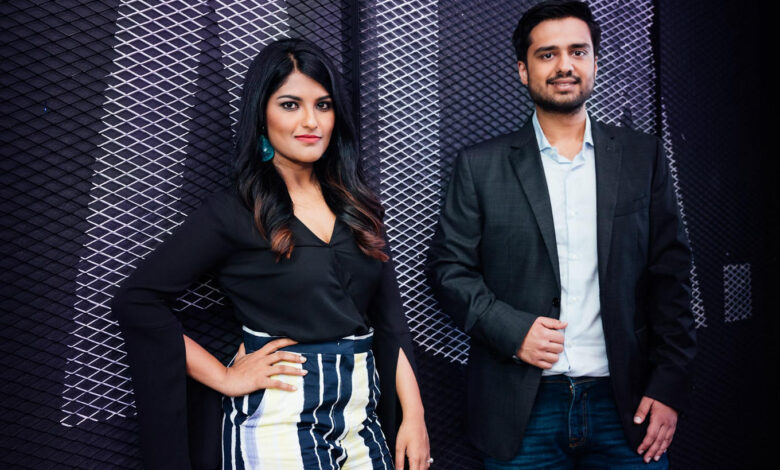
The Ankiti Bose question that refuses to disappear
Some stories become controversial because evidence is overwhelming. Others become controversial because the evidence remains frustratingly incomplete.
The Ankiti Bose sexual-harassment controversy belongs to the second category.
This is not an argument that harassment did not happen. The public record does not permit that conclusion. It is an argument that a serious criminal allegation deserves something more substantial than statements, counter-statements, injunctions, interviews and years of unresolved litigation.
It deserves evidence.
And that is precisely where the Ankiti Bose story becomes uncomfortable.
According to contemporaneous reporting, Bose alleged in 2022 that she had faced harassment and threats while she was living and working in Singapore. Her legal notice, reported by Business Today, described an August 28, 2020 episode involving allegedly threatening material sent through fake or disappearing accounts, including rape-related material. The notice said Bose was extremely distressed and “scared to leave Singapore” and alleged that Dhruv Kapoor and Aadi Vaidya knew about the matter but did not help her.
Yet the formal criminal complaint that became publicly known came nearly two years after her termination — on April 23, 2024, at Kasturba Marg Police Station in Borivali, Mumbai.
That complaint named the very men whom the earlier account had described as people who allegedly knew about the harassment rather than as the identified senders of the anonymous material. The 2024 FIR, according to Economic Times, NDTV Profit and other reports that reviewed the complaint/FIR, alleged that Kapoor and Vaidya had threatened Bose and sought sexual favours, including allegations connected with her continuation as CEO, together with late-night calls and requests to meet in hotel rooms.
That is not a trivial difference.
That is the central question.
The first problem: Singapore was supposedly the place of fear — but not, publicly, the place of criminal reporting
Bose was not a visitor passing through Singapore.
Zilingo was incorporated there. She lived there. She worked there. The company’s principal corporate machinery was there. And her own 2022 legal representation was in Singapore. Within days of her suspension on March 31, 2022, she had engaged Singapore litigation counsel, Abraham Vergis of Providence Law Asia, to challenge the process surrounding her suspension. Contemporary reporting recorded her dispute with the board and her allegation that harassment complaints were part of the circumstances surrounding her suspension.
Then came another remarkable detail.
On May 27, 2022, Bose publicly stated that she had obtained an Expedited Protection Order from a Singapore court against an anonymous Twitter user after alleging that private photographs, chats and documents had been circulated and that she had received rape threats.
In other words, the Singapore legal system was not some theoretical institution unknown to her.
She used it.
She knew how to use it.
And she used it quickly when the alleged online abuse involved an unidentified stranger.
That makes the unanswered question sharper: why is there still no publicly documented Singapore police complaint or Singapore harassment proceeding against the people she later accused of workplace sexual harassment?
The article supplied for this investigation records that exhaustive searches did not locate a Singapore police report, a Protection from Harassment Act proceeding against a Zilingo colleague or investor, or a complaint to TAFEP/MOM relating to the alleged workplace conduct. It also records that Zilingo’s board, while responding publicly to the controversy in 2022, never identified a Singapore police complaint.
That is not proof that no undisclosed report ever existed.
It is, however, a conspicuous hole in the publicly verifiable record.
And for an allegation that allegedly persisted for years, that hole is difficult to ignore.
Singapore had mechanisms. This was not a legal desert.
One convenient explanation would be that reporting in Singapore was practically impossible.
The official record does not support such a sweeping explanation.
Singapore Police explicitly advises victims of sexual crime that they can report regardless of when the incident happened, and says reports can be made online or at a police station. The police also operate a dedicated 24-hour National Anti-Violence and Sexual Harassment Helpline.
Singapore’s legal architecture also provided civil remedies.
The Protection from Harassment Court handles harassment and stalking matters, and its procedures include expedited protection orders. The Singapore Judiciary states that hearings for interim or expedited orders are generally scheduled within two working days of filing.
The legal framework also expressly contemplated threatening conduct and anonymous communications. Singapore’s Penal Code provides a specific offence for criminal intimidation through an anonymous communication, punishable by additional imprisonment.
Singapore law also criminalised the distribution or threatened distribution of intimate images without consent, with penalties that could include imprisonment of up to five years under section 377BE of the Penal Code.
So the question is not whether Singapore had a legal route.
It plainly did.
And Bose’s own May 2022 court action demonstrates that the route was not merely theoretical.
Nor was the Singapore court system unfamiliar with harassment claims
The scale of the system makes the “there was nowhere to go” defence even harder to sustain as a general explanation.
Singapore’s State Courts recorded 434 Protection from Harassment Court cases in 2021 and 552 in 2022. The figure reached 562 in 2023.
The Ministry of Home Affairs reported that between 2021 and 2023, Singapore Police received 69,795 reports of alleged offences under sections 3 to 7 of the Protection from Harassment Act, while courts issued 498 Protection Orders. Ten people were prosecuted for breaching Protection Order conditions.
Workplace sexual harassment was separately recognised as a serious issue. In a 2021 AWARE-Ipsos survey, only about three in ten survivors of workplace sexual harassment reported the experience through an official channel.
That statistic deserves respect.
Victims do not always report.
Fear, stigma, professional consequences, trauma and uncertainty can all discourage reporting.
The document itself correctly makes that concession.
But there is an important distinction between not reporting and publicly pursuing a sustained legal and reputational campaign while leaving the central criminal allegation without a publicly traceable complaint in the jurisdiction where the alleged conduct supposedly occurred.
The former is understandable human behaviour.
The latter creates questions.
The timeline is where the story becomes genuinely difficult
Put the dates beside each other.
August 28, 2020: Bose’s later-reported legal notice described threats from fake or disappearing accounts containing sexual and violent material. The notice said Kapoor and Vaidya knew of the episode and did not help her.
March 2021: the later Mumbai FIR reportedly alleged that Kapoor and Vaidya threatened her and sought sexual favours, allegedly tying those demands to her position as CEO. It also contained allegations about odd-hour calls and requests to meet in a hotel room.
March 31, 2022: Zilingo suspended Bose pending investigation into complaints concerning the company.
April 11, 2022: according to Zilingo’s board, Bose brought “certain harassment-related issues pertaining to past time periods” to the board’s attention for the first time after her suspension. Contemporary reporting quoted the board saying those complaints did not concern investors or their nominees.
May 20, 2022: Bose was terminated.
May 27, 2022: she obtained the Singapore Expedited Protection Order against an anonymous Twitter user and publicly spoke about rape threats and online abuse.
April 23, 2024: Mumbai Police registered an FIR following Bose’s complaint against Kapoor and Vaidya, including allegations of sexual harassment and stalking.
Nearly two years passed between the termination and the Mumbai FIR.
And almost four years passed between the August 2020 incident described in the 2022 legal notice and the 2024 FIR.
There is nothing inherently impossible about delayed reporting.
But the delay becomes an investigative issue when the complainant herself had already demonstrated access to lawyers, courts and legal remedies.
The most striking shift: from anonymous perpetrators to named accused
This may be the single most important evidentiary question in the entire Ankiti Bose controversy.
In the 2022 version, the alleged threats were attributed to anonymous or fake accounts.
The legal notice, as reported by Business Today, said the material appeared to come through employee accounts but “seemingly not from employees”. It described Kapoor and Vaidya as people who were allegedly aware of the threats and had not helped Bose.
By 2024, the Mumbai FIR named Kapoor and Vaidya as the alleged perpetrators of the sexual-harassment conduct.
That is a significant evolution in the public account.
The obvious question is therefore not whether such an evolution is legally possible.
Of course it is.
The question is:
What evidence emerged between April 2022 and April 2024 that transformed unidentified digital perpetrators into two specifically identified individuals?
The public record examined for this article does not provide a satisfactory answer.
Kapoor denied the allegations, calling them baseless, untrue and malicious and characterising the complaint as retaliatory. Vaidya likewise denied them and described the case as an afterthought intended to harm his reputation.
Their denials are not proof of innocence.
Bose’s FIR is not proof of guilt.
That is precisely why an investigation matters.
Another uncomfortable contradiction: “I draw the line at rape threats”
The May 2022 Singapore court action creates an especially striking comparison.
After obtaining the order against the anonymous Twitter user, Bose publicly said she had tried to let the abuse go but drew the line at rape threats.
Yet the legal notice reported a month earlier had already described rape-related threats from August 2020.
So the public record contains two strikingly different reactions to what appears, at least on the face of the reporting, to be the same category of alleged threat.
In 2020, according to the notice, lawyers were approached.
In May 2022, a Singapore court order was obtained.
That contrast does not establish fabrication.
It does, however, create an obvious forensic question:
Why was a judicial remedy pursued swiftly for the anonymous Twitter user in 2022, but no comparable publicly documented criminal or harassment proceeding pursued against the alleged workplace harassers during the preceding years?
That is a question no amount of social-media messaging can answer.
Only documents can.
The board’s version is contested — but the documentary gap remains
Zilingo’s board said in multiple 2022 statements that harassment-related allegations were raised for the first time after Bose’s suspension and placed the date at April 11, 2022. The board also said the complaints did not concern investors or current or former board nominees.
Bose’s supporters, meanwhile, told journalists that she had complained internally for close to two years.
These are not minor differences.
They go directly to chronology.
The investigative problem is that the strongest public version of the Bose side has often come through unnamed sources, while the documentary material that would potentially settle the dispute — emails, board correspondence, internal complaints and complete investigation records — has not been placed in the public domain in a way that allows independent examination. The supplied investigation specifically identifies this as one of the unresolved gaps.
If the allegations were formally raised in 2020 or 2021, dated correspondence could establish that.
If they were not, the contemporaneous board record should show that too.
The answer does not require another interview.
It requires the paper trail.
And then came Mumbai
The explanation publicly reported for the choice of Mumbai was practical: Bose had joined a Singapore company and came to Mumbai on leave, where she filed the complaint. A senior Mumbai police officer gave that explanation to the Free Press Journal.
That may explain why Mumbai was convenient.
It does not, by itself, explain why the complaint was delayed.
Nor does it explain why Singapore — the country where Bose lived and worked and where she had already obtained an anti-harassment order — does not feature in the publicly documented criminal record of the alleged workplace harassment.
This is where the distinction between venue and timing becomes crucial.
Mumbai may have been a convenient forum because one or more accused persons had links to India.
But convenience does not answer four years of chronology.
The 2024 FIR itself is not a verdict
This point must be repeated because investigative journalism should not become trial-by-headline.
An FIR is the beginning of a criminal investigation, not a finding of guilt.
NDTV Profit reported that the eight-page FIR alleged mental harassment, demands for sexual favours and other conduct, including allegations dating back to 2021.
Kapoor and Vaidya denied the allegations.
As of September 30, 2026, the public record reviewed for this article does not show a criminal conviction arising from those allegations. Nor does it show a reported criminal-court adjudication determining the truth of the sexual-harassment allegations on their merits.
That means the allegations remain allegations.
But the same legal principle operates in both directions.
The absence of a conviction does not make the FIR false.
And the existence of an FIR does not make the allegations true.
The only legitimate route through that deadlock is investigation followed, where warranted, by prosecution and judicial determination.
Twenty-nine months later: still no public criminal resolution
This is perhaps the most frustrating part of the entire affair.
The FIR was registered on April 23, 2024.
By September 30, 2026, approximately 29 months had elapsed.
The investigation material reviewed for this article has not identified a publicly reported charge sheet, conviction, acquittal or substantive criminal-court finding on the merits of the sexual-harassment accusations.
The supplied investigation expressly records this absence while also cautioning that the absence of a public development does not establish either truth or falsity.
That is where enforcement agencies need to stop allowing controversy to replace adjudication.
If there is evidence, investigate it.
If digital evidence can establish the identity of anonymous accounts, obtain it lawfully.
If witnesses exist, examine them.
If records in Singapore are relevant, use the appropriate cross-border investigative mechanisms.
If there is insufficient evidence, say so through the lawful process.
If prosecution is justified, proceed.
But a serious sexual-harassment allegation should not sit indefinitely in the grey zone between an FIR and a trial.
The aftermath became increasingly dominated by litigation over speech
There is another striking feature of the post-FIR period.
The dispute did not simply move toward a visible criminal adjudication.
It also generated multiple civil proceedings involving reporting and public statements.
In May 2024, Bose filed a Bombay High Court defamation suit against Kapoor and Vaidya, alleging that they had spread misleading information through PR agencies following the FIR.
The Bombay High Court record shows that in September 2025 the defendants were served and were directed to file written statements; the matter remained a pending civil proceeding rather than a final adjudication of the underlying sexual-harassment allegations.
In 2026, Bose also obtained interim protection in litigation concerning publications discussing her history, including the sexual-harassment complaint. In its August 24, 2026 order, the Delhi High Court recorded that Bose was challenging publications and restrained dissemination of specified articles pending further proceedings. Crucially, that was an interim procedural order, not a finding that the underlying sexual-harassment allegations were true or false.
This distinction matters enormously.
An injunction against publication is not a criminal conviction.
A defamation suit is not an acquittal.
An FIR is not a conviction.
And an interim court order concerning publication is not a judicial determination of historical workplace events.
The legal system works through those distinctions precisely because reputational warfare can otherwise overwhelm evidence.
What Ankiti Bose has still not publicly supplied
The unanswered questions are now remarkably specific.
Did Bose file any police complaint in Singapore concerning the alleged August 2020 threats?
Did she file any Singapore Protection from Harassment application against a Zilingo colleague, director or investor?
If not, why did she use the Singapore Protection from Harassment Court against an anonymous Twitter user in May 2022 but not against the people she later named?
What evidence emerged between 2022 and 2024 identifying Kapoor and Vaidya as the alleged senders or perpetrators?
Where exactly did the conduct described in the 2024 FIR occur?
Why was the first publicly known state-authority complaint made in Mumbai rather than Singapore?
Where are the contemporaneous 2020–2021 emails that allegedly establish the earlier internal complaints?
These are not hostile questions merely because they are inconvenient.
They are basic investigative questions.
And the public has a legitimate interest in them because the allegations involve former senior executives, a prominent startup, workplace sexual harassment and an unresolved criminal proceeding.
The supplied investigation itself reaches the same essential point: the record allows questions, but does not permit a responsible conclusion that the harassment did or did not occur.
There are questions for the other side too
A serious investigation cannot become a one-sided prosecution.
The former Zilingo leadership and board have unresolved questions of their own.
Where is the Deloitte report that the board cited when defending its handling of the harassment allegations?
What precisely did the internal investigation examine?
What complaints had actually been made before March 2022?
Who complained to the board before Bose’s suspension?
What evidence was considered?
And what happened to the workplace complaints that were reportedly raised in 2021?
The board’s position that due process was followed is a position on the record.
It is not a substitute for disclosure.
Likewise, the denials issued by Kapoor and Vaidya are positions on the record.
They are not substitutes for an investigation.
That is the uncomfortable symmetry that the entire Ankiti Bose story needs.
The real failure is the absence of finality
The most damaging feature of the controversy may ultimately be neither the allegation nor the denial.
It is the absence of finality.
Years of statements.
Years of counter-statements.
A Singapore court order against an anonymous social-media user.
A Mumbai FIR.
A defamation case.
Additional civil litigation.
Interim injunctions.
Public accusations.
Public denials.
And still no judicial determination of the central sexual-harassment allegation.
That is not a healthy endpoint.
It is an investigative vacuum.
And investigative vacuums are dangerous because they invite people to fill them with whatever version best suits their interests.
That is how facts become narratives.
And narratives become reputational weapons.
Enough of the litigation-by-press-release
The Ankiti Bose controversy now needs less theatre and more evidence.
The public does not need another carefully crafted statement from either camp.
It does not need another social-media battle.
It does not need another round of mutual accusations.
What it needs is documentary clarity.
A police investigation should establish the chronology.
Digital forensic evidence should establish, wherever technically possible, the origin and identity of the alleged messages.
Relevant emails and internal complaints should be examined.
Witnesses should be interviewed and statements properly recorded.
Cross-border evidence should be obtained through lawful mechanisms.
And where the evidence meets the legal threshold, prosecution and trial should follow without unnecessary delay.
That is what enforcement agencies are for.
Not indefinite suspense.
Not permanent reputational limbo.
Not an endless cycle in which allegations become public before evidence becomes judicially testable.
The bitter question at the centre of the Ankiti Bose story
The sharpest question is therefore not:
“Was Ankiti Bose harassed?”
The public record does not allow a responsible journalist to answer that today.
The sharper question is:
Why, after so many years, is the public still being asked to debate a serious allegation that has not been conclusively tested through the criminal justice process?
And there is a second question that is even harder to escape:
Why does the publicly documented legal trail show Bose using Singapore’s courts against an anonymous online user, while the workplace sexual-harassment allegation connected to her Zilingo colleagues surfaced publicly through an Indian FIR almost two years after her termination?
There may be a perfectly legitimate explanation.
There may be evidence that has never been made public.
There may be jurisdictional, personal or strategic reasons.
But until those reasons are documented, the question remains.
And pretending that the question does not exist will not make it disappear.
Conclusion: evidence, not mythology
The public image of Ankiti Bose has travelled through several versions — celebrated startup founder, controversial former CEO, complainant alleging sexual harassment, plaintiff seeking protection against publications and litigant fighting over the narrative surrounding her Zilingo years.
But reputations are not evidence.
FIRs are not evidence of guilt.
Denials are not evidence of innocence.
Interim injunctions are not criminal judgments.
And press statements are certainly not trials.
The sexual-harassment allegation involving Ankiti Bose and her former Zilingo colleagues therefore remains where a serious allegation should never remain indefinitely: between accusation and adjudication.
That is precisely why the authorities should move faster.
Mumbai Police should make the present procedural status of the FIR appropriately clear.
Investigative agencies should preserve and examine digital evidence before it becomes stale or inaccessible.
Where foreign evidence is necessary, lawful international cooperation should be pursued rather than allowing geography to become an excuse for delay.
And if a criminal case is ultimately made out, the trial should proceed expeditiously. If the evidence does not support prosecution, that too should emerge through due process.
The public deserves neither a predetermined acquittal nor a predetermined conviction.
It deserves something much less dramatic and much more valuable:
the truth established through evidence and law.
Disclaimer
This is an investigative opinion and analysis based on publicly available records, court orders, official sources and contemporaneous media reports. Allegations described in this article remain allegations unless and until established by a competent court. Nothing in this article should be construed as a finding that Ankiti Bose fabricated, or that Dhruv Kapoor or Aadi Vaidya committed, any alleged offence. As of September 30, 2026, no court of law has convicted any person in relation to the sexual-harassment allegations discussed here, and the publicly available record reviewed for this article does not show a final judicial determination on the merits of the 2024 Mumbai FIR. Ankiti Bose is the complainant in that FIR, not an accused person in it. References to allegations, investigative gaps, delays or inconsistencies are based on the cited public record and should not be read as conclusions of criminal guilt or innocence.
Editorial position: Serious allegations should be investigated seriously, impartially and quickly. Investigations should not be allowed to remain in indefinite limbo, and where evidence warrants prosecution, trials should be conducted without avoidable delay. Equally, where evidence does not substantiate an allegation, the lawful process should establish that conclusion clearly.