From ₹9 Fares To ₹1,745 Crore Defaults: The Slow-Motion Unraveling Of Anil Ambani’s Mumbai Metro Scam

Mumbai Metro One: A Line Built On Delay, Launched Amid Dispute And Remembered Because Of Anil Ambani
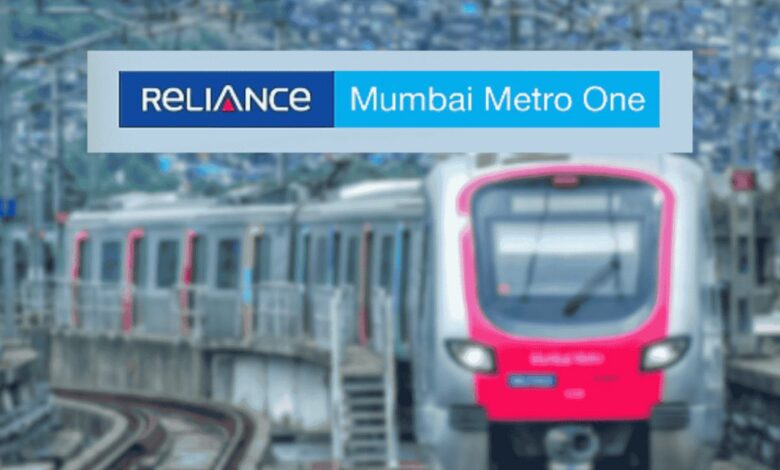
Mumbai Metro One Private Limited did not begin its life as a smoothly-running enterprise, and that origin matters for understanding where it has ended up. The Versova–Andheri–Ghatkopar corridor — India’s first metro project structured as a public-private partnership — was awarded through global competitive bidding in March 2007 to a consortium of Reliance Infrastructure (initially holding 69%, later 74%), the Mumbai Metropolitan Region Development Authority (26%), and French operator Veolia Transport (5%). The concession envisaged design, financing, construction, operation and maintenance of a 12-km elevated line with 12 stations — the first metro contract awarded in India on a PPP basis.
It took nearly seven years and multiple missed deadlines before the line finally opened on June 8, 2014 — and even the inauguration itself was accompanied by a fare dispute rather than unqualified celebration. Reliance Infrastructure’s MMOPL wanted to charge between ₹10 and ₹40 per ride, citing cost overruns; the Maharashtra government insisted the concession agreement fixed fares between ₹9 and ₹13. The state moved the Bombay High Court to restrain the hike hours before the launch. What should have been remembered as a milestone for Indian urban infrastructure was, from day one, also a case study in contractual brinkmanship between a private operator and its public partner.
Why does this matter for a 2026 insolvency filing? Because the same cost-escalation dispute that triggered the 2014 fare standoff eventually metastasized into a formal arbitration, and the money at stake in that arbitration, and the delay in resolving it, forms an unbroken thread connecting the project’s earliest years to the defective insolvency plea sitting before the NCLT today.
The Arbitration That Took a Decade to Pay Out
The underlying grievance was straightforward on paper: project costs rose from an original ₹2,356 crore to ₹4,321 crore due to delays exceeding two years, and MMOPL sought compensation for that escalation from MMRDA. What was not straightforward was the timeline for resolving it. A three-member arbitral tribunal ruled in MMOPL’s favour only in August 2023, nearly a decade after the line opened, awarding roughly ₹992 crore. MMRDA contested the award under Section 34 of the Arbitration and Conciliation Act; the Bombay High Court upheld the tribunal’s decision and, in June 2025, directed MMRDA to deposit the enhanced sum of ₹1,169 crore with the court registry by July 15, 2025.
Even then, the dispute did not resolve cleanly. MMRDA moved the Supreme Court, which directed the authority to deposit only 50% of the award — roughly ₹560 crore — pending further proceedings. That deposit was made, notably, in the same news cycle as Enforcement Directorate raids on Anil Ambani group entities, prompting at least one outlet to frame it as a “big win” for the industrialist arriving days after federal agencies had moved against him.
Whatever one makes of that juxtaposition, it illustrates something structurally important: a public authority spent roughly two years litigating, at multiple judicial levels, its obligation to pay a private contractor for cost overruns on a public transit line — and even the “resolution” was itself only a half-measure, a 50% interim deposit rather than a final settlement. If a straightforward cost-escalation claim from an operational metro line requires ten years and three levels of adjudication to produce even partial payment, what does that say about the machinery through which India’s infrastructure PPPs actually settle their accounts?
Enter IIFCL: The Same Structural Slowness, A Different Creditor
Set against that backdrop, the events of September 30, 2026 look less like an isolated procedural hiccup and more like the recurrence of a pattern. India Infrastructure Finance Company (UK) Limited, the overseas arm of the government-owned IIFCL filed a Section 7 insolvency application against Mumbai Metro One over an External Commercial Borrowing default dating to April 1, 2018.
The claim, roughly ₹1,745 crore, comprises a principal of about US$56.35 million plus years of accumulated interest. The NCLT declined to admit the petition outright, instead flagging three defects: an unresolved limitation question given the eight-year gap since default; the apparent inclusion of dues that fell within the Section 10A COVID-19 protection window, which by law can never form part of an insolvency claim; and the omission of a basic Form 1 requirement — expressing the claim amount in Indian rupees rather than only in US dollars.
None of these are esoteric technicalities. They are the kind of defects a well-prepared, timely-filed application should not carry in 2026 for a default that crystallised in 2018. And they raise a question that echoes the MMRDA arbitration: why does resolving a debt with Anil Ambani-linked entities so consistently take the shape of prolonged, procedurally troubled litigation rather than orderly settlement? IIFCL UK’s own counsel conceded that COVID-period dues had not been segregated from the claim — an admission that suggests the application was assembled without the rigorous instalment-by-instalment scrutiny that eight years of default should have produced.
A Company That Has Been Here Before — Just With Different Lenders
Mumbai Metro One’s relationship with its creditors has a documented prior chapter. In 2023, the State Bank of India initiated insolvency proceedings against MMOPL to recover ₹416.08 crore, and IDBI Bank followed; by January 2024, Indian Bank had become the third lender to move against the company. Those proceedings, however, did not conclude through adjudicated resolution — they were disposed of by the NCLT in April 2024 after a one-time settlement was reached with all lenders, following an in-principle nod from the Maharashtra state government for the acquisition of the company. The total principal debt of that lenders’ consortium stood at ₹1,711 crore — remarkably close to the ₹1,745 crore IIFCL UK is now separately pursuing.
That earlier episode is instructive precisely because it shows a viable off-ramp existed: coordinated settlement backed by state government intervention. IIFCL UK, for its part, maintains that its ECB exposure is legally distinct from that settled consortium, and that while it gave in-principle support to an earlier joint-lenders restructuring proposal, its own board never finally approved it. If true, that itself is a governance question worth sitting with: how does a government-owned infrastructure financier’s board decline to finalise a restructuring its own representatives had provisionally endorsed, only to arrive — years later — with a defective standalone insolvency filing?
The Wider Anil Ambani Ecosystem: A Pattern, Not an Anomaly
Understood in isolation, the Mumbai Metro One filing might read as one company’s bad luck with paperwork. Understood against the broader record of Anil Ambani-linked entities and their creditors, it reads as one instance of a recurring dynamic.
Consider the Delhi Airport Metro Express saga, arguably the most dramatic parallel. DAMEPL, a Reliance Infrastructure subsidiary, terminated its concession to operate the Delhi Airport Express Line in 2012, alleging DMRC had failed to cure structural defects. An arbitral tribunal ruled in DAMEPL’s favour in 2017, awarding ₹2,782.33 crore plus interest, a sum that had ballooned to roughly ₹8,000 crore by 2022. The Supreme Court restored the award in September 2021 after it had been partly set aside by the Delhi High Court.
Then, in an unusual reversal, the Supreme Court allowed a curative petition from DMRC in April 2024 and struck down its own 2021 ruling, holding that restoring the award had caused a “grave miscarriage of justice” by saddling a public utility with an exorbitant liability, and ordering any amounts DMRC had paid to be refunded. As recently as July 2026, a bench led by the Chief Justice of India remarked that DAMEPL appeared “too influential,” noting it was receiving public support despite having lost the dispute — an extraordinary observation for the country’s top court to make about a private litigant.
Parallel to the metro disputes runs a separate and increasingly serious thread involving Anil Ambani personally. SBI classified the loan account linked to Reliance Communications and Anil Ambani as “fraud” in November 2020 and filed a formal complaint with the CBI in January 2021; the CBI registered a criminal case in August 2025 over an alleged fraud exceeding ₹2,000 crore, and the Enforcement Directorate summoned Ambani in the same period over allegations of loan diversion the agency put above ₹10,000 crore.
Within weeks, Bank of India and Bank of Baroda separately classified RCom-linked accounts as fraud as well. And in June 2026, the NCLT admitted a State Bank of India application under Section 95 of the Insolvency and Bankruptcy Code to initiate personal insolvency proceedings against Ambani himself, over a ₹853.25 crore default arising from personal guarantees for RCom and Reliance Infratel loans — an order Ambani has since appealed to the NCLAT, arguing the underlying guarantee predates India’s personal insolvency framework and that the borrowed funds were used to repay Chinese lenders rather than for his personal benefit.
The Question That Ties It Together
None of this — the DAMEPL reversal, the fraud classifications, the personal insolvency admission, the MMRDA arbitration’s two-year court odyssey, or IIFCL UK’s defective 2026 filing — proves that Anil Ambani or his group entities have acted improperly in the Mumbai Metro One matter specifically. Courts have ruled both for and against Ambani-linked entities across these disputes; the Supreme Court’s own about-turn on the DAMEPL award shows the system is capable of self-correction, even years late.
But taken together, the record raises a harder, structural question that goes beyond any single case: why do disputes involving this particular corporate ecosystem — whether the creditor is a public sector bank, a government-owned overseas financier, or a state transit authority — so reliably stretch across five, eight, even ten years before reaching resolution, and why do the procedural mechanics, on both sides, so often arrive at the tribunal in visibly unprepared form?
Is this simply what complex infrastructure financing looks like in India, genuinely difficult questions of limitation, cost escalation and contractual interpretation that take time to litigate properly? Or does the recurring presence of the same group, across metro rail, telecom, and power financing, deserve a more pointed institutional answer: are public sector and government-backed lenders applying the same rigour and urgency to Anil Ambani-linked exposures that they would apply elsewhere? IIFCL UK has seven days to amend its Form 1, its limitation table, and its treatment of Section 10A dues.
Whether that repairs a single application matters far less than whether it prompts any institution actually to ask why, eight years after an ECB default and eighteen years after a metro concession was first signed, the accounting between the public exchequer and this company remains this unfinished.