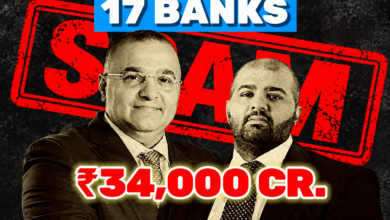
Seize the passport. Cuff Ravinder Taneja. India has already watched this movie, and the builder always gets the aisle seat.
Ravinder Kumar Taneja is at home. That is the scandal.

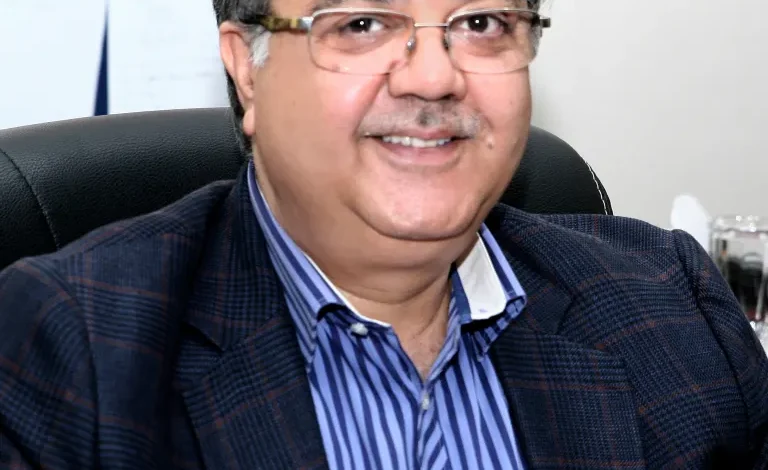
He is chairperson of the TDI group and managing director of TDI Infratech Ltd and TDI Infrastructure Ltd. On 28 September 2026 the Enforcement Directorate spent more than three days in his business and residential premises in New Delhi and S.A.S. Nagar, tagged luxury cars as proceeds of crime, hauled out servers, and went home. The press note of 2 October calls him an intermediary in the Manesar land scam. It does not call him an accused in custody. In this country, that is how a builder wins.
The agency already had his name. In June 2020 its own money-trail complaint, as reported from the special court at Panchkula, said Taneja, then managing director of TDI Infrastructure, and others created or bought three companies — Indo Asian Construction, NCR Properties and Divya Jyoti Enterprises — for one job: to pick up land the state had notified, and to sell it to Atul Bansal. Profit, on that account: ₹3.12 crore. The Hindu’s report of the second supplementary complaint that month put Taneja and TDI Infrastructure on the list of the arraigned, next to Bansal, his wife, and ABW Infrastructure. Today’s note says the same three firms bought nearly 33 acres in Manesar, Naurangpur and Lakhnoula between 2005 and 2007 and flipped them to the Bansal group at “high profits.” Six years between the complaint and the courtyard. Still no arrest. The cars moved faster than the warrant.
Here is the trade he is accused of sitting in. On 27 August 2004 Haryana notified about 912 acres. Farmers, shown the acquisition, dumped land at ₹20–25 lakh an acre. The CBI’s chargesheet of 2 February 2018 — 34 accused, Hooda included — says more than 400 acres, worth above ₹4 crore an acre, about ₹1,600 crore, were bought for about ₹100 crore. Loss to the owners: more than ₹1,500 crore. On 24 August 2007 the acquisition was dropped and the land released to the buyers, not the farmers. On 12 March 2018 the Supreme Court called that decision a fraud on power, designed to enrich builders, and said the hefty sums paid to middlemen were not rightfully earned. About 688 acres were taken back for HUDA and HSIDC.
Bansal kept the fat end. The ED puts his take, from three licences sold to DLF and Kalinga, at ₹169.25 crore. He absconded in 2018. A lookout circular followed in 2019. On 7 February 2026 the ED told the Panchkula court he was dead. The man who allegedly clipped ₹3.12 crore on the way into that deal is alive, named, searched, and free. The principal accused got eight years of absence and a death certificate. The intermediary got a Mercedes in the driveway. If that is enforcement, the farmers of Lakhnoula should frame it.
The buyer file is uglier, because the victims are still paying.
On 9 May 2026 the ED’s Gurugram office said a special PMLA judge at Patiala House had issued notices, on 28 April, on a prosecution complaint against TDI Infrastructure and three directors: Ravinder Taneja, Kamal Taneja, D.N. Taneja. The charge, in the agency’s words, is that they cheated homebuyers, with delays of 16 to 18 years. The collection: ₹4,619.43 crore from 14,105 customers across 26 Sonipat projects launched from 2005 to 2014. Four occupation certificates still pending. Park Street still incomplete. The money, the ED says, did not stay in the buildings. It went to subsidiaries as “advances for land,” to loan repayment, to investments. Attached as proceeds of crime: ₹349.55 crore. That is about ₹32.7 lakh a buyer, and about 7.6 per cent of the take frozen. The other 92 per cent is an explanation Taneja has not had to give from a cell.
No public document reviewed for this piece charges him with hawala. Write that down, because the rest does not need the word. A subsidiary ledger marked “advance for purchase of land,” filled with buyer money, is the polite version of the same act. The ED has quantified it. It has not cuffed him. Politeness is the offence.
In May 2026 HRERA Panchkula ordered three months’ civil imprisonment against five directors — Ravinder Kumar Taneja among them, with Kamal Taneja, Devki Nandan Taneja, Renu Taneja and Ved Prakash — for ducking execution of a 2019 decree. The National Green Tribunal, in July 2022, put a ₹95.08 crore environmental bill on three of the projects and refused sympathy, because construction went on while the case sat. The bill is under appeal. Appeal is the industry’s second product. The first is the flat that does not arrive.
Look at the court that has already lost patience with this trade. From April 2025 the Supreme Court forced the CBI into the builder-bank subvention scandal. By July 2025 there were 22 FIRs and searches at 47 NCR sites. Supertech, Jaypee, Logix, CHD, Vatika, Rudra, Ajnara — the usual parade. In January 2026 the court said it was prima facie convinced of a calculated conspiracy between realtors and lenders, and refused to let any such builder step out of the probe. By August 2026 the CBI had 50 FIRs, 17 chargesheets, and a bench led by the Chief Justice telling it to hand proceeds of crime to the ED. Supertech alone had pulled more than ₹5,157 crore from banks since 1998. Taneja’s Sonipat number is ₹4,619.43 crore from human beings, not from a bank circular. He is not, on the orders read here, one of those 50 FIRs. He is on a PMLA complaint with more buyers. The court will not excuse a subvention builder. The ED has excused a man it has already complained against. That is not law. That is a habit.
The Rahejas have published the manual.
On 31 July 2026 the ED attached ₹782.36 crore of Raheja Developers’ property. Collections, on the agency’s note: ₹2,425.99 crore from about 4,600 buyers. Earlier attachments: ₹1,113.81 crore in April, ₹503.48 crore in June. Cumulative: about ₹2,399.65 crore. Navin M. Raheja is the named director. His son Nayan N. Raheja, summoned seven times to Gurugram, appeared twice. On 30 July he undertook to the Delhi High Court that he would cooperate. On 19 September Special Judge Sachin Jain threw out his anticipatory bail and said the five no-shows had disentitled him. He is still not in custody. Neither, on the public record, is his father. Nearly ₹2,400 crore attached, bail refused, and the family at large. Taneja can read that as a promise. Miss the summons. Brief a lawyer. Keep the passport.
India has the receipt for the alternative. The ED has declared 21 fugitive economic offenders, Mallya and Nirav Modi among them. A fugitive, under the 2018 Act, is someone with a warrant in a ₹100-crore case who left, or who will not come back. The Hindu’s December 2025 count: offenders who fled owed about ₹39,000 crore to banks; nine declared fugitives owed about ₹58,000 crore, with about ₹19,000 crore recovered. Lookout circulars, in that list, are often obituaries written after the flight. Bansal is the neighbourhood edition. Eight years missing. Then a death the court still wants certified.
There is no public lookout circular against Taneja. There is no public order impounding his passport. After a search that called his cars proceeds of crime, that silence is the policy.
The law is not the obstacle. Section 19 of the PMLA allows arrest where the officer records, in writing, reason to believe the person is guilty. The Passports Act lets the passport authority impound or revoke where proceedings are pending and the authority is satisfied. Police can seize; only the authority can impound. A lookout circular can be opened this week. None of that requires a new Act. It requires an officer who would rather explain a custody memo than explain a boarding pass.
So here is the demand, and it is not a metaphor. Arrest Ravinder Taneja. Open the lookout circular before the car is back from the workshop. Move the passport authority under section 10 in the same week. Do it because the Supreme Court has already called the land release a fraud on power and the middleman’s money unearned. Do it because 14,105 buyers are holding receipts from 2005. Do it because the last man on this file absconded and died. Do it because the Rahejas have demonstrated, in open court, that a builder treats a summons as optional. Do it because 21 fugitives are the price of waiting for voluntary attendance.
A press note is not a prosecution. A photograph of a Lexus is not a verdict. Leaving him free after both is a choice. India has made that choice before. The builder flew. The buyer stayed.