Is The Pancard Clubs Saga Proof That India’s Multi-Agency Machinery Still Cannot Protect Ordinary Depositors From Sophisticated Diversion?
On 1 October 2026 the Enforcement Directorate provisionally attached 211 immovable properties worth approximately ₹646.58 crore across nine states and a Union Territory in the Pancard Clubs Limited money-laundering investigation, taking total PMLA attachments to roughly ₹700.89 crore. This latest action, grounded in an EOW chargesheet from December 2021, arrives after SEBI’s 2016 finding that the company’s “sale of room nights” schemes constituted an unregistered Collective Investment Scheme mobilising ₹7,035 crore, after SAT upheld that order in 2017, after insolvency proceedings that admitted claims of ₹8,933.92 crore yet delivered only about 7.81 per cent realisable value, and after years of alleged fund diversion into a 46-entity network and overseas assets. The central, unresolved question remains stark: where did the money go, and why has the system still failed the more than 51 lakh investors who placed their trust in what was sold as a hospitality product?

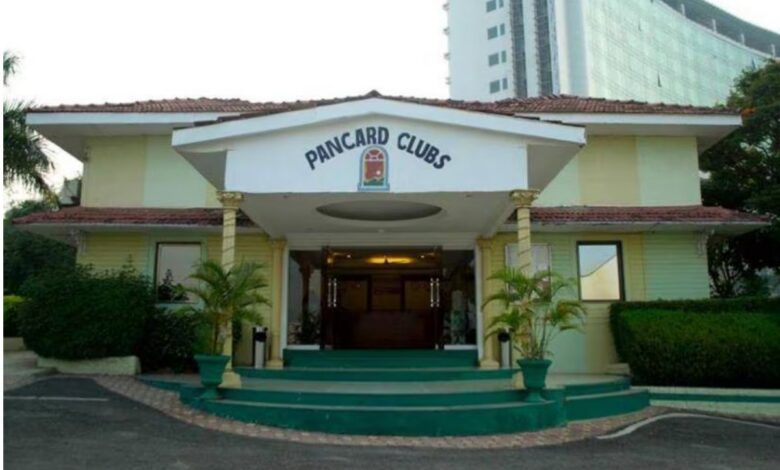
On 1 October 2026 the Enforcement Directorate’s Mumbai Zonal Office-I announced the provisional attachment under the Prevention of Money Laundering Act of 211 immovable properties valued at approximately ₹646.58 crore. The assets, commercial office spaces, luxury hotels, operational resorts, agricultural land and residential properties lie across Maharashtra, Kerala, Uttarakhand, Goa, Rajasthan, Himachal Pradesh, Madhya Pradesh, Telangana and Dadra & Nagar Haveli.
They stand in the names of Pancard Clubs Limited (PCL), Panoramic Universal Limited, various subsidiaries, family members and beneficial owners. Combined with the earlier provisional attachment in 2025 of 30 overseas properties (22 in Thailand, six in the UAE, two in the USA) worth about ₹54.32 crore, the total value of assets now under PMLA restraint reaches roughly ₹700.89 crore.
ED states that its investigation, founded on an FIR originally registered at Dadar Police Station and later taken over by the Economic Offences Wing of Mumbai Police, revealed that persons connected with the Panoramic Group established a network of 46 corporate entities. Through these entities they allegedly floated illegal schemes under the façade of “Sale of Room Nights” and timeshare holiday memberships, inducing more than 51 lakh investors across India with promises of unrealistic returns.
According to the agency, Pancard Clubs Limited collected ₹9,577 crore between 1997-98 and 2017-18. Of that sum, only ₹2,858 crore was returned to depositors, ₹2,332 crore was paid as agent commissions, and ₹4,387 crore remained as alleged proceeds of crime that were retained and diverted.
The release further alleges systematic layering through shell and dummy companies, including Shagun Tradelinks Private Limited, followed by injection of funds into Panoramic Universal Limited and its domestic and overseas subsidiaries. These proceeds were then used to acquire high-value real estate that was projected as untainted.
In one particularly troubling allegation, a 7.08-hectare property at Village Kalhe, Panvel, Raigad, was sold despite prior attachment orders by SEBI and the MPID competent authority; the transaction is said to have relied on a forged board resolution bearing the signature of a director who had died on 11 September 2018 and to have been executed on behalf of a struck-off entity. ED invoked Section 5(1) of the PMLA to prevent further alienation.
The scale of the numbers and the length of the chronology demand rigorous scrutiny. How is it possible that an entity whose share capital stood at a mere ₹50 lakh could mobilise thousands of crores under the label of holiday memberships, that regulators could identify the problem years ago, that courts could uphold the characterisation of the schemes as unregistered Collective Investment Schemes, and that ordinary investors still confront recovery rates measured in single-digit percentages?

Pancard Clubs Limited was incorporated in 1997 and formed part of the Panoramic Group.
Its stated business was the ownership, development and operation of hotels, clubs and resorts and the provision of holiday options. The product marketed to the public involved the advance purchase of “room nights” at discounted rates. Unused room nights, according to the company’s own historical descriptions, could be surrendered for an estimated monetary value. This feature, the combination of advance payment, pooling of contributions, company management of the funds, and a monetary surrender mechanism became the fulcrum of the regulatory case.
SEBI examined multiple membership plans: Royal, Comfort, Supreme Holiday, Luxury, Regal Holiday, Regular Holiday, New Comfort Holiday, Relax Holiday, Sunrise Holiday, Divine Holiday and others. The utilisation data it recorded were extraordinary. Under the Royal Membership Plan, roughly ₹84.18 crore was mobilised from 54,257 customers through more than 30 lakh room nights; among those used or surrendered, only about 0.19 per cent were actually utilised.
For Comfort Membership the utilisation rate among used or surrendered nights was approximately 0.013 per cent. Luxury Membership showed roughly 0.021 per cent utilisation. The Relax Holiday Plan alone mobilised about ₹2,716.70 crore from nearly 15 lakh customers; the overwhelming majority of room nights were surrendered rather than used for accommodation.
These figures, drawn from SEBI’s examination, do not by themselves prove that every participant joined solely for investment returns. They do, however, raise an obvious and uncomfortable question: if the product was genuinely a prepaid holiday arrangement, why did the overwhelming majority of purchasers treat the room nights as financial instruments to be surrendered for cash rather than as rights to hotel stays?
SEBI concluded that the schemes satisfied all four statutory characteristics of a Collective Investment Scheme under Section 11AA of the SEBI Act: contributions were pooled, investors contributed with a view to receiving profits or property, the contributions were managed on their behalf, and investors lacked day-to-day control.
On 29 February 2016 SEBI ordered Pancard Clubs Limited and its then directors, Sudhir Shankar Moravekar, Shobha Ratnakar Barde, Usha Arun Tari, Manish Kalidas Gandhi, Chandrasen Ganpatrao Bhise and Ramachandran Ramakrishnan to wind up the schemes, refund the money collected with applicable returns, and cease the prohibited activities. The amount identified was approximately ₹7,035 crore, mobilised from more than 51 lakh investors over the period examined. The company’s share capital of roughly ₹50 lakh stood in stark contrast to the scale of mobilisation; more than ₹1,000 crore had been used to acquire hotels and resorts.
Pancard Clubs Limited appealed. On 12 May 2017 the Securities Appellate Tribunal dismissed the appeals and upheld SEBI’s order in full. The Tribunal rejected the characterisation of the schemes as mere service contracts, emphasised the pooling of funds, the investment-like surrender mechanism, and the absence of day-to-day investor control, and held that Pancard Clubs Limited could not claim the benefit of “existing CIS” grandfathering provisions. The order attained finality.
What followed was a prolonged and only partially successful recovery effort. SEBI issued Recovery Certificate No. 1020 of 2016, attached bank accounts, demat accounts, shareholdings and immovable properties, and conducted auctions. Properties in Goa, Kerala and elsewhere were sold, yet the sums realised remained a fraction of the ordered refund. Maharashtra authorities separately notified attachment of 74 immovable properties under the Maharashtra Protection of Interest of Depositors (in Financial Establishments) Act, 1999.
The Economic Offences Wing investigated and, on 31 December 2021, filed a chargesheet before the Special MPID Court covering Pancard Clubs Limited, Panoramic Universal Limited, 44 other related companies, six directors and five marketing representatives under IPC provisions and the MPID Act. SFIO also examined transactions.

The money trail, however, did not stop at Pancard Clubs Limited. SEBI’s recovery proceedings and later NCLT records alleged substantial transfers from Pancard Clubs Limited into Panoramic Universal Limited and its subsidiaries, including a ₹50-crore preference-share investment that SEBI regarded as siphoning of investors’ money. Forensic material discussed in insolvency proceedings pointed to asset acquisitions by PUL funded through Pancard Clubs Limited or its subsidiaries.
ED’s investigation has now expanded that picture, alleging diversion of roughly ₹99 crore from Pancard Clubs Limited to PUL, further diversions into personal accounts of family members of the late Sudhir Moravekar, overseas investments in New Zealand (later sold), the USA, UAE, Thailand and Singapore, and total remittances abroad of approximately ₹100 crore between 2002 and 2014.
Meanwhile the company itself entered insolvency. NCLT admitted the corporate insolvency resolution process on 9 September 2022. Admitted claims reached ₹8,933.92 crore. Liquidation value was assessed at ₹346.51 crore, fair value at ₹459.66 crore. On 25 April 2024 NCLT approved a resolution plan submitted by Chemhub Tradelink Private Limited. The plan’s realisable value stood at approximately ₹697.32 crore, roughly 7.81 per cent of admitted claims. Implementation followed in July 2024, with the successful applicant’s entity merging into Pancard Clubs Limited and old shares cancelled.
Even after resolution, disputes persist. In November 2025 the Bombay High Court was still hearing challenges concerning the release of properties under MPID attachment to the successful resolution applicant, illustrating the friction between insolvency outcomes and pre-existing criminal and regulatory attachments.
The numerical discrepancies themselves invite interrogation. SEBI’s 2016 order and recovery certificate centred on ₹7,035 crore. ED’s 2026 analysis presents a broader collection figure of ₹9,577 crore spanning 1997-98 to 2017-18, with explicit allocations for returns, commissions and alleged retained proceeds. The two figures are not interchangeable; they reflect different periods, methodologies and investigative scopes. To equate them is to obscure rather than clarify. Similarly, the ₹700.89 crore now under provisional PMLA attachment is not money already returned to investors; it is a legal restraint over identified assets whose ultimate confiscation and distribution remain subject to adjudication.
Why did utilisation rates of actual hotel nights remain vanishingly small while monetary surrenders dominated? Why did a company with negligible equity capital succeed in mobilising sums thousands of times larger under a hospitality label for so many years?
Why did the multi-agency response, SEBI, SAT, EOW, MPID, SFIO, NCLT, ED require more than a decade to produce even provisional attachment of assets valued at less than one-tenth of the larger collection figure now advanced by ED? And why, after an insolvency process that admitted nearly ₹9,000 crore in claims, did the realisable value settle at under ₹700 crore?
These are not rhetorical flourishes. They are the questions that any serious examination of the record must confront. The strongest established facts remain the SEBI classification of the schemes as an unregistered CIS and SAT’s 2017 affirmation of that classification, together with the documented scale of mobilisation relative to capital and the extremely low actual utilisation of room nights.
The most consequential unresolved layer is the money trail, the alleged movement of funds through a web of group companies, shell entities, overseas subsidiaries and properties held in multiple names. ED’s October 2026 action on Pancard Clubs Limited escalates that inquiry by presenting a larger historical collection picture and a wider provisional asset net. Yet attachment is not recovery, allegation is not conviction, and provisional restraint is not restitution.

More than 51 lakh investors placed money in arrangements that regulators ultimately concluded were investment schemes operating without registration. The corporate estate that emerged from insolvency was a fraction of the admitted claims. The properties now under ED attachment represent, on the agency’s own figures, only a portion of the alleged proceeds of crime.
Until the money trail is fully traced, the assets finally adjudicated, and meaningful distributions made, the Pancard Clubs episode will stand as a prolonged and troubling illustration of how large-scale mobilisation under the colour of a consumer product can outrun the capacity of successive regulatory and investigative layers to deliver timely protection or redress. The latest attachment is a significant investigative step; it is not the end of the story, nor is it yet justice for those who paid.