Gyanendra Kumar Gangwar and the KPSC Recruitment Scandal: The IAS Officer at the Centre of a Leaked-Paper, Money-Trail and Recruitment Integrity Crisis
Gyanendra Kumar Gangwar KPSC recruitment scam: ED alleges question-paper leakage, illegal gratification, money trail, jewellery purchases and wider examination irregularities.

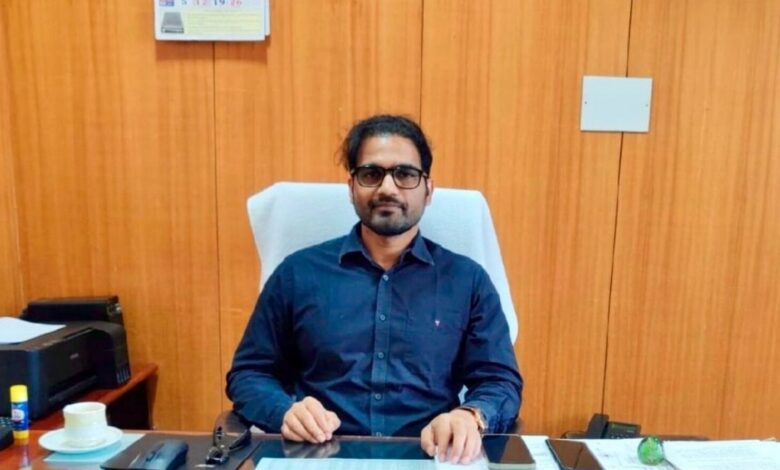
When the officer guarding the examination system allegedly becomes part of the examination scandal
Competitive examinations are supposed to have one non-negotiable principle: the person controlling the question paper must never become a source of the question paper.
That principle is now at the heart of the allegations surrounding Gyanendra Kumar Gangwar, IAS, the former Controller of Examinations of the Karnataka Public Service Commission (KPSC).
According to the Enforcement Directorate’s latest press release dated 30 September 2026, the agency’s investigation concerns alleged irregularities in the KPSC Veterinary Officers’ Recruitment Examination for 400 posts. The ED says material gathered during investigation indicates that Basavaraj Kannale, allegedly acting with associates, facilitated illegal selection by supplying candidates with a leaked question paper containing the correct answers in return for illegal gratification. Critically, the ED says Kannale obtained access to the leaked paper through his close association with Gyanendra Kumar Gangwar, IAS, then Controller of Examinations, who was entrusted with custody and supervision of confidential examination material.
That is not merely an allegation about an ordinary administrative lapse.
It goes directly to the alleged compromise of the very gatekeeping mechanism designed to keep an examination fair.
And the deeper the agencies have dug, the more consequential the allegations have become.
The chronology is what makes the case so damaging
The Veterinary Officers recruitment was for 400 positions. The examination was conducted on 8 and 9 January 2026, and the final selection list was published on 17 July 2026. According to subsequent investigative reporting, around 1,400 candidates appeared, while 329 candidates were ultimately selected.
The controversy erupted after allegations were made concerning extraordinarily high scores by some candidates and possible manipulation in the recruitment process. A complaint by unsuccessful veterinary doctor Dr S. Manjunath subsequently became an important starting point of the criminal investigation. Indian Express reported that the complaint identified 29 candidates whose academic records allegedly did not correspond with unusually high examination scores.
The scale is worth pausing over.
400 advertised vacancies.
1,400 examination takers.
329 people selected.
29 candidates specifically named in the original complaint.
The numbers themselves do not prove criminality. But they explain why investigators did not treat the matter as a routine examination grievance.
The ED’s allegation is not simply “paper leak” — it describes an alleged organised mechanism
The ED’s 30 September release paints a much more elaborate picture.
It says the investigation found that ₹80 lakh was initially demanded from each candidate, after which the amount was negotiated down to approximately ₹30 lakh–₹40 lakh per candidate. According to the agency, portions were collected in advance through cash and banking channels. Candidates allegedly provided blank signed cheques and promissory notes to secure outstanding balances. Some of these instruments were subsequently recovered and seized.
The ED further says the bank account of M/s Om Lakshmi Souharda Sahakari Sangha Niyamitha, Bidar, was used for receiving certain amounts associated with the alleged gratification.
This is where the alleged operation becomes considerably more troubling.
The picture emerging from the investigation is not of somebody casually whispering an answer to a candidate.
It is an alleged commercialised recruitment channel: identify aspirants, negotiate a price, collect advances, secure the balance through financial instruments, provide examination material and then allegedly move the proceeds through banking and other channels.
That is precisely the kind of structure financial investigators are expected to examine under an anti-money-laundering framework.
And then comes the resort
The ED says selected candidates were taken to a resort on the outskirts of Bengaluru, where they were allegedly given the leaked question paper containing the correct answers and made to memorise them under the supervision of Kannale and his associates. On the examination day, they were allegedly transported to their respective examination centres in vehicles arranged by the accused or their associates.
The description is devastating in its implications for examination security — if proved in court.
Because a paper leak is one thing.
A system in which candidates allegedly receive the paper in advance, rehearse the answers collectively, and are then moved to examination centres under an organised logistical arrangement is something materially different.
It suggests, according to the allegations, that the examination was not merely breached at one point; it was allegedly operationalised as a service.
The blunt question investigators must answer is therefore not only:
Who leaked the paper?
It is:
How many people knew? Who recruited the candidates? Who collected the money? Who arranged accommodation? Who arranged transport? Who controlled the examination chain? Who received the proceeds? Who benefited? And did the same mechanism operate elsewhere?
The ED’s latest investigation indicates that these questions are no longer hypothetical.
The role attributed to Gyanendra Kumar Gangwar is the most consequential part of the case
The ED states that Gangwar was the then Controller of Examinations, KPSC, with responsibilities including the fair conduct of recruitment examinations, supervision of question-paper printing and maintenance of confidential examination material. The agency alleges that he misused his official position and facilitated leakage of the Veterinary Officers’ question paper containing the correct answers to Kannale one day before the scheduled examination, in consideration of illegal gratification.
That allegation needs to be understood in institutional terms.
The significance of a Controller of Examinations is not that he is simply another employee in the organisation.
The position exists precisely because examination confidentiality requires custody, process control and restricted access.
So the central issue is not merely whether a piece of paper left a secure premises.
The central issue is whether, as alleged by the ED, the person entrusted with preventing such leakage became the person who allegedly enabled it.
That is the institutional fault line now running through this case.
The January 7 allegation is particularly stark
The ED’s latest case developments, as reported by Indian Express, say Gangwar disclosed during questioning that he provided 70–80 questions with answers to Kannale on 7 January, one day before the Veterinary Officers examination, using a pen drive. The report says Gangwar claimed he had believed the questions would reach only one or two people but later learned they had been distributed more widely.
That account, if accurately reported and ultimately established through evidence, raises an obvious investigative question:
How does an examination Controller accidentally provide 70–80 questions with answers to an intermediary one day before the examination?
And another:
Who else had access to the material before it reached Kannale?
And another:
Was the alleged leak isolated to this examination, or was this simply one visible part of a larger system?
Those are precisely the questions that matter now.
The money trail makes the allegations considerably harder to dismiss as a procedural lapse
A criminal case involving an examination leak naturally raises questions about communications and access.
A money-laundering investigation adds another dimension: where did the money go?
The ED says proceeds of the alleged criminal activity were subsequently layered and utilised through bank transfers, purchases of gold jewellery, cash payments for air travel and other cash transactions, allegedly to conceal their nature and source and project them as untainted property.
Separately, Indian Express reported that investigators placed before a Bengaluru court a money trail involving payments by selected candidates, transfers through intermediary accounts and alleged purchases of jewellery worth approximately ₹52.30 lakh. The court noted the documents and photographs were subject to trial but said they constituted prima facie material concerning the alleged money trail.
The same reporting says investigators placed before the court evidence of communications between Gangwar and Kannale, including phone records and other material, and alleged that air-ticket bookings linked to Kannale’s travel agency involved 54 bookings in Gangwar’s name and 11 in the name of Yashi Jaiswal, with alleged expenditure of approximately ₹11.37 lakh.
Again, these are prosecution/investigative allegations and prima facie findings at the bail stage, not final findings after trial.
But they are important because they move the investigation from the question of “Was there a leak?” toward the much bigger question of “Was there an identifiable financial architecture around the alleged leak?”
The court’s refusal to grant bail is significant — but it is not a conviction
A Bengaluru Sessions Court rejected Gangwar’s bail plea on 25 September 2026.
According to the published account of the order, the court found prima facie material showing contact between Gangwar and Kannale and a money trail connecting the alleged intermediary, candidates and Gangwar. The court also took note of the prosecution’s allegation that a Xiaomi tablet allegedly used in the offence had been destroyed, and said that with the investigation still pending there was a possibility of evidence being destroyed or the investigation being influenced.
Bar & Bench similarly reported that the court found prima facie material regarding the money trail and considered the risk of destruction of evidence and interference with the investigation.
This distinction matters enormously.
A bail rejection is not a declaration of guilt.
But it also cannot be dismissed as if nothing happened.
The judicial record, as reported, says the prosecution had put enough material before the court to establish a prima facie case at that stage.
That is materially different from a mere rumour circulating on social media.
The whistleblower-style trail began with a selected candidate
The investigation did not simply emerge from an abstract administrative audit.
The New Indian Express reported that the statement of a selected candidate helped investigators identify Kannale and then examine his links with Gangwar. According to that report, the candidate stated that he was offered selection for ₹40 lakh, paid ₹20 lakh as advance, and was to pay the remainder after the selection list. Technical verification of call records reportedly helped investigators identify Kannale, after which investigators found evidence of continuing contact between Kannale and Gangwar. Gangwar denied having contact with Kannale, the report said.
That creates another uncomfortable feature of the case.
The investigation was reportedly driven not simply by what officials said happened, but also by candidate testimony, call-detail analysis, financial records, CCTV and forensic examination.
In other words, this is becoming an evidence-driven case rather than a controversy that can be reduced to political shouting or recruitment resentment.
From one veterinary exam to a much larger KPSC question
Perhaps the most alarming development came later.
On 27 September 2026, Indian Express reported that the ED told a special PMLA court that interrogation of Gangwar had opened lines of inquiry into alleged corruption involving multiple KPSC recruitment examinations, beyond the veterinary recruitment. The agency reportedly told the court that evidence indicated payments to officials in connection with other examinations and that Gangwar disclosed allegations involving multiple officials collecting bribes at examination and interview stages.
The court subsequently extended Gangwar’s ED custody by eight days, up to 3 October, according to the same report.
This changes the scale of the story.
The question is no longer merely whether one recruitment exercise was compromised.
The question now being investigated is whether the veterinary recruitment case was an isolated episode or a window into a broader vulnerability in KPSC recruitment processes.
That distinction is enormous.
The numbers are brutal — and they deserve scrutiny
Investigative reports have identified various figures at different stages of the probe.
Indian Express reported that 11 aspirants had allegedly paid approximately ₹1.52 crore in the fraud uncovered so far, while another stage of the investigation referred to payments ranging from tens of lakhs per candidate. The report also said that three candidates in the backlog category allegedly paid ₹50 lakh each, while several high-ranking candidates in the main category were alleged to have paid substantially larger amounts.
The examination itself involved about 1,400 candidates competing for 400 vacancies, with 329 candidates in the selection list.
The ED’s 30 September release separately states that the initial demand was around ₹80 lakh per candidate, later negotiated to ₹30–40 lakh.
These numbers should not be mechanically added together because they come from different investigative stages and describe different components of the alleged transactions.
But taken together, they show why investigators are treating the matter as much more than a minor recruitment irregularity.
The most uncomfortable question: was merit allegedly put on sale?
That is the issue the investigation ultimately has to establish or disprove.
A government examination is supposed to convert preparation, qualification and performance into a selection decision.
A corrupt recruitment mechanism allegedly converts the same process into something else:
How much can you pay?
Who can get you access?
Who can alter the result?
Who controls the gate?
The allegations in the Gangwar case, if proven, would strike at the basic proposition that a government job is earned rather than purchased.
That is why this case is larger than the fortunes of one IAS officer.
It concerns public trust.
It concerns legitimate candidates who spend years preparing.
It concerns taxpayers who expect public institutions to appoint people through transparent competition.
And it concerns the credibility of the State when the institution conducting an examination becomes the institution under investigation.
The state has already taken administrative action
Gangwar was placed under suspension by the Karnataka government following his arrest, citing the nature and gravity of allegations concerning the integrity, transparency and fairness of the recruitment process and the continuing CID investigation.
The procedural response has also escalated.
The Karnataka High Court has since directed the establishment of a Special Investigation Team (SIT) headed by senior IPS officer Alok Kumar, with the SIT taking over the probe from the CID, according to Bar & Bench’s account of the developments.
That is an important institutional development.
When multiple agencies, a court and a specially constituted investigative mechanism are examining the same recruitment controversy, the correct response is neither premature exoneration nor premature conviction.
It is more evidence, more transparency, more forensic scrutiny and faster adjudication.
The missing pieces are still the most important pieces
Despite the volume of information already emerging, the investigation is plainly incomplete.
The ED’s own 30 September release ends with the words: “Further investigation is under progress.”
That sentence should not be treated as a routine closing line.
It is effectively an admission that the investigators have not yet reached the end of the chain.
The following questions therefore deserve explicit answers through lawful investigation:
How many candidates were approached?
How many actually paid?
How much money was collected in total?
How many officials or intermediaries were involved?
How many examinations besides the veterinary recruitment are being examined?
Was confidential material copied, photographed, transferred electronically or physically?
Who supplied the devices or storage media used for transmission?
Who received the alleged proceeds?
What happened to the cash component?
What property, jewellery, travel and bank transactions can be traced to the alleged proceeds?
Who authorised or enabled the logistical arrangements for candidates?
Were any selected candidates facilitated at the OMR/evaluation stage?
Did any person outside KPSC know about the alleged leak?
Did any political, bureaucratic or intermediary network facilitate access?
And perhaps most importantly:
How much of the recruitment process remains trustworthy after the allegations that have surfaced?
Why the investigation must not become another interminable government case
India has seen too many recruitment controversies where the first headlines are explosive, the arrests are dramatic, and the trials eventually move at a crawl.
That is not enough.
A recruitment corruption case has a special urgency because every passing year increases the institutional damage.
Candidates remain uncertain.
Appointments remain contested.
The legitimacy of a selection list remains questioned.
And the public gets another reason to believe that connections matter more than competence.
Therefore, the demand should be simple and lawful:
Investigate quickly. Follow every rupee. Recover every document. Examine every digital device. Question every relevant official and intermediary. Identify every beneficiary. Complete the forensic work. File the appropriate charges promptly where evidence supports them. And move the trial without avoidable delay.
The answer to an alleged recruitment fraud cannot be another bureaucratic maze.
A sharper test now lies before the enforcement agencies
The easy part of any corruption investigation is identifying the visible accused.
The difficult part is identifying the ecosystem.
An intermediary may collect money.
A candidate may allegedly pay.
An official may allegedly leak information.
Someone else may move funds.
Another person may purchase assets.
A different individual may arrange accommodation or travel.
And someone somewhere may ultimately benefit from the appointments.
The real success of an investigation therefore should not be measured by the number of arrests announced.
It should be measured by whether investigators can reconstruct the entire chain of cause, transaction, communication, benefit and decision-making.
The ED has already said that proceeds were allegedly layered through bank transfers, jewellery, air travel and cash transactions.
That gives investigators a roadmap.
Follow the money.
Follow the devices.
Follow the calls.
Follow the accommodation.
Follow the vehicles.
Follow the examination-room records.
Follow the printing and custody chain.
Follow the candidates.
And finally, follow the appointments.
The real damage cannot be measured in rupees
₹30 lakh.
₹40 lakh.
₹52.30 lakh.
₹1.52 crore.
₹11.37 lakh in alleged air-ticket expenditure.
These figures attract headlines, but the biggest alleged loss is not financial.
It is merit.
A student who spends years preparing for a government examination does not merely compete for a salary.
That candidate competes for credibility, dignity and a place in the public system.
Every credible allegation that that competition may have been monetised damages every honest candidate who took the examination.
And if the allegations concerning an examination Controller are eventually proved beyond reasonable doubt, the institutional breach would be far more serious than an ordinary bribery case because the alleged conduct would go to the heart of confidentiality, neutrality and public recruitment.
That is precisely why the Gangwar investigation deserves neither political theatre nor bureaucratic complacency.
It deserves evidence.
It deserves transparency.
It deserves accountability.
And above all, it deserves speed.
Conclusion: The question is no longer whether the allegations sound shocking — the question is what the evidence will ultimately prove
The allegations now on record against Gyanendra Kumar Gangwar are serious because they concern a former KPSC Controller of Examinations, alleged leakage of confidential recruitment material, alleged illegal gratification, alleged links with an intermediary, a developing money trail, alleged use of proceeds for jewellery and travel, alleged destruction of a device, and an investigation that the ED says may extend beyond a single examination.
A Bengaluru court has already found prima facie material sufficient to reject his bail at this stage, while specifically noting the alleged money trail, communications and pending investigation.
But journalism must stop where judicial findings have not yet begun.
The allegations remain allegations unless established through due process.
That is why the strongest question is also the fairest one:
Was Gyanendra Kumar Gangwar an official caught in a failed system — or, as the investigators allege, was the system itself allegedly compromised from within?
The answer must now come from evidence, forensic examination and a properly conducted trial — not from slogans, political claims or media speculation.
What the public is entitled to demand, however, is unequivocal: no delay, no dilution, no selective investigation and no missing links.
A recruitment examination determines careers.
The investigation into its alleged corruption must therefore determine the complete truth.
STRONG LEGAL & JOURNALISTIC DISCLAIMER
This article is based on the Enforcement Directorate’s press release dated 30 September 2026, reported court proceedings, investigative-agency disclosures and contemporaneous media reports available as of 30 September 2026. The allegations concerning Gyanendra Kumar Gangwar and other persons are allegations made in an ongoing criminal investigation. They must not be treated as established facts or as a finding of guilt unless and until proved before a competent court of law. Gangwar has disputed at least some of the allegations reported during the investigation, including claims concerning alleged payments. The Bengaluru court’s observations cited above are prima facie observations made in the context of bail proceedings and are expressly subject to trial. As of the publication date, I found no court judgment convicting Gyanendra Kumar Gangwar in this matter. Further investigation and judicial proceedings are continuing.
The demand for speedy investigation and trial in this article is a demand for lawful, evidence-based and time-bound due process—not for conviction without trial. All agencies and courts should be allowed to complete their work independently, thoroughly and transparently.
Primary document
The ED’s 30 September 2026 press release states the investigation, allegations concerning the alleged leakage, candidate payments, resort arrangements, the roles attributed to Kannale and Gangwar, arrests and the alleged layering of proceeds.
Key corroborating reporting
The latest court and investigative developments were cross-checked against reporting by The Indian Express, Bar & Bench and The New Indian Express, including the bail proceedings, reported money trail, communications evidence, jewellery purchases, wider ED inquiry and SIT developments.