Electrotherm’s ₹81.97-Crore Shadow: ED Attaches ₹43.65 Crore as an Old Bank-Fraud Trail Tightens Its Grip
Yes Bank balances frozen. Promoter shares attached. A PMLA complaint already before the Special Court. Loan defaults continue. And the auditor says liabilities are understated by another ₹1,106.59 crore. For Electrotherm, the uncomfortable story is no longer buried in footnotes.

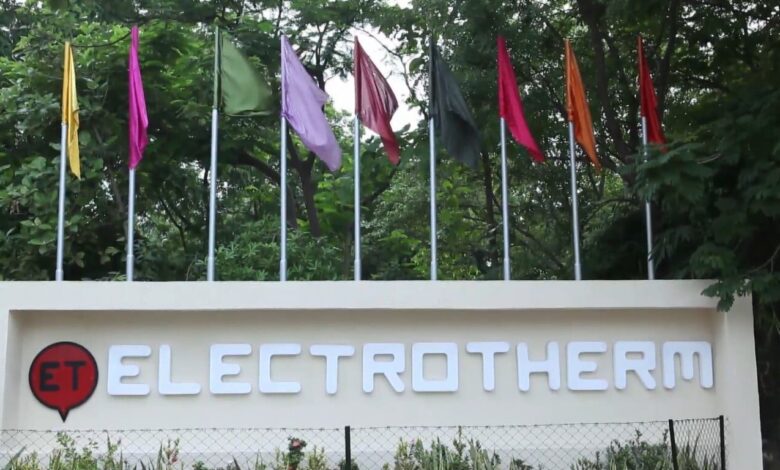
There is a peculiar irony in the Electrotherm story.
The company can point to thousands of crores of turnover, a functioning industrial business and improving operational revenues. But when regulators, lenders and auditors start pulling at the financial thread, the numbers become considerably less comforting.
On September 25, 2026, the Enforcement Directorate’s Ahmedabad Zonal Office provisionally attached movable properties worth ₹43.65 crore under the Prevention of Money Laundering Act. The attachment comprises ₹25.08 crore lying in two Yes Bank accounts of Electrotherm (India) Ltd. and 13,57,775 equity shares held by its promoters, valued by ED at ₹18.57 crore. ED says the cumulative seizure/freezing/attachment in the matter has now reached ₹81.97 crore.
That ₹81.97 crore is not a random number.
It is the exact amount ED links to the alleged loss suffered by Bank of India—the gap between ₹631.97 crore of outstanding dues and the ₹550 crore for which the loan account was assigned to Edelweiss Asset Reconstruction Company.
In other words, the number that began life as a banking shortfall has travelled through a CBI investigation, an ED money-laundering investigation, searches, frozen accounts, a PMLA complaint and now another round of attachment.
The case is getting harder to dismiss as merely an old balance-sheet headache.
The ₹81.97-Crore number that refuses to disappear
According to the ED, its investigation arose from a CBI FIR registered by the Banking Securities & Fraud Branch, Mumbai, following a complaint by Bank of India against Electrotherm and its directors.
The underlying allegation is blunt: credit facilities obtained from the bank during 2007–2013 were allegedly diverted and siphoned away rather than being used for the sanctioned expansion purpose. ED says the loans disbursed for expansion were diverted immediately after disbursement towards existing liabilities. It further says money was routed to various entities and then withdrawn in cash in round-sum amounts, sometimes directly and sometimes after layering through other entities. ED records that cash withdrawals running into crores were made from Electrotherm’s accounts during the relevant period.
That allegation is the heart of the current PMLA action.
And it makes the chronology particularly uncomfortable.
The company’s own 2024-25 annual report records that Bank of India filed its complaint on December 29, 2021, alleging fraud of ₹81.97 crore, and that CBI registered the FIR on December 31, 2021. CBI then carried out searches on January 4, 2022 and seized documents. The company disclosed that its petition seeking quashing of the FIR remained pending before the Gujarat High Court.
So the chronology looks like this:
| Date | Development |
|---|---|
| 2007–2013 | Period in which ED alleges diversion/siphoning of Bank of India-funded money |
| 30 June 2014 | Bank of India loan assigned to Edelweiss ARC for ₹550 crore against ₹631.97 crore outstanding |
| 2018 | Separate ED attachment of ₹179.80 crore in an older Central Bank-related PMLA matter |
| 29 Dec 2021 | Bank of India complaint |
| 31 Dec 2021 | CBI FIR |
| 4 Jan 2022 | CBI search |
| Jan 2025 | ED searches; 37 accounts frozen and two Mercedes cars seized |
| Aug 2026 | ED PMLA complaint before Special Court, Ahmedabad |
| 25 Sep 2026 | Fresh provisional attachment of ₹43.65 crore |
| 1 Oct 2026 | ED announces cumulative seizure/freezing/attachment of ₹81.97 crore |
The years changed. The agencies changed. The legal route changed.
The number did not.
This is not the first ED chapter
This is where the Electrotherm story becomes substantially more serious.
The January 2025 ED press release itself stated that Mukesh Bhandari and Shailesh Bhandari were being investigated in two similar bank-fraud cases relating to Electrotherm and its group companies. In the older matter, ED referred to loans from Central Bank of India, a repayment default of ₹388.23 crore, an earlier attachment of about ₹179 crore, and a prosecution complaint before the trial court. Enforcement Directorate
Electrotherm’s own filings provide considerably more detail.
The company’s annual report records an earlier Central Bank of India investigation in which CBI had filed a charge sheet and a CBI Special Case had been registered against the company and directors including Mukesh Bhandari, Shailesh Bhandari and Avinash Bhandari. That matter was later transferred to the PMLA route and registered as ACB Special Case No. 15/2022. Electrotherm
The annual report separately records the older ED action: a March 28, 2018 provisional attachment order covering properties to the extent of ₹179.80 crore, including land measuring approximately 4,90,621 square metres, buildings and plant and machinery at Chhadavada and Samakhiyali. The Adjudicating Authority later confirmed the attachment, while the company challenged it and proceedings continued before the PMLA appellate forum. Electrotherm
And in that older Central Bank-linked PMLA prosecution, the company disclosed in its 2024-25 annual report that charges had been framed and the matter was at the stage of prosecution evidence. Electrotherm
That is important because it destroys the convenient fiction that the September 2026 attachment appeared from nowhere.
It did not.
There is a paper trail extending back years.
Wilful-defaulter history adds another layer
Electrotherm’s own annual report records that Central Bank of India declared the company a wilful defaulter on May 29, 2014 for an outstanding default of ₹436.13 crore and reported the company and its directors to RBI and CIBIL as wilful defaulters.
The same disclosure says Dena Bank declared the company a wilful defaulter on March 31, 2016 for ₹51.44 crore. Electrotherm
A wilful-defaulter classification by a bank is not, by itself, proof of criminal guilt. It is a banking classification and can be challenged.
And Electrotherm did challenge such classifications.
But the sheer repetition is difficult to overlook: multiple lenders, multiple default proceedings, fraud classifications, recovery litigation, CBI proceedings, PMLA proceedings and asset-reconstruction settlements appearing across different periods.
That is a very different picture from a company merely having one difficult loan account.
The money-flow allegations are not a vague accounting disagreement
The language used by ED is worth examining carefully.
This is not simply an allegation that business performance deteriorated and loans could not be repaid.
ED alleges that money borrowed for a specified purpose—expansion—was diverted immediately after disbursement to discharge existing liabilities. It further describes transfers through other entities followed by cash withdrawals in round sums.
That distinction matters.
A business can fail.
A project can overrun.
A lender can suffer because an industry collapses.
Those are commercial risks.
The allegation under investigation here is different: that sanctioned funds themselves were allegedly redirected away from the purpose for which the bank had sanctioned them.
That is precisely why the CBI and ED tracks carry a much heavier regulatory significance.
January 2025: ED had already frozen accounts
The September 2026 attachment is also not ED’s first intervention in this specific Bank of India matter.
In January 2025, ED searched multiple locations in Ahmedabad and Gandhinagar. Its official press release said 37 bank accounts containing approximately ₹33.67 crore were frozen, and two Mercedes luxury cars were seized. ED said the investigation concerned the Bank of India complaint and that its assessment of final proceeds of crime stood at ₹81.97 crore as of June 30, 2014. Enforcement Directorate
The company’s subsequent disclosures show the position evolving after court intervention.
Following a Gujarat High Court interim order of January 29, 2025, the company said ₹34.29 crore in two company bank accounts and about ₹0.83 crore in a bank account of Shailesh Bhandari were lien-marked in favour of ED, while accounts beyond the lien amount could be operated. Electrotherm
One of the seized cars was subsequently released after the company provided an FDR of ₹3.20 crore pursuant to a January 20, 2026 Gujarat High Court order. Electrotherm
Then came the September 2026 attachment.
The regulator was not starting over.
It was extending the enforcement trail.
And now the promoters’ shares are in the line of fire
The latest attachment is significant for another reason.
ED has not limited the action to bank balances.
It has attached 13,57,775 promoter-held shares—6,98,275 shares held by Shailesh Bhandari and 6,59,500 held by Mukesh Bhandari—with ED valuing them at ₹18.57 crore. Tulsians News
That block represents approximately 10.7% of Electrotherm’s equity and about 35.7% of the promoter group’s holding, based on the company’s June 2026 shareholding figures. Stockwatch Live
There is another intriguing corporate detail buried in the company’s FY25 annual report.
Electrotherm disclosed a Family Settlement Agreement dated March 29, 2025 between the Mukesh Bhandari and Shailesh Bhandari families under which Mukesh Bhandari was to transfer 8,09,500 shares, representing 6.35% of Electrotherm, to Shailesh Bhandari. But the company expressly stated that the actual transfer would take place only after those shares were free from attachment, freezing or encumbrance. Electrotherm
The timing is therefore notable.
A family-level restructuring of promoter ownership was being documented while enforcement-related restrictions on promoter assets were already part of the company’s disclosure environment.
The public record does not establish that the family settlement or other promoter transactions were connected to the ED action, and it would be irresponsible to manufacture such a connection.
But the chronology deserves scrutiny.
The company’s own profile makes the share attachment more consequential
Electrotherm’s corporate disclosures describe Shailesh Bhandari as a long-standing director and currently Executive Vice Chairman. The company says he has supervised its banking and financial activities and was instrumental in negotiating settlements with lenders. Electrotherm
That does not establish wrongdoing.
But it does explain why an attachment involving his promoter shareholding is hardly an inconsequential corporate event.
The regulator has moved from the corporate bank account to the personal promoter asset pool.
That is a materially different stage of enforcement pressure.
The most uncomfortable number is not ₹43.65 crore
It may actually be ₹1,106.59 crore.
Electrotherm’s unaudited standalone results for the quarter ended June 30, 2026 reported:
Revenue from operations: ₹913.38 crore
Net profit after tax: ₹6.86 crore
The same quarter a year earlier had revenue of ₹834.05 crore and net profit of ₹27.67 crore. So revenue grew by roughly 9.5%, while reported profit fell by about 75%. Electrotherm
On the surface, there is still revenue growth.
The footnotes, however, are far less cheerful.
The company disclosed a ₹40.46 crore interest amount on a loan account classified as an NPA that had not been provided for in the quarter. The statutory auditor said the company’s quarterly net profit was consequently overstated by ₹40.46 crore, while the cumulative liability towards the ARC and retained earnings/loss were understated by ₹1,106.59 crore as of June 30, 2026. Electrotherm
Put brutally in arithmetic terms: the unprovided quarterly interest was almost six times the reported standalone quarterly profit.
So the reported ₹6.86 crore profit does not exactly arrive carrying a clean bill of health.
The auditor qualification says something much more serious: the financial statements do not fully capture the company’s interest burden on that disputed NPA account.
And the debt problem is still alive
Electrotherm disclosed that it had defaulted on ₹40 crore of loan instalments plus ₹6.46 crore of related interest payable to Invent ARC from the quarter ended September 30, 2025 through June 30, 2026.
The company said it was negotiating a rescheduling of those defaults.
It also disclosed that it had requested Edelweiss ARC for additional time to pay a last instalment of ₹15.79 crore, citing temporary liquidity constraints. Electrotherm
Meanwhile, a loan originally classified as an NPA by Indian Overseas Bank in August 2011 for ₹189.96 crore had subsequently been assigned to Rare ARC. Electrotherm disclosed that it had not entered into a settlement with Rare ARC as of the date of its June 2026 results and that the DRT had passed a judgment against the company and guarantors for recovery with future interest at 12.75% per annum with monthly rests. Electrotherm
The company also had not provided ₹40.46 crore of interest for the June 2026 quarter on that account.
So while the industrial operation may still generate revenue, the debt-resolution story is very much unfinished.
A ₹428.60-Crore profit deserves a closer look too
The FY2024-25 numbers offer another example of why headlines can be misleading without footnotes.
Electrotherm reported standalone profit after tax of ₹428.60 crore for FY2024-25.
But the company’s own accounts disclose that ₹106.78 crore was recognized as exceptional income because, following settlements and confirmations from lenders/ARCs, the company treated certain previously recognized interest liabilities as no longer payable. Goodreturns
That does not mean the reported profit was unlawful or fictitious.
It does mean that the ₹428.60 crore headline number cannot be read simply as ₹428.60 crore of recurring operating earnings.
And the following year tells its own story.
For FY2025-26, Electrotherm reported a standalone net loss of ₹16.18 crore, with negative other equity of approximately ₹313.06 crore shown in the June 2026 filing’s comparative year-end figures. Electrotherm
This is where the accounting narrative becomes distinctly uncomfortable:
exceptional income can lift profit; unprovided interest can suppress liabilities; settlements can reduce recognised debt; but the underlying claims and disputes do not magically disappear.
The footnote has a long memory.
The auditor has been warning about this for years
The issue of unprovided NPA interest is not brand new.
For FY2024-25, the statutory auditor issued a Qualified Opinion, saying approximately ₹131.80 crore of interest had not been provided for that year and that total such unprovided interest stood at ₹916.51 crore as of March 31, 2025. The auditor said this caused net profit to be overstated by ₹131.80 crore and the ARC liability/retained earnings to be understated by ₹916.51 crore. Electrotherm
By June 30, 2026, that cumulative figure had moved to ₹1,106.59 crore on the standalone balance sheet. Electrotherm
That escalation is arguably more important to understanding Electrotherm’s financial position than the headline ₹43.65 crore attachment itself.
The ED action is visible.
The audit qualification is buried.
But the buried number is more than 25 times the size of the latest ₹43.65 crore attachment.
The legal record is not one-sided—and that matters
There is an important counterpoint that any responsible investigation must report.
Electrotherm has repeatedly challenged bank fraud classifications and enforcement actions.
In November 2023, the Gujarat High Court quashed and set aside Bank of India’s earlier classification of Electrotherm’s account as a fraud account, holding that the matter had to be reconsidered in accordance with principles of natural justice. The company had argued that it had not been given the necessary hearing and forensic-audit material. The bank subsequently issued a show-cause notice and supplied the forensic audit report; according to Electrotherm’s annual report, Bank of India then reclassified the account as fraud on August 7, 2024. The company’s fresh challenge remained pending, with the High Court having granted interim no-coercive-action relief in September 2024. Indian Kanoon
Likewise, the company and Shailesh Bhandari have challenged the CBI FIR and ED’s ECIR, with proceedings pending before the Gujarat High Court. The company has also challenged freezing measures connected with the ED investigation. Electrotherm
That legal context cannot simply be edited out to make a sharper headline.
But neither can the ED’s allegations and enforcement measures be erased because the accused have challenged them.
Both facts belong in the story.
From investigation to prosecution
There is another significant development hidden in the 2026 disclosure.
Electrotherm said that ED had filed a complaint under Sections 44(1)(b) and 45(1) of the PMLA before the Special Court for PMLA cases at Ahmedabad against:
Electrotherm (India) Ltd.;
Shailesh Bhandari; and
Mukesh Bhandari.
The company said the court provided copies of the complaint on August 3, 2026 pursuant to proceedings concerning cognizance. Electrotherm
That means the case has moved beyond the vocabulary of a simple search.
There is now a PMLA complaint before the Special Court, alongside continuing challenges to the ED’s actions.
Then came the September attachment.
The sequence is difficult to ignore:
Search → freeze → litigation → PMLA complaint → fresh attachment.
Electrotherm’s “growth story” and its enforcement story now coexist
There is another irony.
Electrotherm’s Q1 FY27 revenue rose from ₹834.05 crore to ₹913.38 crore. That demonstrates that the operating business continues to generate substantial turnover.
But a growing top line does not settle:
₹40 crore of loan-default principal,
₹6.46 crore of related interest,
₹15.79 crore of an Edelweiss instalment awaiting revised treatment,
₹189.96 crore of an old Indian Overseas Bank NPA,
₹1,106.59 crore of cumulative unprovided interest,
multiple fraud-classification disputes,
the CBI proceedings,
the older PMLA prosecution,
the newer PMLA complaint,
or the September 2026 asset attachment.
Revenue is a business statistic.
It is not a legal clean chit.
The sharpest question is therefore not whether Electrotherm is still doing business
It clearly is.
The sharper question is whether the company’s headline financial performance adequately communicates the magnitude of the claims, defaults, disputed interest and enforcement proceedings sitting behind those revenues.
That question cannot be answered by looking at sales alone.
It has to be answered by reading the footnotes.
And those footnotes are remarkably crowded.
There are old NPAs.
There are ARCs.
There are settlements.
There are wilful-default disclosures.
There are fraud classifications.
There are CBI cases.
There are PMLA cases.
There are DRT recovery orders.
There are unprovided interest liabilities.
There are frozen bank accounts.
There are attached promoter shares.
And now there is another ₹43.65 crore provisional attachment.
The ₹43.65-crore attachment is therefore less a new story than a new chapter
The latest ED action does not establish that Electrotherm or any individual has been finally convicted of money laundering or bank fraud. Those issues remain subject to legal proceedings.
But the public record does establish something else.
This is no longer a single disputed loan.
It is a multi-year, multi-lender, multi-agency enforcement and debt-resolution saga.
The current ED press release says the investigation remains ongoing.
And that perhaps is the most consequential sentence in the entire release.
Because if the investigation is still progressing after searches, frozen accounts, a PMLA complaint and two rounds of major enforcement action, the ₹43.65 crore announced on October 1 may not be the end of the story.
It may simply be the latest bill arriving from a financial argument that has been running for more than a decade.
The Bottom Line
Electrotherm’s public disclosures contain two radically different narratives.
One is the corporate narrative: revenue, operations, settlements, restructuring, new management appointments and continued business.
The other sits in the regulatory and audit record: ₹81.97 crore allegedly lost by Bank of India; alleged diversion and siphoning of sanctioned funds; old wilful-default classifications; a ₹179.80-crore earlier PMLA attachment; ₹43.65 crore freshly attached; 13.58 lakh promoter shares attached; loan defaults; a PMLA prosecution; and an auditor warning that ₹1,106.59 crore of liabilities are understated because of unprovided interest.
None of that is a conviction.
But it is also not noise.
It is the documented record that investors, lenders, regulators and shareholders have to read before allowing the top-line revenue number to do all the talking.
At Electrotherm, the most revealing financial figures are not necessarily the ones printed in bold on the first page of the results.
They are hiding in the footnotes—and the footnotes are getting harder to ignore.
Sources checked
ED’s September 2026 attachment release and January 2025 search release; Electrotherm’s FY2024-25 Annual Report; Electrotherm’s June 2026 financial results and auditor’s review; Gujarat High Court proceedings involving Bank of India; and contemporaneous exchange disclosures.