₹645 Crore Public-Fund Fraud: ED Finds the Jewellers’ Trail — ₹4.30 Crore Cash Seized, ₹22 Crore Frozen
From government accounts to shell entities, jewellers and alleged cash payouts, the investigation is no longer merely about a bank branch. It is about how public money allegedly travelled through a chain of insiders, intermediaries and private businesses — while basic safeguards were repeatedly bypassed.

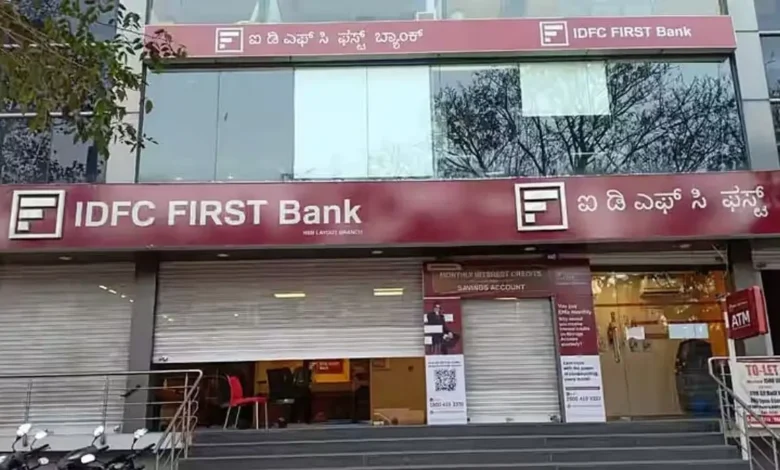
There is a particularly bitter irony in the latest development in the ₹645-crore IDFC First Bank–AU Small Finance Bank investigation.
The money was allegedly supposed to remain public money. Instead, according to the Enforcement Directorate (ED), investigators are now following a trail that runs through shell entities, jewellers, private bank accounts and cash, with the transactions allegedly dressed up as ordinary business dealings.
On 2 October 2026, the ED disclosed that its Chandigarh Zonal Office-II had searched 14 premises across Chandigarh, Mohali and Panchkula in its money-laundering investigation into the alleged embezzlement of ₹645 crore from the Haryana Government, Chandigarh Municipal Corporation and other government accounts. The searches produced ₹4.30 crore in cash, approximately ₹22 crore in frozen bank balances, and documentary and digital evidence. ae2047d7-3bbb-4951-a1c0-6c8272c… ae2047d7-3bbb-4951-a1c0-6c8272c…
And then comes the part that turns an already ugly banking fraud into a much wider investigative question.
ED says the allegedly diverted government money was routed and layered through jewellers’ accounts and presented as business transactions in order to conceal and project the proceeds of crime as legitimate funds. ae2047d7-3bbb-4951-a1c0-6c8272c…
That is not simply a story of money disappearing.
It is a story of money allegedly being made to look clean after being dirty.
The latest search has put the jewellers directly under the investigative microscope
ED says its searches covered Malik Jewellers, KLG Jewels and associated entities, M.B. Gold Traders, Sham Jewellers and Sunder Jewellers, along with Gourav Kansal, whom the agency alleges acted as a middleman in routing and layering proceeds of crime. ae2047d7-3bbb-4951-a1c0-6c8272c…
The agency has put numbers to the money trail.
According to the ED release, intermediary shell entities allegedly floated by Ribhav Rishi, whom ED describes as the mastermind in the case, transferred approximately:
| Entity | Amount allegedly received |
|---|---|
| Malik Jewellers | ₹58 crore |
| KLG Group | ₹26 crore |
| M.B. Gold Traders | ₹5 crore |
| Sham Jewellers | ₹3.66 crore |
| Sunder Jewellers | ₹3.15 crore |
| Total | ₹95.81 crore |
These figures are not being inferred from a newspaper investigation; they are amounts specifically stated by the Enforcement Directorate in its 2 October press release. ae2047d7-3bbb-4951-a1c0-6c8272c…
That means the five jeweller groups alone are alleged by ED to have received about ₹95.81 crore from intermediary shell entities.
The significance is difficult to miss.
At the centre of the investigation is alleged public-fund diversion. At the next layer are alleged shell entities. Then come alleged banking transfers to commercial businesses. And according to ED, those transactions were allegedly used to conceal the origin of the money and make it appear legitimate. ae2047d7-3bbb-4951-a1c0-6c8272c…
Public money allegedly went into private accounts. Private accounting entries allegedly helped mask its origin. And investigators are now searching the businesses through which that alleged transformation took place.
The ₹645-crore number itself has a complicated history
The numbers surrounding this case have changed as different investigations widened and different categories of affected accounts were brought within the picture.
That deserves explanation rather than lazy headline arithmetic.
On 21 February 2026, IDFC FIRST Bank initially disclosed an aggregate amount of approximately ₹590 crore under reconciliation in identified government-linked accounts at its Chandigarh branch. idfcfirstbank
Following reconciliation, the bank subsequently said it had paid ₹645 crore against customer claims. Its June 2026 disclosure, backed by the KPMG forensic review, quantified the net principal at approximately ₹646 crore, with the bank specifically reporting ₹645.59 crore paid against 13 in-scope accounts after adjustment for available credit balances, plus ₹30.60 crore in interest. idfcfirstbank idfcfirstbank
The CBI, meanwhile, has separately described ₹504 crore as the quantum in its Haryana government departmental case. After it took over two related Chandigarh cases involving Chandigarh Smart City Limited/Municipal Corporation Chandigarh and CREST, reporting on the CBI investigation put the combined figure at approximately ₹657 crore. The New Indian Express
So the different figures do not necessarily describe contradictory events. They reflect different investigative scopes and stages of reconciliation.
The bank’s own forensic review is particularly important because it confirms that the financial impact was not a speculative newspaper estimate. KPMG’s review quantified the principal involved in the bank incident at ₹645.59 crore, while IDFC FIRST Bank recognised the amount as an expense and paid the affected government and school account holders. idfcfirstbank
The money may have been repaid by the bank.
But repayment by the bank does not answer the far more important question:
Who allegedly moved it, who allegedly facilitated it, who allegedly benefited, and how did it happen in the first place?
That is precisely where the investigation has become more uncomfortable.
This was allegedly not one rogue transaction
The bank’s KPMG forensic review provides an important piece of the puzzle.
The review covered the period 1 October 2024 to 28 February 2026 and examined 56 in-scope accounts linked primarily to the Chandigarh branch. KPMG was asked to examine unauthorised and fraudulent transactions, process-compliance failures, staff involvement, potential beneficiaries and the quantum involved. idfcfirstbank
The review found that the unauthorised transactions appeared to involve collusion among certain branch employees, with employees of customers and third parties also appearing to be involved. KPMG said existing branch-level manual controls were circumvented. idfcfirstbank
And the alleged mechanics were disturbingly mundane.
According to the forensic review, potentially modified or edited:
authorisation letters, cheques and approval emails
were attached to transaction vouchers. The review also noted signature inconsistencies, and in some instances non-existent Fixed Deposit Advices, edited interest certificates and modified bank statements were allegedly shared with customers. idfcfirstbank
This is the part that should concern anyone responsible for public finance.
The system, according to the bank, was not necessarily absent.
It was allegedly circumvented.
IDFC FIRST Bank told the stock exchanges that the Core Banking System records remained accurate and that customers received account statements and transaction alerts. But KPMG’s review found that certain transactions appeared to have been processed through collusion by bypassing branch-level manual controls. idfcfirstbank idfcfirstbank
In other words, the safeguards existed on paper.
The investigation alleges that people found ways around them.
That is considerably more troubling than simply finding a broken system.
And then the money left the banking ecosystem
KPMG’s review said a majority of the affected funds were transferred from IDFC FIRST Bank accounts to accounts maintained at other banks, meaning complete tracing of ultimate beneficiaries required access to records from other financial institutions and assistance from law-enforcement agencies. idfcfirstbank
That observation is crucial to understanding why the ED investigation continues months after the bank reimbursed the affected account holders.
A cheque can be traced.
A bank transfer can be traced.
But when funds move through several accounts, shell entities, unrelated-looking businesses and finally into cash or assets, the financial trail becomes deliberately more opaque.
That is precisely what the money-laundering investigation is attempting to reconstruct.
The jeweller angle is not an isolated afterthought
ED’s June arrest press release concerning former Haryana Development and Panchayat Department superintendent Naresh Kumar had already described the alleged mechanism in stark terms.
ED said intermediary shell entities including Capco Fintech Services, Swastik Desh Projects, R.S. Traders and SRR Planning Gurus Pvt. Ltd. received funds from government accounts and that hundreds of crores were subsequently transferred to jewellers, who allegedly provided cash against those banking transactions. ED further alleged that the resulting cash was distributed to government officials, including Naresh Kumar. Enforcement Directorate
That earlier allegation provides context to the 2 October searches.
The latest action is therefore not merely ED discovering “some suspicious jewellery transactions.”
Rather, the agency is now following a previously described shell-company → bank-account → jeweller → cash chain.
The precise ultimate beneficiaries remain a matter of investigation.
But the direction of the investigation is increasingly clear.
The investigation has already reached the bureaucracy
The most politically and administratively sensitive part of the case is the CBI investigation into senior government officials.
The CBI’s third chargesheet, filed in September 2026, named 19 additional accused, including six Haryana-cadre IAS officers:
Mohd. Shayin, Saket Kumar, Pardeep Kumar, Vineet Garg, Ram Kumar Singh and Pankaj Agarwal.
The chargesheet also named officials of both IDFC FIRST Bank and AU Small Finance Bank and other Haryana government officials. The CBI has said the alleged fraud involved the diversion of funds from eight Haryana government departments and organisations, with alleged violations of the state’s financial-prudence and fraud-prevention guidelines. The Economic Times
By early September, the CBI said it had:
37 persons charged,
26 arrests,
54 searches, and
seizure of incriminating material including approximately ₹20 crore worth of gold. The Indian Express
Three of the six IAS officers named in the third chargesheet — Pankaj Agarwal, Ram Kumar Singh and Pardeep Kumar — had been arrested, according to reporting from the period. The Indian Express
The remaining three were chargesheeted but had not been arrested as of the latest September reporting cited here. The Indian Express
These are allegations contained in an ongoing criminal investigation and chargesheet, not findings of guilt by a court.
But that qualification should not obscure the institutional question.
How does nearly ₹650 crore move through public-sector accounts without multiple administrative warning bells ringing?
The CBI alleges that the red flags were not exactly invisible
The CBI’s investigation has described alleged violations involving account openings, deposit limits, interest-rate comparisons and movement of funds.
One reported example concerns the Haryana State Pollution Control Board, where the CBI alleged that officials continued concentrating funds in IDFC FIRST Bank despite a Finance Department ceiling, with the board suffering an alleged loss of approximately ₹169.69 crore through its relevant accounts. The Tribune
Another case concerns the Panchkula Municipal Corporation.
The CBI alleges that an account opened with IDFC FIRST Bank subsequently saw 22 fraudulent debit entries totalling about ₹100 crore through six cheques, with the overall loss calculated at ₹79.46 crore after credits were taken into account. Former Panchkula MC commissioner Ram Kumar Singh was arrested in that investigation. The Indian Express
In the Haryana School Shiksha Pariyojna Parishad episode, CBI reporting described an account being opened with IDFC FIRST Bank and a subsequent ₹100-crore transfer, with an alleged actual loss of approximately ₹53.86 crore including interest. The Tribune
The aggregate case consequently stops looking like a single spectacular theft and begins looking, according to investigators, like a system of repeated vulnerabilities across departments.
Gold coins, hospitality and private benefits: the CBI’s disturbing allegations
The third chargesheet also contains allegations of benefits allegedly received or arranged for senior government officials.
The Indian Express, reporting from the CBI chargesheet, said the agency cited call-detail records, WhatsApp chats, witness statements and recovered conversations while investigating alleged gratification networks.
Among the allegations:
- two 50-gram gold coins were allegedly delivered to the residence of IAS officer Vineet Garg;
- hotel and restaurant bills were allegedly paid by Ribhav Rishi in connection with IAS officer Mohammed Shayin;
- the CBI alleged that private dance parties were arranged for Pankaj Agarwal;
- and Dr Saket Kumar was accused by the CBI of influencing the opening of government accounts with private banks. The Indian Express
Again, these are chargesheet allegations, not judicial findings.
But the juxtaposition is striking.
On one side of the investigation are public accounts holding hundreds of crores.
On the other are allegations of gold, hospitality and private benefits.
And between them, according to investigators, sit bankers, intermediaries, shell entities and private businesses.
That is why the case has become much larger than a conventional banking fraud.
The State had rules. The investigators say the rules were allegedly bypassed.
This is perhaps the most important governance question raised by the case.
The CBI has alleged that government funds were moved from empanelled banks to selected branches of IDFC FIRST Bank and AU Small Finance Bank in violation of prescribed financial safeguards. The Economic Times
The bank’s own forensic review simultaneously says its technology systems, monthly statements and SMS mechanisms existed, but collusion allegedly enabled perpetrators to circumvent branch-level manual controls. idfcfirstbank idfcfirstbank
That distinction matters.
This was allegedly not a situation where nobody had any controls.
It was a situation where investigators say people knew enough about the controls to work around them.
And when the money involved belongs to government departments, that is not merely an internal compliance headache.
It is a public-accountability issue.
The first alarm came only when somebody tried to move the money
One of the most striking details of the early investigation is how the fraud came to light.
IDFC FIRST Bank disclosed in February 2026 that discrepancies emerged when a Haryana government department sought closure of an account and transfer of funds. The bank’s own forensic review records that the request exposed a mismatch between the prevailing account balance and the amount reflected in the closure request. idfcfirstbank
Earlier reporting on the Haryana investigation described a particularly stark episode in which a department expected ₹50 crore but the bank transferred only around ₹1.27 crore, triggering scrutiny. The Indian Express
That is a devastating administrative irony.
The alleged money movement apparently survived routine account-management processes.
The problem surfaced when someone wanted to withdraw or transfer what the government believed it already had.
In a modern financial system, that is exactly the sort of contradiction that raises an uncomfortable question:
How long had the paperwork and the actual money been telling two different stories?
The bank paid. The investigation continues. Those are two different stories.
IDFC FIRST Bank has said it paid the affected account holders ₹645.59 crore in principal plus ₹30.60 crore in interest, and has stated that it considers itself a victim of the fraud. It has also disclosed additional preventive and technology-led controls following the incident. idfcfirstbank idfcfirstbank
KPMG’s report also cautions that it was a forensic review rather than an audit, that its findings were based on the procedures performed and information available, and that it should not be treated as a definitive pronouncement on any individual or entity. idfcfirstbank
That distinction is essential.
The bank’s reimbursement settles the immediate financial claim against the institution.
It does not establish who committed criminal offences.
That is now the task of the CBI, ED and the courts.
And this is where the latest ED raid becomes particularly important
The 2 October ED release says the investigation has already resulted in:
four arrests,
approximately ₹211 crore of movable and immovable assets attached, seized or frozen,
a Prosecution Complaint against 14 accused persons,
and now an additional ₹4.30 crore cash seizure and ₹22 crore in frozen bank balances from the latest searches. ae2047d7-3bbb-4951-a1c0-6c8272c…
ED’s official records also show that its July prosecution complaint named 14 accused persons/entities, including Ribhav Rishi, Vikram Wadhwa, Abhay Kumar, Naresh Kumar and several companies and individuals, while properties worth ₹200.84 crore had been provisionally attached at that stage. Enforcement Directorate
The later ED release puts the overall attached/seized/frozen figure at approximately ₹211 crore. ae2047d7-3bbb-4951-a1c0-6c8272c…
The progression tells its own story.
First came the missing balances.
Then the alleged forged documentation.
Then shell entities.
Then intermediaries.
Then arrests.
Then property attachments.
Then the CBI’s allegations involving senior government officials.
And now the ED is following the trail into jewellery businesses and alleged cash conversion.
The uncomfortable question is no longer merely “Where did the money go?”
Investigators appear to be asking a far more sophisticated question:
Who helped make the allegedly diverted money look ordinary?
That distinction is critical in a money-laundering investigation.
A government account allegedly loses money.
A shell company receives it.
Another account receives it.
A jeweller records a supposed business transaction.
Cash allegedly emerges.
Assets may be purchased.
And somewhere down the line, investigators attempt to determine who finally benefited.
The objective is therefore not merely to identify the first fraudulent debit.
It is to reconstruct the entire financial ecosystem surrounding it.
The jewellers will now have to withstand the most uncomfortable scrutiny: the paper trail
The ED has explicitly alleged that the money routed through jewellers was projected as business transactions. ae2047d7-3bbb-4951-a1c0-6c8272c…
That makes the evidentiary questions fairly obvious.
Were the underlying purchases genuine?
Were there actual deliveries of goods?
Were invoices commercially justified?
Were tax records consistent?
Did the value of the goods correspond to the banking transfers?
Who were the counterparties?
Where did the money go after leaving the jewellers’ accounts?
Was cash actually withdrawn or handed over?
And most importantly:
Who was the ultimate beneficiary?
ED says those questions remain under investigation.
The agency’s own June statement said efforts were continuing to trace the complete money trail, identify other beneficiaries and locate properties acquired from the alleged proceeds. Enforcement Directorate
That means the ₹95.81 crore identified across the five jeweller groups should not automatically be treated as the entire jeweller-related laundering trail.
It is the part publicly identified by ED in its current release.
The final number could change as the investigation progresses.
A ₹645-crore scandal with a remarkably small beginning
There is another uncomfortable lesson embedded in the case.
The fraud began with what was, at first glance, an account discrepancy.
It then opened into:
₹590 crore initial bank estimate → ₹645.59 crore principal identified by forensic review → ₹504 crore in the CBI’s Haryana departmental case → approximately ₹657 crore when related Chandigarh cases were included in the CBI investigation. idfcfirstbank The New Indian Express
It produced:
26 CBI arrests, 37 chargesheeted accused, 54 CBI searches and approximately ₹20 crore in seized gold, alongside separate ED arrests, prosecution proceedings and asset attachments. The Indian Express The New Indian Express
And now ED has searched another 14 premises.
At some point, the word “isolated incident” becomes an increasingly inadequate description of the investigative footprint, even though IDFC FIRST Bank’s KPMG review concluded that the banking incident itself was confined to one branch. The two statements address different questions: the bank’s geographical/branch scope versus the broader network of alleged beneficiaries, government accounts and related criminal cases being investigated by multiple agencies. idfcfirstbank The New Indian Express
The real scandal may ultimately be the failure of detection
The public does not need another grand speech about zero tolerance for financial misconduct.
The public needs answers.
How were multiple government departments persuaded to place funds into the relevant accounts?
Why were the alleged procedural violations not stopped earlier?
How were alleged forged or modified documents accepted?
How did alleged irregular transactions survive account-confirmation processes?
Why did allegedly diverted money reach private shell entities?
Why did investigators later find an apparent trail through jewellers and cash?
And if the CBI allegations are eventually proved, how did persons with responsibility over public institutions allegedly become linked to the scheme?
These are not rhetorical questions about politics.
They are basic questions of public-finance governance, internal control and institutional accountability.
The ₹4.30 crore seized today is not the headline. The trail behind it is.
A pile of cash makes for a powerful photograph, and the ED’s page-2 photograph indeed shows the seized currency arranged in a conspicuous display. ae2047d7-3bbb-4951-a1c0-6c8272c…
But the cash is arguably the least complicated part of this investigation.
Cash can be counted.
The difficult part is reconstructing the chain that allegedly produced it.
₹4.30 crore cash.
₹22 crore frozen balances.
₹211 crore in assets attached/seized/frozen.
₹95.81 crore traced by ED to five jeweller groups.
₹645.59 crore principal quantified in the bank’s forensic review.
₹30.60 crore interest paid by the bank.
37 persons/entities charged by CBI to date.
26 arrests reported by CBI.
54 CBI searches.
14 persons/entities named in ED’s prosecution complaint.
Those numbers are not the noise around this case.
They are the case.
ae2047d7-3bbb-4951-a1c0-6c8272c… ae2047d7-3bbb-4951-a1c0-6c8272c… idfcfirstbank The Indian Express Enforcement Directorate
The bottom line
The latest ED action has shifted the spotlight from the original bank accounts to the financial camouflage allegedly used after the money left them.
And that is why the jeweller angle matters.
According to ED, hundreds of crores were allegedly moved through intermediary entities, with substantial sums allegedly transferred into jewellers’ accounts and represented as business transactions before being converted or routed onward. Enforcement Directorate
The CBI, in parallel, has alleged a much broader conspiracy involving bank officials, government personnel and private actors, and has named six Haryana-cadre IAS officers in its third chargesheet. The Economic Times
The bank says it was a victim and has reimbursed the affected accounts. KPMG describes the branch incident as an isolated case involving collusion and says its review should not be treated as a definitive judicial finding. idfcfirstbank idfcfirstbank
So the money may have been returned. But the questions have not.
The real test now is whether investigators can follow the trail past the bank, past the shell companies, past the jewellers and past the cash — all the way to the ultimate beneficiaries — and whether the courts ultimately establish the allegations beyond reasonable doubt.
Until then, the starkest fact remains this:
Hundreds of crores belonging to public institutions allegedly travelled through a private financial maze sophisticated enough to disguise its origin, yet obvious enough for investigators eventually to start finding the trail.
For taxpayers, departments and citizens whose money these accounts represented, that is perhaps the most bitter part of the entire affair.
The money was public. The alleged camouflage was private. And the accountability cannot be allowed to disappear into the same maze.
Reporting basis: ED press release dated 2 October 2026 supplied with this report; IDFC FIRST Bank/NSE disclosure and KPMG forensic-review material; CBI chargesheet reporting and contemporaneous court/investigative reporting cited above. Allegations attributed to ED/CBI remain allegations unless and until established by the competent court.