₹631 crore walked out. ED came back with ₹81.97 crore — and the Bhandaris are still in the chair.

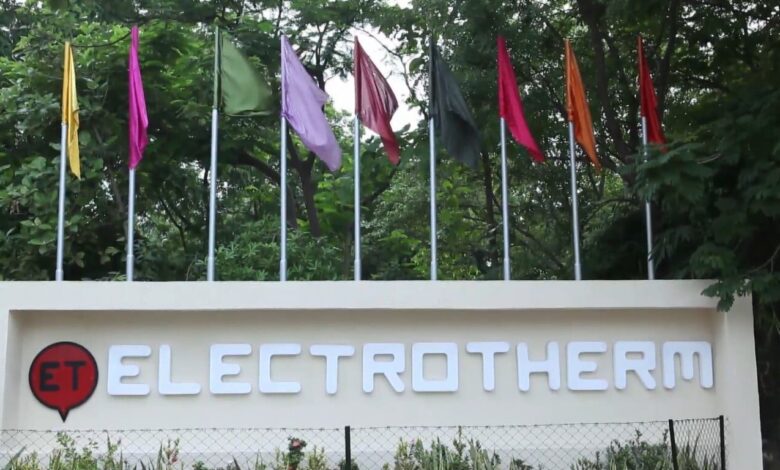
The Enforcement Directorate has finally put a number on a 12-year-old hole in a public-sector bank’s books. The number is small. The hole was not. And the men whose names sit on the CBI’s FIR are still signing Electrotherm (India) Ltd’s letters to the stock exchanges.
On 25 September 2026, the Ahmedabad Zonal Office provisionally attached movable property worth ₹43.65 crore under the Prevention of Money Laundering Act: ₹25.08 crore lying in two Yes Bank accounts of the company, and 13,57,775 shares held by its promoters, which the agency valued at ₹18.57 crore. With the January 2025 seizure and freeze of ₹38.32 crore — already confirmed by the Adjudicating Authority — the running total is ₹81.97 crore. That figure is not a coincidence. It is the exact haircut Bank of India took when, on 30 June 2014, it assigned dues of ₹631.97 crore to Edelweiss Asset Reconstruction Company for ₹550 crore. The agency has spent more than a decade catching up with the discount a public bank already booked.
The press release of 1 October 2026 is careful, and it should be read as what it is: an allegation, not a conviction. No court has yet held that the money was laundered. The company and Shailesh Bhandari are challenging the CBI FIR, the account freezes and the Enforcement Case Information Report in the Gujarat High Court and before the PMLA Appellate Tribunal. A prosecution complaint is pending cognizance before the special PMLA court in Ahmedabad. That is the legal position. It does not make the arithmetic polite.
Expansion money, used to pay yesterday’s bill
The ED’s case, built on a CBI Bank Securities and Fraud Branch FIR registered in Mumbai on a Bank of India complaint, is that credit taken between 2007 and 2013 was diverted and siphoned. The agency says loans sanctioned for expansion were, immediately on disbursement, turned around to discharge existing liabilities — the opposite of the purpose the bank was told it was funding. It says funds were then pushed to other entities and pulled out in cash, in round sums, shortly after receipt, either directly or after layering. Cash running into crores, the agency says, left Electrotherm’s own accounts across those six years.
The CBI, when it booked the company in early January 2022, was blunter and slightly out of sync with the ED on dates. Spokesperson R.C. Joshi said the directors enjoyed fund-based and non-fund-based limits from Bank of India during 2012–16; that a forensic audit found diversion through subsidiaries and associates with common directors; and that the company dealt with “suspicious dealers” issuing false bills without delivery of goods. The account was classified NPA with about ₹631.97 crore outstanding. The FIR named the company and four men: Shailesh Bhanwarlal Bhandari and Avinash Prakashchandra Bhandari as managing directors and guarantors, Mukesh Bhanwarlal Bhandari as director and guarantor, and whole-time director Narendra Babubhai Dalal. Searches followed at six Ahmedabad premises.
Two agencies, two windows — 2007–13 and 2012–16 — one lender, one family name. The public has still not been shown the entity list, the cash-withdrawal slips, or the false-bill dealers. What it has been shown is a press note that stops at “further investigation is under progress.”
₹136 a share, on a screen printing ₹870
The share attachment is where the 1 October note becomes slippery. The 13,57,775 shares are not an anonymous promoter block. Electrotherm’s own Regulation 30 filing of 26 September 2026 says the order under Section 5(1) of the PMLA attaches 6,98,275 shares of Shailesh Bhandari, promoter and Executive Vice Chairman, and 6,59,500 shares of Mukesh Bhandari, promoter and ex-chairman.
Against 1,27,42,814 shares outstanding, that is 10.7 per cent of the company and about 35.7 per cent of the promoter group’s 29.87 per cent holding (38,05,727 shares as of 30 June 2026). The ED priced the block at ₹18.57 crore. That is roughly ₹137 a share.
Market trackers put the 25 September close near ₹870, on a market capitalisation of about ₹1,109 crore, already 32 per cent under a 52-week high of ₹1,277. At ₹870, the same 13.58 lakh shares are worth about ₹118 crore — more than six times the figure in the press release. Either the attachment valuation is a conservative, restricted-stock number the agency has not explained, or a listed steel and engineering company under a live fraud cloud was still being priced by the market as if the cloud were weather. Both readings are an indictment. Neither has been answered.
Fifteen days before that order, on 10 September 2026, the company disclosed an off-market inter-se gift: Suraj Shailesh Bhandari received 80,000 shares, 0.63 per cent, from Bhandari Rakesh. Promoter holding stayed at 29.87 per cent. A gift inside the family is legal. The timing, against an attachment that landed on the father’s and the uncle’s paper and not on the son’s, is the sort of fact a serious investigation does not leave in a footnote.
The Mercedes, the FDR, and the chair that did not move
This is the second pass, not the first. On 10 and 11 January 2025, ED Ahmedabad searched the Palodia corporate office and factory and Shailesh Bhandari’s residence, among other locations in Ahmedabad and Gandhinagar. The agency’s own account: two high-end Mercedes cars seized, 37 bank accounts frozen with balances of ₹33.67 crore. The company’s filing put the freeze at about ₹33 crore across 39 company accounts, plus two personal accounts of the Executive Vice Chairman. The October 2026 release folds that action into a confirmed seizure and freeze of ₹38.32 crore.
One of those cars has already been bargained back. The company’s later disclosure records a ₹3.20 crore fixed-deposit receipt submitted to the ED to release a seized vehicle, and an earlier freeze of ₹83.18 lakh in one account of Shailesh Bhandari. On 29 January 2025 the Gujarat High Court gave interim relief: the company could operate balances above the frozen ₹33.67 crore, and Shailesh Bhandari could operate amounts above ₹83.18 lakh. The petitions remain pending. A public-sector-bank fraud file, and the first visible personal asset to change hands is a German car, swapped for a deposit.
Through all of this, the letterhead did not change. Shailesh Bhandari, 67, B.Sc. (Economics), director since the company’s inception in 1986, remains Executive Vice Chairman. The FY25 annual report says he supervises banking and financial activities, and credits him with settlements “at sustainable level” with 18 of 19 lenders. The same report records that his approved remuneration of ₹2 lakh a month, and that of managing director Suraj Bhandari, was not paid in the year — because the company has defaulted, and lender approval was not in hand. A man the annual report presents as the banker-in-chief of a serial defaulter is the same man named in the CBI FIR. His son, Suraj, 29 in that annual report, a B.Tech who joined in 2017, has been managing director since February 2024.
The petition to quash the December 2021 FIR was filed in April 2024. The Gujarat High Court issued notice on 26 April 2024. It is still pending. Four years from FIR to a share attachment; twelve years from the assignment of the loan; nineteen years from the start of the period the ED now describes. Delay is not a defence. It is the method.
One bank’s haircut, and the others still on the book
Bank of India’s ₹81.97 crore “loss” is the polite version. The outstanding was ₹631.97 crore. The ARC paid ₹550 crore. The public bank kept the reputation hit and passed the carcass. ED Ahmedabad has itself said the proceeds of crime in this case stood at ₹81.97 crore as on 30 June 2014 — the assignment date, not the date of the diversion. Matching the attachment total to that haircut is tidy for a press note. It is not a recovery of what the forensic audit described.
Nor is Bank of India the only lender in the room. In January 2025 the same zonal office said Mukesh Bhandari and Shailesh Bhandari were already under investigation in two other Electrotherm-linked bank-fraud cases. In one, the company had taken loans from Central Bank of India and defaulted to the tune of ₹388.23 crore; ED had earlier attached ₹179 crore and filed a prosecution complaint. The second case was flagged and not quantified. On 30 January 2025 the company told the exchanges it had defaulted again — ₹5.69 crore interest and ₹8 crore principal for the December quarter — to Rare ARC, assignee of Indian Overseas Bank, against settlement principals of ₹28 crore and ₹198.50 crore. Total outstanding borrowings from banks and financial institutions, as the company itself stated: ₹1,512.77 crore as at 31 December 2024, and that figure excludes unprovided interest on the unsettled Rare account after NPA classification.
The FY25 accounts add the smaller humiliations. Supplier complaints under Section 138 of the Negotiable Instruments Act cover dishonoured cheques of ₹67.42 crore, up from ₹66.17 crore a year earlier. Civil recovery suits: ₹3.76 crore, excluding interest. In October 2025 the Gujarat High Court quashed a private complaint in which Siddharth Mukesh Bhandari had accused the administration of pulling ₹26 crore out of a ₹480 crore Central Bank of India cash-credit limit into group companies against orders that never came. The brothers told the court it was a family settlement. The complaint died. The pattern it described did not.
Q1 FY27, the quarter the market was applauding, showed revenue of ₹913.38 crore and net profit of ₹6.93 crore, at an operating margin of 2.45 per cent. Set the newly attached ₹25.08 crore and the earlier frozen ₹34.29 crore beside that profit. Company cash equal to more than eight such quarters now sits frozen or attached — about ₹59.4 crore of Electrotherm’s own balances — while the men who ran the borrowing are still in the board photographs.
What the note will not say
A provisional attachment is not confiscation. Section 5 freezes; it does not convict. The Adjudicating Authority has confirmed the 2025 freeze; it has not yet spoken on the 25 September order. The Prevention of Corruption Act sections in the predicate FIR have not been particularised in the ED note. The names of the layered entities are absent. The cash is “crores,” not a schedule. Avinash Bhandari and Narendra Dalal, named by the CBI in 2022, do not appear in the October 2026 release at all.
That silence is the story. A listed company, BSE 526608, CIN L29249GJ1986PLC009126, with foreign institutions holding 9.21 per cent as of June 2026, has spent four years disclosing a fraud FIR in its annual report and one weekend disclosing that the promoter paper itself has been attached. The agency that attached it has matched its haul, to the rupee, to a haircut a public bank swallowed in 2014. The family that borrowed the money is still in the chair. The car was negotiable. The ₹631.97 crore was not.
Until a special court takes cognizance and a charge is proved, this remains an allegation the accused are entitled to fight. They are fighting it. What they are not entitled to is the pretence that ₹81.97 crore attached in 2026 closes a book that opened at ₹631.97 crore, touched a second public bank for ₹388.23 crore, and still shows ₹1,512.77 crore of institutional borrowings on the company’s own default filing. The press release ends with three asterisks. The lenders’ loss does not.
Sources: ED Ahmedabad press release, 1 October 2026; ED statement and Indian Express, 16–17 January 2025; CBI spokesperson R.C. Joshi as reported by PTI / Financial Express, 6 January 2022; Electrotherm Regulation 30 filings as reported from the 26 September 2026 and 17 January 2025 disclosures; company default disclosure, 30 January 2025; Electrotherm annual report 2024–25; shareholding pattern, 30 June 2026. Allegations are allegations. The company and Shailesh Bhandari contest them.