TDI’s Ravinder Taneja, the Seized Luxury Cars and 14,105 Buyers Still Waiting for the Keys
The Enforcement Directorate took possession of luxury cars at premises linked to TDI chairperson Ravinder Taneja in about three days. Some of TDI's homebuyers, by the same agency's count, have waited 16 to 18 years for possession of anything at all.

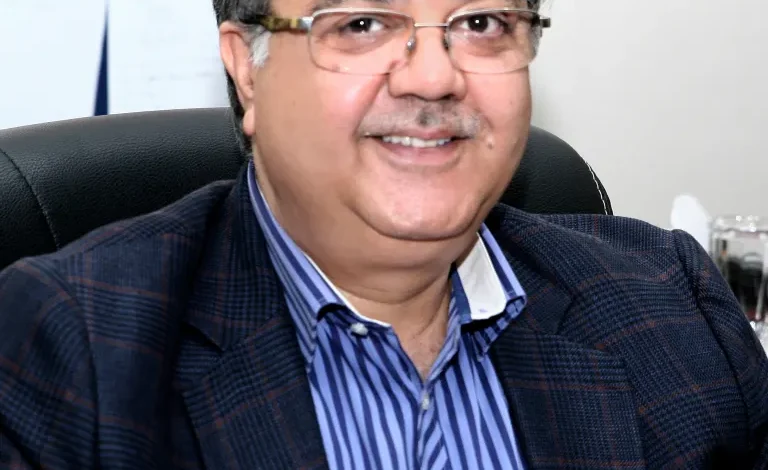
The garage: possession, at last, for somebody
In Indian real estate, “possession” is the word a buyer waits half a lifetime to hear. On 2 October 2026 the Enforcement Directorate finally used it in a sentence about TDI. The agency was the one taking possession, and the thing possessed had four wheels.
The ED’s Chandigarh Zone-I said its searches began on 28 September 2026 at business and residential premises linked to Ravinder Taneja. It describes him as Chairperson of the TDI Group and Managing Director of group companies including TDI Infratech Ltd and TDI Infrastructure Ltd. The searches ran for more than three days in New Delhi and S.A.S. Nagar (Mohali), under the Prevention of Money Laundering Act, 2002, according to reports of the release.
The haul, as the agency lists it: dozens of project records and files, computers, digital devices, hard disks, servers, and luxury vehicles “identified as proceeds of crime”. The agency added that records pointing to alleged irregularities in other projects also surfaced and are being examined.
So a group that sells townships has been relieved of its servers and its cars in a single week. The servers presumably remember where the money went. The cars merely show that some of it travelled comfortably.
Three cautions belong here, because a taunt without a fact is only noise.
- The ED has not published the number, make or value of the vehicles. One outlet put the fleet at roughly Rs 8 crore; no agency statement we found confirms that figure, and it should not be printed as fact.
- “Proceeds of crime” is the agency’s label, not a court’s verdict. A seizure under the PMLA records what investigators believe. It still has to survive adjudication and trial.
- No response from Mr Taneja or TDI appeared in the release or in the coverage we reviewed. One report said so in terms. Their version is owed space the moment they offer it.
With that said, the question the cars raise is fair, and it is the agency’s own allegation that raises it. If these vehicles were bought with tainted money, whose money was it?
Manesar: from fraud on power to horsepower
The Manesar case is the rare Indian land scandal where the central mechanism is not an allegation. The Supreme Court has already ruled on it.
On 27 August 2004 the Haryana government notified about 912 acres in Manesar, Naurangpur and Lakhnoula for an industrial township. Farmers were left staring at compulsory acquisition and government-rate compensation. Private buyers arrived with slightly better offers and a helpful sense of urgency. Once the land had changed hands, the State lost interest in acquiring it.
On 12 March 2018 a bench of Justices A.K. Goel and U.U. Lalit annulled the State’s decisions of 24 August 2007 and 29 January 2010 to drop the acquisition. The exercise of power, the Court held, “was designed to enrich the builders/private entities. These decisions were nothing but fraud on power.” It ordered the authorities to “recover every single pie” and directed the CBI to unearth the “unnatural gains received by ‘middle men'”, as The Tribune reported. The CBI had registered its case in September 2015, and the scam has been sized in official accounts at about Rs 1,500 crore.
Note who the Court’s finding is against: the Haryana government of the day. It is not a finding of guilt against TDI or Mr Taneja. What concerns them is the phrase “middle men”, because that is the seat the ED says they occupied.
The alleged middle
The ED’s October 2026 release says the TDI Group, led by Ravinder Taneja, was one of the intermediaries. It alleges the group used three companies between 2005 and 2007 to buy nearly 33 acres of notified land from farmers and sell it on to the Atul Bansal-led ABWIL group at a high profit. The three companies it names are Indo Asian Construction Co. Pvt. Ltd., NCR Properties Pvt. Ltd. and Divya Jyoti Enterprises Pvt. Ltd.
None of this is new, which is the embarrassing part. In June 2020 the ED filed a second supplementary chargesheet naming eight individuals and five entities. Ravinder Taneja and TDI Infrastructure Ltd were on the list. The agency’s case, as The Tribune reported it, was that Mr Taneja, then Managing Director of TDI Infrastructure, “along with others created or purchased” the three companies “solely for the purchase of notified land” and sold them to Mr Bansal at a profit of Rs 3.12 crore.
A company formed solely to buy land the State has just announced it will take is either an act of extraordinary optimism or an act of extraordinary information. The ED alleges the second. A court has yet to say.
Three numbers that do not sit comfortably together
- Rs 3.12 crore. That is the entire profit the ED attributed to the TDI leg in 2020. In a matter the CBI sizes at Rs 1,500 crore, it is about 0.2 per cent.
- Six years. The chargesheet came in June 2020. The search came in September 2026. Evidence does not improve with age, and servers are not wine.
- An unstated fleet. The agency calls the cars proceeds of crime in the Manesar case, but it has not said how vehicles seized in 2026 trace to a 2005-07 deal with an alleged margin of Rs 3.12 crore.
That third point cuts both ways, and honest reporting should say so. Either the Manesar money trail is far larger than the agency disclosed in 2020, or the “proceeds of crime” label on the cars is doing more work than the public record yet supports. The ED owes the public the arithmetic. Mr Taneja owes it an explanation.
One more fact belongs on the defence side of the ledger. The same Tribune report recorded that the adjudicating authority confirmed the ED’s earlier Manesar attachment orders “except in case of TDI Infrastructure”. Readers should know the agency has not won every round.
Sonipat: the buyers who advanced, and the money that advanced elsewhere
Manesar is the smaller file. The larger one sits on the other side of Delhi, in Kundli, Sonipat, and it is measured in households.
On 9 May 2026 the ED’s Gurugram Zonal Office announced that the Special Judge (PMLA) at Patiala House, New Delhi, had issued notices on 28 April 2026 on its prosecution complaint. The complaint arraigns TDI Infrastructure Ltd, its directors Ravinder Taneja, Kamal Taneja and D.N. Taneja, and related entities. It rests on FIRs and chargesheets filed by the Delhi Police.
The agency’s own figures are these.
| Measure | ED figure |
|---|---|
| Advance booking money collected | Rs 4,619.43 crore |
| Customers | 14,105 |
| Projects in Sonipat, launched 2005 to 2014 | 26 |
| Longest delay cited, in one project | 16 to 18 years |
| Attached in 2024 | Rs 45.49 crore |
| Attached in 2026 | Rs 304.06 crore |
| Total identified and quantified as proceeds of crime | Rs 349.55 crore |
The allegation behind the table is simple. Instead of building what was sold, the promoters allegedly diverted buyers’ money to subsidiaries and land-owning companies as “advances” for more land, the agency said when it attached Rs 206.40 crore of property in Kamaspur on 6 March 2026. The buyers paid advances for homes. The homes, the ED says, paid advances for land. Everybody advanced except the construction.
The agency also records that one commercial project, Park Street, remains incomplete. A project called Park Street that stays parked is the only pun in this story TDI wrote itself.
The arithmetic of patience
Do the division the press releases leave undone.
- Rs 32.75 lakh. The average amount each of the 14,105 customers handed over (Rs 4,619.43 crore divided by 14,105).
- 7.6 per cent. What the Rs 349.55 crore of attached assets amounts to against the Rs 4,619.43 crore collected.
- Rs 2.48 lakh. What each customer would get if every attached rupee were confiscated and shared equally. No law currently promises that it will be.
A delay of 16 to 18 years means a buyer who booked at 35 is now past 50. A child born the year the cheque cleared can vote. On the agency’s account, the keys still have not arrived.
What the numbers do not say
Precision demands two corrections to the angrier versions of this story already in circulation.
First, Rs 4,619.43 crore is what the ED says was collected. It is not the sum the ED says was stolen. The agency has quantified proceeds of crime at Rs 349.55 crore. It has not said how many of the 14,105 customers are still without possession, and any headline claiming “zero homes” goes beyond the record.
Second, the agency’s own count wobbles. Its March 2026 statement spoke of 23 projects. Its May 2026 release says 26. The money and customer figures are identical in both. An agency asking a court to confiscate Rs 349.55 crore should be able to count the projects the same way twice.
Neither correction rescues the company. A developer does not acquire 26 FIRs and chargesheets, two attachment rounds and a money-laundering complaint by delivering on time.
Panchkula: one buyer, five directors and a regulator out of patience
If Rs 4,619.43 crore is too large to picture, consider a single file in Panchkula.
Narender Kumar complained against TDI Infrastructure in 2019 (Complaint No. 2950 of 2019). He won. Then he discovered what Indian homebuyers discover next: an order is not money. He went back in execution (Execution No. 1208 of 2024).
On 15 May 2026, Haryana RERA Member Chander Shekhar ordered three months’ civil imprisonment for five directors, The Tribune reported: Managing Director Kamal Taneja, and directors Devki Nandan Taneja, Ravinder Kumar Taneja, Renu Taneja and Ved Prakash. The order was conditional. Warrants were to issue once the decree holder deposited subsistence allowance, and the directors could avoid them if the company satisfied the order first.
The authority’s findings, as reported, deserve to be read slowly.
- The directors filed no personal replies to show-cause notices and did not appear in person despite service.
- The company was adopting “delay tactics” instead of complying.
- The company “appeared financially capable of making payment” but was intentionally delaying.
- Accepting repeated assurances of settlement without payment would create an “unfair advantage for errant entities”.
So the regulator’s view was not that TDI could not pay one buyer. Its view was that TDI could, and did not. Delay, on this reading, was not the company’s misfortune. It was the company’s method.
There is a detail of civil procedure here that no satirist could improve. To have a defaulting director jailed, the person who is owed the money must first deposit the director’s subsistence allowance. The buyer who paid for a home he did not get must then pay for his debtor’s meals.
Two cautions again. Civil imprisonment is a coercive measure to force compliance, not a criminal conviction. And whether this particular order was later satisfied or settled should be confirmed from the HRERA record before publication; we could not verify its current status.
The record: 22 years, no verdict
From the first notification to the latest seizure, the paper trail runs 22 years, and we found no trial verdict, for or against TDI or Mr Taneja, in either case.
| Date | Who | What happened |
|---|---|---|
| 2 Oct 2026 | ED, Chandigarh Zone-I | Announces searches; says luxury vehicles, servers and records seized |
| 28 Sep 2026 | ED, Chandigarh Zone-I | Searches begin at premises linked to Ravinder Taneja; run over three days |
| 15 May 2026 | Haryana RERA, Panchkula | Orders three months’ civil imprisonment of five TDI Infrastructure directors, conditional on non-payment |
| 9 May 2026 | ED, Gurugram | Announces prosecution complaint; proceeds of crime put at Rs 349.55 crore |
| 28 Apr 2026 | Special Judge (PMLA), Patiala House | Issues notices to TDI Infrastructure, three Taneja directors and related entities |
| 6 Mar 2026 | ED, Gurugram | Attaches Rs 206.40 crore of property in Kamaspur, Sonipat |
| 2024 | ED | First attachment in the homebuyer case, Rs 45.49 crore |
| Jun 2020 | ED | Second supplementary Manesar chargesheet names Ravinder Taneja and TDI Infrastructure Ltd |
| 12 Mar 2018 | Supreme Court | Annuls Haryana’s decisions to drop the Manesar acquisition as “fraud on power” |
| Sep 2015 | CBI | Registers the Manesar land case |
| 2005 to 2007 | Alleged by ED | Three companies buy nearly 33 acres of notified land and sell to the Bansal group |
| 27 Aug 2004 | Haryana government | Notifies about 912 acres in three villages for acquisition |
What is not proven, and who owes answers
Nothing in this file is a conviction. Mr Taneja and the TDI companies are accused, not guilty, and every ED claim quoted above is an allegation until a court rules. That is the law, and it is also the scandal: after 22 years, two money-laundering cases and one Supreme Court judgment, we could find no trial verdict on them.
So the questions go to both sides of the table.
For the Enforcement Directorate
- How many vehicles were seized, of what make and value, and in whose names were they registered?
- How do cars seized in 2026 trace to a 2005-07 land deal whose alleged profit you put at Rs 3.12 crore?
- You named Mr Taneja in a chargesheet in June 2020. Why did the search come in September 2026?
- The Supreme Court asked for the middlemen’s “unnatural gains” in March 2018. What has been recovered from any of them?
- Of 14,105 customers, how many are still without possession today?
- Were there 23 projects or 26?
For Ravinder Taneja and the TDI Group
- Why were three companies buying land in Manesar that the State had already notified for acquisition?
- What paid for the vehicles the ED has seized?
- Where did buyers’ advances go, if not into the buildings they were paid for?
- Haryana RERA found the company able to pay and unwilling. Is that finding wrong, and if so, why did no director appear to say so?
- When will Park Street and the other delayed projects be handed over, by date?
These questions should be put to TDI in writing before publication, and the answers, or the silence, reported.
The last word
In a TDI township, by the ED’s account, the possession letter has been the hardest document to obtain. Last week the agency managed to issue one in three days. It issued it to itself, for the cars.
The farmers of Manesar sold land under fear and watched others bank the upside. The buyers of Sonipat paid an average of Rs 32.75 lakh and, in at least one project, waited 16 to 18 years. The cars waited for nobody. Whether they were bought with either group’s money is for the ED to prove and Mr Taneja to rebut. Until one of them does, the vehicles sit in custody as the fastest-moving assets in a very slow case.