Two Money-Laundering Cases, 21 Years, No Verdict: The Enforcement Trail Behind TDI’s Ravinder Taneja
From 33 acres of notified farmland in Manesar to Rs 4,619.43 crore of homebuyers' money in Sonipat, the Enforcement Directorate has now placed one promoter in two separate laundering cases. Attachments have crossed Rs 349 crore. A regulator has ordered directors to civil prison. Yet no court has delivered a verdict, and the buyers and farmers are still waiting.

Three days inside TDI
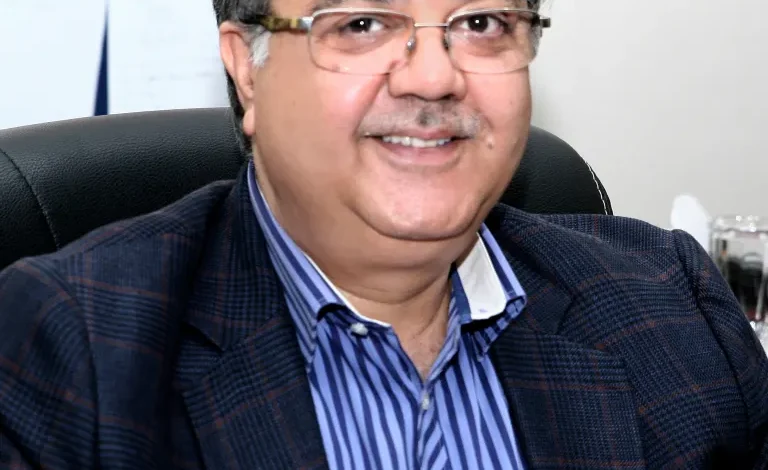
On 28 September 2026, officers of the Enforcement Directorate’s Chandigarh Zone-I entered business and residential premises linked to Ravinder Taneja. The agency describes him as Chairperson of the TDI Group and Managing Director of several group companies, including TDI Infratech Ltd and TDI Infrastructure Ltd. The searches ran for more than three days across New Delhi and S.A.S. Nagar (Mohali).
The ED made the action public on 2 October. It said it had seized dozens of project records, files, digital devices, computers, hard disks and servers. It also seized luxury vehicles, which it described as proceeds of crime. That description is the agency’s allegation; no court has yet ruled on it.
The searches were carried out under the Prevention of Money Laundering Act, 2002 (PMLA), in the long-running Gurgaon (Manesar) land case. The ED said the TDI Group had already been under investigation for its dealings with Atul Bansal and his ABWIL group of companies.
One line in the statement deserves more attention than the cars. The agency said records relating to alleged irregularities and illegalities in other TDI projects had also surfaced, and were under examination. A search in one case may therefore have opened further lines of inquiry.
The ED’s release carried no response from Mr Taneja or the TDI Group, and none appears in the published reports reviewed for this article.
A raid is not a finding of guilt. But this one did not arrive from nowhere. It is the latest entry in a file that began in 2005, and that file is the real story.
Manesar: a scheme the Supreme Court called a “fraud on power”
The Manesar case rests on a mechanism that India’s highest court has already condemned. That finding is against the Haryana government’s decisions, not against TDI. It still explains why the trail matters.
On 27 August 2004, Haryana notified about 912 acres in Manesar, Naurangpur and Lakhnoula villages for an Industrial Model Township. About 224 acres were later released after objections, leaving roughly 688 acres under acquisition.
What followed is the heart of the scandal. With compulsory acquisition hanging over them, farmers sold to private builders and intermediaries. The CBI, which registered its case in September 2015, alleged that land was bought at throwaway prices. On 24 August 2007 the government dropped the acquisition. The land, now free, was worth many times more.
On 12 March 2018, in Rameshwar v. State of Haryana, a bench of Justices A.K. Goel and U.U. Lalit annulled the government’s decisions of 24 August 2007 and 29 January 2010. The Court held that the power was used on extraneous considerations and was “designed to enrich the builders/private entities”. It called the decisions “nothing but fraud on power”.
The judgment quoted a CBI report alleging a wrongful loss of Rs 1,500 crore to the landowners of the three villages. The Court ordered the authorities to “recover every single pie”. It directed the CBI to run a complete probe, including into “unnatural gains” received by middlemen.
That last direction is the one that matters here. More than eight years ago, the Supreme Court told investigators to find the middlemen and trace their gains. The ED now says the TDI Group was one of them.
The 33 acres: three companies and a chargesheet filed six years ago
The ED’s October statement says more than 400 acres of notified land in the three villages were bought from farmers “at throwaway prices” by builders and intermediaries. It identifies the TDI Group, led by Ravinder Taneja, as one such intermediary.
The alleged method is specific. During the acquisition period of 2005 to 2007, the agency says, the group used three companies to buy nearly 33 acres from farmers and sell them to the Atul Bansal group at high profits:
- Indo Asian Construction Co. Pvt. Ltd.
- NCR Properties Pvt. Ltd.
- Divya Jyoti Enterprises Pvt. Ltd.
None of this is new, and that is the uncomfortable part. On 5 June 2020 the ED filed a supplementary chargesheet before the Special PMLA Judge at Panchkula against 13 accused: eight individuals and five firms. Ravinder Taneja and TDI Infrastructure Ltd were both named.
The Tribune reported the allegation in detail at the time. The ED claimed that Mr Taneja, then Managing Director of TDI Infrastructure, along with others, created or purchased the same three companies “solely for the purchase of notified land”. It alleged they were sold to Mr Bansal at a profit of Rs 3.12 crore.
The larger gains, on the ED’s own account, sat further up the chain. The agency alleged that Mr Bansal assembled about 239 acres, obtained six licences and sold three of them. Two went to DLF Home Developers for Rs 150.95 crore and one to Kalinga Realtors for Rs 37.96 crore. Against a stated cost of Rs 19.66 crore, the ED computed proceeds of crime of Rs 169.25 crore.
So the same companies, the same acreage and the same promoter were before a court in June 2020. The search came in September 2026. The ED has not publicly explained what changed in those six years, or why fresh searches at the premises of an already-chargesheeted accused became necessary.
It has also not said whether “high profits” in 2026 means more than the Rs 3.12 crore it alleged in 2020. If the number has grown, the public is entitled to know by how much. If it has not, the agency should say so.
The second file: 14,105 customers and Rs 4,619.43 crore
Manesar is only half the exposure. A second, unrelated PMLA case is run by the ED’s Gurugram Zonal Office. It concerns people who paid TDI Infrastructure for homes, plots and shops in Sonipat.
This case grew out of 26 FIRs and chargesheets filed by the Delhi Police and its Economic Offences Wing. The allegation in them is plain: buyers paid, and the promised flats and units were not delivered on time. In one project, the ED says, the delay ran to 16 to 18 years.
The scale is the agency’s own figure. TDI Infrastructure, formerly Intime Promoters Pvt. Ltd., launched its Kundli and Sonipat projects between 2005 and 2014. The ED says it collected about Rs 4,619.43 crore in advance bookings from 14,105 customers.
The ED alleges the money did not stay in the projects. It says funds were diverted to subsidiaries and land-owning companies as advances for land, and to other purposes. That diversion, on the agency’s case, is why construction stalled.
The enforcement record in this case has moved in three steps:
- In 2024, the ED provisionally attached assets worth Rs 45.49 crore.
- On 6 March 2026, it attached a further Rs 206.40 crore, including about 8.3 acres of land and commercial units at Kamaspur, Sonipat.
- By 9 May 2026, it reported recent attachments of Rs 304.06 crore in all, taking the total to Rs 349.55 crore.
The ED then filed a prosecution complaint, the PMLA equivalent of a chargesheet. It names TDI Infrastructure Ltd, its directors Ravinder Taneja, Kamal Taneja and D.N. Taneja, and related entities. The Special PMLA Court at Patiala House, New Delhi, issued notices to all the accused on 28 April 2026. The agency has asked the court to confiscate the attached assets.
Behind each of the 14,105 bookings is a household. Many will have paid rent and loan instalments together for years, for a home that existed only on a brochure. Whatever the trial decides about laundering, a wait of up to 18 years is itself an indictment of how India polices its builders.
A regulator runs out of patience
The sharpest language about TDI has come from a regulator, in a dispute over a single buyer, not from the ED.
On 15 May 2026, the Haryana Real Estate Regulatory Authority (HRERA), Panchkula, ordered the civil imprisonment of five directors of TDI Infrastructure Ltd for three months. The order was passed by Member Chander Shekhar in Execution No. 1208 of 2024, arising from Complaint No. 2950 of 2019 filed by a homebuyer, Narender Kumar.
The five named, as reported by The Tribune, are:
- Kamal Taneja, Managing Director
- Devki Nandan Taneja, Director
- Ravinder Kumar Taneja, Director
- Renu Taneja, Director
- Ved Prakash, Director
The authority’s findings are damaging on their own terms. It held that the directors neither filed personal replies to show-cause notices nor complied with payment directions, despite repeated opportunities. It said the company was adopting “delay tactics”. It noted that the company appeared financially able to pay but was delaying compliance.
HRERA also warned that accepting repeated promises of settlement without payment would hand an “unfair advantage” to “errant entities”.
Two cautions are essential. Civil imprisonment is a coercive step to force compliance with an order. It is not a criminal sentence. And the order allowed the company to avoid it by satisfying the decree before the warrants were executed.
Consider what the case represents. A buyer complained in 2019. He won. He then had to file execution proceedings in 2024 to collect. Only in 2026 did the authority threaten jail. That is seven years of one citizen’s life spent enforcing a single order against one company.
The environmental file
There is a third strand. On 29 March 2025, the ED provisionally attached eight shops in TDI Mall on GT Road, Kundli, valued at Rs 5.61 crore. The agency alleged that TDI Infrastructure had contravened the Water and Air pollution-control Acts in its residential townships and had generated proceeds of crime of that amount.
Earlier, a joint committee reporting to the National Green Tribunal had recommended recovering Rs 34.53 crore from TDI Infrastructure as environmental compensation for projects in Kundli. The complaint, filed by a farmers’ body in 2018, concerned sanitation and sewerage.
The record at a glance
Every entry below is an official action, a court ruling or, where marked, an allegation. None is a conviction.
| Date | Authority | Action |
|---|---|---|
| 2 Oct 2026 | ED, Chandigarh | Announces searches; names TDI Group as an intermediary for nearly 33 acres in Manesar |
| 28 Sep 2026 | ED, Chandigarh | Begins searches, lasting over three days, at premises linked to Ravinder Taneja |
| 15 May 2026 | HRERA, Panchkula | Orders three months’ civil imprisonment of five TDI Infrastructure directors |
| 9 May 2026 | ED, Gurugram | Reports prosecution complaint and total attachments of Rs 349.55 crore |
| 28 Apr 2026 | Special PMLA Court, Patiala House | Issues notices to TDI Infrastructure, three Taneja directors and related entities |
| 6 Mar 2026 | ED, Gurugram | Attaches Rs 206.40 crore of property in Sonipat |
| 29 Mar 2025 | ED | Attaches eight TDI Mall shops worth Rs 5.61 crore in environmental case |
| 2024 | ED, Gurugram | First homebuyer-case attachment, Rs 45.49 crore |
| 5 Jun 2020 | ED | Supplementary chargesheet at Panchkula names Ravinder Taneja and TDI Infrastructure |
| 25 Jul 2019 | ED | Attaches Rs 66.58 crore across several accused, including TDI Infrastructure |
| 12 Mar 2018 | Supreme Court | Annuls Haryana’s decisions as “fraud on power”; orders CBI probe of middlemen |
| Sep 2015 | CBI | Registers the Manesar land case |
| 24 Aug 2007 | Haryana government | Drops the acquisition |
| 2005 to 2007 | (alleged) | Three companies buy nearly 33 acres of notified land from farmers |
| 27 Aug 2004 | Haryana government | Notifies about 912 acres for acquisition |
The arithmetic of delay
Set the official numbers side by side and the failure is hard to miss. It is a failure of speed more than of law.
Twenty-one years. The first alleged land purchases date to 2005. The first homebuyer projects launched the same year. In 2026, both matters are still at the stage of notices, searches and attachments.
Eight years. The Supreme Court ordered a complete probe of the middlemen in March 2018. The search of the alleged middleman’s premises announced this month came more than eight years later.
Six years. The ED named Mr Taneja and TDI Infrastructure in its Manesar chargesheet in June 2020. No public record reviewed for this article shows that trial reaching a verdict.
Seven years. That is how long one HRERA complainant waited between filing his case and seeing an order with teeth.
7.6 per cent. The ED has attached Rs 349.55 crore against Rs 4,619.43 crore collected from buyers. That is under eight paise in the rupee. The attachments are also provisional. Buyers receive nothing until a court orders confiscation and restitution.
26 FIRs and chargesheets. That many separate police cases accumulated before the laundering investigation produced a prosecution complaint.
The questions follow directly from these figures:
- Why did eight years pass between the Supreme Court’s direction and this search?
- What does the ED now say the 33-acre profit was, and where did it go?
- Who controlled the three companies when they bought from farmers, and who was paid when they were sold?
- What did each farmer receive per acre, against what the land later fetched?
- What “irregularities and illegalities” in other TDI projects did the September search uncover?
- How much of the Rs 4,619.43 crore has been traced, and to which entities?
- When will the 14,105 customers see possession or a refund?
Enforcement that takes two decades punishes only the victims. The farmer who sold in fear in 2006 and the buyer who booked in 2008 have both aged through this case. Delay on this scale works in favour of whoever holds the money.
What the record does not show
A hard look at this file must also record what cuts the other way. Fairness requires it, and so does accuracy.
- No conviction. No court has convicted Ravinder Taneja, any other Taneja director, or any TDI company in either laundering case.
- The Supreme Court did not rule on TDI. Its “fraud on power” finding is against decisions of the Haryana government. The role of each middleman was left to investigators.
- TDI’s alleged Manesar gain is small beside the whole. The ED’s 2020 figure was Rs 3.12 crore. The alleged landowner loss was Rs 1,500 crore, and the gain attributed to the Bansal group was Rs 169.25 crore.
- One attachment was not confirmed. The Tribune reported in June 2020 that the adjudicating authority confirmed the 2019 Manesar attachments except in the case of TDI Infrastructure.
- Attachments are provisional. They freeze assets. They do not prove the assets are tainted.
- “Proceeds of crime” is the ED’s label. Its application to the seized vehicles and records has not been tested in court.
- The ED’s own counts differ. Its March 2026 release spoke of 23 projects. Its May 2026 release spoke of 26. The agency has not explained the difference.
- The HRERA order is civil. Whether the decree has since been paid, or the order challenged, could not be confirmed from the published record.
- TDI’s side is missing. The company and its directors are entitled to answer every allegation. Their response should be sought and printed.
None of these points weakens the case for urgency. They strengthen it. If the allegations are true, thousands of people have been denied justice for two decades. If they are false, the accused have lived under them for just as long. Only a trial can settle it.
What must happen now
The public interest here is in speed and transparency, with every safeguard of a fair trial intact. Seven steps would deliver that.
- Finish the forensic work fast. The ED should complete its examination of the seized servers, hard disks and files within a fixed, published period, and file any further complaint without delay.
- Put a number on Manesar. The agency should state what profit it now attributes to the 33 acres and where it says the money went.
- Try both cases day to day. The Special PMLA Courts at Panchkula and Patiala House should hear these matters on a time-bound schedule. A chargesheet from 2020 should not still be awaiting judgment.
- Complete the Supreme Court’s 2018 mandate. The CBI was told to probe the middlemen and their “unnatural gains”. It should report publicly on how far that probe has gone.
- Put buyers first in line. Attached assets should reach the 14,105 customers through restitution as early as the law allows, not sit frozen for another decade.
- Enforce regulatory orders. HRERA should execute its orders within months, not years, and publish the compliance status of every order against the company.
- Coordinate the agencies. The ED’s two zonal offices, the CBI, the Delhi Police EOW and HRERA are working overlapping facts. They should share evidence and avoid duplicated delay.
India has the laws it needs for this case. What it has lacked, for 21 years, is the urgency to use them.
Disclaimer
Allegations remain allegations until proved in a court of law. This article is based on press statements of the Enforcement Directorate, a judgment of the Supreme Court of India, an order of the Haryana Real Estate Regulatory Authority as reported, and published news reports, all listed below.
As of 9 October 2026, no court of law has convicted Ravinder Taneja, Kamal Taneja, D.N. (Devki Nandan) Taneja, Renu Taneja, Ved Prakash, TDI Infrastructure Ltd, TDI Infratech Ltd or any other TDI Group entity of any offence in the matters described here. Every person and company named is presumed innocent unless and until proved guilty.
Searches, seizures, provisional attachments, chargesheets, prosecution complaints and court notices are steps in an investigation or trial. They are not findings of guilt. The term “proceeds of crime” is used here only as the ED uses it, as an allegation. The HRERA civil-imprisonment order is a measure to enforce a civil obligation and is not a criminal conviction. The Supreme Court’s 2018 finding of “fraud on power” concerns decisions of the Haryana government and is not a finding against any TDI entity or individual.
Other persons and companies mentioned, including Atul Bansal, the ABWIL group, DLF Home Developers and Kalinga Realtors, appear only as described in agency statements and reports. No conclusion about their guilt is stated or implied.
The opinions and demands in this article are fair comment on a matter of public interest. TDI Group and the individuals named are invited to respond, and any response will be published.