Taneja’s TDI: Too Delayed Infrastructure, Too Delayed Justice — Luxury Cars Seized as “Proceeds of Crime” While Manesar Farmers and 14,105 Homebuyers Still Wait in the Dust

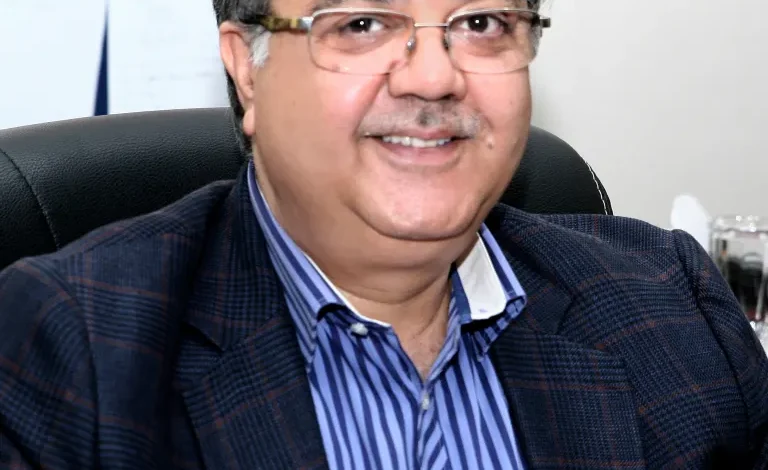
On 28 September 2026, officers of the Enforcement Directorate’s Chandigarh Zone-I walked into the business and residential premises linked to Ravinder Taneja, Chairperson of the TDI Group and Managing Director of TDI Infratech Ltd and TDI Infrastructure Ltd, in New Delhi and S.A.S. Nagar. They stayed for more than three days. When they left, according to the ED’s own 2 October 2026 press release, they took with them dozens of project records, files, computers, digital devices, hard disks, servers — and luxury vehicles the agency identified as proceeds of crime.
Some reports put the value of those cars at roughly ₹8 crore. The ED’s language was clinical: the vehicles were proceeds of crime. The public language around the case has been less polite. After more than two decades of allegations that stretch from distressed farmers in Manesar, Naurangpur and Lakhnoula to homebuyers in Sonipat who have waited 16 to 18 years, the seizure looks less like a sudden breakthrough and more like a garage sale of delayed accountability.
The Manesar Intermediary Role the ED Has Already Named
The searches sit inside the long-running Gurgaon-Manesar land scam investigation under the Prevention of Money Laundering Act, which itself flows from a CBI FIR. The ED’s press release is blunt. More than 400 acres of state-notified land in Manesar, Naurangpur and Lakhnoula — earmarked for acquisition — were purchased by private builders and intermediaries from farmers at throwaway prices amid fear of acquisition by HSIIDC. The acquisition process was later allowed to lapse, the award was dropped, and the same land was sold at skyrocketing prices.
The ED identifies the TDI Group led by Ravinder Taneja as one such intermediary. Between 2005 and 2007, it says, the group used three companies — Indo Asian Construction Co. Pvt. Ltd., NCR Properties Pvt. Ltd. and Divya Jyoti Enterprises Pvt. Ltd. — as vehicles to buy nearly 33 acres from farmers and sell them to the Atul Bansal/ABWIL group at high profits.
This is not a 2026 invention. The ED had already named Ravinder Taneja and TDI Infrastructure Ltd as accused in a supplementary chargesheet years earlier. Court records in the matter identify Taneja as A-29 and TDI Infrastructure Ltd as A-30. Earlier reporting on the 2020 supplementary chargesheet described the allegation that Taneja and others created or purchased those three companies for the purpose of acquiring the notified land and flipping it. One quantification of the alleged intermediary profit in that earlier material was put at approximately ₹3.12 crore.
The broader judicial record is harsher still. In Rameshwar v. State of Haryana (Supreme Court, 12 March 2018), the Court held that the Haryana government’s decisions of 24 August 2007 and 29 January 2010 to drop the acquisition were a mala fide exercise of power and a “fraud on power” designed to benefit builders and private entities, producing “unnatural gains” for intermediaries. The original notifications covered roughly 912 acres; the CBI case alleged that around 400 acres were acquired at depressed prices, with landowner losses estimated in some accounts near ₹1,500 crore. Farmers sold under the shadow of compulsory acquisition and low compensation. The line on the map later disappeared. The land did not come back to them.
The ED’s latest seizure of luxury vehicles tagged as proceeds of crime simply places a fresh, tangible asset against that older paper trail. The question the farmers of Lakhnoula might ask is not complicated: if the intermediary role is as the agency describes it, and if the cars are proceeds of crime, why did it take until late 2026 for the garage to be examined?
The Parallel Homebuyer File: ₹4,619.43 Crore, 14,105 Customers, 16–18 Years
A separate ED investigation, run by the Gurugram Zonal Office and based on 26 FIRs and chargesheets filed by Delhi Police and the Economic Offences Wing, concerns TDI Infrastructure Ltd’s projects in the Kundli/Sonipat area. The numbers come from the ED’s own releases and are not in dispute as agency statements:
- TDI Infrastructure (formerly Intime Promoters Pvt. Ltd.) launched commercial and residential projects between 2005 and 2014.
- It collected approximately ₹4,619.43 crore as advance booking amounts from 14,105 customers across 26 projects.
- In some cases delays reached 16–18 years. Four projects still lacked occupation certificates at the time of earlier 2026 updates; Park Street remained incomplete.
- The ED alleges substantial diversion of homebuyer funds to subsidiaries, erstwhile subsidiaries and land-owning companies as advances for land or other purposes, and for loan repayments and investments, rather than project completion.
- Proceeds of crime have been quantified at ₹349.55 crore. Provisional attachments include approximately ₹45.49 crore in 2024 and a further ₹206.40 crore in March 2026 (including about 8.3 acres and commercial units in Kamaspur, Sonipat), with subsequent attachments bringing the total identified and attached proceeds to ₹349.55 crore.
On 28 April 2026 the Special Judge (PMLA) at Patiala House issued notices on a prosecution complaint that names TDI Infrastructure Ltd, Ravinder Taneja, Kamal Taneja and D.N. Taneja, along with related entities. The ED has sought confiscation of the attached assets.
That is the scale the agency itself has put on record. ₹4,619.43 crore collected. ₹349.55 crore so far quantified as proceeds of crime. More than 14,000 customers. Delays measured in decades, not months. The money, on the ED’s case, did not stay where the buyers were told it would go.
The Regulator That Moved When Others Had Not
On 15 May 2026, Haryana RERA, Panchkula (Member Chander Shekhar), in Execution No. 1208 of 2024 arising from Complaint No. 2950 of 2019 filed by homebuyer Narender Kumar, ordered three months’ civil imprisonment against five directors of TDI Infrastructure Ltd: Managing Director Kamal Taneja, and directors Devki Nandan Taneja, Ravinder Kumar Taneja, Renu Taneja and Ved Prakash. The authority found that the company and its directors had neither filed personal replies to show-cause notices nor complied with payment directions, characterising the conduct as delay tactics. Civil imprisonment is coercive execution, not a criminal conviction, but it is a public finding that a state regulator was prepared to send the named directors — including Ravinder Kumar Taneja — to civil jail for non-compliance with its orders.
Other threads exist in the public record. The Delhi High Court, in a matter arising from FIR 57/2020, refused to quash proceedings in which a chargesheet under Sections 406, 420 and 120B IPC had been filed against TDI Infratech and directors including Kamal Taneja, Ravinder Kumar Taneja, Devki Nandan Taneja and Ved Prakash, holding that there was prima facie material. Multiple RERA complaints involving TDI entities have continued into 2026. National Green Tribunal environmental compensation figures have also been cited in connection with TDI projects in parallel reporting.
None of these matters has produced a final criminal conviction on the money-laundering allegations. That is the point the timeline makes for itself. The Manesar notifications date to 2004–2005. The homebuyer collections span 2005–2014. The first major ED attachments in the homebuyer case arrived in 2024. The prosecution complaint and court notices came in 2026. The latest searches and the seizure of luxury cars arrived in September–October 2026. Twenty-one years after some of the earliest alleged transactions, there is still no verdict.
What the Record Actually Shows — and What It Does Not
The ED has alleged, in successive official statements, an intermediary role in the Manesar land deals through three named companies, high profits on the onward sale, diversion of homebuyer funds on a very large scale, and the existence of proceeds of crime now quantified in the hundreds of crores. It has attached assets and, most recently, seized luxury vehicles it has labelled proceeds of crime. Courts have issued notices. A regulator has ordered civil imprisonment proceedings for non-compliance. The Supreme Court has already condemned the underlying acquisition decisions as a fraud on power that produced unnatural gains for intermediaries.
What has not yet happened is a final judicial determination of guilt on the PMLA allegations, an arrest in the most recent searches, or delivery of possession or refunds at the scale and speed the numbers of affected people would suggest. The two tracks — Manesar land and Sonipat homebuyers — are legally distinct. They intersect at the level of the promoter and the corporate group. The public record of allegations against that group is now long, documented by the ED itself, and still open.
Enforcement agencies and special courts have the tools. The attachments, the prosecution complaint, the RERA order and the latest seizures demonstrate that the machinery can move. What remains is whether it will move with the speed and finality that 14,105 homebuyers who have waited up to 18 years, and the farming families who sold under the fear of acquisition more than two decades ago, are entitled to expect. Luxury cars can be seized in a day. Justice that takes a generation is not enforcement. It is an extended invitation to treat both farmers and buyers as a source of inventory.
The files are open. The numbers are on the record. The cars have been towed. The only question left is how many more years the rest of the process will take.