THE SUPREME COURT’S GAVEL, THE STATE’S BARRICADES AND DEMOCRACY’S WAITING ROOM
CJP Protest in Delhi, 10 October 2026: When Will the Guardians of the Constitution Decide That Enough Is Enough?

When an entire capital city prepares for a protest as though it were preparing for an invasion, when citizens reportedly face detention before they can exercise their right to assemble, and when the question of electoral integrity sends people onto the streets, the Supreme Court cannot afford to let its constitutional voice become an occasional whisper.
An editorial on judicial accountability, civil liberties and the increasingly uncomfortable distance between constitutional promises and the lived experience of democracy.
The question India must ask: Is the Constitution being protected, or merely being quoted?
India possesses one of the world’s most powerful constitutional courts. Its judgments are cited across continents. Its constitutional vocabulary is formidable. Its judges speak of liberty, proportionality, accountability, due process and the rule of law.
Yet, on 10 October 2026, as Delhi witnessed an extraordinary security response to the proposed Cockroach Janta Party (CJP) protest against Chief Election Commissioner Gyanesh Kumar, a more uncomfortable question confronted the country:
What is the practical value of constitutional liberty when exercising it becomes an exercise in getting past barricades, avoiding detention and hoping that someone in authority will remember the Constitution exists?
The CJP protest was organised against the controversy surrounding the Special Intensive Revision (SIR) of electoral rolls. Critics have questioned the deletion of millions of voter entries and alleged that the process could affect electoral fairness. The Election Commission has maintained that the revision identified deceased, relocated and untraceable voters, and that eligible voters incorrectly excluded could re-enrol. The political allegations remain disputed; they should not be mistaken for judicially established findings. But the importance of electoral participation and access to legal remedies is beyond dispute.
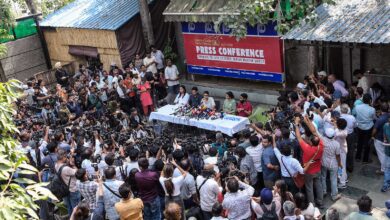
According to Reuters’ reporting of 10 October, authorities deployed extensive security across the capital, suspended mobile internet services in parts of central Delhi, shut metro stations and markets, and detained hundreds of protesters. The planned gathering at Jantar Mantar was blocked, while several political figures and protest organisers were detained.
The administration has its responsibilities. Police must prevent violence, protect public property and safeguard ordinary citizens. Protesters, too, must obey lawful restrictions and cannot claim immunity from the law merely because their cause is political.
But here lies the essential distinction: maintaining public order is a legitimate governmental duty; extinguishing lawful dissent through disproportionate restrictions is not a legitimate substitute for maintaining it.
And who is supposed to draw that line when the executive itself is exercising coercive power?
The Constitution points unmistakably towards the judiciary.
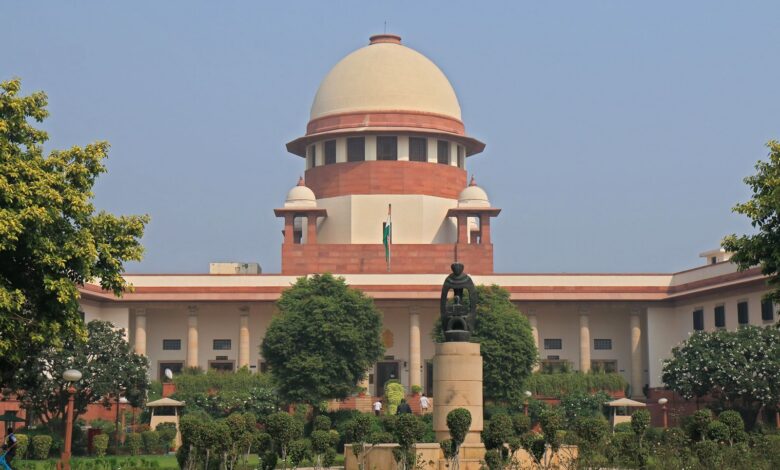
Which brings us to the Supreme Court of India.
1. Supreme Court, how much more must happen before emergency constitutional scrutiny becomes unavoidable?
It would be factually incorrect to claim that the Supreme Court did absolutely nothing in the CJP episode.
On 9 October, a bench headed by Chief Justice of India Surya Kant, with Justices Joymalya Bagchi and V. Mohana, addressed proposed transport restrictions ahead of the demonstration. The Court opposed a complete prohibition on metro movement and emphasised that security restrictions must be proportionate. The Chief Justice reportedly cautioned authorities against using a hammer to kill a fly.
That was the correct principle.
The problem is what happens after the principle has been pronounced.
A judicial direction is not a decorative sentence for newspapers. It is not a particularly elegant quotation to be circulated on social media. It is not a ceremonial reminder that the Constitution still occupies a place somewhere in the official record.
A judicial order must translate into compliance. If it does not, the next question is accountability.
On 10 October, a fresh petition reportedly sought contempt proceedings over alleged non-compliance with the Supreme Court’s directions on transport restrictions. The allegation must be tested through judicial process, not assumed to be proved. But it raises a question that goes to the heart of judicial authority: if an order of the highest court is allegedly not being implemented in the very circumstances for which it was issued, how urgently will the Court examine what happened?
The Court has already articulated the principle of proportionality. The country now needs to know whether the measures taken on the ground complied with that principle.
Did the authorities implement the directions faithfully? Were any restrictions continued despite being unnecessary? Were alternative arrangements available? What was the actual legal basis for each major restriction? And if there was non-compliance, who was responsible?
These are not anti-government questions. They are constitutional questions.
And the Supreme Court must be as interested in the answers as the citizens whose daily lives were affected.
2. The Court intervened on transport. Will it examine the wider question of liberty?
There is a distinction between challenging a transport shutdown and examining a broader pattern of preventive restrictions.
The first concerns public convenience, access to transport and proportionality. The second can involve fundamental rights, the legality of detention, access to lawyers, freedom of expression and the right to peaceful assembly.
Both matter.
Reports of extensive detentions on 10 October deserve careful scrutiny, particularly where people were allegedly detained before reaching the planned protest site. Reports also indicated that several advocates were detained near the Supreme Court premises.
The Supreme Court Bar Association called for the Chief Justice’s urgent intervention after the reported detention of lawyers. According to India Today’s coverage, the association’s president subsequently contacted the Deputy Commissioner of Police, after which the detained lawyers were expected to be released.
If lawyers can reportedly be detained while attempting to protest near the Supreme Court itself, the episode raises questions that extend well beyond one political organisation or one demonstration.
Were the detentions legally justified? Were the individuals informed of the grounds for their detention where required by law? Were they given the opportunity to contact legal counsel? Were any lawyers prevented from performing professional duties? Were the restrictions necessary and proportionate? Were similarly situated people treated consistently?
These questions require verified facts, not speculation.
But they also require something more than expressions of concern.
The Court’s earlier intervention is relevant and should be acknowledged. So should the possibility that the circumstances on 10 October presented additional questions needing examination.
The criticism, therefore, is not that the Supreme Court never spoke. It is whether its response has been sufficiently comprehensive, timely and effective to meet the full scale of the constitutional questions raised.
If the Court believes the allegations are unfounded, a transparent judicial examination can establish that. If they disclose unlawful action, the rule of law requires appropriate remedies.
Either way, silence or uncertainty should not be allowed to become a substitute for accountability.
3. Will the Supreme Court permit democracy to become an administrative permission slip?
A functioning democracy does not require every protest to succeed. It does not require every government to agree with its critics. Nor does it mean that every gathering must be permitted at any location, irrespective of safety, traffic or competing public interests.
Democracy requires something more fundamental: the government must remain answerable to citizens, and citizens must be able to question authority without being treated as enemies of the state merely because their questions are inconvenient.
The Supreme Court has repeatedly recognised both the right to protest and the need to balance that right against the rights of other members of the public.
In Amit Sahni v. Commissioner of Police, decided in 2020, the Court addressed the limits of prolonged occupation of public ways in the context of the Shaheen Bagh protests. It did not hold that constitutional challenges or public dissatisfaction eliminate the right to protest. The question was how and where demonstrations could be conducted while protecting public access and the rights of others.
The judgment is available here.
That balance matters in Delhi today. Protesters cannot claim unlimited authority over public streets. Equally, the administration cannot convert the principle of regulating a demonstration into a blank cheque for preventing dissent.
There is a profound difference between regulating a protest and disabling the conditions necessary for citizens to participate in one.
A government that wants to prevent violence can deploy proportionate policing, establish reasonable security perimeters, regulate traffic, facilitate lawful assembly and prosecute specific unlawful conduct supported by evidence.
A government should have to explain why it is necessary to go further.
When the collective response to a planned demonstration affects transport, communication, commerce, movement and access to the protest site, a constitutional court has reason to ask whether the restrictions are justified individually and collectively.
Otherwise, a troubling precedent can emerge: the larger the protest expected, the greater the restrictions imposed; the greater the restrictions imposed, the harder it becomes for citizens to exercise their rights; and the resulting absence of a large demonstration is then presented as evidence that public order has been preserved.
What a convenient constitutional arithmetic.
The fewer citizens permitted to assemble, the quieter the streets. But quieter streets do not automatically mean a healthier democracy.
A capital can be orderly and still have serious civil-liberties questions. Peace can be genuine, or it can be the apparent peace produced by keeping everyone away.
The judiciary’s responsibility is to distinguish between the two.
4. Why no broader suo motu intervention? Does the judiciary need a formal invitation before noticing a constitutional problem?
Suo motu cognizance is one of the most powerful instruments available to constitutional courts. It enables a court to examine a matter on its own initiative rather than waiting for a properly framed petition from an affected individual.
But it is not an automatic requirement whenever a controversy appears in the news. Courts must consider jurisdiction, credible material, the appropriate procedure, the existence of pending proceedings and the need to hear all affected parties.
The question is not whether every controversy must trigger suo motu proceedings.
The question is whether a sufficiently serious and credible indication of systemic rights violations warrants urgent judicial examination—even if those affected do not have the practical ability to approach the Court immediately.
Consider the circumstances reported on 10 October: extensive preventive policing, detention of protesters and public figures, disruption to transport and communications, and allegations that even lawyers near the Supreme Court were detained.
No single report proves that every police action was unlawful. Nor does the available material establish that every person detained was peaceful or entitled to be released immediately.
But why should those uncertainties be a reason for inaction rather than a reason for fact-finding?
A court could require a factual account of the detentions, the statutory provisions invoked, the orders authorising restrictions, the grounds for internet suspension and the extent to which the public-transport directions were implemented.
It could examine whether the restrictions were necessary, whether less restrictive alternatives were considered and whether anyone was denied access to legal remedies.
It could hear the government’s explanation before reaching conclusions.
Such an approach would not prejudge the legality of the authorities’ conduct. It would establish the facts needed to determine legality.
This is the distinction between judicial overreach and judicial vigilance.
The Supreme Court should not govern Delhi’s streets, direct every police operation or decide political disputes by intuition. But it must remain institutionally capable of testing executive action against fundamental rights.
A constitutional court does not have to assume that the government is guilty. It has to ensure that the government’s power is not beyond examination.
Where credible allegations concern liberty on a broad scale, the question of timely judicial scrutiny becomes particularly urgent.
5. The internet shutdown: can citizens meaningfully exercise their rights when communication is restricted?
The reported suspension of mobile internet in parts of central Delhi raises a separate constitutional question.
Internet restrictions are often defended on public-order grounds. There can be circumstances in which temporary restrictions are legally justified. But the existence of a security concern does not remove the requirement to follow the law.
In Anuradha Bhasin v. Union of India, decided in January 2020, the Supreme Court addressed restrictions on internet and telecommunications services. The judgment recognised constitutional protection for speech and expression over the internet and required internet-suspension orders to comply with legality and proportionality. It also rejected indefinite suspension and directed publication of relevant orders so that they could be challenged.
The judgment is available here.
The significance of that decision is straightforward. The government cannot justify a restriction merely by naming a threat. The restriction must satisfy the applicable legal standards.
In the CJP episode, therefore, the pertinent questions include:
What order authorised the reported suspension of mobile internet services? Was it published as required? What evidence supported the restriction? Why was the geographical area selected? Was the duration limited to what was necessary? Were less restrictive alternatives considered? Were essential services adequately protected?
And what independent review was available to affected citizens?
The ability to communicate is not merely a convenience in a modern democracy. It affects how people obtain information, contact lawyers, learn where restrictions apply, report detention, challenge official action and document events.
To be clear, not every communications restriction is unconstitutional. But every restriction must be judged by law rather than by the convenience of the authority imposing it.
The Supreme Court has already articulated that standard. Its credibility depends in part on how consistently that standard is applied.
6. The judiciary is not the protector of the government’s version of law and order
There is a crucial institutional distinction that should never be lost in this debate.
Police maintain public order. The executive administers government policy. Election authorities conduct elections within their constitutional and statutory responsibilities.
The judiciary determines whether public power has been exercised lawfully when that question is properly brought before it or otherwise falls within its powers.
Judges are not required to endorse every protest. They are not political campaigners. They do not have to accept every allegation against the government. Their duty is not to replace the executive.
But neither are they supposed to act as the executive’s constitutional public-relations department.
When the government says a restriction was necessary, the judicial question is whether the law permits it and whether the measure satisfies applicable constitutional standards.
When police say a detention was necessary, the question is whether the legal grounds existed and the required procedures were followed.
When an authority claims a public-order emergency, the question is whether its response was justified, proportionate and subject to appropriate review.
When citizens allege that an official restriction has deprived them of liberty, the question is whether their grievance deserves a remedy under the law.
That is the separation of powers in practice.
The judiciary must neither automatically presume misconduct by the state nor automatically presume that every exercise of state power was justified.
A government is entitled to enforce the law. It is not entitled to be the final judge of whether its own enforcement of the law was lawful.
That is precisely why an independent judiciary matters.
7. The uncomfortable question about post-retirement benefits and political appointments
Now comes the question that makes the legal establishment uncomfortable.
Are some judges more concerned about their positions, institutional privileges and post-retirement prospects than about the public’s expectation of judicial courage?
That is a serious question. It must be asked carefully.
There is no substantiated evidence in the reporting reviewed for this article that any judge involved in the CJP proceedings acted out of concern for personal benefits or future appointments. It would be irresponsible to allege such a motive against an individual judge without evidence.
But refusing to make an unsupported accusation does not mean that the institutional issue should be ignored.
India has a longstanding debate over post-retirement appointments of judges to public offices and the potential impact of such appointments on perceptions of judicial independence.
In September 2023, the Supreme Court dismissed a public interest litigation seeking a two-year cooling-off period before retired constitutional-court judges could accept post-retirement appointments. The petition had raised concerns that such appointments could undermine public confidence in judicial independence, even where no actual quid pro quo was established.
The report on that proceeding is available from LiveLaw.
The dismissal of that petition does not establish that judges are influenced by prospective appointments. Nor is accepting a lawful post-retirement position, by itself, proof of improper conduct.
The deeper problem is institutional perception.
Judicial independence depends on the reality of independence and on public confidence that judges are able to decide politically sensitive disputes without fear, favour or expectation of reward.
If a judicial order is unpopular with the executive, citizens must be confident that the judge will apply the law nevertheless. If the government is criticised by the Court, citizens must be confident that the criticism arose from constitutional principle rather than political preference. If the Court declines to intervene, citizens must be able to understand the legal reasons for that decision.
These are demanding standards. They must be.
Judicial office is not an ordinary government posting. The authority attached to it comes with a corresponding obligation to preserve public confidence.
The sarcastic question, therefore, is not whether a particular judge is secretly waiting for a post-retirement reward.
It is this:
Why should citizens ever have to wonder whether the independence of a constitutional court could be influenced by incentives outside the courtroom?
The system must do enough to make that suspicion less plausible—not by demanding that citizens remain silent, but by maintaining safeguards, transparency and a demonstrable culture of independence.
The public does not owe the judiciary unconditional confidence. The judiciary earns confidence by showing, repeatedly, that the law comes before convenience.
8. If the Supreme Court’s orders are not followed, what remains of its authority?
This may be the most immediate institutional question arising from the events of 9 and 10 October.
The Supreme Court reportedly directed that metro services should not be completely prohibited. A contempt petition was subsequently filed, alleging that authorities continued to shut stations and impose restrictions in breach of the Court’s directions.
The allegation remains an allegation unless and until judicially determined.
Nevertheless, the Court has reason to establish what actually happened.
If the authorities complied, the facts should demonstrate compliance.
If practical difficulties required modified arrangements, the responsible authorities should explain those arrangements and the legal basis for them.
If any order was deliberately or unlawfully disregarded, the Court must decide the appropriate response through a fair process.
None of this requires the Court to take the protesters’ side. It requires the Court to take its own orders seriously.
The authority of the judiciary rests not on the grandeur of its building, the solemnity of its ceremonies or the eloquence of its language, but on the principle that judicial orders are binding and that lawful remedies remain available when they are breached.
A court that issues an order must be prepared to examine credible allegations of non-compliance.
Otherwise, a dangerous lesson may be learned: judicial intervention is effective only to the extent that the administration finds it convenient to follow.
That cannot be the meaning of constitutional government.
The Supreme Court’s order must not become a suggestion that expires when the streets fill with police vehicles.
9. Is India becoming a dictatorship? The question deserves scrutiny, not slogans
The word dictatorship carries enormous political and historical weight. It should not be used carelessly as a substitute for evidence.
India’s constitutional structure remains distinct from that of a formal dictatorship. A single day’s protest, even one marked by serious allegations of excessive policing, does not by itself prove that the country has ceased to be a democracy.
Similarly, a government’s assertion that it is maintaining public order does not, by itself, settle whether its conduct is constitutional.
The proper question is whether democratic safeguards are functioning effectively when power is exercised under pressure.
Can people criticise the government and public institutions without unlawful retaliation?
Can peaceful demonstrations proceed subject to reasonable, lawful and proportionate regulation?
Can journalists report events without unjustified detention or intimidation?
Can citizens approach a court when their rights are threatened?
Can an independent judiciary scrutinise executive decisions even when the dispute is politically sensitive?
Can electoral controversies be examined through credible, timely and impartial procedures?
These are the questions against which a democracy should be judged.
The CJP protest has brought several of them into sharp focus. It concerned complaints about electoral-roll revision, but the response extended to assembly, movement, communication and preventive policing.
The Election Commission’s explanations and the protesters’ allegations should be examined on their evidence. Neither political accusations nor official assurances can replace independent scrutiny.
If the authorities acted lawfully, that conclusion should stand up to examination.
If they acted unlawfully, the law must provide remedies.
And if the restrictions were disproportionate, the fact that they were imposed in the name of security should not insulate them from criticism.
Democracy is not measured by how comfortably a government can govern without interruption. It is measured, in part, by how lawfully it responds when citizens interrupt the government’s preferred narrative.
The judiciary is one of the principal institutions entrusted with protecting that distinction.
It must not allow constitutional liberty to survive merely as a phrase in judgments while becoming increasingly fragile in the public square.
10. The Supreme Court must distinguish between controlling a protest and protecting the right to protest
There are two simplistic positions in this debate, and neither is sufficient.
The first is that every proposed protest must proceed without restriction. That would disregard public safety, the rights of commuters, property, and the legitimate responsibilities of law enforcement.
The second is that once the police invoke law and order, the courts should leave the matter entirely to the executive. That would disregard the purpose of constitutional judicial review.
The Constitution requires neither extreme.
A court can recognise legitimate security concerns while insisting that restrictions have a proper legal basis. It can acknowledge the inconvenience caused to the public while protecting the right to peaceful assembly. It can permit action against violence while requiring that peaceful participants not be swept into indiscriminate preventive measures without lawful justification.
The Court’s intervention on transport restrictions was an example of the need for that balance.
The remaining challenge is to ensure that the balance is not confined to transport.
The legality of detentions, the treatment of advocates and journalists, the basis for communications restrictions, access to legal assistance and allegations of non-compliance with judicial orders all deserve examination on their own facts.
A reasoned judicial response would strengthen the rule of law regardless of which political side benefits.
That is the standard the country should demand.
11. What should the Supreme Court do now?
The answer is not to issue dramatic orders merely to satisfy public anger. It is to take practical steps that establish facts, protect rights and ensure compliance with the law.
First, the Court should ensure that the allegations concerning its 9 October directions are considered through the appropriate judicial process. The authorities should be required to explain how the directions were implemented, what restrictions remained in place and why.
Second, where credible allegations of widespread or arbitrary detention have been raised, the competent court should consider requiring an accurate account of those detained, the legal grounds invoked, the duration of detention and the circumstances of release, subject to appropriate safeguards for individual rights.
Third, the legal basis for internet suspension and other major restrictions should be publicly accessible as required by law, so affected citizens can challenge them effectively.
Fourth, alleged detention or intimidation of lawyers and journalists should be investigated on the available evidence. Professional status must not confer immunity from lawful restrictions, but it must not become a pretext for obstruction or intimidation either.
Fifth, electoral-roll disputes should be addressed through transparent legal procedures capable of identifying and correcting genuine errors. The judiciary need not endorse the allegations of any political party to recognise that accurate electoral rolls and meaningful remedies for excluded eligible voters are essential to democratic legitimacy.
Finally, where orders are deliberately or unlawfully disobeyed, the Court should apply the law fairly and consistently. Where allegations prove unfounded, it should say so just as clearly.
None of these steps demands that judges enter the political arena.
They demand that constitutional adjudication operate as it should.
12. The final question: Will the judiciary be remembered for its words, or for what its words protected?
India’s Supreme Court has not been silent in every aspect of the CJP episode. It intervened on the transport restrictions before the protest, and the Chief Justice was reportedly approached after lawyers were detained near the Court.
Those facts deserve acknowledgement.
But acknowledging judicial intervention does not require the public to suspend scrutiny of whether more was necessary, whether orders were implemented and whether the broader allegations warrant further action.
A constitutional court does not lose its authority when citizens question it. It loses public confidence when serious constitutional questions appear to receive no proportionate, transparent or effective answer.
Nor should the Court’s performance be judged by whether it agrees with the protesters, the government or the opposition. Its performance should be judged by whether it applies the law consistently, examines credible allegations, protects access to justice and remains willing to review coercive power.
The government may argue that it was preventing disorder. Protest organisers may argue that their democratic rights were suppressed. The Election Commission may defend its revision process. Citizens affected by restrictions may have their own grievances.
The Supreme Court does not have to accept any of those positions uncritically.
It has to examine them impartially.
And if the public-transport restrictions are alleged to have continued in defiance of the Court’s directions, that allegation must be addressed with the seriousness that judicial authority requires. If detention practices or communications restrictions raise credible constitutional questions, those too should receive an appropriate legal response.
As for the question of judges’ post-retirement benefits, the responsible position is equally clear: do not invent motives without evidence, but do not dismiss legitimate concerns about the safeguards necessary to preserve institutional independence.
The judiciary is not beyond criticism. It is the institution to which citizens turn precisely because executive power must not be beyond scrutiny.
The people of India are not asking the Supreme Court to organise demonstrations, choose political winners or declare a government guilty simply because it is unpopular with its critics.
They are asking something more fundamental.
Can the Constitution be relied upon when its protections become politically inconvenient?
Can a citizen challenge the government without first needing the government’s permission to be heard?
Will allegations of unlawful detention be examined rather than lost in the machinery of administration?
Will the Court ensure that its orders mean what they say?
Will it protect the space in which democracy is permitted to question itself?
And when a dispute becomes politically explosive, will judicial independence be visible not merely in the language of judgments, but in the Court’s willingness to apply the same constitutional standards to every side?
These are not unreasonable expectations of the Supreme Court. They are the very reasons that constitutional courts exist.
A government may be temporary. A political majority may change. Police deployments may end, barricades may come down and internet services may be restored. Today’s protest may disappear from tomorrow’s headlines.
But the precedent established by how the state and the judiciary respond to dissent can outlast the immediate controversy.
If extraordinary restrictions are imposed, the question of their legality must remain open to meaningful scrutiny. If rights are infringed, there must be effective remedies. If judicial directions are breached, the Court must establish the facts and decide what follows.
The Constitution must not become a document that citizens are permitted to celebrate but not effectively exercise.
And the Supreme Court must not be judged simply by whether it spoke once, or issued a warning, or produced a memorable quotation.
It must be judged by whether its constitutional authority made a real difference when citizens needed it.
Because the purpose of a constitutional court is not merely to remind the powerful that rights exist. It is to ensure that power remains answerable when those rights are put to the test.
On 10 October 2026, the question facing the Supreme Court was not whether India needed public order. It did.
The question was whether public order would be maintained within constitutional limits—and whether every credible allegation that those limits had been crossed would receive serious judicial attention.
The answer matters far beyond the CJP protest.
It matters to every citizen who may one day disagree with the government, challenge an official decision, question an election process or take to the streets to demand accountability.
It matters to every judge whose oath derives its meaning from the Constitution.
And it matters to the credibility of the institution entrusted with ensuring that the rule of law remains more than a promise.
The Supreme Court has the constitutional authority to ask the government difficult questions. The public is entitled to ask the Supreme Court difficult questions, too.
The final question is therefore unavoidable:
When the next citizen asks where constitutional protection stood while liberty was under pressure, will the answer be a judgment that changed the course of events—or merely a quotation reminding us what should have happened?
That is the standard by which the judiciary’s response to the CJP protest should ultimately be judged.
And that is why the Supreme Court must ensure that India’s Constitution remains a living guarantee, rather than an elegant document waiting in the wings while the real drama of democracy unfolds behind barricades.