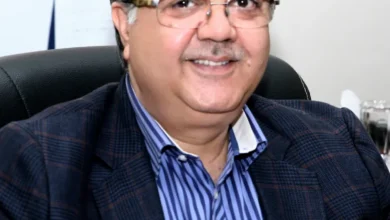
“BAIL MILEGI, SIR?” — THE GREAT INDIAN ‘DATE PE DATE’ SPECTACLE: WHY SOME ALREADY EXPECT NAYAN RAHEJA TO WALK OUT WITH RELIEF BEFORE 4,600 HOMEbuyers GET ANSWERS
Seven ED summonses. Five reported non-appearances. ₹2,399.65 crore in provisionally attached assets. And an anticipatory-bail battle that raises a question far bigger than one individual: Will the system deliver speedy accountability, or another masterclass in procedural patience?


Let us begin with a prediction so confident that it deserves its own disclaimer:
“The Indian courts will surely grant Nayan Raheja bail!”
Who knows? Perhaps they will. Perhaps they will not. At the moment, anyone claiming certainty about the outcome is not reporting a judicial decision. They are operating a fortune-telling counter outside a courtroom.
But the very fact that such a prediction sounds plausible to a cynical observer is the real story.
Why have so many ordinary citizens become accustomed to expecting that a high-profile accused will have an army of lawyers, a carefully constructed defence, multiple procedural arguments and an extended legal battle—while the people seeking answers will have to keep checking the next hearing date?
And why, whenever a financially powerful accused person approaches a court, does a section of the public instinctively begin placing imaginary bets on the outcome?
The answer is not that courts are necessarily inclined to grant bail. There is no verified basis for that conclusion in Nayan Raheja’s case. The answer is that repeated procedural delays, complex corporate litigation and the long wait for substantive outcomes have created a crisis of confidence that deserves serious scrutiny.
The judiciary deserves independence. The accused deserves due process. The investigating agency must prove its case.
And the homebuyers? They deserve something rather more tangible than another instalment of Date Pe Date.
1. Five missed appearances: Is a summons now merely a calendar suggestion?
According to reporting on the Saket Special PMLA Court’s order dated 19 September 2026, the Enforcement Directorate had issued seven summonses to Nayan Raheja. He appeared on two occasions and reportedly did not appear on five others, citing different reasons.
The trial court rejected his anticipatory-bail application. The reported history of non-appearance formed part of the court’s consideration.
These are procedural facts reported from the proceedings; they do not, by themselves, establish money laundering or prove that the reasons given for non-appearance were invalid.
Nevertheless, the numbers deserve attention.
Seven summonses. Two appearances. Five non-appearances.
That is a ratio the investigating agency, the defence and the court should be able to explain without requiring the public to complete a legal jigsaw puzzle.
If there were legitimate reasons for the missed appearances, let them be examined. If medical circumstances, scheduling conflicts, legal objections or other genuine obstacles existed, they should be documented and evaluated fairly.
If the explanations were insufficient, the court can consider that conduct under the applicable legal standards.
What should not happen is for the controversy to become an endless exchange of allegations, explanations and adjournments without clarity on what the investigation actually requires.
A summons is a lawful instrument, not a polite invitation to a corporate networking dinner.
And cooperation with an investigation is not a decorative sentence to be inserted into a court order and forgotten when inconvenient.
The reported Saket court proceedings of September 2026 deserve to be read alongside the subsequent High Court record, rather than reduced to social-media slogans.
Here is the sarcastic question that needs a serious answer:
If a small businessman misses five official appointments, he cannot simply announce that his diary was busy and expect the controversy to disappear. So what, precisely, explains five non-appearances here?
The answer must come from the record, not from assumptions about wealth, influence or privilege.
Because the rule of law is not a premium subscription in which the basic terms and conditions change depending on the subscriber.
2. The anticipatory-bail express: Next stop, the High Court
After the trial court rejected his anticipatory-bail application, Raheja moved the Delhi High Court in Bail Application No. 4194/2026, concerning ECIR/DLZO-II/30/2022 dated 13 March 2022.
On 1 October 2026, the High Court issued notice to the ED. On 6 October, Justice Amit Bansal directed the agency to file a status report supported by an affidavit, permitted additional documents to be placed on record and listed the matter for 9 October.
These procedural developments can be checked in the Delhi High Court order dated 1 October 2026 and the order dated 6 October 2026.
Notice, however, is not bail. A hearing date is not an acquittal. Permission to submit documents is not a finding that the defence is correct.
And the rejection of anticipatory bail by the lower court is not a final finding of criminal guilt.
Yet somewhere between the filing counter, the courtroom and the next listed date, public debate often begins behaving as if the final order has already been typed.
The anticipatory-bail process exists to protect liberty where the applicable legal standards justify that protection. It is not inherently suspicious, nor is asking for bail evidence of wrongdoing.
Equally, seeking bail cannot be allowed to substitute for answering the underlying factual questions.
The relevant issue is whether the legal criteria for relief are satisfied, considering the evidence, the nature of the allegations, the applicant’s conduct, the investigation’s requirements and all other legally relevant circumstances.
That is for the court to determine.
The public can question whether the process is moving efficiently. It can demand that the ED explain its investigation. It can scrutinise the facts and the legal arguments.
What it cannot responsibly do is declare in advance that a particular judicial outcome is guaranteed.
Predicting a bail order before it is delivered is not legal analysis. It is astrology with a case number.
As of 10 October 2026, I could verify the 6 October order listing the matter for 9 October, but could not independently verify a subsequent signed order disposing of the application. This article therefore does not claim that the Delhi High Court has granted or rejected the fresh plea.
The next substantive update should come from the actual judicial record.
3. ₹2,425.99 crore in collections. ₹2,399.65 crore in attached assets. And a public still asking: Where is the money?
Now comes the part that makes this controversy much larger than an anticipatory-bail application.
The ED’s official press releases concerning Raheja Developers describe collections of approximately ₹2,425.99 crore from around 4,600 homebuyers and property provisionally attached at a cumulative estimated market value of approximately ₹2,399.65 crore.
The agency reported the following attachment figures:
- 28 April 2026: ₹1,113.81 crore.
- 15 June 2026: ₹503.48 crore.
- 31 July 2026: ₹782.36 crore.
Together, these produce the reported cumulative attachment value of ₹2,399.65 crore.
Sources: ED press release dated 28 April 2026, 15 June 2026 attachment reporting and ED press release dated 31 July 2026.
These figures must be understood correctly.
An attachment is not a conviction. The estimated market value of attached properties is not necessarily the value of criminal proceeds finally established by a court. Provisional attachment does not automatically mean that the assets have been confiscated or that homebuyers have received refunds.
But it does put a substantial set of financial questions squarely on the table.
Who collected the money? Which accounts received it? How much was actually spent on construction? What went to other group entities? Which transfers were legitimate business transactions? Which transactions does the ED allege were diversion of funds? Who authorised them? Who ultimately benefited?
And what remains traceable today?
There is also an important discrepancy requiring clarification. Reporting on the High Court proceedings has cited a collection figure of approximately ₹2,699.13 crore and alleged diversion of ₹1,353.26 crore. The reported proceedings also included an allegation that ₹1.23 crore linked to the alleged proceeds of crime was received by Nayan Raheja personally.
Those figures have been reported in connection with the litigation, but they should not be silently combined with the ED’s own published totals. The differences need to be reconciled through the underlying records and agency submissions.
This is precisely why the status report sought by the High Court matters.
The public does not need another impressive number. It needs an intelligible money trail.
A property attachment may secure an asset. A press release may publicise the amount. A court hearing may establish the next procedural step.
But none of those automatically puts money back in a homebuyer’s account.
The bitter punchline is that the market value of an attached asset can be stated down to two decimal places, while the public may still be waiting for a clear account of the money that was allegedly diverted and the remedies legally available to those who suffered loss.
The agency should now explain the figures transaction by transaction.
Because ₹2,399.65 crore looks impressive in a headline. A fully reconstructed ledger would be more impressive in court.
4. The defence is entitled to be heard. The evidence is entitled to be examined.
Nayan Raheja’s defence, as reported in the proceedings, has challenged the allegation that he was personally involved in the alleged diversion.
His counsel has relied on his stated historical directorship periods, an asserted shareholding of approximately 0.81%, his claimed role as an architect advising on drawings, and arguments concerning the absence of a charge-sheet against him in the predicate offences.
The defence has disputed the basis for the allegations against him and argued that the requirements for anticipatory bail are satisfied.
Those arguments deserve serious consideration.
A person is not guilty because of a surname. Corporate association is not proof of personal participation. A small shareholding does not establish criminality, and the absence of a charge-sheet in a predicate case cannot be ignored when examining the defence’s submissions.
At the same time, a shareholding percentage alone does not establish who exercised practical control over transactions. A professional designation does not conclusively determine a person’s actual responsibilities. Those matters require documentary examination.
The right response is neither to accept the defence uncritically nor to dismiss it sarcastically.
The right response is to ask for the evidence.
What did the relevant corporate filings show? Who was authorised to operate the accounts? Who approved the transfers? What was the applicant’s actual role during the relevant period? What evidence supports or undermines the agency’s allegation regarding the reported ₹1.23 crore?
These are answerable questions if the investigation has been properly conducted.
And if the evidence does not establish individual culpability, that conclusion should be reached fairly. If the evidence does, the case should proceed according to law.
A strong investigation does not fear the defence’s arguments. It answers them.
That is how the public gets a reliable outcome rather than a prolonged battle of competing press statements.
5. Revanta, Shilas, Trinity—and the homebuyers who cannot live inside a court order
The wider controversy is not confined to one individual’s bail plea.
Projects including Raheja Revanta, Raheja Shilas and Raheja Trinity have featured in reported buyer disputes, insolvency proceedings and regulatory litigation.
In June 2026, The Times of India reported the admission of an insolvency petition involving 176 homebuyers and 99 units in Raheja Revanta. The report stated that the buyers had paid more than ₹137 crore and were still awaiting possession. The developer attributed delays to various external infrastructure and approval issues and maintained that the project was at an advanced stage of completion.
Source: The Times of India, 11 June 2026.
Separately, The Indian Express reported on 4 September 2026 that Haryana RERA ordered a refund of ₹50,49,890, with 10.80% annual interest, to buyers who had booked a commercial unit in Raheja Trinity in 2017. The report described a prolonged wait for possession and a regulatory order requiring a refund.
Source: The Indian Express, 4 September 2026.
These proceedings must be described accurately. They do not independently prove the criminal allegations against Nayan Raheja. The company’s explanations and the precise status of each project must be considered on their own records.
But to families who have paid substantial sums, the difference between a legal remedy on paper and an actual remedy in their hands is enormous.
A homebuyer’s bank does not postpone an EMI because the project has been listed for another hearing. The landlord does not accept a High Court cause list in lieu of rent. The family’s savings do not earn interest merely because the dispute has become legally complicated.
An order for a refund may offer legal relief, but implementation and recovery remain essential.
The same applies to possession. A promised date that repeatedly recedes into the future eventually stops looking like a date and starts looking like a marketing strategy.
The buyer was sold a dream home. The system must not sell the buyer an endless dream of justice.
For the institutions involved, the priority must be to establish what went wrong, who is legally responsible, what relief is due and how lawful remedies can be implemented without avoidable delay.
No individual should be condemned without proof. No legitimate buyer claim should be left in limbo without an effective legal path.
6. India’s ‘date pe date’ culture: The only thing that should be guaranteed is a fair decision
The statement that Indian courts will “surely” grant bail to Nayan Raheja is powerful as satire because it exposes a broader public frustration.
People see an investigation, a bail application, a rejected plea at one level, proceedings at another level, a request for a status report and another hearing date.
They begin asking whether the system is designed to deliver decisions or simply to schedule the next opportunity to discuss why a decision is still pending.
That frustration is understandable.
But the conclusion should not be that the outcome is predetermined.
Judicial independence means that an anticipatory-bail application must be determined on the record and applicable law. The court should neither grant nor reject relief to satisfy public anger, the investigating agency, the accused or the media.
The appropriate criticism is directed at avoidable delay, inadequate investigation, poor financial reconciliation and a lack of timely progress—not at an unsupported allegation that the outcome has already been decided.
A fair hearing is not a favour. A reasoned order is not a concession. And bail, where legally justified, is not an admission of innocence or guilt in the underlying case.
Likewise, denial of bail is not a conviction.
There is an uncomfortable irony here. The more complex the corporate allegations become, the more important it is for agencies to present a clear evidentiary case. Yet complexity can also make it harder for the public to understand what is actually happening.
That gap is fertile ground for cynicism.
The answer is to narrow the gap with verifiable records, not to fill it with conspiracy theories.
If the ED has traced the money, it should show the court how. If the defence disputes the trail, it should be allowed to challenge the evidence. If the court needs further information, the necessary report should be filed and the matter progressed efficiently.
And if additional investigation is genuinely required, it should be directed towards specific outstanding questions with realistic timelines.
The public should not have to guess whether justice is coming. The institutions should be able to demonstrate that the case is moving towards an answer.
7. What should happen now: Less courtroom theatre, more forensic accounting
The next phase must be measured in substantive progress, not merely hearing dates.
The ED should provide a transparent reconciliation of the different reported collection and diversion figures. It should identify the transactions, accounts and related entities relevant to the allegations and explain the evidentiary basis for attributing responsibility to each individual.
It should also clarify the current status of the provisionally attached assets, the objections raised, the legal steps required for further action and any lawful mechanism through which funds may ultimately be recovered for eligible claimants.
The defence must have a fair opportunity to examine and challenge the material relied on by the agency.
The Delhi High Court should determine the anticipatory-bail application promptly on the applicable legal standards. There must be no presumption that relief is inevitable, and no presumption that denial of relief would establish guilt.
The agencies and adjudicating bodies dealing with the connected project disputes should coordinate within their legal mandates. Regulatory orders, insolvency proceedings and criminal investigations serve different purposes; the public interest requires that their respective outcomes be clear and that avoidable procedural fragmentation be minimised.
The priority is not to manufacture a dramatic outcome. It is to establish facts, secure assets lawfully, protect legal rights and bring the relevant proceedings to a timely conclusion.
That is the standard every citizen should demand.
The final punchline: If bail comes, let it come by law. If rejection comes, let it come by law. But let the answers come without endless delay.
Will Nayan Raheja obtain anticipatory bail from the Delhi High Court?
The honest answer is that the outcome cannot be declared in advance. The court must decide the application on the evidence, the legal framework and the relevant circumstances.
But another question deserves a much less comfortable answer.
Will the ED explain the alleged money trail clearly enough to stand up to scrutiny? Will the reported differences in the financial figures be reconciled? Will the investigation establish individual responsibility rather than relying on corporate association? Will the affected homebuyers see meaningful progress in the legal remedies available to them? And will all the connected proceedings move forward without avoidable delay?
Those are not predictions. They are legitimate demands for accountability.
The public does not need a guarantee that Nayan Raheja will receive bail. It needs a guarantee that the law will be applied fairly, the evidence will be tested rigorously, and the process will not be permitted to drift without explanation.
The sarcasm, then, is reserved for the system’s habit of allowing procedural movement to be mistaken for substantive progress.
Seven summonses should produce clarity about cooperation. Thousands of crores under investigation should produce a coherent financial account. Attachments should be accompanied by lawful steps to preserve and adjudicate assets. A bail application should receive a reasoned decision. A buyer’s grievance should receive an effective remedy through the relevant legal process.
If this becomes another case of “date pe date,” the joke will not be on the accused, the ED or the court alone. It will be on a justice system that asks ordinary people to trust its process while struggling to show them when that process will deliver an answer.
So, will the courts “surely” grant Nayan Raheja bail?
That is a prediction for the pundits.
The public-interest demand is more serious: ensure that whichever decision the court reaches is lawful, reasoned and based on evidence—and that the investigation and connected proceedings advance towards timely resolution.
Because, in a matter involving thousands of homebuyers and allegations running into thousands of crores, the final test is not whether a headline predicted the bail order correctly.
It is whether the law did its job.
Bail is for the court to decide. Guilt is for the evidence to establish. Recovery is for the law to determine. And delay is a problem the system must stop treating as business as usual.
End.
Editorial and legal note
The figures concerning homebuyer collections and attached assets are attributed to ED releases and contemporary reporting. The allegations concerning diversion and Nayan Raheja’s individual role remain allegations unless and until established through the applicable legal process. The company has disputed wrongdoing and has advanced explanations for project delays. No claim of judicial bias, corruption or a predetermined bail outcome is made.
The latest independently verified High Court order located for this article is dated 6 October 2026 and lists the matter for 9 October 2026. The subsequent disposition was not independently verified as of 10 October 2026; that status should be checked against the current court record before publication.