What BJP Government Must Learn From Indian’s History Which It Has Not Learned Yet!


The Cockroach That Can Fly And Will Bite This Time: What The BJP Government Must Learn From The CJP Saga, And Is Still Failing To Learn!!
Governments often discover too late that the smallest things can be the hardest to stamp out. A joke, a hashtag or a throwaway insult can become a movement. That is the lesson of the Cockroach Janta Party (CJP) saga, and it is a lesson the Bhartiya Janta party (BJP) government seems determined not to absorb, however many times it is repeated.
Protest is messy, and public order is a real responsibility. But the way a government responds to peaceful dissent reveals what it thinks power is for. On that test, the response so far deserves a failing grade.
1. Press Down on a Spring and It Pushes Back
History has shown that if you suppress, it will bounce back with more intensity. Suppression does not end anger, it postpones it, and the delay adds interest. Few movements have died because they were detained into silence. Many have been strengthened by it.
The CJP-led protest began as a peaceful assertion of grievance. Had the government allowed it to continue peacefully, there was a real chance that the protesters could have addressed the incumbent government.
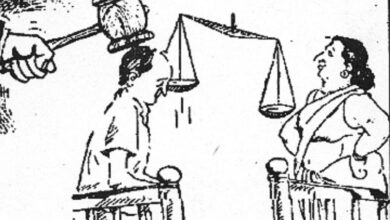
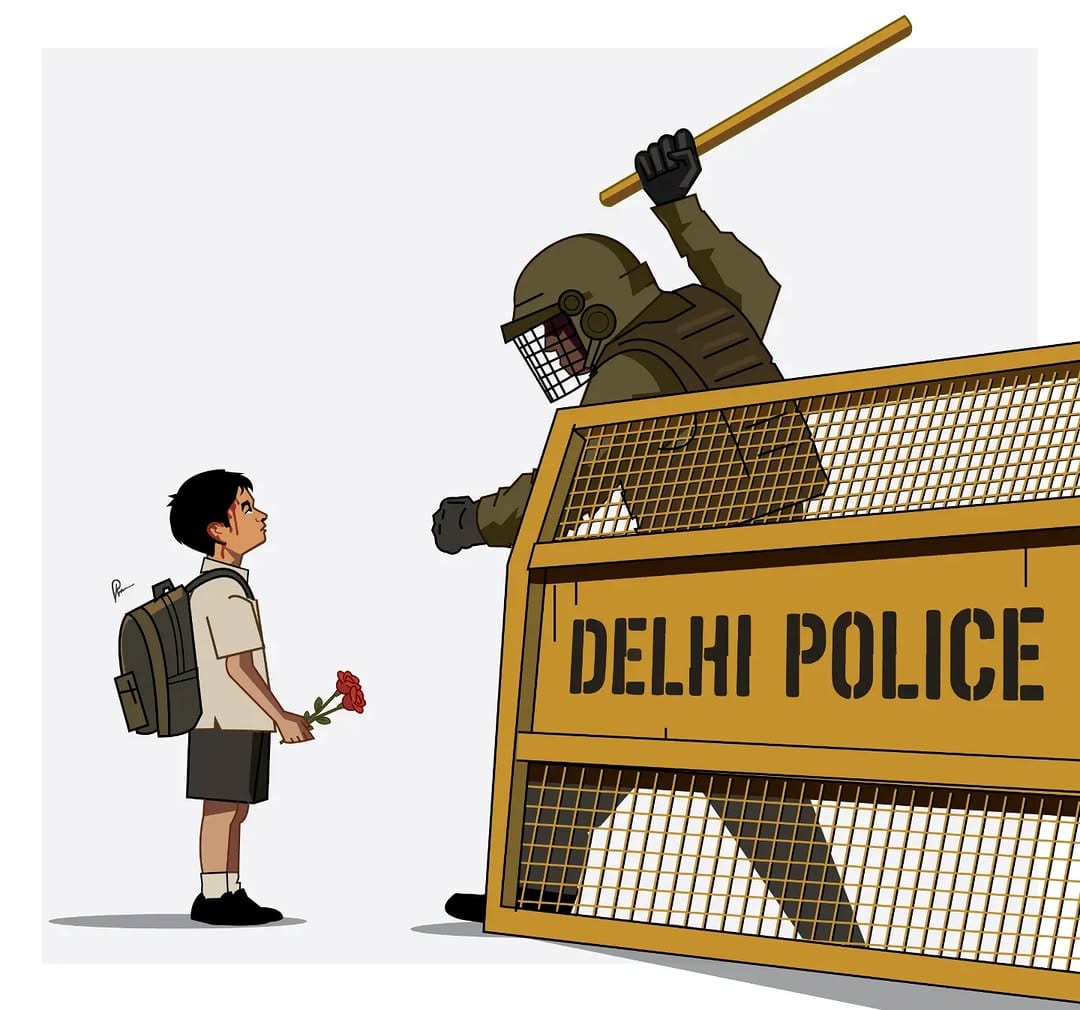
That is not what happened. Reports described tear gas, water cannons and lathi charges against student marchers in a related agitation, and Amnesty International’s India chapter called the response “state-sanctioned violence masked as crowd control.” The Supreme Court then ordered the government to drop the criminal charges against the protesters. When the highest court has to tell the executive to stop prosecuting peaceful dissent, the damage goes beyond one agitation.
Forceful detention will only push protesters toward their trigger points. A detained protester is rarely cowed. More often they become a symbol, a story told at dinner tables and a profile picture on a thousand phones. Detention does not remove the protester from the movement. It places them at the centre of it.
2. Gen Z Is a Different Breed
The current generation, Gen Z, is a different breed. Their ancestors lived a life of survival and growth, and many gave up comfort, hobbies and rest to build a safety margin. Today’s young adults inherit the fruits of that struggle and ask a different question. What they chase is quality of life over quantity.
At every point, the incumbent government is catalysing their anger to the point where they are just burning. The grievances are voiced in conversation, comment sections and surveys: excessive taxation, compromised policies, poor infrastructure, exam systems that can feel unfair, and the list is long. Whatever one thinks of each complaint, the cumulative effect is plain. Many young Indians feel they do everything right and still get less than expected. Coverage of the movement has framed the discontent as economic at root, with reporting on the hard numbers behind youth angst.
Sooner or later, they will explode, and the flames will be uncontrollable. A government can dismiss discontent as ingratitude or noise, but frustration that is not addressed does not vanish. It accumulates and then finds a spark. The warning is not that young Indians are dangerous. It is that they are patient only until they conclude that patience is being taken for weakness.
3. There Is a Limit to Everything
There is a limit to everything. Indian blood has, through times and tides, shown a pattern: we will welcome you, we will respect you, till the point you do not make us your slave. Once you dare to do so, you will see what a calm, serene DNA can do. Historical anecdotes are enough to support the statement.
Mughals and Britishers came to this land, and Indians accommodated them. For the British, it began as trade, and trade was welcomed. But once they started to rule, the people made sure they faced their fate. The Company’s commerce turned into command, and the resentment that followed ended in the freedom struggle.
Recent times show the same pattern in miniature. AAP was given a chance because people were frustrated by the duopoly of what they saw as the corrupted politics of the BJP and the Congress. But when AAP also walked down the same lane, the Delhiites made them bleed their own route. The 2025 Delhi result showed how quickly goodwill can evaporate.
Hence, no one can rule us, and the present government is exactly attempting to do so. Mandates are loans, not gifts. A decisive electoral win gives a government the right to govern, not the right to dismiss those who disagree. The more a ruling party behaves as though its authority is permanent, the more it invites a public that wants to prove otherwise.
4. The Word That Built a Movement
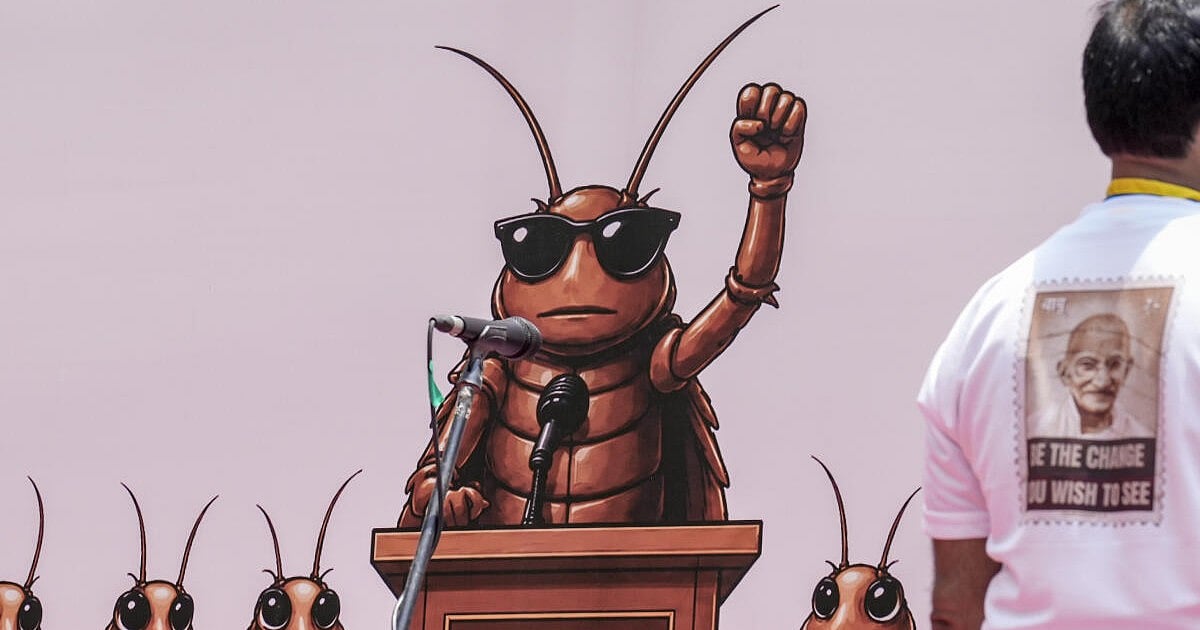
The CJP movement started with a remark of “cockroach.” It began as an online joke, born from a remark by the Chief Justice of India comparing unemployed youth and online activists to “cockroaches” and “parasites,” and it grew into a genuine mass mobilisation that drew in established student unions and large numbers of Gen Z participants.
It is worth being precise about whose words these were. The remark came from the judiciary, not from the BJP, and a fair critique must say so. But the broader point stands. A powerful institution dismissed a generation’s anxiety with contempt, and the young people on the receiving end answered with wit. They took the insult and made it a banner.
That throwaway remark turned an online joke into a genuine mass mobilisation. Every time a power centre ridicules young people instead of listening to them, it hands the movement a slogan, a symbol and fresh recruits. A government that cannot take a joke ends up being the joke. In an age of screenshots and memes, a punchline never gets deleted.
5. Jobs, Fair Exams, a Clean System, and No More Excuses
This generation wants jobs, fair exams and a clean system, and it has no patience for slogans, whataboutery or party loyalty. The agitation began over alleged exam irregularities, and celebrations followed the resignation of the Education Minister in July. That shows the youth will accept accountability, not excuses.
Posting on Snapchat or adopting trending language doesn’t count as listening, so FRANDSS will not work this time! The government has become more active on social media, with the foreign ministry even joining Snapchat, but a generation fluent in internet culture can tell a performance from a policy. The government must fix the system itself, not its social media image. Packaging cannot replace the product.
Social media is a Gen Z era thing. It is their native language and their megaphone. A government that treats it only as a place to broadcast, rather than a place to listen, wastes the opportunity. Without acknowledging their demands, the government cannot rule them. It cannot rule this generation anyway!
6. The Lesson That Is Still Not Learned
The most worrying part is not that mistakes were made, since every government makes them. It is that the pattern repeats. The CJP withdrew its Jantar Mantar protest after the Centre accepted key remaining demands, including compensation for families of students who died by suicide and the withdrawal of FIRs against protesters. Yet soon afterwards the party’s leaders spoke of reports of students and other protesters being targeted, detained or arrested in several states. A promise followed by pursuit does not build trust. It erases it.
The newest chapter shows the cycle continuing. On 3 October, police in Delhi detained more than 100 young protesters demanding the chief election commissioner’s resignation over alleged voter-roll irregularities, saying no permission had been granted, and the CJP has called for a large mobilisation of young Indians in the capital on 10 October. The Election Commission has rejected the allegations, but the optics repeat the old script. A protest is declared unauthorised, participants are detained, and the detentions become the headline instead of the issue.
As activist Yogendra Yadav asked, if a designated protest site cannot accommodate peaceful dissent, where does democracy leave room for protest? That question will not be answered by silence or a lathi.
Learning would look unglamorous: designated spaces where protest is genuinely possible, police trained to de-escalate, a transparent process for complaints of excess, honest timelines for fixing exam integrity and job creation, and a tone from the top that treats critics as citizens rather than adversaries. None of this weakens a government. It is what makes authority durable.
The Other Side of the Argument
A fair reading acknowledges the counter-case. Supporters of the government argue that large protests need permission for good reason, and that police in a crowded capital must manage safety and the risk of escalation. They point out that the Centre did concede significant demands, that an exam reform task force has been announced under Nandan Nilekani, and that governments cannot answer for every remark by other institutions.
There are also critics of the CJP itself. One Wire commentator argued that the party leadership lost its moral authority through its conduct during and after the protests. The party also faced backlash over videos of its leaders dancing at a post-protest celebration, and some critics questioned who funded the agitation. A careful citizen should hold both the state and the protest leadership to scrutiny.
Conclusion
Any administration looks confident when nobody is shouting. The real test comes when thousands of young people appear on the street, impatient and loud. How a government behaves in that moment shows what kind of democracy it believes in.
Suppression feeds what it tries to bury. A generation that wants a life worth living will not be satisfied by slogans. Patience in India is long but not infinite. Mockery builds movements, and substance earns the trust of the young. A government that tries to squash an idea with a boot rarely succeeds, because ideas have no shells to crush. If the BJP learns that now, it can turn a crisis into credit. If not, the next protest will be larger, louder and harder to ignore.