Amrapali’s ₹5,619-Crore Money Trail: ED Attaches ₹54.71-Crore Maharani Bagh Property as Questions Over Diverted Homebuyers’ Funds Resurface
The latest provisional attachment revives disturbing questions about the alleged diversion of homebuyers’ money, the use of intermediary companies, the accountability of promoters and the pace of criminal investigations in one of India’s most notorious real-estate controversies.

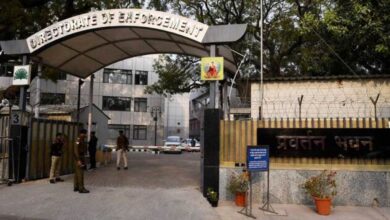
For thousands of homebuyers who put their life savings into an apartment that was supposed to become their home, the Amrapali controversy has long represented the nightmare of paying for a promise and then being left to fight for its fulfilment. Now, the Enforcement Directorate’s latest action has put another high-value property under scrutiny: an immovable asset valued at ₹54.71 crore at A-3 (New), Maharani Bagh, New Delhi, provisionally attached in connection with the Amrapali Group money-laundering investigation.
According to the ED’s press release dated 10 October 2026, the property stands in the name of Surbhaee Advertising Pvt. Ltd. The agency alleges that a portion of the money collected from homebuyers was routed, directly and through family members of Amrapali Group Managing Director Anil Kumar Sharma, to the company in the form of loans and was used in relation to the property. The agency has identified the asset as alleged proceeds of crime under the Prevention of Money Laundering Act, 2002. The attachment is provisional; it is not, by itself, a final confiscation order or a criminal conviction.
The most disturbing aspect of this development is not simply the value of the property. It is the larger financial trail behind it. In its landmark judgment of 23 July 2019 in Bikram Chatterji v. Union of India, the Supreme Court dealt with the plight of Amrapali homebuyers and considered a court-appointed forensic audit that identified ₹5,619.47 crore in alleged diversion of homebuyers’ funds. The ED’s latest release separately refers to a forensic audit finding that more than ₹5,000 crore had been diverted. These figures point to a financial scandal of extraordinary scale, although the audit total must not be confused with the value of the newly attached property or with the amount ultimately recovered.
The question confronting investigators is blunt: how much of the money collected in the name of constructing homes travelled elsewhere, through which companies and transactions, and what assets can now be traced, secured and recovered for the people who paid for those homes?
A ₹54.71-crore attachment is a significant development. But in a matter involving thousands of crores in alleged diversion, an attachment is a step in the investigation—not the end of the accountability exercise.
The Supreme Court’s September 2026 warning: ₹283.7 crore attached against a ₹5,619-crore trail
The latest development becomes even more consequential when read alongside what the Supreme Court was told barely a month earlier.
On 16 September 2026, according to a report published by Hindustan Times on 17 September, the Supreme Court directed the ED to prioritise the attachment of assets belonging to former Amrapali directors and promoters. The agency’s status report reportedly disclosed that properties worth approximately ₹283.7 crore had been provisionally attached against an estimated ₹5,619 crore in proceeds of crime associated with the homebuyers’ money trail. The Court directed the agency to treat the matter as a priority and instructed the relevant PMLA courts to decide applications for the sale of attached assets as expeditiously as possible. The next review was scheduled for 26 October 2026.
Put the figures side by side and the scale of the recovery challenge becomes impossible to ignore.
AMRAPALI MONEY-TRAIL SNAPSHOT
₹5,619.47 cr
Funds identified as diverted in the forensic-audit findings reproduced in the 2019 Supreme Court judgment.
₹283.7 cr
Properties reported attached by the ED in the status report discussed by the Supreme Court in September 2026.
₹54.71 cr
Value of the Maharani Bagh property covered by the ED’s October 2026 announcement.
₹744.81 cr
Amount of recovery that homebuyers’ counsel reportedly said had been achieved, citing the forensic-audit report.
Sources: Supreme Court judgment of 23 July 2019; reporting on the Supreme Court proceedings dated 17 September 2026; ED press release dated 10 October 2026. Attachment values, recovery estimates and amounts reportedly recovered are different measures and should not be treated as interchangeable.
At ₹283.7 crore, the provisional attachment figure was equivalent to approximately 5.05% of ₹5,619.47 crore. That is an illustrative comparison of asset values, not a measure of the amount ultimately recoverable. The additional ₹54.71-crore attachment announced in October warrants an updated, consolidated account from the ED. If it is additional to the September figure, the provisional attachment total would rise to ₹338.41 crore, approximately 6.02% of the audit figure. The October press release does not itself provide a revised aggregate, so the agency should expressly confirm the cumulative position.
This distinction matters. An attachment temporarily restricts dealings with an asset; it does not automatically mean that the asset has been finally confiscated, sold or converted into money distributed to homebuyers. Any headline figure about recovery must therefore identify whether it refers to identified assets, provisionally attached assets, realised sale proceeds, recoverable receivables or money actually returned.
The Supreme Court’s insistence on faster asset attachment and sale is telling. The investigation is not merely about tracing a property. It is also about whether the enforcement process can identify, secure, realise and account for assets quickly enough to make a practical difference to those who paid for homes.
The forensic audit: what the ₹5,619.47-crore figure actually represents
The financial allegations against Amrapali did not originate with the October 2026 attachment. Their most substantial public-record foundation is the Supreme Court’s 23 July 2019 judgment in Bikram Chatterji and Others v. Union of India and Others, arising from petitions by homebuyers concerning the Group’s stalled housing projects in Noida and Greater Noida.
The Court’s judgment reproduced findings of forensic auditors appointed in September 2018. The audit examined the Group’s transactions, companies, financial records and the movement of funds collected from homebuyers. Its findings described multiple channels through which money had allegedly been diverted away from the purpose for which it had been collected. The judgment recorded a total of ₹5,619.47 crore as homebuyer funds diverted to other companies and directors.
The alleged mechanisms were particularly serious because they involved more than ordinary construction delays or a builder’s inability to complete a project.
1. Professional fees paid to directors
The forensic-audit findings identified approximately ₹100.53 crore in professional fees paid to directors, relatives and senior managerial personnel as part of the overall diversion analysis. The auditors questioned payments made without adequate agreements, supporting evidence or a clear relationship to services rendered. The judgment also discussed the manner in which remuneration, professional fees and related-party payments were recorded.
These are not trivial accounting questions. Professional fees can be entirely legitimate when supported by actual services, proper authorisation, appropriate documentation and accounting records. The issue raised by the audit was whether such mechanisms had been used to transfer money out of the Group without adequate commercial justification.
2. Bogus bills and questionable supplier transactions
The audit findings identified approximately ₹842.42 crore in bogus bills, including commissions. The judgment also discussed purchases that had allegedly been booked without the physical receipt of goods and bills from suppliers alleged not to exist.
Such findings go to the heart of financial accountability. In a housing project funded by instalments from ordinary purchasers, construction expenditure should be traceable to materials, contractors, work completed and verifiable payments. Where invoices do not correspond to genuine supplies, investigators must determine who generated the invoices, who approved them, where the payments ultimately went and who benefited.
The public-record allegations concerning these transactions warrant close examination of the underlying documents and the responsibility of the relevant company officers, suppliers and auditors. They should not, however, be presented as proof that every supplier or individual connected with the Group participated in wrongdoing.
3. Flats allegedly sold at undervalued prices
The forensic-audit findings identified approximately ₹321.21 crore associated with flats recorded as sold below their apparent market values, with the possibility that a difference had been received in cash outside the books.
The significance is obvious: when a property is sold at an artificially low recorded price but additional money is allegedly received outside the accounting system, the transaction can obscure the actual consideration and the destination of the proceeds.
The audit’s concern was not simply that prices were low. It was the alleged gap between recorded transaction values and actual economic consideration, and the resulting possibility that the company’s books did not faithfully represent the money received.
4. Inter-corporate deposits and transfers to related entities
The forensic audit also scrutinised inter-corporate deposits, advances and transfers to related entities and other parties. The Supreme Court’s judgment described money moving through companies associated with the Group and entities that appeared to serve as conduits for transactions whose business purpose or accounting support was questioned.
This is where the money trail becomes critical. A transfer recorded as a loan is not automatically unlawful. Investigators must establish whether it was genuine, whether proper agreements existed, whether the recipient had the capacity and obligation to repay it, how the money was used and whether the transaction ultimately benefited those who controlled the source and recipient companies.
The October 2026 ED release describes a similar line of investigation in relation to Surbhaee Advertising Pvt. Ltd.: part of the funds was allegedly routed to that company in the form of loans and used in connection with the Maharani Bagh property. Whether those loans were bona fide commercial transactions or part of the alleged laundering chain is a matter for the evidence and the adjudicatory process.
These individual categories must not be added mechanically to the ₹5,619.47-crore total. They describe particular findings and mechanisms within a much larger forensic examination, and some transaction categories may overlap or represent different accounting stages. The overall figure is the audit’s reported total, not the sum of every allegation independently mentioned in the judgment.
Shell companies, accounting irregularities and the search for the real beneficiaries
The forensic-audit material reproduced in the Supreme Court judgment described the identification of 27 additional companies that the auditors regarded as shell or sham entities used in the suspected diversion arrangements. The judgment also discussed the use of cash subscriptions, cash share transfers and individuals allegedly unaware of transactions associated with companies in which they had been appointed as directors.
The report described irregularities in the Group’s accounting systems. Among the issues examined were changes between accounting platforms, incomplete recording of transactions and failures to maintain or produce adequate financial records. The judgment also recorded allegations that the Group had not been regular in filing certain accounts and returns.
Such issues are important because the corporate structure of a large real-estate business can make the movement of money extremely difficult to reconstruct. Funds may enter one project company, move to a group entity, be recorded as an advance or loan and eventually be used for an asset unrelated to the original project.
But corporate complexity does not itself prove criminality. The investigative task is to reconstruct each material transaction, identify the person who authorised it, establish its actual purpose and follow the proceeds to their ultimate destination.
That is precisely why the asset-tracing exercise cannot stop with one property worth ₹54.71 crore. The investigators need a comprehensive inventory of companies, directors, family-linked entities, related-party accounts, property purchases, loans, receivables and other assets connected to the suspected diversion.
The personal-asset trail: what the court record says about Anil Kumar Sharma
The forensic-audit material reproduced in the 2019 judgment also recorded transactions concerning Amrapali Group Managing Director Anil Kumar Sharma. It reported that funds received from Group companies had been used for purchases including shares and securities valued at approximately ₹5.96 crore, jewellery worth approximately ₹3.39 crore, a car costing approximately ₹0.56 crore and life-insurance policies. It also referred to unexplained cash deposits of approximately ₹5.73 crore in his bank accounts during November and December 2016.
These are audit findings recorded in a judicial proceeding, not a substitute for proving every underlying transaction in a criminal trial. Their significance is that they provided investigators with specific leads to test against bank records, tax filings, purchase documents, source-of-funds explanations and the relevant persons’ statements.
The proper investigative questions are straightforward: what was the source of each payment; which company account supplied the funds; whether the payment had a legitimate business purpose; whether the relevant asset was disclosed; and whether the transaction was supported by documentary evidence.
If an asset was purchased using funds that can be established to be proceeds of crime, the law provides mechanisms for tracing and taking action against it, subject to the applicable statutory safeguards and adjudication. If a transaction was legitimate, that too should be demonstrable from the evidence.
The important point is that the ₹54.71-crore Maharani Bagh attachment has to be read in the wider context of the financial trail already examined by the Supreme Court—not as an isolated event divorced from the historical allegations.
The 2018 Supreme Court proceedings: when account books became a matter of judicial urgency
The Amrapali controversy had already reached an extraordinary stage by October 2018.
According to contemporaneous reporting, the Supreme Court ordered that three Group directors—Anil Kumar Sharma, Shiv Priya and Ajay Kumar—remain in police custody while documents from the Group’s 46 companies were collected and made available to the court-appointed forensic auditors. The immediate concern was non-compliance with directions to hand over the relevant account books and records. The Court also issued contempt notices in connection with alleged disobedience of its directions.
The significance of that episode is not that a custody order established criminal guilt. It did not. The Court’s directions were intended to secure records and facilitate the examination of the companies’ accounts.
But the episode illustrates how serious the document-retrieval and financial-accountability issues had become. When a court-appointed forensic examination depends on complete books of account, delays, missing documents or failure to comply with lawful directions can substantially impede the process of reconstructing transactions.
In a case involving thousands of crores in suspected diversion, complete records are not a bureaucratic formality. They are the foundation of the investigation.
The public deserves to know what was ultimately established about the identified transactions, what was recovered, what remains unaccounted for and which criminal proceedings have reached trial or final adjudication.
The July 2019 judgment: an extraordinary intervention to protect homebuyers
The Supreme Court’s 23 July 2019 decision was a turning point.
The judgment concerned projects in Noida and Greater Noida in which the Group had proposed to construct approximately 42,000 flats. Buyers had booked apartments during the 2010–2014 period, while the Group’s brochures promised delivery within approximately 36 months. The judgment recorded that many buyers had paid between 40% and 100% of the consideration but faced delayed possession and other serious difficulties.
The Court examined the condition of the projects, the conduct of the Group and the forensic-audit findings. Its judgment described the alleged diversion of homebuyer money and referred to a “patent and blatant fraud” appearing from the manner in which money had been transacted and companies created. The phrase reflected the Court’s assessment of the material before it in those proceedings; it should not be misrepresented as a final criminal conviction following a completed criminal trial.
The Court cancelled the registrations of the Amrapali Group companies under the real-estate regulatory regime and directed that the unfinished housing projects be completed by the National Buildings Construction Corporation, or NBCC. The intervention was intended to protect homebuyers and establish a viable route to completion rather than leave purchasers trapped in an unresolved corporate and construction crisis.
The distinction between project completion and criminal accountability remains essential. Construction work can proceed under a court-supervised arrangement while investigations, asset recovery and criminal trials continue separately. Delivering a flat does not, by itself, establish that every suspected diversion has been investigated or that every liability has been resolved.
More than six years later, the recovery question remains central
The September 2026 Supreme Court proceedings brought the recovery issue back into sharp focus.
According to the report of the hearing, homebuyers’ counsel submitted that the forensic-audit material indicated that approximately ₹744.81 crore had been recovered against the ₹5,619.47-crore figure. Counsel further submitted that more than ₹2,159 crore remained recoverable from promoters and directors and over ₹1,200 crore from third-party entities and persons or groups connected with Amrapali. These were submissions made on behalf of homebuyers, as reported by Hindustan Times, and should not be confused with a fresh judicial determination that every amount is presently recoverable from every named party.
The same report stated that the ED had identified 74 unencumbered properties in Indore for sale, but the relevant application was pending before the Special Court constituted under the PMLA. The Supreme Court directed the PMLA courts concerned to decide sale applications as expeditiously as possible and asked the ED to provide an updated account of the steps taken against former directors, promoters, the chief financial officer and related entities.
The contrast is stark. There is a long-running forensic record, there are assets identified for possible sale, and the Court has specifically pressed for faster attachment and realisation. Yet the practical question remains: how quickly can the process turn identified assets into actual recoveries, and what proportion will ultimately reach the intended beneficiaries?
The October 2026 Maharani Bagh attachment is relevant to that question. But the public record needs to distinguish clearly between assets located, assets attached, sale approvals, amounts realised and funds actually applied towards the obligations arising from the Amrapali proceedings.
Asset attachment is not the finish line. Recovery and accountability are.
The Maharani Bagh property: the questions investigators must answer
The ED’s 10 October release sets out an alleged route by which part of the homebuyers’ money travelled to Surbhaee Advertising Pvt. Ltd., both directly and through family members of Anil Kumar Sharma, in the form of loans. It states that the money was used in relation to the property at A-3 (New), Maharani Bagh, and that the asset was provisionally attached as proceeds of crime.
That disclosure raises several questions which can only be resolved by examining the underlying documents.
First, what were the precise dates and amounts of the transfers to Surbhaee Advertising Pvt. Ltd.? Were the transfers made from Amrapali project companies, from personal accounts or through other intermediary entities?
Second, what loan agreements, board approvals, banking records and repayment documents support the transactions? Was interest charged or paid? Were the transactions disclosed in the books and financial statements of the relevant entities? Were the loans repaid, and if so, from what source?
Third, what was the precise link between the money transferred and the acquisition, financing or use of the Maharani Bagh property? The ED’s press release states that the property was used in relation to the funds under investigation, but does not provide a complete transaction-by-transaction account.
Fourth, who were the relevant persons responsible for authorising, receiving, transferring or utilising the funds? Their roles and knowledge must be established individually from the evidence.
Fifth, what is the legal status of the attachment? The agency should clarify the subsequent adjudicatory steps, any challenge to the provisional attachment, the status of the property and whether any action for final confiscation or realisation has been initiated.
These are not findings of wrongdoing against every person connected with the property-holding company. They are the questions that a transparent money-laundering investigation ought to be able to answer through documentary evidence.
The property’s registered holder, Surbhaee Advertising Pvt. Ltd., is named in the ED’s release because the asset stands in its name and because the agency alleges that funds were routed to it. The release alone does not establish that each director, shareholder, employee or other person associated with that company knew of or participated in any alleged wrongdoing. Their roles, if relevant, must be assessed on the evidence.
Separate criminal cases: serious allegations, different proceedings
The Amrapali controversy has not been confined to the Supreme Court’s project-monitoring proceedings or the ED’s PMLA investigation. Delhi Police’s Economic Offences Wing has also investigated individual complaints concerning allegedly unfulfilled housing promises.
Two Delhi High Court bail decisions from January 2024 illustrate both the seriousness of the allegations and the need to report the procedural status of each case accurately.
FIR No. 355/2017: allegations involving Ultra Home Construction
In a judgment dated 3 January 2024, the Delhi High Court considered a regular-bail application by Anil Kumar Sharma in an EOW case arising from FIR No. 355/2017 under Sections 420 and 120B of the Indian Penal Code. The complaint concerned a company associated with the Amrapali Group, Ultra Home Construction Pvt. Ltd., and the alleged failure to fulfil a housing-related commitment. The Court granted bail in that particular case, taking into account, among other factors, the period spent in custody, the filing of the charge sheet and the stage of proceedings. It expressly clarified that its observations for deciding bail were not findings on the merits of the case.
That distinction is indispensable. A bail order does not amount to an acquittal; equally, allegations recited in a bail proceeding are not a substitute for a final criminal verdict.
FIR No. 139/2019: the Amrapali Adarsh Awas Yojana allegations
In a separate decision dated 25 January 2024, the Delhi High Court rejected a regular-bail application by Sharma in connection with FIR No. 139/2019 under Sections 420, 406, 409 and 120B of the IPC.
The case concerned allegations relating to Amrapali Adarsh Awas Yojana. According to the prosecution’s case described in the judgment, a complainant paid approximately ₹12.82 lakh towards a flat advertised on the 34th floor, although the relevant building plans were reportedly sanctioned only up to the 29th floor. The prosecution also alleged that the housing scheme was not registered with the Uttar Pradesh Real Estate Regulatory Authority and that possession had not been delivered. The Court referred to 17 additional complaints received in the case and held that no ground for granting regular bail was made out at that stage. It nevertheless made clear that its observations were confined to the bail application and were not an expression of opinion on the merits of the case.
The two bail decisions concern different proceedings and produced different outcomes. Neither should be used to claim that Sharma was acquitted in one matter or convicted in another.
Together with the Supreme Court’s findings on the Group’s wider finances, the EOW proceedings underline why the status of each FIR, charge sheet, trial and appeal should be consolidated into a publicly accessible record. They also demonstrate why criminal allegations relating to individual homebuyers must remain distinct from the larger money-laundering case.
The unfinished-home dimension: the human cost behind the financial figures
The money trail is only one side of the Amrapali story. The other is the unfinished housing stock and the long wait faced by purchasers who paid for apartments.
The September 2026 Supreme Court hearing report stated that homebuyers’ counsel submitted that approximately 33,250 flats had been constructed and possession delivered to around 22,350 buyers, leaving another 10,900 homebuyers still waiting. Those figures were reported as submissions made to the Court, not as an independently audited, project-by-project status statement in the ED’s attachment release.
NBCC’s role in completing stalled Amrapali projects is intended to address this separate but closely related problem. The existence of a court-supervised completion mechanism is important, but it cannot replace rigorous asset recovery or criminal adjudication.
For a homebuyer, the issue is not merely the value of an asset attached in New Delhi. It is whether a flat will be completed, whether possession can be obtained, whether the title can be registered and whether money lost through a failed project can be recovered where legally due.
Those outcomes require coordination among the ED, police investigators, the PMLA courts, the Supreme Court’s court receiver and project-management framework, NBCC and the relevant development authorities.
A process that secures properties but allows sale and recovery applications to remain unresolved for long periods risks becoming an exercise in accumulating attachments rather than delivering relief. Likewise, completion of construction cannot be presented as a complete solution if the associated financial wrongdoing remains unexamined.
What a genuinely effective investigation should now deliver
The Supreme Court has already pressed the ED to prioritise asset attachment and recovery. The October 2026 property action should therefore be followed by measurable steps rather than another round of general assurances.
First, the ED should publish a consolidated asset and recovery statement. The statement should distinguish the value of provisional attachments, assets confirmed through adjudication, assets available for sale, sale proceeds realised, recoveries made from individuals and entities, and sums actually applied towards homebuyer-related obligations. It should also reconcile the September 2026 attachment total with the ₹54.71-crore Maharani Bagh property.
Second, investigators should complete the money trail across the relevant entities and accounts. Each material transfer should be mapped to its source, recipient, stated purpose, supporting documentation, eventual utilisation and ultimate beneficiary. Transactions described as loans should be examined on their actual substance and terms, rather than treated as legitimate or illegitimate merely because of their accounting label.
Third, the ED and the relevant PMLA courts should move expeditiously on assets already identified for sale. Where applications are pending, the agency should place the complete supporting material before the court and seek prompt adjudication. The Supreme Court has expressly called for urgency in these matters.
Fourth, the status of the criminal cases should be made transparent. A central, regularly updated case-status register should identify the relevant FIR, investigating agency, accused entities and individuals, charges filed, charges framed, trial stage, important orders and any final judgment. Public reporting should distinguish the PMLA proceedings from separate EOW cases and civil or project-completion proceedings.
Fifth, accountability should extend to every person for whom the evidence establishes responsibility, without presuming guilt by association. Promoters, directors, finance officers, intermediaries and other recipients should be investigated in accordance with their specific roles and the available evidence. Where the evidence supports prosecution, proceedings should be pursued promptly; where it does not, allegations should not be allowed to substitute for proof.
Finally, the homebuyers must remain central to the recovery process. The objective cannot be reduced to reporting how many crores have been attached. The agencies and court-supervised mechanisms should explain how recovered amounts will be accounted for, what legal claims remain unresolved and what measures are available to protect affected purchasers.
These are concrete, auditable goals. They would permit the public to assess progress by reference to transactions examined, assets located, sale applications decided, sums realised and cases taken through trial—not merely by the number of press releases issued.
Conclusion: another attachment must lead to a larger accounting
The ₹54.71-crore Maharani Bagh attachment brings the Amrapali money trail back into sharp focus, but it also exposes the limits of measuring progress through isolated asset actions.
The 2019 Supreme Court judgment recorded a forensic-audit figure of ₹5,619.47 crore in alleged diversion of homebuyer funds. In September 2026, the Supreme Court pressed the ED to accelerate attachment and recovery after receiving a report that assets worth approximately ₹283.7 crore had been provisionally attached. In October, the ED announced the Maharani Bagh attachment and described an alleged route through which funds were transferred to Surbhaee Advertising Pvt. Ltd. and used in relation to the property.
The developments are significant, but the outstanding questions remain substantial. How much money can actually be recovered? Which assets are ready for sale? What portion of the alleged diversion has been traced to its ultimate beneficiaries? What remains in dispute before the courts? And when will the public receive a clear, consolidated account of the progress made?
The answers cannot be replaced by dramatic headlines or announcements of provisional attachment. They require a complete evidentiary trail, effective coordination among agencies, timely judicial decisions and an honest accounting of the sums actually recovered.
The central demand is therefore straightforward: speed up the investigation, accelerate lawful asset realisation, pursue evidence-supported prosecutions and ensure that the process of recovery does not become another prolonged wait for the homebuyers.
In a matter of this magnitude, delay is not a measure of complexity that the public must accept without explanation. It is a reason for institutions to disclose what remains to be done, why it remains pending and when the next measurable results can reasonably be expected.
The Supreme Court has already insisted that the recovery exercise receive priority. The next stage should demonstrate, through verified figures and case-specific progress, that the instruction is being translated into action.
Legal disclaimer and verification note
This article is based on the ED press release dated 10 October 2026, the Supreme Court’s judgment dated 23 July 2019 in Bikram Chatterji v. Union of India, publicly available Delhi High Court bail judgments and published reporting on the Supreme Court’s September 2026 proceedings.
The ED’s description of the Maharani Bagh property as proceeds of crime, the alleged routing of funds through Surbhaee Advertising Pvt. Ltd. and the figures reported by the forensic auditors are presented as findings, allegations or submissions in the relevant records. The provisional attachment is not a final confiscation order or proof that every person associated with the property-holding company has committed an offence. The corporate identity of a property holder does not by itself establish the knowledge, involvement or guilt of its directors or shareholders.
The forensic-audit findings and the Supreme Court’s observations in the 2019 proceedings must also be distinguished from criminal convictions following trial. Bail decisions are procedural determinations and are neither convictions nor acquittals.
Conviction status: As of 16 October 2026, the publicly accessible records reviewed for this article did not establish a final criminal conviction of Anil Kumar Sharma in the specific Amrapali-related PMLA proceedings discussed here. The Supreme Court proceedings reported in September 2026 described the money-laundering trial as pending. This statement is limited to the records reviewed and should not be treated as an exhaustive certification of the status of every separate case involving every Amrapali company, director or associated entity. No finding of guilt is asserted against any person beyond what has been finally established by a competent court.
The allegations remain subject to the applicable legal process, and every accused person retains the presumption of innocence unless and until guilt is established in accordance with law. The demand for faster investigation, asset recovery and trial is a demand for timely enforcement of the law—not a presumption of guilt.