A Police Badge, an Alleged ₹8 Lakh Bribe and Nearly ₹9.69 Crore in Cash and Jewellery: The Harcharan Singh Bhullar Case Demands Uncomfortable Questions
From an alleged demand for police favour to the recovery of crores in cash and jewellery, multiple corruption-related investigations have placed suspended Punjab Police DIG Harcharan Singh Bhullar under an extraordinary degree of scrutiny. The ED’s latest action raises a fundamental question: was the alleged bribery transaction an isolated incident, or does the financial trail reveal a much larger story that investigators have yet to fully unravel?


The uniform, the alleged bargain and the mountain of unanswered questions
A police uniform is supposed to represent authority exercised in accordance with the law. It is not supposed to become an instrument through which a citizen allegedly negotiates relief from police action by paying an intermediary.
That is precisely why the allegations surrounding Harcharan Singh Bhullar, the suspended Deputy Inspector General who headed the Ropar Range in Punjab, deserve scrutiny that extends far beyond the arrest of an individual officer.
The case is no longer confined to an alleged ₹8 lakh demand and the acceptance of ₹5 lakh through an intermediary. It now involves a separate disproportionate-assets investigation, the Enforcement Directorate’s money-laundering proceedings, extensive property records, financial accounts, luxury assets and questions about whether other people helped acquire, hold, transfer or conceal the suspected proceeds of crime.
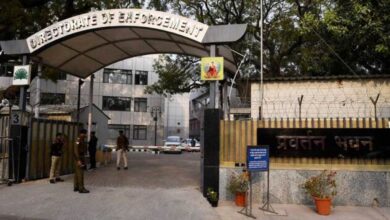
The Directorate of Enforcement (ED), Chandigarh Zonal Office-I, announced on 12 October 2026 that it had arrested Harcharan Singh Bhullar on 9 October under Section 19 of the Prevention of Money Laundering Act (PMLA), 2002. The Special Court under the PMLA in Chandigarh granted the agency eight days of custody. The ED had previously arrested Kirshanu Sharda, described by the agency as the alleged middleman or conduit, on 18 September 2026.
The enforcement agency’s statement also records that CBI searches at Harcharan Singh Bhullar’s residence recovered cash amounting to approximately ₹7.37 crore and jewellery valued at ₹2.32 crore. Subsequent ED searches resulted in the seizure of ₹8.35 lakh in cash and the freezing of bank accounts holding approximately ₹1.42 crore.
These figures are serious. But their significance must be established through evidence, financial analysis and judicial scrutiny, not sensationalism.
The central question is brutally straightforward: can the assets, transactions and property interests under investigation be satisfactorily reconciled with their legitimate sources of funding?
That question must be answered through documented evidence. A badge, rank or lengthy career must not provide immunity from investigation. Equally, allegations and seizures must not be mistaken for a final finding of guilt.
1. The alleged ₹8 lakh demand: when policing itself becomes the issue
The original CBI case arose from a complaint by Akash Batta, a scrap dealer from Mandi Gobindgarh, Punjab.
According to the CBI proceedings and the subsequent ED press release, the allegation was that Harcharan Singh Bhullar demanded illegal gratification through Sharda in return for favourable treatment in a criminal matter. The complaint concerned FIR No. 155 of 2023, registered at Sirhind police station, and alleged that the complainant’s business would otherwise face police interference or coercive action.
The alleged financial arrangement was as follows:
| Particulars | Amount |
|---|---|
| Bribe allegedly demanded | ₹8 lakh |
| Amount allegedly accepted through the intermediary | ₹5 lakh |
| Difference between the demand and the amount accepted | ₹3 lakh |
The CBI case records that a complaint was submitted on 11 October 2025, followed by verification and a trap operation on 16 October 2025. During the operation, Sharda was apprehended while allegedly accepting ₹5 lakh as part of the amount demanded. Harcharan Singh Bhullar was arrested on the same date.
The distinction between the alleged demand and the sum allegedly accepted matters. The investigation concerns a claimed arrangement worth ₹8 lakh, while the amount allegedly received at the trap was ₹5 lakh. They are not interchangeable figures.
The allegation, if proved, would represent something more serious than an ordinary financial offence. It would concern the alleged use of public authority to influence the treatment of a citizen facing a criminal investigation.
That is where the case strikes at the heart of public confidence. Citizens must be able to approach the police without having to wonder whether lawful protection depends on an unofficial payment, a personal connection or an intermediary who claims access to a senior officer.
A police station cannot become a marketplace for negotiating the exercise of statutory power. Nor can protection from alleged police interference become a privately priced service.
But the decisive question is not whether the allegation is disturbing. It is whether the prosecution can prove the alleged demand, the connection between the accused, the purpose of the payment and the relevant events through admissible evidence.
The courts must determine that question on the evidence presented at trial.
2. ₹7.37 crore in cash and ₹2.32 crore in jewellery: the financial trail needs answers
The most striking element of the case is the scale of the assets reportedly recovered during the CBI searches.
The ED’s October 2026 press release cites approximately ₹7.37 crore in cash and jewellery valued at ₹2.32 crore recovered during searches at Harcharan Singh Bhullar’s residence. The detailed reporting of the CBI’s disproportionate-assets FIR gives more precise figures:
| Asset or financial record | Reported figure |
|---|---|
| Cash recovered | ₹7,36,90,000 |
| Cash recorded as seized in the reported CBI case | ₹7,36,50,000 |
| Gold and silver items | ₹2,32,07,686 |
| Balances in five bank accounts and two fixed deposits, as reported for 17 October 2025 | Approximately ₹2.95 crore |
| Declared income for assessment year 2025–26, as reported from the CBI investigation | ₹45.95 lakh |
| Reported net income after tax for financial year 2024–25 | Approximately ₹32 lakh |
These numbers should not be read as a final judicial calculation of illicit wealth. The source, ownership, valuation and legal status of individual assets must be established. Nor should every reported financial amount simply be added together: the underlying records may cover different accounts, dates, searches or categories of assets.
Nevertheless, the reported figures warrant a rigorous financial examination.
When investigators recover crores of rupees in cash and jewellery and also obtain documents relating to extensive property holdings, the obvious questions concern the origin of the funds, the acquisition dates, the identities of the beneficial owners and the relationship between declared income and expenditure.
Were the assets accumulated through disclosed income, inheritance, legitimate investments or other lawful sources? Were any assets held by other people on someone else’s behalf? Did the financial records disclose transactions inconsistent with legitimate income? Which assets, if any, can the prosecution establish as proceeds of crime?
These questions must be answered property by property and transaction by transaction.
The public deserves an evidence-based accounting, not a guessing game.
Luxury possessions and large bank balances are not crimes in themselves. Cash recovered during a search is not automatically illicit money. A person’s income cannot be compared with a seizure total without considering the period over which assets were accumulated and other lawful sources of wealth.
But neither can the issue be dismissed merely because individual assets may have an innocent explanation. The responsibility of the investigating agencies is to test those explanations against records, tax returns, banking trails, purchase documents and evidence of beneficial ownership.
The ED says it is investigating the acquisition, possession, concealment and utilisation of suspected proceeds of crime. That inquiry must go beyond identifying what exists. It must establish who funded it, who owns it in substance, how it was acquired and whether the assets are connected to any scheduled offence.
3. Landholdings, luxury vehicles and property records: follow the ownership, not just the headlines
The asset investigation extends beyond cash and jewellery.
Reports concerning the CBI’s separate disproportionate-assets case refer to documents relating to approximately 150 acres of agricultural land across Mohali, Hoshiarpur and Ludhiana districts. The records reportedly included documents concerning residential properties, commercial interests and assets held in the names of Harcharan Singh Bhullar, family members and others.
Subsequent reporting on the ED’s investigation described approximately 129 acres of agricultural and urban property in Patiala, Ludhiana, Mohali and New Chandigarh as part of the suspected asset pool being examined by the agency.
The figures of 129 acres and approximately 150 acres should not automatically be treated as contradictory findings or combined into a single total. They may relate to different property schedules, stages of investigation or methods of calculating the relevant holdings. The public documents reviewed for this report do not establish a complete reconciliation.
That is precisely why the underlying property schedules matter.
The crucial questions include whether the parcels are distinct, whether the ownership documents are complete, whether the recorded owners supplied the purchase consideration and whether any alleged beneficial ownership can be substantiated.
The CBI’s disproportionate-assets investigation also reportedly identified five vehicles associated with Harcharan Singh Bhullar and family members, including Mercedes, Audi, Innova and Fortuner vehicles. Reporting on the searches and subsequent FIR also referred to luxury watches, including a count of 26 in the detailed asset allegations.
The case therefore involves more than the visual spectacle of expensive possessions. It requires a documented explanation of acquisition, ownership, financing and declared income.
A vehicle registration, a bank entry or a property deed is a starting point for verification—not proof, by itself, of criminal conduct. Equally, placing an asset in another person’s name does not settle the question of who actually paid for or controlled it.
The investigation must determine the facts rather than rely on appearances.
A discrepancy that should not be ignored
The reported land figures—approximately 129 acres in coverage of the ED proceedings and approximately 150 acres in reporting on the CBI’s disproportionate-assets case—deserve a clear, documented explanation.
The same applies to the different financial categories reported at various stages of the investigation.
The ED’s later statement identifies approximately ₹1.42 crore in frozen bank-account balances. Earlier reporting on the CBI’s asset investigation recorded approximately ₹2.95 crore across five bank accounts and two fixed deposits as of 17 October 2025.
These figures are not necessarily inconsistent: the accounts, dates and scope of the respective actions may differ. They must not be treated as the same pool of money without the underlying records.
A credible financial investigation should disclose a clear schedule of identified assets, their recorded owners, the basis of valuation, the dates of acquisition and the legal status of each seizure or freeze.
That would help prevent both unjustified allegations and any attempt to conceal assets behind confusing or incomplete figures.
4. Two corruption-related investigations, a money-laundering probe and a larger question about accountability
The Harcharan Singh Bhullar matter did not begin with the ED’s October 2026 arrest. The publicly reported chronology shows a series of connected investigative and judicial proceedings that developed over almost a year.
16 October 2025 — CBI bribery case and arrests. The CBI arrested Harcharan Singh Bhullar and Sharda following a trap operation linked to the alleged ₹8 lakh demand and the alleged acceptance of ₹5 lakh. Searches at properties linked to Bhullar resulted in the recovery of cash, jewellery and other material, according to the investigating agency’s statements and subsequent reporting.
29 October 2025 — A separate disproportionate-assets case. The CBI registered another case concerning suspected assets disproportionate to Harcharan Singh Bhullar’s known sources of income. The reported material included cash, jewellery, property documents, vehicles and bank balances. Punjab’s Vigilance Bureau also registered its own reported disproportionate-assets FIR, creating a need for clear coordination between the parallel investigations.
December 2025 — CBI chargesheet and further investigative leads. The CBI filed its chargesheet in the alleged bribery case. Subsequent reporting said the agency was examining digital communications that might point to the involvement of additional public servants and private individuals. The CBI reportedly kept further investigation open to examine the mobile-phone data and verify suspected transactions.
February 2026 — Prosecution sanction and bail proceedings. The Ministry of Home Affairs granted prosecution sanction, according to published reporting, and a supplementary chargesheet followed. The Punjab and Haryana High Court rejected Harcharan Singh Bhullar’s regular-bail plea in the bribery case on 16 February 2026.
March 2026 — Judicial cognisance and defence challenges. On 13 March, the Special CBI Court reportedly took cognisance of the case, recording that the material before it prima facie supported the allegations. Harcharan Singh Bhullar and Sharda subsequently sought recall of that order, contesting issues that included the completeness of the prosecution material and jurisdiction.
July 2026 — Charges framed. The Special CBI Court framed charges against Harcharan Singh Bhullar and Sharda in the bribery case. Both pleaded not guilty, and the court directed that the trial proceed.
10 August 2026 — Another bail plea rejected. The Punjab and Haryana High Court dismissed Harcharan Singh Bhullar’s second successive regular-bail petition in the bribery case. The court referred to the material witnesses yet to be examined and the reasonable apprehension that the accused might influence or intimidate witnesses, taking account of his former position in the police hierarchy. It also made clear that observations made while deciding bail did not determine the merits of the criminal case.
18 September 2026 — ED action against Sharda. The ED arrested Sharda under the PMLA and secured seven days of custodial interrogation. Published reports of the proceedings referred to cash recovered during searches and funds or investments whose source the agency sought to establish.
9–12 October 2026 — ED action against Harcharan Singh Bhullar. The ED arrested Bhullar on 9 October under Section 19 of the PMLA. The Special PMLA Court granted eight days of custody, and the agency’s 12 October press release set out the alleged money-laundering connection and the principal seizure figures.
This chronology matters because it shows that the current proceedings are not a single, isolated arrest. There are separate legal questions concerning the alleged bribe, the source of assets and whether property or money can be linked to suspected proceeds of crime.
Yet the existence of multiple proceedings must not be confused with multiple convictions. The same underlying facts may feature in different cases for different legal purposes. Each charge must be proved in the proceedings in which it is brought.
The investigative challenge is to ensure that the cases complement one another without duplicating effort, leaving gaps in the evidence or allowing disputes between agencies to slow the process.
5. What the courts have—and have not—said
The procedural record is important, but it must be described precisely.
In the bribery case, the CBI Court framed charges against Harcharan Singh Bhullar under Section 61(2) of the Bharatiya Nyaya Sanhita, 2023, concerning criminal conspiracy, and Section 7 of the Prevention of Corruption Act, 1988. Sharda was charged under Section 12 of the Prevention of Corruption Act in connection with the alleged abetment.
The July 2026 court proceedings resulted in both accused pleading not guilty. The court’s decision that a prima facie case existed was sufficient to proceed to trial; it was not a finding of guilt beyond reasonable doubt.
The High Court’s August 2026 refusal to grant Harcharan Singh Bhullar bail is also not a conviction. The court considered the allegations, the evidence cited at that stage and concerns about possible influence over witnesses. Its order expressly reserved the merits for the appropriate proceedings.
The ED’s later arrest and the grant of custodial remand similarly permit further investigation; they do not establish that every asset under examination is illicit or that the offence of money laundering has been proved.
This distinction is not a technicality. It is the foundation of a criminal justice system in which public office does not confer immunity and accusations do not replace proof.
The prosecution must now demonstrate, through admissible evidence, the alleged demand and acceptance, the connection between the accused, and any link between identified assets and criminal proceeds. Where ownership is disputed, the documentary and financial evidence must speak for itself.
The accused, in turn, remain entitled to challenge the prosecution case, test the evidence and receive a fair trial.
6. The wider-network allegation: investigate every credible lead, but do not manufacture guilt by association
One of the most consequential aspects of the case is the question of whether the investigation could lead to people beyond the two principal accused.
In December 2025, Hindustan Times reported that the CBI chargesheet referred to mobile-phone chats indicating suspected illegal gratification involving other public servants and private individuals. The report said the agency had kept its investigation open to analyse digital data and verify the suspected transactions.
A November 2025 report in The Tribune, citing investigative sources, went further, describing alleged patterns of monthly payoffs, suspected attempts to influence judicial orders and a possible wider network involving officials, political aides and businesspeople.
Those broader claims require particularly careful treatment. They were reported as investigative leads and information attributed to sources—not as judicial findings that every person who might appear in a communication or transaction committed an offence. No list of individuals should be presented as a list of guilty participants without independently verified evidence and clear information about their procedural status.
Nevertheless, the leads merit serious scrutiny.
If investigators have credible evidence of other people facilitating payments, passing confidential information, arranging benefits or assisting in the acquisition or concealment of suspected proceeds, those leads must be verified. They should not be abandoned merely because the first case is already high-profile or because further investigation could involve influential individuals.
The proper test is evidence, not rank, connections or public prominence.
Investigators should establish who communicated with whom, what was communicated, whether any payment or benefit followed, whether the transaction had a legitimate explanation and whether the available evidence links a particular individual to a specific alleged offence.
An unrelated conversation, a social connection or a name appearing in a phone is not enough. Corroborated communications, transaction records, witness testimony and documentary evidence may be relevant, but their legal meaning must be assessed in context.
The objective should be neither to protect powerful people nor to create a sensational list of supposed conspirators. It should be to identify every participant for whom the evidence establishes a legally sustainable case—and to clear those against whom it does not.
That is what a genuine investigation demands.
7. The Sharda question: intermediary, alleged conduit or the beginning of a wider financial trail?
Kirshanu Sharda’s alleged role deserves separate attention because the prosecution’s account places him between the complainant and Harcharan Singh Bhullar.
The original CBI case alleges that Sharda accepted ₹5 lakh on Harcharan Singh Bhullar’s behalf as part of the larger ₹8 lakh demand. The ED subsequently arrested him in the money-laundering investigation, seeking to determine the source and nature of funds found in his possession and accounts and to identify anyone else who might have participated in the receipt, movement, concealment or use of suspected proceeds of crime.
Published reporting on the ED proceedings concerning Sharda referred to cash recovered in subsequent searches and approximately ₹1 crore in cumulative balances, investments and related holdings considered by the agency. An earlier CBI search had reportedly recovered about ₹21 lakh in cash from premises linked to him.
These figures must be kept in their proper categories. They do not independently prove that all money associated with Sharda came from unlawful activity, and the same money must not be counted more than once across different searches and proceedings.
Sharda’s counsel, as reported, argued that his client had a long background in hockey and would explain his assets. That defence position must be tested against the documentary record, just as the ED’s allegations must be supported by evidence.
The investigators should examine the alleged payment, the communications between the accused, relevant financial transactions and any identifiable connection between the funds and the alleged scheduled offence. They should also establish whether there are other transactions of the same nature and, if so, whether the evidence supports treating them as part of a wider criminal arrangement.
An intermediary can be crucial to understanding how an alleged transaction was arranged. But the label “middleman” is not itself proof of every suspected transaction or of participation in any alleged wider network.
The legal case must rest on what the evidence proves about each person’s conduct.
8. The defence position deserves a hearing—but the public deserves answers too
A hard-hitting investigation must not become a one-sided substitute for a courtroom.
Harcharan Singh Bhullar has challenged the bribery allegations and argued, through his counsel, that the case against him is unsupported and that no recovery of the alleged bribe was made directly from him. His defence has also raised questions concerning the CBI’s jurisdiction and the sufficiency of the prosecution material.
The prosecution, meanwhile, has relied on alleged recorded conversations, digital material, the trap proceedings and the alleged acceptance of money by Sharda. The High Court’s August order considered these matters at the bail stage but expressly stated that its observations were not findings on the ultimate merits.
Harcharan Singh Bhullar’s counsel also challenged the complainant’s antecedents, arguing in the bail proceedings that he was involved in six criminal cases. That was a defence submission recorded in the proceedings; it should not be treated as a judicial finding that the complaint was false or that the prosecution’s case was disproved.
The distinction matters. A complainant’s background, where legitimately relevant, may be tested through evidence. It does not automatically invalidate an allegation. Equally, the complainant’s account must not be treated as conclusive merely because an investigation has resulted in an arrest.
The same standard applies to Sharda’s defence concerning his assets and to any explanation offered for Harcharan Singh Bhullar’s property or financial holdings.
The prosecution must prove its case. The accused must have a fair opportunity to answer it. Neither principle excuses investigative delay or permits the public significance of the allegations to be brushed aside.
9. The uncomfortable questions the ED, CBI and Punjab Vigilance Bureau must answer
The proceedings have now generated multiple cases, separate searches and a substantial body of reported financial information. The next phase should be measured by the quality of answers produced, not by the number of press releases issued.
First, where did the money come from? The agencies must trace the source of the cash, jewellery, deposits, investments and property-purchase funds. An evidence-backed financial reconstruction should distinguish legitimate wealth, unexplained wealth and assets that can legally be shown to constitute proceeds of crime.
Second, who actually owns the properties? The reported differences between approximately 129 acres and approximately 150 acres demand reconciliation. Investigators should establish the identity of recorded owners, beneficial ownership where legally relevant, the dates of acquisition, payment trails and the relationship between the different property schedules.
Third, what was the full scope of the alleged bribery arrangement? The prosecution should establish the alleged demand, the role attributed to Sharda, the circumstances of the payment and the evidence connecting Harcharan Singh Bhullar to it. Any additional transactions uncovered through digital or financial records must be independently verified.
Fourth, what do the digital records genuinely establish? Messages, call records and financial entries should be examined in their complete context. If they point to additional people, their roles should be investigated without presuming guilt from association alone.
Fifth, have the parallel investigations been properly coordinated? The CBI, ED and Punjab Vigilance Bureau should avoid fragmented evidence collection, inconsistent asset schedules and unnecessary disputes over custody or investigative responsibility. Their findings should be capable of being reconciled without compromising the independence of each proceeding.
Sixth, what happens next in court? The authorities should provide a clear procedural account of the pending bribery trial, the PMLA investigation, the status of the disproportionate-assets cases and any further applications or reports. Custody is not a substitute for completing the investigation and bringing the relevant allegations to trial.
These are not demands for a predetermined result. They are demands for a properly documented investigation capable of withstanding judicial scrutiny.
10. The demand for tighter investigations and faster trials
The Harcharan Singh Bhullar case deserves close scrutiny because of the nature of the alleged conduct, the seniority of the public official involved and the scale of the assets under examination.
The appropriate response is not a media conviction. It is a more rigorous, transparent and time-bound process.
The ED must use its custodial period to establish the source, ownership and movement of suspected proceeds of crime, identify the relevant financial links and pursue admissible evidence against any additional person for whom a legally sustainable case emerges.
The CBI must pursue the bribery trial without avoidable delay. It should ensure that the digital and documentary evidence is properly presented, the relevant witnesses are examined and the case progresses through the normal judicial process. Any additional allegations arising from further investigation must be tested before being presented as established wrongdoing.
The Punjab Vigilance Bureau must clarify the status and scope of its own disproportionate-assets proceedings and coordinate where necessary with the other agencies. Where different investigations concern overlapping property or financial records, the underlying schedules and valuations should be reconciled rather than left to public speculation.
The courts, for their part, should endeavour to manage the proceedings efficiently, subject to the accused’s right to a fair trial, adequate disclosure and a meaningful opportunity to challenge the evidence. Time-bound hearings should not mean a truncated defence or a rushed judgment; they should mean avoiding unnecessary adjournments and preventing a serious case from languishing indefinitely.
Any asset-freezing or confiscation measure must follow the applicable legal process. Likewise, any prosecution should be pursued on evidence, not public pressure.
Accountability must be real, but it must also be lawful.
A senior officer cannot reasonably expect the power of his former position to shield him from credible investigation. A private intermediary cannot be exempt from scrutiny merely because the alleged beneficiary held a senior post. Nor should family members or business associates be treated as offenders simply because their names appear in property or financial records. Their roles must be independently established.
The proper standard is the same for everyone: trace the money, verify the documents, test the explanations, protect the evidence and prosecute where the law and the evidence justify it.
A serious corruption investigation should not stop at the first arrest, the first seizure or the first prominent name. It should follow every credible lead to its lawful conclusion.
Conclusion: no rank above scrutiny, no allegation above proof
The allegations concerning Harcharan Singh Bhullar present a difficult test for the institutions responsible for policing, investigation and prosecution.
The alleged ₹8 lakh demand raises questions about the use of police authority. The recovery of approximately ₹7.37 crore in cash and ₹2.32 crore in jewellery raises further questions about the origin and ownership of assets. The reported landholdings and financial accounts require detailed verification. The ED’s PMLA proceedings now add another layer to an already complex investigation.
But the case must be judged on what the evidence ultimately establishes—not merely on how disturbing the allegations appear.
The investigative agencies must resist two opposite failures: shielding powerful people from scrutiny and treating suspicion as proof. Both would undermine public confidence. Both would weaken the legal process.
Punjab’s citizens deserve a police service in which protection is not allegedly traded for money, and a justice system in which serious corruption allegations are neither buried by delay nor sensationalised into premature verdicts.
There must be a complete accounting of the evidence, a rigorous examination of the financial trail and an efficient trial. Every credible lead should be pursued. Every disputed amount should be reconciled. Every person against whom sufficient evidence exists should face the appropriate legal process, without selective protection or selective prosecution.
The real measure of this investigation will not be how dramatically it begins, how many crores appear in headlines or how senior the accused once was.
It will be whether the facts are established, the law is applied equally and the proceedings reach a lawful conclusion without avoidable delay.
A public office is a responsibility, not private property. No rank should stand above scrutiny—and no allegation should stand above proof.
Legal disclaimer
All allegations remain allegations unless and until established through the applicable legal process. As of 14 October 2026, no court of law has convicted Harcharan Singh Harcharan Singh Bhullar or Kirshanu Sharda in the matters discussed in this report, based on the court records and public reporting reviewed for this article.
Charges have been framed against both accused in the CBI bribery case, and both have pleaded not guilty. Harcharan Singh Bhullar’s bail applications have been rejected, and the ED has arrested Bhullar in a separate money-laundering investigation. None of these procedural developments is, by itself, a conviction.
The reported recoveries, asset figures, suspected financial links and allegations of wider involvement must be understood in that context. The accused remain entitled to the presumption of innocence, a fair trial and the opportunity to challenge the evidence. Any further allegations must be independently verified before publication as factual conclusions.
The article calls for thorough investigations, accountability and faster trials—not a predetermined finding of guilt.