Tag: Zomato

  • Swiggy In Loss- FY 2022-23: Startups Failing, Investors Do Not Seem To Learn

    Swiggy In Loss- FY 2022-23: Startups Failing, Investors Do Not Seem To Learn

    Swiggy, a Bengaluru-based foods along with grocery delivery company, had an enormous spike in losses during the fiscal year (FY) 2023, according to the annual report provided by Dutch-listed technological investor “Prosus”. Swiggy’s attempts to address problems in the food delivery market are highlighted in the study, including a particular emphasis on reviving consumers, enhancing customer engagement, and reaching profitability.

    As reported by investment firm Prosus earlier, losses of food delivery company Swiggy would exceed $500 million by 2022. The Netherlands-based company’s portion of Swiggy losses on trading increased to $180 million in 2021 compared to $100 million. Swiggy’s fiscal year runs from April to March, whereas Prosus accounts is subject to a one-quarter lag.

    In the fiscal year that concluded in March, the private equity organization made $299 million in investments. Prosus’ portion of Swiggy’s income reached $297 million, an increase of 40% from the prior year, thanks to an increase in the average value of orders, income from delivery costs, as well as sales of advertisements. The private equity firm was the only stakeholder and had a 32.38% operating ownership stake in Bundl Technologies Pvt., the company that owns the Swiggy brand.

    The overall value of the items sold by Swiggy, including delivery fees, increased by 13% to $2.6 billion in 2022 from $2.3 billion. The GMV of Swiggy’s primary food delivery service increased by 26% on a yearly basis, whereas Instamart witnessed a fivefold increase.
    prosus swiggy News and Updates from The Economic Times

    Swiggy’s Widening Losses:

    According to papers with the Ministry of Corporate Affairs, Swiggy’s loss more than doubled to INR 3,629 crore in the fiscal year that ended March 2022 after reporting INR 1,617-crore loss in the fiscal year prior to that.

    The company that specializes in meal delivery recorded earnings of 5,705 crore and costs of 9,574 crore. Operational revenue increased by over two times from the 2,547 crore recorded in FY21. In the fiscal year under review, the business’s total income increased by more than twofold to 6,119.8 crore from 2,675.9 crore, according to the Director’s report that was submitted by the company to the Registrar of Companies.

    We continued to focus on growth post-business recovery from COVID, particularly on the expansion of our quick commerce offering, we saw our revenues improve 2.3×in FY22.

    – Filing by the company to the RoC stated.

    Prosus, the company’s biggest stakeholder with a 33 percent interest, disclosed that their loss share in Swiggy increased to $180 million in FY23 from $100 million in FY22. Investments in Instamart, Swiggy’s quick-commerce division, which peaked during the year, were mostly responsible for this surge. However, Swiggy said that the firm has reached the top of its Instamart investments.

    Over the course of FY23, Swiggy lost around $545 million, an increase of over 80% from its losses of about $300 million in FY22. In a similar vein, Prosus said that its revenue share from Swiggy increased by 40% to $297 million in FY23, translating to an estimated $900 million in total revenue for Swiggy for FY23. Swiggy’s efforts to reactivate customers, increase monthly frequency, and improve user conversion were singled out by Prosus as contributing elements to the company’s FY23 results.

    Swiggy has focused on user reactivation, monthly frequency growth, and user conversion during the past two reporting periods. According to Prosus’ annual report for FY23, the advantages were reflected in company performance. According to the report, their portion of Swiggy’s trade loss climbed to $180 million (from $100 million in FY22) as a result of investments in Instamart, which surged in the year.

    Swiggy’s rising losses happened just after CEO Sriharsha Majety declared that the company’s primary industry, meal delivery, will achieve profitability in March 2023, ignoring ESOP payments. In less than 9 years after its founding, Swiggy has emerged as one of the handful of international food delivery services to become profitable, said Majety in March.

    Swiggy’s Revenue and GMV:

    Gross Merchandise Value, often known as GMV, refers to the sales that a platform for e-commerce records during a pre-determined time frame.

    According to Prosus, Swiggy’s revenue share increased by forty percent to $297 million during FY23. On the basis of this sum, Swiggy’s full-year earnings for FY23 is projected to be in the neighborhood of $900 million. Swiggy’s gross merchandise value (GMV) went from $2.3 billion in FY22 to $2.6 billion in FY23, a small rise of around 13%. A larger restaurant base, now totaling over 272,000 eateries that are enabled on Swiggy’s platform, up from over 197,000 in FY22, was the main factor in the surge in GMV.

    Even while Swiggy’s GMV increased slightly, it still behind Zomato, its nearest rival, by a wide margin. Gurugram-based Zomato stated in its reports that its GMV was over $3.2 billion during FY23, up from approximately $2.7 billion in FY22. This suggests that Zomato has a superior market position with regard to of GMV.

    While Zomato’s revenues were relatively comparable to Swiggy’s in FY23, the former’s losses were far smaller in the range of $126 million, as opposed to Swiggy’s $545 million. Swiggy’s losses have also increased at a time when Majety stated that the company’s primary operation, delivery of food, was projected to become profitable in March 2023, removing ESOP expenses, and was on track to do so.
    Which food delivery app is better Zomato or Swiggy ?

    While Swiggy’s losses and costs increased, its revenue increased by 2.2 times to INR 5,705 crore in FY22, up from INR 2,547 crore in FY21. In accordance with Entrackr, outsourcing support costs accounted for 24.5% of total corporate spending in FY22, representing a 2.3-fold increase from INR1,031 crore in FY21. Swiggy’s advertising and promotional spending more than quadrupled to Rs 1,848.7 crore in FY22, based on the report.

    Swiggy’s spokesman allegedly stated in a statement last month, despite the layoff claims, that there actually have been no job cuts at Swiggy. In October, they completed their performance cycle and issued ratings as well as promotions across all levels. They anticipate exits depending on performance, just like with every cycle.

    According to the source, the forthcoming layoffs would have an influence on Swiggy’s rapid commerce delivery business Instamart in order to prevent cash burn. Swiggy, although giving steep discounts, had been losing share of the market against competitor Zomato, according to global investment company Jefferies in November.

    According to Jefferies, the gross value of Swiggy’s meal delivery company was $1.3 billion during the January-June timeframe this year, referencing Swiggy investor Prosus’ annual report. Swiggy’s competitor Zomato reported a $1.6 billion gross order volume over the same time period. Swiggy paid a total of approximately $200 million for Dineout, an eating out and restaurant software platform, in May of the previous year.

    Swiggy, like its competitor Zomato, is planning an IPO, which might take place this year. Swiggy was already in the midst of planning for an IPO that would raise $800 million to $1 billion in the first quarter of 2023.

    Additionally, it was mentioned in a previous article that Swiggy has started recruiting independent directors for its board and intended to present itself as more than just a meal delivery service. Last year, Swiggy hired financial banks JP Morgan as well as ICICI Securities to serve as lead managers, thus beginning the IPO process.

    The most significant privately owned food along with grocery delivery company in India, Swiggy, had a 27% decline in scale during FY21, but has recovered in FY22 thanks to a more than two-fold increase in sales. But the expansion came at a price, as Swiggy’s losses exceeded what kept up with the expansion in size.

    Swiggy’s main sources of income include the online platform services it offers to its partner merchants (such as food and grocery retailers and delivery partners), advertising services, the selling of food and other traded items, subscriptions, as well as other platform services. Revenue from offering platform services increased by 83.3% during FY22, from INR 1,879 crore to INR 3,444 crore. In contrast to FY21, it did not provide a breakdown of services income in the previous year.

    The second-largest source of income during the previous fiscal year was generated by sales of groceries and FMCG items, and revenues from these sales increased by 3.9 times to INR 2,036 crore in FY22 from INR 517 crore in FY21.

    The Bowl Company, Goodness Kitchen, Breakfast Express, as well as Homely are just a few of the cloud kitchen brands that Swiggy manages in addition to being an online ordering platform. During FY22, sales related to food from the aforementioned companies were unchanged at INR 88 crore. Significantly, over the previous two fiscal years, the company has pulled back its cloud kitchen business.

    Swiggy’s total revenue in FY22 was INR 6,120 crore, including INR 415 crore in additional income that is not related to operations (interest income). On the cost front, outsourced support costs made approximately 24.5% of total costs and increased 2.3 times to INR 2,350 crore in FY22 from INR 1,031 crore in FY21.

    Why Do Investors Invest in Unprofitable Startups? (Explained)

    Who is to be blame? What needs to be done?

    A shocking number of companies in India are incurring serious financial losses, raising questions about the general health and viability of the startup ecosystem, according to a disturbing trend that has been making headlines across the country. Every day, another firm succumbs to insurmountable losses or falls victim to over-valuation frauds, leaving investors and entrepreneurs suffering from the repercussions. Industry experts are now advocating for immediate regulatory action and more oversight of startups to guarantee proper and effective operations.

    Startups, long heralded as engines of innovation and economic progress, are now confronted with a slew of problems that threaten their very survival. The general unwillingness to learn from past mistakes is one of the key contributors to this unfortunate predicament. Companies and investors are repeating the same mistakes rather than learning from setbacks and modifying their tactics, resulting in a never-ending cycle of losses.

    A fundamental stumbling obstacle for businesses has arisen as a lack of market understanding. Inadequate market research or misreading of market trends has led in products and services that do not resonate with customers. As a result, startups struggle to generate income and become locked in a negative loop of increasing losses.

    Weak company strategies that favor quick development and client acquisition above long-term revenue creation exacerbate the situation. Startups frequently fail to develop solid strategy for turning their ideas into lucrative companies, leaving them financially fragile and reliant on ongoing financing.

    Cases of over-valuation and mismanagement, which have become all too prevalent, aggravate the situation. Unscrupulous practices, such as fraud and financial mismanagement, have contributed to the demise of countless enterprises. Founders and investors, motivated by short-term rewards and hype, engage in risky activity that jeopardizes their companies’ long-term success.

    The absence of effective starting regulation and examination has aggravated the problem. Due to a lack of regulation, unscrupulous persons have been able to exploit loopholes, perpetrate frauds, and participate in unethical behaviors. Comprehensive regulatory procedures and frequent exams are clearly required to filter out fraudulent activity and ensure startups adhere to proper operating standards.

    Experts in the sector underline the importance of taking fast action to solve this concerning situation. Building a more open and responsible startup environment requires strengthening the regulatory framework, performing frequent audits and inspections, and enforcing harsher laws. Investor education initiatives should be conducted concurrently to promote safe investment practices and encourage due diligence.

    To nurture entrepreneurship in a sustainable way, aspiring entrepreneurs must be provided with support mechanisms such as mentoring programs, access to capital, and company development services. Collaboration and information sharing platforms may help to disseminate best practices and lessons learned, fostering a culture of failure learning and allowing entrepreneurs to make better informed decisions.

    Furthermore, financial literacy classes for entrepreneurs may provide them with crucial financial management skills, allowing for better planning and budgeting for their businesses.

    While the situation seems dire, striking a careful balance between regulation and encouraging innovation is critical. Excessive rules may impede business, inhibit innovation, and hinder economic progress. As a result, any regulatory measures should be carefully structured to encourage ethical activities while supporting startup growth and development.

    As stakeholders grapple with the critical issues confronting the Indian startup ecosystem, it is evident that coordinated actions from the government, investors, and entrepreneurs themselves are required to turn the tide. The startup scene in India can reclaim its vibrancy and pave the road for sustainable growth by learning from failures, embracing ethical methods, and encouraging a culture of creativity and responsibility.

  • The ONDC Storyline: Just Posing A Threat To Food Delivery Businesses Or Expanding The Market For The Farm Value Chain.

    The ONDC Storyline: Just Posing A Threat To Food Delivery Businesses Or Expanding The Market For The Farm Value Chain.

    What is a reasonable price for a farmer’s mushroom in Maharashtra? There is no simple solution. Farmer Producer Organisations (FPOs), for example, aren’t frequently seen on e-commerce merchant sites like Amazon and Flipkart, where they may readily reach consumers outside their immediate vicinity. The Open Network for Digital Commerce (ONDC) aims to alter this. These agricultural groups of small and marginal farmers are joining the government-backed e-commerce marketplace to access a more significant, countrywide market by using the ONDC’s suite of services, such as seller applications and logistics. 

    The ONDC recently garnered headlines for the competition it offered to Zomato and Swiggy, as well as the influx of new users that joined the year-old site. 

    Now, the network is attempting to pull the fringe to the centre—a modest start has been made by onboarding 597 FPOs with 601 items. The participation of the National Seeds Corporation (NSC) on the platform complements this. Addble, introducing 250 organic FPOs from the northeast to the network, has also joined. DforD (Data for Decision), which deals in agricultural inputs, and vendor app Farmer Mandi, which deals in fruits and vegetables, are also on board. Whether it’s local rice, millet, honey, or mushrooms, ONDC brings local gems to a broader audience. FPOs, on the other hand, provide small and marginal farmers with more negotiating power since they can aggregate their output.

    Some real examples where ONDC’s presence has made notable differences.

    The capacity to sell directly to a market digitally contrasts with the conventional methods of selling to intermediaries and local marketplaces, according to Maninder Kaur, managing director of the Small Farmers’ Agri-Business Consortium (SFAC) and managing director of NSC. Daringbadi Mahila, a women-led tribal FPO in Odisha’s Kandhamal district, for example, grows organic turmeric without fertiliser and is GI labelled. When they joined ONDC, they sent their items through India Post because the remote tribal area lacked logistical partners. Their first orders were via the buying app Mystore. 

    ONDC

    Hence, we can say that ONDC is developing a value chain from farm to fork. A buyer app, such as Mystore, provides ONDC buyers with a shop window that includes a portfolio of items supplied by sellers. Daringbadi Farmers Producer Co. Ltd FPO has received 50 requests for organic turmeric from eight states, although they were previously exclusively available in Odisha.

    According to Susanta Nayak, marketing specialist at Odisha’s Basix Krishi Samruddhi Ltd, they’ve marketed organic turmeric in nine cities, including big cities like Mumbai, Nagpur, Delhi, Gurugram, Kolkata, Ahmedabad, and Pune. As they had very narrow margins, they previously exclusively sold at shows in Bhubaneshwar or Cuttack by coordinating with dealers and setting up stands.

    Basix Krishi aggregates small and marginal farmers to provide fee-based agri-extension and end-to-end value chain development services. ONDC has made it possible for FPOs to apply their labels to items without the need for local middlemen. FPOs benefit from buyer feedback and increased market access.

    There are instances that several types and non-adulterated versions of honey are accessible, for example, dependent on the orchards in which they’re cultivated. Because it is not available in corporate packed containers, the purity of natural honey causes people to give up sugar. Because these plants cannot tolerate excessive nitrogen levels, ethnic rice has a speciality that is free of artificial fertilisers. 

    There is a multitude of non-Basmati aromatic rice that may be marketed through ONDC channels. The new outlets have pushed FPOs to look at things sold online by others and maybe mimic them. For example, an FPO in West Bengal sells ten different types of mushrooms and pickles produced from them. They have assisted over 100 different rice merchants in joining ONDC and have set aspirational targets for others to follow.

    The claims are that several are GI labelled. Some of these FPO items are specialist crops and kinds that only grow in certain places, necessitating GI or geographical indication marking. The 10K FPO plan encouraged FPOs to join the network in February. They provide both raw materials and completed goods for sale.

    What in ONDC?

    Those with an FSSAI licence and a goods and services tax (GST) number have been accepted by ONDC. ONDC compliance was achieved through online training courses. Many are also in talks with the ONDC on B2B (business-to-business) commerce to trade in bulk.

    A brief about the chain.

    ONDC conducted its first business-to-business transaction on May 22, followed by an official launch on June 5. ONDC provides FPOs with various solutions that may be tailored to their specific requirements. According to Ashok Sajjan, farmers earn a decent price on the network. Sajjan works at the Indian Institute of Agricultural Research (ICAR)-Indian Council of Millets Research (IIMR) in Hyderabad as a coordinator for 21 FPOs. Farmers in major cities may preserve a 20% to 30% profit margin, he claims.

    On ONDC’s Mystore buying app, he mentioned two FPOs from Karnataka: Aland Bhootai Millets Farmers Producer Co. and Hulsoor Mahila Kisan Millets Producer Co. The FPOs sell millets-based candies, biscuits, chutney powder, rusk, and khakra.

    According to Sajjan, the availability of logistics suppliers in the marketplace is a boon for FPOs. However, registering the FPOs is difficult since they lack seed capital and registration costs money. Another issue, he claims, is the packaging. Since joining the ONDC, Rich Returns Krishi Producer Co. of Rajasthan’s Kota has gotten three bulk orders for papads. A bulk order begins at 4 kilogrammes and may be as large as 16 kg. According to Hariom Nagar of Rich Returns, the commission must be on sites like Flipkart and Amazon. 

    Why is ONDC winning the game?

    ONDC does not levy any fees. While individuals or farm owners earned ’70 per unit offline, they get ‘150 to ‘180 on ONDC, minus shipping expenses. In April, they made ‘40,000,’ and in May, they made ‘10,000. They’ve also recruited five FPOs to join the network.” 

    Also, digitisation is not everywhere. So, Amazon, Flipkart, and Myntra aren’t truly options at the village level due to a lack of internet access.

    The ONDC storyline: just posing a threat to food delivery businesses or expanding the market for the farm value chain.

    This is the first time FPOs have joined a digital platform like ONDC and are selling their products on Mystore’s buyer app, said  Amal Roy from the cluster-based business organisation (CBBO) of SFAC in West Bengal’s Cooch Behar, adding that 15 FPOs from Cooch Behar, Alipurduar, and Darjeeling had joined the ONDC. Each of these FPOs has 300 farmers as members, for a total of 4,500 farmers. New Agriverse Farmers Producer Co., one of the FPOs, sells solely mushroom-based items, including gift boxes, and has received 45 orders from clients in Delhi, Uttar Pradesh, and Gujarat.

    Roy’s CBBO oversees 32 FPOs in nine West Bengal districts. Their goods included tomato squash, betel nut, honey, seeds, and vermicompost, all sold on the open market. They wouldn’t be able to receive a reasonable price, and their market access was limited. They are now accepting orders from many states. Previously, smartphone and laptop users had never purchased from FPOs, he explained. They encourage, guide, and nurture them.

    The presence of new alternatives.

    Farmers are no longer constrained to the few seed alternatives accessible locally with the NSC on board. Local seed merchants not only restrict seed kinds but also set minimum volumes. While conserved seeds of traditional types are essential for conserving biodiversity and keeping farmer input costs low, access to certified high-yield seeds remains a difficulty. A level playing field for small and marginal farmers includes obtaining certified seeds at reasonable costs.

    While seeds are accessible on commercial e-commerce sites, the difference with ONDC is that there are no platform fees. So the farmer or gardener pays the cost of the seed plus the cost of logistics and delivery. According to sources, all charges are for the goods and their logistics, not for the e-commerce platform’s profit. When placing orders online, there is no minimum quantity that a farmer must purchase. Farmers will benefit from home delivery of any amount of seeds.

    Selling seeds online involves re-engineering the agricultural input sector’s business operations. Orders from new locations signal which regions to focus on and improve on the ground via the dealer network. The first order received on Mystore was for grain for cow consumption. It showed demand for products even in urban areas, which was unexpected.

    ONDC

    Conclusion.

    ONDC is not only challenging food ordering applications; it is also attempting to bring the fringe to the centre by providing the agricultural value chain with access to a larger market than ever before.

    Proofread & Published by Naveenika Chauhan

  • ESOP Impact On Zomato: Deepinder Goyal’s ESOP Cost Zomato INR 143 Crore In The Second Half Of FY23.

    ESOP Impact On Zomato: Deepinder Goyal’s ESOP Cost Zomato INR 143 Crore In The Second Half Of FY23.

    Employee stock options (ESOPs) granted to Zomato co-founder and Chief Executive Officer Deepinder Goyal cost the company INR 143 crore in the second half of FY23, despite the company’s efforts to persuade public market investors of the company’s impending profitability, according to related party transaction filings on the exchanges.

    ESOP Impact On Zomato: Deepinder Goyal's ESOP Cost Zomato INR 143 Crore In The Second Half Of FY23.

    Meanwhile, the total ESOP cost for such rewards to the company’s three key managerial personnel (KMPs) was INR 156 crore during the period, with allotments to chief financial officer Akshant Goyal and company secretary Sandhya Sethia costing Rs 13.5 crore and Rs 10 lakh, respectively.

    According to the company’s records, Deepinder Goyal’s share-based payments accounted for 67.5 per cent of the company’s total ESOP cost of INR 212 crore in the first half of FY23. Similarly, KMPs accounted for 74% of all ESOP expenditures, implying that share-based payments for all other employees accounted for just 26% of the total or Rs 55 crore.

    Meanwhile, Zomato said in a shareholder letter this week that it spent Rs 510 crore on ESOP expenditures in FY23, compared to Rs 880 crore in FY22.

    For comparison, the total ESOP cost for such awards to the company’s three key management persons (KMPs) in FY22 was Rs 779 crore. According to Zomato’s annual report for FY22, the cost spent by the firm due to the CEO’s stock remuneration was Rs 753 crore. However, the papers revealed that the CEO and CFO waived their cash remuneration in FY22 and FY23.

    ESOP Impact On Zomato: Deepinder Goyal's ESOP Cost Zomato INR 143 Crore In The Second Half Of FY23.

    The expenditures on Donation.

    Deepinder Goyal told staff in an internal memo last year that he planned to donate roughly Rs 700 crore of his ESOP income to the Zomato Future Foundation in FY22. The funds would be utilised to fund the education of the children of delivery partners.

    Some expert opinions on ESOP.

    In response to an analyst question on whether ESOP expenses can be expected to fall on a quarterly basis in the future, firm management stated that it might go up or down depending on a variety of circumstances.

    During the analyst call, a senior official stated that while the recent high-profile exits from the firm, such as those of New Initiatives Head Rahul Ganjoo and co-founder Mohit Gupta, might influence the ESOP expenses, the impact would be minor.

    The impact of Competitors.

    Zomato said it achieved positive adjusted EBITDA in the March quarter, excluding the rapid commerce subsidiary Blinkit. The timing is significant since it comes only one day after Swiggy announced that its food delivery service was also operationally profitable in March, excluding employee stock option (ESOP) fees.

    Zomato, Swiggy.

    The role of Adjusted EBITDA in calculations.

    Adjusted EBITDA is a new-age company’s measure of operational profitability. Some fixed expenditures, such as share-based payment expenses, are not included in the computation.

    Zomato stated in a letter to shareholders last week that its next objective was to achieve complete profitability in the next four quarters or by March 2024. This would cover Blinkit-related charges as well.

    Zomato announced on May 19 that its consolidated net loss in Q4FY23 was Rs 188.2 crore, down from Rs 359.7 crore in the same period last year. Its operating income increased by 70% to Rs 2,056 crore in the last quarter, up from Rs 1,211.8 crore in the previous quarter.

    Zomato‘s meal delivery business saw its gross order value fall by around 1% to Rs 6,569 crore in the March quarter, owing to an industry-wide slowdown and its pullout from 225 cities in the previous quarter.

    Some criticisms on ESOP.

    Several analysts and investment critics have criticised the ESOP practises of businesses such as Zomato, Delhivery, Paytm, and Policybazaar, which have been listed on the stock exchanges in 2021. While the firms continue to lose money, the founders and senior executives have been rewarded with hefty ESOP payouts.

    Proofread & Published By Naveenika Chauhan

  • Modern Problems Require Modern Solutions: Zomato Faces Influx Of Rs. 2000 Bank Notes After RBI Order

    Modern Problems Require Modern Solutions: Zomato Faces Influx Of Rs. 2000 Bank Notes After RBI Order

    The leading food delivery app in India, Zomato gets flooded with Rs. 2000 notes as customers opt for cash-on-delivery following the new announcement made by RBI.

    A whooping 72 per cent of buyers handed out their 2000 rupee paper note to pay their food delivery bills in a bid to dispose off the bank note at the earliest.

    RBI Announcement To Withdraw Rs. 2000

    The Reserve Bank of India (RBI) came out with a communique to withdraw the circulation of the high paying note on 19 May 2023.

    The Central Bank further urged all the citizens to exchange or deposit the Rs. 2000 bank notes by 30 September.

    As soon as the announcement was made public, Indians are in a frenzy to do away with the highest denomination currency, and have thronged the jewelry stores and fuel stations to find a way out.

    Number of Rs 2000 currency notes continue to decline; just 1.6% of total notes in circulation at March end

    Banks will open the exchange facility on 23 May that is today. State Bank of India (SBI) proclaimed that no ID proof or requisition slip would be needed for the transaction.

    In addition, RBI has set a limit of exchanges that can be made at any bank up to 10 currency notes that totals to Rs. 20,000 at one time.

    However, there is no daily cap set for the deposit of Rs. 2000 bank notes. The bank customers are eligible to deposit any number of notes into their account and can later withdraw them.

    Rs. 2000 denomination note will still be considered as a legal tender, yet RBI has advised Banks to stop the issue of the high paying note with immediate effect.

    Shaktikanta Das, RBI Governor, manifested that citizens do not have to rush to exchange their bank notes as their is ample time of 4 months in hand, and the Central Bank will look after any issues that pops up during the whole process.

    In fine tune with the clean note policy, the currency management operations of RBI decided to withdraw the highest denomination note from circulation.

    The purpose of the Rs. 2000 currency notes have been fulfilled as they were initially introduced as an alternative measure post demonetization of Rs. 500 and Rs. 1000 bank notes in 2016.

    Moreover, the printing of Rs. 2000 currency notes were ceased in the year 2018-19. The cumulative value of 2000 rupee notes have also degraded to 3.62 trillion in 2023 compared to 6.73 trillion in 2018.

    Zomato Flooded

    Following the RBI message, Zomato tweeted with a playful dig remarking that while kids exchanged Rs. 2000 notes at the bank, adults chose the COD mode of payment and gave away their Rs. 2000 bank notes, whereas legends never possessed the Rs. 2000 notes.


    Zomato: Zomato may have a Rs 2,000 note 'problem', here's why - Times of India

    On Monday, Zomato took to Twitter again exclaiming that since the revelation of the withdrawal of the notes on Friday, the Gurugram-based restaurant aggregator witnessed a hysterical influx of the Rs. 2000 notes so much to as 72 per cent of its total users.

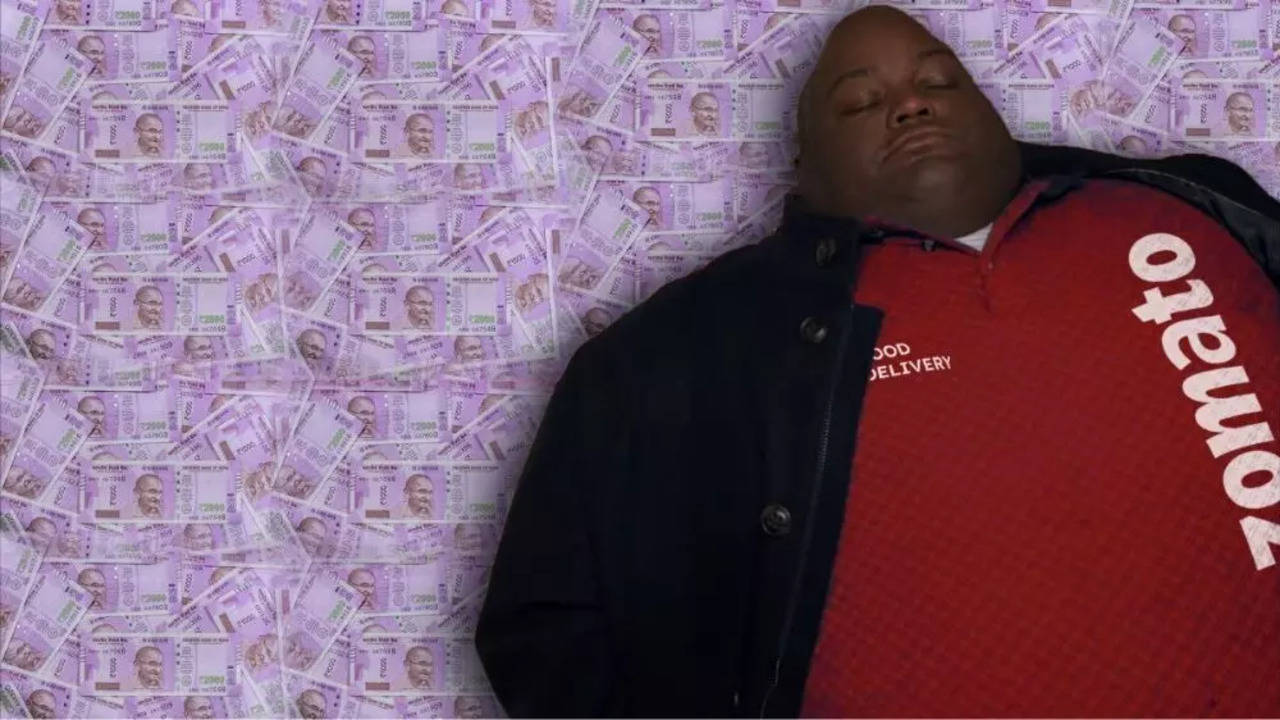
    Along with the stream of memes that followed in Twitter, the food tech giant posted with a Breaking Bad reference wearing a Zomato T-shirt lying on a pile of Rs. 2000 notes.

    Reacting to this tweet by Zomato, some users took a dig by stating that modern problems require modern solutions.

    Zomato UPI

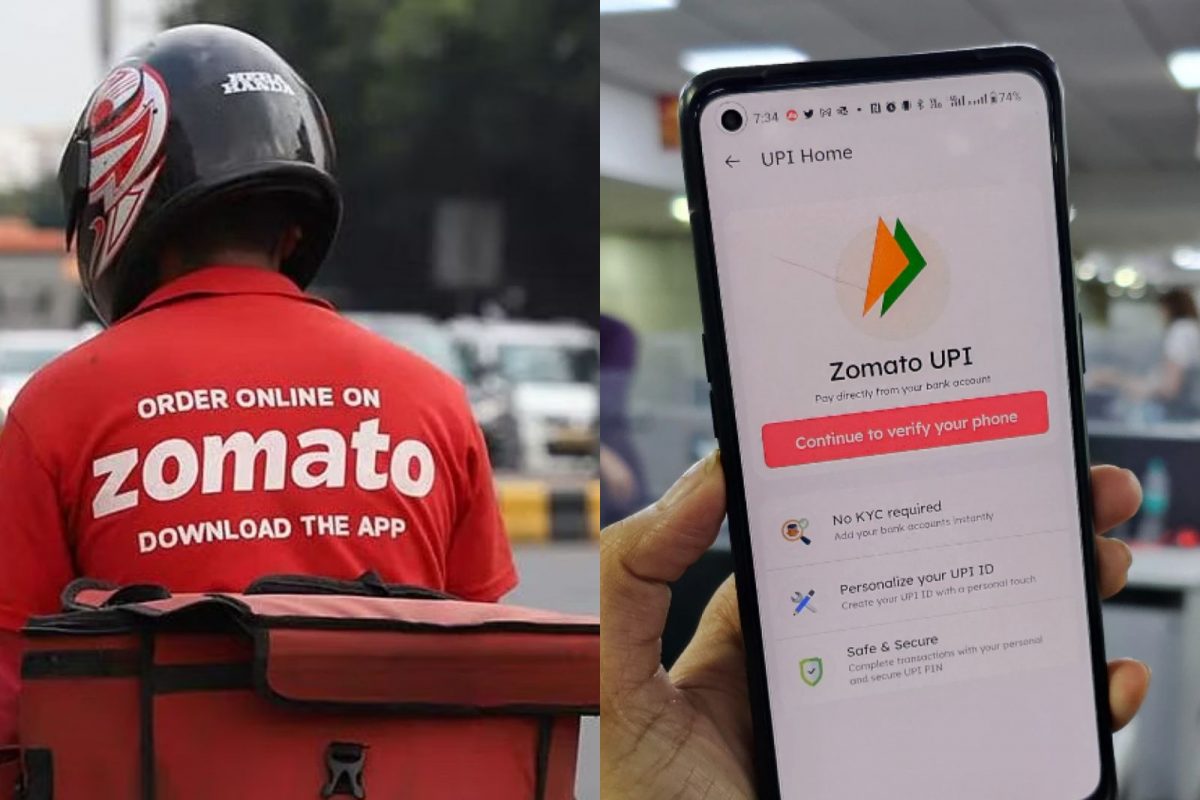
    Hoping on to the bandwagon, Zomato in partnership with ICICI Bank has recently launched its newest service of Zomato UPI, and is currently rolling out the feature to its customer base.

    The Zomato UPI will assist the buyer in completing their payment within the Zomato App itself, without the need of switching to other UPI apps such as Google Pay, Phone Pay, Paytm, Amazon Pay among others.


    Upi News, Photos, Videos, Upi News in Tamil - News 18 Tamil

    Zomato serves a large number of clientele who prefer using the UPI mode of payment, and therefore released their seamless solution into the market.

    No wonder, the recent hullabaloo of the Rs. 2000 notes has almost masked this development by the food tech giant.

    Proofread & Published By Naveenika Chauhan

  • Zomato’s Subsidiary Hyperpure’s Auditor Resigns

    Zomato’s Subsidiary Hyperpure’s Auditor Resigns

    On Saturday, Zomato announced that the auditor of the affiliate Zomato Hyperpure Pvt Ltd, BB & Associates, had resigned. In a regulatory report, Zomato revealed that the approved auditor of its significant subsidiary quit effectively from May 13, 2023.

    BB & Associates stated in a letter to the board of directors of Zomato Hyperpure Pvt Ltd, which was posted on stock exchanges. Its resignation came after multiple meetings with the management of the parent company Zomato Ltd. 

    “BB & Associates believe Hyperpure intends to select one of the major auditing firms as the company’s statutory auditors. As a result, BB & Associates agreed that they would step down as Hyperpure’s statutory auditors on May 13, 2023” the document stated.

    “BB & Associates submitted the audit result to the company’s board of directors on May 12, 2023,” it added. Zomato has submitted the letter to the stock markets. 

    Hyperpure by Zomato, Delhi, Zomato, Hyperpure, FSSAI

    Zomato’s statutory auditor is Deloitte Haskins & Sells, which examines the company’s unaudited consolidated financials in Gurgaon. Zomato stated Hyperpure’s sales increased 26% quarter on quarter along with 169% year on year at Rs 421 crores for the quarter ending December 31. The corporation stated that it was more concerned with growing the vertical than with reaching profitability. 

    “Hyperpure is prioritizing development over profit at present. Since Hyperpure has become a multi-city operation with each of them at a distinct stage on its profit curve. Our oldest city, Bangalore (4+ years old), is already close to profitability, and thus the newest areas are the largest contributors to losses in this business,” Zomato CEO Deepinder Goyal previously stated. 

    The company also stated that Hyperpure has begun to capitalize on the rapid commerce possibility. A portion of the revenue rise seen in the B2B sector during the December quarter was due to goods supplied to vendors on the marketplace of Zomato-owned quick-commerce platform Blinkit. 

    On May 19, Zomato is likely to release its financial results for the quarter ending March 31 in 2022-23 (April-March). On the BSE on Friday, Zomato’s stock closed 0.1% above its last closing at Rs 62.57.

    Hyperpure’s income increased by 25% year on year to Rs 421 crores during the December 31st quarter, according to Zomato. Zomato’s Hyperpure program aims to provide restaurants with fresh, sanitary, high-quality products and supplies.

    According to the letter, BB & Associates was reinstated as the official auditors of Hyperpure by investors on July 14, 2021. It was for a time frame of 5 consecutive years, beginning with the end of the 6th annual general meeting and ending with the conclusion of the 11th Annual General Meeting of the Company.

    Hyperpure’s goal is to provide an end-to-end environment for restaurants to handle their complete backend operations. It includes economical sustainable packaging and inventory control as well. 

    Zomato’s acquisition of Hyperpure in 2018 has emerged as a critical component of the food tech giant’s growth plan. It expands and merges its non-food delivery companies, including the newly acquired quick-commerce site Blinkit. 

    Blinkit Permanently Shuts Down Some Dark Stores In Delhi-NCR As Delivery Workers Continue Protest

    Restaurants currently receive culinary mixtures and prepared fruit juices from the restaurant-facing unit. Hyperpure announced in December that it intended to expand its ready-to-eat menu for restaurants by adding desserts and additional beverages. 

    Rakesh Ranjan, CEO of Hyperpure, expected the company’s ready-to-eat sweets and beverages to be available in restaurants in roughly six months, around June 2023 The company may eventually explore appetizers and select main dishes as well. 

    When restaurants source from an outlet like Hyperpure, they avoid having to deal with many vendors, which is typically the case when dealing with food distributors directly. Although quality and pricing would be the decisive criteria, Hyperpure’s new segment might benefit restaurant chains. 

    By providing a tailored line of products, the ready-to-eat dessert market could assist smaller eateries that lack the resources to prepare their sweet dishes.

    According to Rakesh, the idea is to enable Hyperpure to expand into a full-stack sourcing solution provider, replete with managing inventory. Restaurants can acquire all of their needs from one supplier and avoid maintaining their warehouses. 

    Hyperpure is also considering an investment in environmentally friendly packing for eateries, addressing a major issue with numerous jurisdictions prohibiting the use of plastic for purposes such as wrapping food packs. These additional bets could be critical growth drivers for Hyperpure.  

    According to Rakesh, the number of eateries using Hyperpure is increasing by 25% per quarter. However, given that Zomato’s food-delivery network includes over 1 million eateries in India, Hyperpure has a long way to go.

    According to the company’s website, Hyperpure services about 30,000 eateries across ten cities, providing approximately 15% of Zomato’s total income. In the most recent second quarter, Hyperpure’s sales nearly tripled from the previous year to Rs 334 crore. 

    However, it trails behind in the business-to-business e-commerce category. While Udaan earned Rs 9,900 crore in gross revenue in FY22, and Ninjacart made Rs 967 crore, Hyperpure earned Rs 540 crore for the fiscal year.

    “We have raised our FY2023-25 revenue projections for Zomato, owing largely to the Hyperpure business’s better-than-expected performance,” KIER wrote in an August research.

    And as Hyperpure expands, it hopes to apply innovative and long-term solutions. For example, Hyperpure just provided the ability for restaurants to opt out of receiving printed bills. 

    Hydroponics: Know How To Get 50% Subsidy & License For Hydroponics Farming

    Hyperpure has also recently begun hydroponic farming. 

    Cultivating crops without soil will not only allow Hyperpure to harvest more from a smaller area, but it will also cut the carbon emissions caused by shipping fruits and vegetables between rural areas and cities. And as it expands, it hopes to apply innovative and long-term solutions. 

    Zomato sees rapid commerce as an inevitable consequence of its core meal delivery business, expanding its target market significantly. Quick commerce can help Zomato establish a more successful business by utilizing its current clientele and improving the hyperlocal delivery fleet efficiency. 

    Despite a rise in restaurant eating habits in recent years, Zomato’s overall presence in India remains much lower than its worldwide equivalents, according to Kaushik Dutta.

    Dutta, chairman of Zomato, stated in August, that the company opted to narrow its focus on three important areas. They include ordering meals and delivery, supplies to eateries via ‘Hyperpure,’ and rapid commerce. 

    Zomato believes that Hyperpure has the potential to grow to be as large as, if not greater than, their food delivery operation since the target market could be larger than that of food delivery. 

    Zomato’s overall net loss increased to Rs 346.6 crores in the third quarter of the year ended December 31, 2022, owing to greater expenses and a slowdown in the food delivery operation. In the identical quarter last year, the company reported a total net loss worth Rs 67.2 crore.  

    Nine of the fourteen startup shares covered by Inc42 fell between 0.2% and 4% this week, with Zomato becoming the largest loss, dropping 4.3% on the BSE.

    When it comes to food delivery, the advantages of scale enjoyed by Zomato and Swiggy might outweigh the open procedure and resource pooling provided by the ONDC.

    In a video, Zomato altered the company’s name to Mazoto to emphasize that ‘Ma’ always appears first. According to the company, the ad aims to show a food delivery service created solely by mothers.

    proofread & Published By Naveenika Chauhan

  • Zomato Experimenting Yet Again! Pilots B2B Logistics Service For Ecommerce Giants

    Foodtech behemoth Zomato is evaluating B2B (business-to-business) logistical solutions as it continues its wave of trial launches. The gurugram-based business intends to work with e-commerce platforms to assist them to deliver food, pharmaceuticals, and other consumer products to clients.

    Zomato rolls out revamped Gold loyalty programme with delivery and dine-in benefits - BusinessToday

    In the previous 30-45 days, the listed unicorn is also believed to have contacted smaller food and retail aggregators, pharmacies, and consumer brands to sign on them for the pilot run. According to the source, Zomato is now fulfilling ‘a few thousand’ orders every day as part of the experimental project.

    Going Beyond Food Delivery
    According to reports, Zomato charges its B2B clients anywhere from Rs 10 to INR 15 per kilometer for the service.

    In comparison to other participants in the market, Zomato is hardly offering a significantly different price range for the service. It is a commodity, logistics. Customers can get a wonderful product from Zomato that has trained drivers and faster delivery times. From a cost-center standpoint, it won’t make much of a difference for the company

    Zomato’s decision to enter the B2B logistics market could aid the company in increasing size and optimizing fleet utilization as it seeks to take advantage of the underlying income opportunity. It might also be Zomato’s strategy for avoiding any rivalry with other companies as it explores the hyperlocal market.

    Zomato and the Unit Economics Problem

    The most recent event comes days after Zomato’s quick-commerce division Blinkit was in the spotlight a few weeks ago after hundreds of its delivery execs in the Delhi-NCR region went on strike in protest of poor pay and working conditions.

    The new B2B logistics pilot program could aid Zomato in increasing its revenue and fending off any rivalry from other companies while it conducts research in the hyperlocal market. Additionally, it might enable Zomato to expand and maximize the use of its fleet.

    However, the company’s experimental runs beyond the food business have mostly fallen into a brick wall. While Zomato still holds over fifty percent of the market share and is one of the biggest names in the food tech industry, the company’s food delivery business experienced a decline in the quarter that ended in the last month of 2022, and its net loss increased to INR 346.6 Cr. during the same period.

    Seeking Revenue Growth
    Zomato has been testing a tonne of new services over the past year, despite claims from industry insiders that the metro city phenomena of meal delivery are slowing down.

    Between Q3 of FY21 and Q3 of FY22, the gross order value increased by 85 percent, reaching Rs 5,500 crore, but between Q3 of FY22 and Q3 of FY23, the growth slowed to just 21 percent.

    Zomato's Loss Narrows To Rs 67.2 Crore In December Quarter

    It started a new service in February to provide students and office workers with quick and inexpensive home-style meals. These meals are offered for breakfast and lunchtime for as little as Rs 89 per consumption, delivery fees excluded.

    The company introduced its ‘Legends’ inter-city meal delivery service last year to let clients place orders from well-known eateries in other cities. While it was once offered to anyone who wanted it, it is now only included in the company’s just-launched Gold subscription scheme.

    Good news for Zomato users Now order Order Mysore Pak From Bengaluru Rasagulla from Kolkata On Zomato | Zomato: కోల్‌కతా రసగుల్లా, లక్నో కబాబ్... జొమాటోలో ఆర్డర్ చేసి హైదరాబాద్‌కి ...

    Zomato Experimenting yet again
    In recent years, Zomato has conducted several experimental projects, including its own private-label label nutritional supplements business, the supermarket delivery company, Zomato Wings, and the Legends inter-city meal delivery service.

    Zomato’s quick-commerce division, Blinkit, also revealed that it was introducing electronic and valuable goods delivery from grocery stores as well as offering printout delivery for users. It was stated earlier this year that Blinkit was exploring expanding its capabilities by entering the at-home services market, similar to Urban Company.

    Zomato Blinkit Deal: Will the Blinkit deal turn out to be too expensive for Zomato shareholders? - The Economic Times
    In its pilot project, Zomato collaborates with a few e-commerce companies to identify their logistics needs and develop custom solutions. The last-mile delivery component of the logistics process, which is frequently the most difficult and expensive, is the project’s main area of attention.

    With the help of its cutting-edge technology and driven by data algorithms, the food delivery company widely recognized fleet of delivery companies should be able to optimize delivery routes, cut down on transit times, and improve overall efficiency.

    What the Future Holds!
    Zomato’s introduction into the B2B logistics market is marked by the pilot project. Based on the comments and insights received throughout the pilot phase, the company intends to improve its offerings. If it is successful, the firm wants to expand its logistical operations, work with more e-commerce companies, and reach more people worldwide.

    Conclusion
    The company’s entry into the business-to-business logistics sector is a calculated effort to diversify its offerings and engage with the quickly expanding e-commerce market. It promises to offer affordable and effective logistics options for e-commerce companies by utilizing its current infrastructure, wide network, and technological know-how. Zomato’s debut into the B2B logistics market is anticipated to transform last-mile delivery operations as the pilot project develops, helping both e-commerce companies and end customers.

    Proofread & Published By Naveenika Chauhan

  • ONDC: The New Name That Can Trigger War In The Online Food Delivery Industry!

    ONDC: The New Name That Can Trigger War In The Online Food Delivery Industry!

    The Indian food delivery duopoly of Zomato and Swiggy is under threat as a new e-commerce delivery platform supported by the government sparks a pricing war. According to industry officials, the Open Network for Digital Commerce (ONDC), which lets restaurants sell food directly to customers via buyer applications, might be the most significant disruptor in food delivery if it maintains aggressive pricing and profitability.

    The thing which is occurring is a paradigm change; it is about allowing merchants to determine their discounts and other conditions, according to T Koshy, CEO of ONDC. It is also about giving customers the ability to make their own decisions.

    India's ONDC Platform Working To End "Monopolization" Of Zomato, Swiggy.

    How will ONDC oomph up the game?

    Prices for brands like Taco Bell, McDonald’s, Behrouz Biryani, Pizza Hut, Wow Momo, and Cafe Coffee Day are reduced by up to 80% on ONDC ordering systems such as Paytm, Magicpin, and PhonePe as compared to Swiggy and Zomato.

    The platform is unquestionably a path to profitability. However, what is now taking place is a short-term discount battle, according to Sagar Daryani, vice president of the National Restaurants Association of India (NRAI), which represents over 500,000 restaurant brands. ONDC does not yet charge consumers delivery costs and charges less than half the commissions from restaurants that established aggregators do, according to officials.

    This differential pricing results from significant discounts financed by the ONDC system or other companies and platforms backed by ONDC. Daryani, a co-founder of Wow! Momo Foods explained. For ONDC to make a long-term, meaningful difference for restaurants, it must permit growth to new consumers, sustain profitability, and reduce commissions.

    ONDC: The New Name That Can Trigger War In The Online Food Delivery Industry!

    NRAI urged single and multi-chain restaurant partners to investigate the ONDC platform as an alternate channel for stronger commercials but cautioned them to consider long-term sustainability. Restaurants have expressed an interest in experimenting with the platform as an extra route for delivering to customers. They are working quickly with ONDC and other ecosystem partners to remain available for consumers and continue to provide attractive value, said Rajeev Ranjan, managing director of McDonald’s India North and East.
    What is ONDC?

    The platform was launched by the Department for Promotion of Industry and Internal Trade (DPIIT) in late 2021, and allows consumer-facing firms to gain access to technology and solutions utilised by e-commerce platforms, such as listing, order management, and delivery. Following beta testing in Bengaluru over 16 pin codes, the platform has gone live in several cities, allowing customers to purchase meals and groceries.

    Deliveries are made by third-party last-mile service companies like Shadowfax, Dunzo, and Loadshare for a charge paid by the restaurants, depending on which platforms applications like Paytm and Magicpin have tie-ups with.

    How will the new platform compete with the already existing dominion platform, Swiggy and Zomato?

    While Swiggy and Zomato charge 18% to 25% fees from eateries, charges on the ONDC platform would be less than half that, at 8-10%, according to an executive representing NRAI. He claims that commission savings might be passed on to customers through direct discounts.

    ONDC: The New Name That Can Trigger War In The Online Food Delivery Industry!

    Onboarding buyer-side applications such as Paytm, Magicpin, Meesho, and PhonePe has allowed ONDC to save money on client acquisition because these apps already have millions of active users.

    Zomato-backed Magicpin said last week that it is now processing over 10,000 orders per day on ONDC, up from 1,000 orders two weeks earlier.

    Swiggy and Zomato have a sizeable captive share of the online food delivery fleet and have well-established discoverability on food menus on buyer-end applications.

    Future of India’s food service industry.

    According to research by consulting company Francorp, India’s food service industry is expected to reach $79.65 billion by 2028, rising 11.19% per year from $41.1 billion in 2022.

    ONDC: The New Name That Can Trigger War In The Online Food Delivery Industry!

    ONDC’s breakthrough comes when Swiggy and Zomato are suffering from stacking losses. While Swiggy recently discontinued its premium food delivery service Handpicked, it has also begun collecting a platform charge of Rs 2 for every order.

    Access to data on the ONDC platform, according to executives, might be another appeal for restaurant firms, a key point of contention between restaurant companies and aggregators, with the former arguing that Swiggy and Zomato hide data. The matter is now being heard by the Competition Commission of India (CCI).

    Conclusion.

    Let us all wish for this model to succeed and end Swiggy and Zomato’s supremacy. Many people argue that both of them promise to delay time and then fail to deliver; also, the rates charged are outrageous, and small eateries are the ultimate sufferers. Hoping this new model works.

  • Zomato Is At Ease Because The Blinkit Strike Had No Major Impact On The Company’s Finances.

    Zomato Is At Ease Because The Blinkit Strike Had No Major Impact On The Company’s Finances.

    Recently, the food delivery service Zomato said it had modified the Blinkit business’ compensation structure to serve its delivery partners better. It further asserted that the present interruptions wouldn’t significantly affect the company’s operations or financial results. The company believes the event does not signify any disclosure in regulation 30 of the SEBI (LODR), 2015, because these disruptions and changes have no material impact on the company’s operations or financial performance (meaningfully less than a 1% revenue impact).

    The apparent reason behind the strike by Blinkit employees.

    The decision, according to Zomato’s petition with the exchanges, was undertaken to embrace customer feel and surge down cancellation/order rejection frauds by a few delivery partners in the system. These modifications are occasionally made if necessary. 

    Zomato Is At Ease Because The Blinkit Strike Had No Major Impact On The Company's Finances.

    Some problems that have been encountered by delivery personnel.  

    The delivery partners of the rapid commerce platform Blinkit are protesting the firm’s decision to reduce the payment for each delivery. The firm has decreased the compensation for each delivery from the previous Rs 25 to Rs 15. Several delivery partners in the Delhi-NCR region have protested as a result. The delivery partners believe that this will significantly lower their pay. In addition, delivery executives expressed concern that the new structure’s distance-based component will limit their income because Blinkit dark shops only operate within a 2-3 km radius. 

    The delivery executives were interested in working again, but not at the reduced pay scale. Even if the charge has decreased, they can’t provide for Blinkit. They hope the company will return to the previous structure and not cut salaries. Delivery guys are still employed by establishments that have not switched over to the new method.

    The individual stated that drivers who started working at this location after August, despite paying an onboarding fee of Rs 1,600–1,700, have not yet received a bag or raincoat from the company. Some delivery guys said he frequently works 13 to 14 hours daily, making 30 to 40 deliveries. Under the former pay structure, this equated to around Rs 1,500–1,600 per day with incentives.

    Zomato Is At Ease Because The Blinkit Strike Had No Major Impact On The Company's Finances.

    The daily cost of petrol is Rs 300, whilst the meal price is Rs 100–150. Additionally, they lose about 10% of their sales when paying with cash on delivery. According to him, the higher distribution would cause incomes to drop by 250–300 rupees, leaving less money for savings.

    Blinkit only reportedly allows delivery personnel to keep up to Rs 500 for cash on delivery orders. Once you have Rs 500, use the app to send money to Blinkit. They have to deposit it first since they don’t always have enough money in their bank accounts to accomplish it. Then, they send the money to a local company owner who operates an internet transfer into their funds since they are unable to keep going to the bank. According to a delivery partner, the proprietor of the shop would charge us Rs 10 for each Rs 100 they received in their accounts. 

    The attempts made by the company to restore the smooth functioning of the firm.

    To safeguard the safety of both our shop staff and the delivery partners, the company had to close several of our locations temporarily. Most of these stores have resumed business, according to the corporate filing. Zomato shares were up 3.75% from their previous close, trading at Rs 55.30 on the NSE. With an 80 rupee target price, brokerage company UBS has kept its buy recommendation on Zomato. According to the study, Zomato is reversing share loss as a result of the subscription relaunch, revisions to the delivery fee, and promotions. 

    Zomato Is At Ease Because The Blinkit Strike Had No Major Impact On The Company's Finances.

    A view of competition.

    The brokerage also noted that Swiggy had increased its market share over the previous six months as a result of more noticeable hikes in Zomato’s delivery rates.

    Disclosure.

    Though this point in time, Zomato’s performance is not much affected by the Blinkit protest, but these attempts by employees can have a significant impact on company performance shortly. Companies like Zomato and Blinkit, which heavily depend upon the pool of delivery executives, may see harsh conditions if the protest continues for a lengthier period of time, as it may jeopardise the operations of the firm.

  • More Than 100 Blinkit Dark Outlets In Delhi NCR Are Closed Due To A Delivery Employees’ Strike.

    More Than 100 Blinkit Dark Outlets In Delhi NCR Are Closed Due To A Delivery Employees’ Strike.

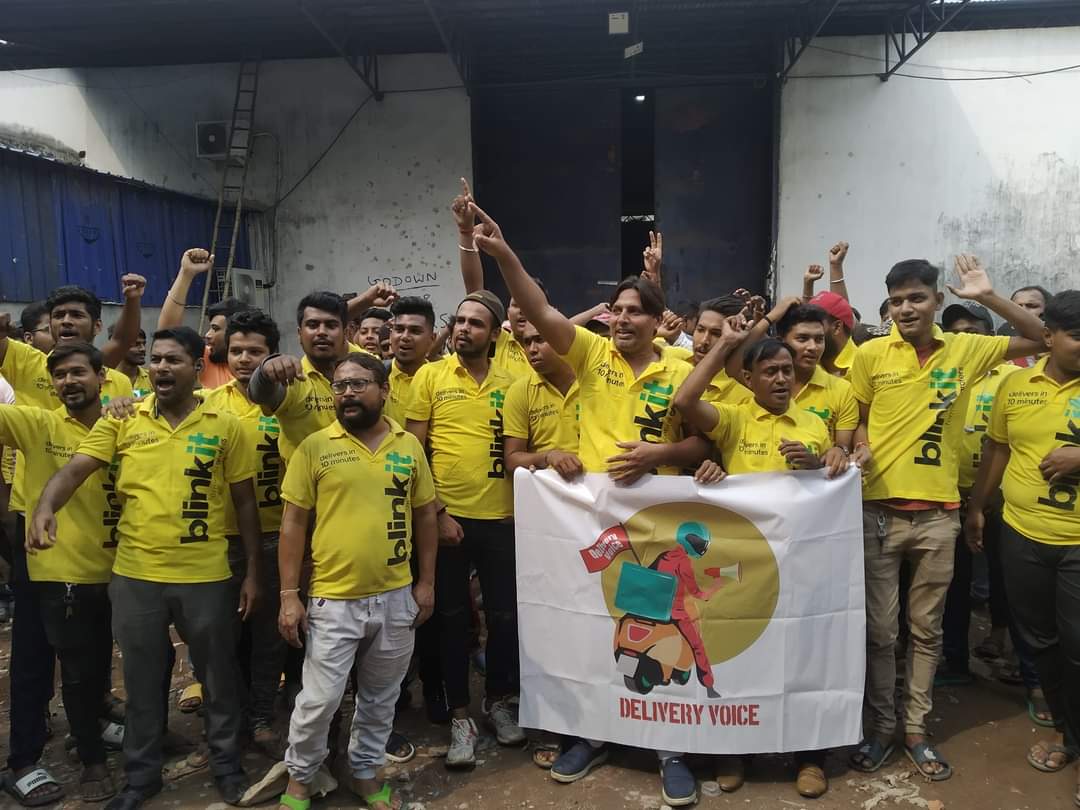
    Over half of the Zomato-owned rapid commerce platform, Blinkit’s 200 dark storefronts across Delhi, Gurugram, Faridabad, Ghaziabad, Noida, and Greater Noida have been closed for the past three days, with a more significant number set to be offline in the coming days owing to delivery worker strikes. Delivery executives oppose a change in their compensation system, which they allege will result in lower profits. As per a source familiar with the case, almost all of Gurugram’s 50-60 outlets have closed, and more are closing across Noida and Delhi as the new charge structure is implemented.

    Furthermore, consumers across the region have been unable to make orders in offline stores, with the Blinkit app displaying these locations as “temporarily unavailable” due to store maintenance. Several people have taken to social media to voice their concerns. A search on the Blinkit app at most Gurugram retailers and several others in Delhi, Noida, Faridabad, and Ghaziabad revealed they were unavailable. Certain stores in South Delhi and other locations in Noida offered 8-10 minute delivery. It has been learned that while delivery executives throughout the Delhi-National Capital Region plan to continue protesting in the coming days, the firm intends to roll out the new compensation structure to other locations.

    More Than 100 Blinkit Dark Outlets In Delhi NCR Are Closed Due To A Delivery Employees' Strike.

    The company anticipated disruption before the new structure’s Monday rollout but is attempting to educate delivery executives about the benefits. Blinkit executives have been on the pitch speaking with protesting employees, a corporate executive said. According to reports, Blinkit has 400 dark businesses nationwide in 20 cities, with half in Delhi-NCR. Blinkit recorded an average gross order value/ dark store/ day of Rs 5.24 lakh during the October-December 2022 quarter, up from Rs 4.22 lakh in the July-September 2022 period. Blinkit reported a GOV of Rs 1,749 crore for the December quarter, while sales were Rs 301 crore.

    An email question submitted to Zomato received no answer. A Blinkit spokesman, however, stated that the company considered this as a step in the right direction for our ecosystem of partners since it is just for both them and our clients. 

    Several delivery folks said they signed up with Blinkit last year when the charge was Rs 50 per order, but it was dropped to Rs 25 last year, and it has now been reduced further to Rs 15 with the introduction of a distance-based fee component.

    More Than 100 Blinkit Dark Outlets In Delhi NCR Are Closed Due To A Delivery Employees' Strike.

    Blinkit dark shops operate within a 2-3 km radius, and delivery executives voiced worry that their revenues will be constrained due to the new structure’s distance-based component. 

    Rider service radius may grow in areas where the number of the company’s dark establishments is lower. Zomato’s chief financial officer Akshant Goyal stated in the business’s December-quarter results announcement on February 9 that the company hoped to increase Blinkit’s dark shop count by 30-40% over the following year. However, according to a business official, delivery executives are likely to earn more from the improved compensation structure as Blinkit adds additional client use cases to the app. They are adding more items and use-cases to encourage customers to order from Blinkit on a regular basis. As a result, the riders will be able to deliver more orders in a day, the individual explained.

    More Than 100 Blinkit Dark Outlets In Delhi NCR Are Closed Due To A Delivery Employees' Strike.

    Some experiences directly from ground level.

    A number of Blinkit delivery executives in the Delhi-NCR region said that they joined Blinkit because it paid more than other platforms that onboard delivery professionals. Many fresher riders are still joining up for lesser rates, but some of us have been delivering for the firm for more than a year because it pays greater rates than Swiggy, Zomato, Dunzo, and Zepto, according to 33-year-old Jeetu Yadav, who delivers for a Blinkit store in Gurugram.

    Unlike food-delivery platforms, rapid commerce firms such as Blinkit and Zepto have dedicated delivery executives who are assigned to individual establishments. This is done to guarantee that personnel are always accessible to complete requests in a timely manner.

    According to Rahul Gupta, a store manager at a Delhi-based dark store, the company’s owner has requested that the shutters remain down due to the demonstrations. It is pointless to keep the store open if deliveries are not being made. If the store remains open and orders continue to come in, we may be punished by the firm for failing to fulfil them. As a result, Gupta believes it is best to keep the business closed until the delivery executives return.

    The shop management has assured them that the new compensation structure will result in increased revenues as the dark store serves a bigger region and delivery distances rise, but in their experience, orders that are more than 2 km long are quite rare. 

    According to Mohammed Zakir, one of the protesting Blinkit delivery partners who works from an east Delhi store, “there are nearly 80 delivery executives tied up with this store, and with all of them on duty, they might not cross the minimum Rs 15 per delivery mark.” The delivery executives, according to Zakir, wanted to return to work, but not at the decreased pay structure. They want to deliver for Blinkit, but the charge decrease is insufficient. They are hopeful that the corporation would return to the former arrangement and refrain from reducing compensation. “There are still delivery boys working in stores where the new system has not been implemented,” he explained.

    Ganesh Kumar, a 28-year-old delivery partner from Noida, also complained about terrible working conditions at his store. He has been delivering for Blinkit for the last six months. Despite paying Rs 1,600-1,700 as an onboarding charge, drivers who joined up at this store after August have yet to get a bag or a raincoat from the firm, he claimed. Kumar further stated that he often works 13-14 hours daily, between 30-40 deliveries. With incentives, this amounted to around Rs 1,500-1,600 per day (under the previous compensation system).

    The daily petrol cost is Rs 300, while the daily meal cost is Rs 100-150. They also lose roughly 10% of their revenue on cash-on-delivery purchases. He said the increased distribution would reduce earnings by Rs 250-300, resulting in even fewer savings.

    According to Kumar, Blinkit only permits delivery executives to store up to Rs 500 for cash on delivery orders. Once you have Rs 500, transfer it to Blinkit via the app. They don’t always have enough money in our bank accounts to do it, so we must deposit it first. They can’t keep going to the bank, so they send the cash to a business owner near our store, who performs an internet transfer into our accounts. He stated that the store owner would charge us Rs 10 for every Rs 100 they got in our accounts. 

    Disclosure.

    Protests by delivery executives in cities including Delhi, Mumbai, Bengaluru, and Chennai erupted last year after Zomato’s main rival, Swiggy implemented a revamped wage structure. Delivery executives were also requesting the removal of the new rate scheme at the time. It has previously been reported that Swiggy had faced delivery worker strikes throughout metro areas amid talks over the industry’s low pay and absence of a social safety net. Let’s see whether the demands of delivery executives at our services at every minute would make their needs accepted by the management!

  • Byju’s Valuation Marked Down to $11.5 Billion By Blackrock

    Byju’s Valuation Marked Down to $11.5 Billion By Blackrock

    US regulators downsized the values of their holdings in Byju and Swiggy last year. This has been stated according to recent US filings. Blackrock has declined the value of its investment in Byju by nearly 50 percent. At the same time, Invesco has slashed its investments in Swiggy by 23 percent.

    Blackrock dropped the per-share value of Byju to 2400 USD at the end of 2022. In addition, the value has declined significantly from 4600 USD in April Last year. Presently, the company’s valuation accounts for 11 billion USD.

    Blackrock, the world’s most prominent asset manager, owns less than 1 percent of the shares in Byju. The latter is India’s most valuable privately owned startup and was offered a total valuation of 22 billion USD by the end of 2022. It has been considered the first markdown of the valuation of the company, which has been constantly under the scanner for delays in reporting its earnings. It includes the business practices like mis-selling its courses and the recognition of its revenues.

    Byju's valuation declined

    According to the filings by valid sources, Invesco has valued the shares of Swiggy to be 4759 USD per piece in October 2022, compared to 6212 USD per share in July 2022. The company’s valuation accounts for 8.2 billion as of now. In January 2022, Swiggy was valued at 10.7 billion USD after it closed the 700 million USD round of funding.

    At the same time, the startup’s rival Zomato, which went public in 2021, was valued at 5.5 billion USD on Friday on the BSE after having a total market cap of 17 billion in November 2021.

    Us Institutional investors and the mutual funds managed by them review their values at frequent intervals. The mutual funds have revised the valuations in Flipkart, Ola, Paytm, and others in the midst of the less harsh slowdown in the funding sector.

    Byju and Swiggy have not replied to the queries about the decline in their companies’ valuation. Byju was looking to refinance a higher rate of its 1.2 billion USD term loan B. The development has been made, which is linked to the delays in publishing the company’s FY21 and 22 results. It has resulted in lenders recalling their loans.

    The edtech company is gearing up for another fundraising round with convertible notes and has conducted meetings with the existing investors, sovereign funds, and pension funds to help with the refinancing. No valuation is given to a company when it raises funds with the help of convertible notes.

    The participating investors receive a discount in the valuation when the company goes through another new equity funding round or in case there is a liquidity event like an Initial Public Offering.

    Byju looks for alternate rounds of funding:

    Byju has been undergoing massive storms. The company has been reducing costs to cope with the losses. Around 3500 employees have been slacked off in the two rounds of layoffs. The edtech industry reported losses of 4588 crores for the year in March 2021. The readjusted revenues from the operations account for Rs. 2289 crore, which has declined from 48 percent of the projected revenue of Rs. 4400 crores because of the unaudited results of the parent company of Byju’s, Think & Learn Private Limited.

    Byju's

    Byju has even been in discussions with creditors on raising the interest rates on term loan B by at least 200 to 300 basis points. The negotiations made by Byjus for the TLB have been the most prominent discussion arranged by an Indian startup. The company, which is backed by investors including the General Atlantic and Prosus, has taken loans to finance the acquisition and expansion in the North American industry.

    This has increased the ed-tech company’s pressure to improve its financials resulting in pulling back the company’s investments amidst the macroeconomic conditions.

    Edtech companies have seen an increase in their operations during Covid-19 and suffered massively once the pandemic was lifted and schools and other educational institutions opened. This has caused the edtech funding to decline by 42 percent as of 2021.

    Recently, another ed tech company named unacademy has slacked off 12 percent of its employees in response to slashing its cash burn rate. The founder and the chief executive of the company, Gaurav Munjal, has stated that the permanent salary of the workers will decline by 25 percent.

    Swiggy’s decline in valuation has emerged as a challenge for Soft Bank’s based company. It has fired 380 employees this year because of the slowdown in its business.

    Edited by Prakriti Arora