₹537.50 crore in, ₹4.84 crore out: Kabul Chawla buys a FEMA receipt, not a clean chit
Eighteen years after Mauritius money entered BPTP on a put option the rules did not allow, the chairman’s personal bill is ₹40.36 lakh. The buyers, the CBI file and the New York questions are still on the table.

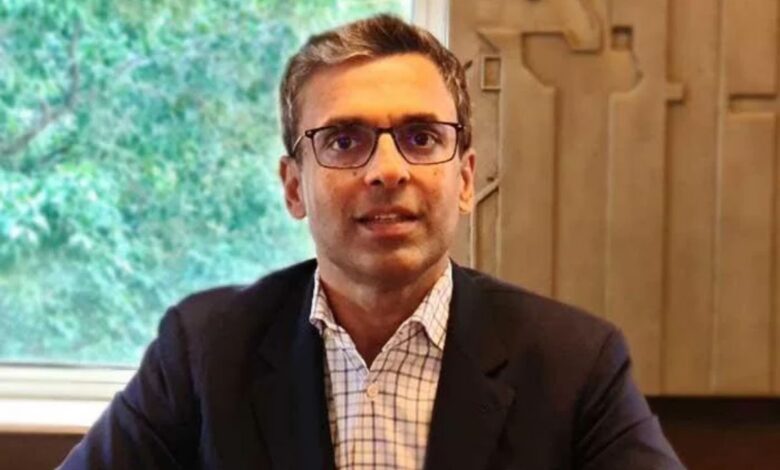
On 17 September 2026 the Reserve Bank of India did what the Foreign Exchange Management Act permits it to do. It compounded one contravention against BPTP Limited, formerly Business Park Town Planners Private Limited, and against two directors who have been on the letterhead since the foreign money arrived: Kabul Chawla and Sudhanshu Tripathi. The Enforcement Directorate announced the orders on 1 October 2026. The sum the agency put under the contravention was ₹5,37,50,00,000. The price of closure was ₹4,03,62,500 from the company and ₹40,36,250 from each director. Total: ₹4,84,35,000.
Read that again, slowly. Five hundred and thirty-seven crore and fifty lakh involved. Four crore and eighty-four lakh to make one slice of the file go away. That is 0.90 percent. The company’s share alone sits at 0.75 percent, which is not a negotiation. It is the top of the RBI’s own grid for a non-reporting contravention that has run five years or more: a fixed ₹50,000 plus 0.75 percent of the amount under contravention. Add those and you get ₹4,03,62,500 to the rupee. Each director’s line is a tenth of the company’s. Nobody invented a special tariff for Kabul Chawla. The file was old enough to sit in the highest ordinary band, and the band was applied.
Spread the company’s bill across the eighteen years from the 2007 inflow to the 2026 order and it comes to about ₹22.4 lakh a year on a structure of ₹537.50 crore. Chawla’s personal cheque is ₹40.36 lakh. For a man the New York Times, a decade earlier, had already placed inside a 4,050-square-foot condominium on the 68th floor of the Time Warner Center, that is not a punishment. It is a receipt.
What the receipt actually buys
The Directorate’s release is careful in a way the headline writers were not. It says the investigation and further proceedings stand terminated “only with respect to the contravention compounded.” The contravention it describes is one sentence long: shares issued to foreign investors with an optionality clause assuring an assured return or exit price, contrary to Regulation 5(1) read with paragraph 2 of Schedule 1 to FEMA 20/2000-RB.
That is not an acquittal. Compounding under section 15 is a civil settlement of a contravention punishable under section 13. The same release spends a page explaining that contraventions suspected of money-laundering, terror financing, or an attack on sovereignty are not compoundable at all. The ED issued a no-objection. By its own policy, that means this particular breach was treated as eligible, the conditions were met, and no legal impediment was recorded against this application. Anyone selling the order as proof of a laundering conviction is inventing a case the agency declined to bring to that door. Anyone selling it as a clean chit is ignoring the four words the agency bothered to print: only the contravention compounded.
The money itself is not in dispute. The ED’s own search note of 29 August 2025 says BPTP received ₹322.5 crore from CPI India I Ltd, Port Louis, Mauritius, and ₹215 crore from Harbour Victoria Investment Holding Ltd, Mauritius, under the automatic route in 2007–08. Contemporaneous agency copy puts the first inflow at about $77.67 million on 21 August 2007 and the second at about $49.84 million on 9 July 2008. Together they are the ₹537.50 crore now on the compounding order. The same August note says the investments were structured with put and swap options that handed the foreigners a guaranteed return on exit, which the FDI policy of that period did not allow.
Worse than the clause is what the ED says happened after the regulator noticed. Documents seized in the August 2025 searches, the agency said, showed that the RBI had specifically directed BPTP to amend the shareholders’ agreement and delete the put. The company did not. Failure to obey the regulator is not a drafting oversight discovered in 2026. It is a refusal, recorded by the agency that later agreed the refusal could be bought out.
News reports of the ED’s section 16 complaint, filed in December 2025, describe a second limb: about ₹320 crore of the CPI money parked, at the outset, in fixed deposits and mutual funds instead of the projects the investment was supposed to fund. The October 2026 release does not list that limb as the contravention compounded. That silence is the story. One clause has a price tag. The use of the money is not in the receipt.
The foreign investors already had their own file
This was never a secret between BPTP and a junior compliance officer. On 3 July 2015 Justice S. Muralidhar of the Delhi High Court was already writing about the same ₹322.5 crore. CPI India I Ltd had subscribed to 5.67 percent of BPTP’s paid-up equity. The promoters on the record were Kabul Chawla and Anjali Chawla. The shareholders’ agreement, the court recorded, gave CPI a dividend, a qualified IPO inside 24 months, and if that failed a stack of exits: swap option, sale rights, put option. The IPO did not happen. The exits were triggered. An appellate arbitral tribunal ordered BPTP to deposit ₹251.2 crore in escrow, the collections CPI said had been taken from two projects sold without the consent the contract required. BPTP appealed. The High Court dismissed the appeal with costs of ₹50,000 and used a sentence that has aged better than the company’s press notes: BPTP “was keeping back vital facts from the Court.”
That was an arbitration appeal, not a criminal conviction. It is still a judicial finding that the promoter’s company withheld facts from a constitutional court in a fight over the same foreign capital the RBI has now priced at three-quarters of one percent.
The other Mauritius investor did not wait for the ED either. A London arbitration panel ruled in October 2014 that companies linked to Chawla, including BPTP, owed more than $90 million to Harbour Victoria Investment Holdings, the JPMorgan subsidiary that had taken a stake of about 6 percent in 2008–09. In March 2015 a JPMorgan unit sued in New York to stop the transfer of a $19.4 million condominium at 25 Columbus Circle and to attach it towards that award. A federal judge later threw the attachment out for want of proof that Chawla owned the flat. The award the bank was trying to collect was not thrown out with it.
The apartment, the denial, and the agency that came back
The New York Times had already been there. In February 2015 Stephanie Saul and Louise Story reported that protesters outside BPTP’s world said nearly 200 military officers had booked at Park Serene in 2008, and that six years on the company had collected almost the full price from about 400 buyers, an outlay the protesters put above $35 million, without completing the units. Seven thousand miles away, the paper wrote, Chawla had the use of a five-bedroom, five-and-a-half-bath flat with Central Park views, held by NYC Real Estate Opportunities, a Delaware company with a Singapore address. The purchase contract named his cousin, Aneil Anand, a Dubai hedge-fund trader who had come out of JPMorgan. Broker emails referred to a man behind the request by one name: Kabul.
Chawla’s answer to the Times was exact. “I don’t own an apartment in New York.” He said he stayed there. He said it belonged to the cousin.
In August 2025 the ED’s Gurugram office searched BPTP’s offices and the residences of chairman and managing director Kabul Chawla and whole-time director Sudhanshu Tripathi. Lockers were frozen. Documents and digital material were seized. The agency then said, in its own release, that Chawla was the beneficial owner of multiple foreign entities, that one of them had been used to buy a costly property in New York, and that the entities, the property and the source of funds were under examination. A press release is not a judgment. It is also not a rumour. It is the investigating agency putting his denial and its finding in the same public file, ten years after he told the Times the flat was not his.
The warrant that was about ₹40 lakh, and the projects that were about everything else
On 26 December 2011 the Times of India reported that Patiala House had issued a non-bailable warrant against Kabul Chawla. The case was not the mythic ₹400 crore FIR that later retellings have stapled to that date. It was a complaint by a Kotla businessman, Suresh Goel, who said he had paid ₹40 lakh between 2006 and the warrant for a 200-square-yard commercial plot in Faridabad at ₹32,500 a yard, then discovered the site did not have HUDA approval. The plot was cancelled. The money, he said, was forfeited. Additional commissioner K. C. Dwivedi told the paper the police were looking for Chawla. That was fifteen years before the compounding order. The public record does not show the warrant being executed.
The buyer anger was real, and it was larger than one plot. The Times protesters were talking about Park Serene. The ED’s August 2025 note says multiple FIRs were already registered against BPTP and its directors at police stations in Delhi-NCR for non-completion of projects over a long period and for diversion of funds, and that those FIRs were under examination. The October 2026 release does not say those FIRs have been withdrawn. It says the opposite. Closure is confined to the compounded contravention.
Regulators have kept writing smaller, uglier orders. On 12 March 2026 Haryana RERA told BPTP to refund ₹18.12 lakh, with interest, to an allottee in Park Terra, Sector 37D, who had booked in 2012 against a possession date of 29 December 2016. The company called the 2025 complaint time-barred and claimed a right to forfeit 15 percent as earnest money. The authority rejected both, and noted that a promoter cannot take more than 10 percent as earnest money. In June 2026 the Gurugram bench ordered BPTP to return about ₹1.1 lakh taken as maintenance before possession, with 11 percent interest, plus ₹1 lakh for harassment, and called the demand an unfair practice. These are not the sums that move a balance sheet. They are the sums that show whose time the company has been spending.
On 14 November 2022 the National Company Law Tribunal admitted a corporate insolvency petition against BPTP on the application of RBCL Projects, an operational creditor owed money on Park Sentosa in Faridabad and on Discovery Park and Astaire Garden in Gurugram. The work order on Sentosa alone, in April 2015, was ₹34.25 crore. Six days later the appellate tribunal stayed the admission. RBCL told the tribunal it had been paid under a settlement. Insolvency, for BPTP, lasted less than a week. The pattern is not subtle. When a proceeding threatens the company, a cheque appears. When the proceeding is a homebuyer waiting since 2012, the cheque is ordered by a regulator in 2026.
There was an income-tax search too, on 15 November 2007, on BPTP and on Chawla, who with his wife controlled the group. The Delhi High Court later heard the Revenue’s appeal on whether additions under section 2(22)(e) could stand without incriminating material from that search. That appeal is not a concealment conviction. It is proof that the tax department was inside the premises in the same financial year the Mauritius money arrived.
The criminal file the receipt does not touch
On 20 April 2026, in Writ Petition (Criminal) No. 150 of 2026, BPTP Limited and a director stood before the Supreme Court as petitioners against the CBI. The Court recorded that FIR RC2192026E0001 had been registered at the Economic Offences Wing-I police station, New Delhi, against the petitioners, in purported compliance with its own directions of 23 September 2025 in SLP (Civil) No. 7649 of 2023. Those directions were to probe alleged collusion between builders and lenders in subvention schemes. Petitioner No. 1 was described as the developer of Pedestal @70A, Sector 70-A, Gurugram. Petitioner No. 2 was a director. The buyers who put them in the FIR were respondents 2 and 3.
The Court did not convict anyone. It disposed of the petition and left both sides’ material with the CBI. Counsel for BPTP said 180 units had been completed and that no other buyer had complained. That claim is now part of the order. So is the fact of the FIR. Secondary reports of the complaint describe a “No Pre-EMI till delivery of possession” pitch in January–April 2014, a flat priced at ₹1.47 crore, an HDFC loan of ₹1.11 crore of which about ₹1.01 crore was disbursed early, and allegations under section 120-B read with section 420 of the IPC and section 13(2) read with 13(1)(d) of the Prevention of Corruption Act. Those remain allegations. They also remain outside section 15 of FEMA. A compounding order cannot dissolve them.
The arithmetic of impunity
Kabul Chawla has spent two decades being described as the man who built a Delhi-NCR residential empire out of Faridabad. The public paper trail says something narrower and harder. In 2007 and 2008 his company took ₹537.50 crore from two Mauritius vehicles on exit clauses a High Court would later recite and a regulator would later tell him to delete. He did not delete them. In 2011 a Delhi court issued a warrant in a ₹40 lakh booking. In 2014 a London panel put a $90 million award on his companies. In 2015 a High Court said his company had kept facts back, and a New York paper put him in a flat he said he did not own. In 2022 a tribunal admitted his company to insolvency and was persuaded to step aside after a settlement. In 2025 the ED searched his house, froze lockers, and said he beneficially owned foreign entities tied to a New York property. In April 2026 the Supreme Court recorded a CBI FIR against his company and a director in a subvention probe the Court itself had ordered. In September 2026 the RBI took ₹4.84 crore and closed one contravention.
That is the whole trick, and it is legal. FEMA is a civil statute. Section 15 exists so that eligible breaches can be paid off and the file closed. The ED followed its own NOC policy. The grid was applied at the top of the band. None of that is a conspiracy by the regulator.
It is, however, a price list. Eighteen years. A refused amendment. ₹537.50 crore. A personal bill of ₹40.36 lakh for the chairman whose name is on the compounding order. And a press note that spends more ink on the virtues of ease of doing business than on the buyers who paid for flats in 2008 and were still in RERA in 2026.
The receipt is real. The clean chit is not. The October release says so, in the only sentence that matters. Termination applies only to the contravention compounded. Everything else — the FIRs the ED itself flagged, the CBI case the Supreme Court recorded, the New York property the agency said was still under examination — is exactly where Kabul Chawla left it. Open.