4,600 Homebuyers, ₹1,353 Crore In Alleged Money Laundering And Years Of Unfinished Projects. The Raheja Developers Story Has Been Unravelling For Years, Navin Raheja And Nayan Raheja, Why Are The Promoters Still Out?
For nearly 4,600 homebuyers, the Raheja Developers story has been years of unfinished projects, unfulfilled promises and courtroom battles. Now, the ED alleges ₹1,353 crore was diverted and laundered. But after years of complaints, regulatory action and investigations, why are Navin and Nayan Raheja still out?

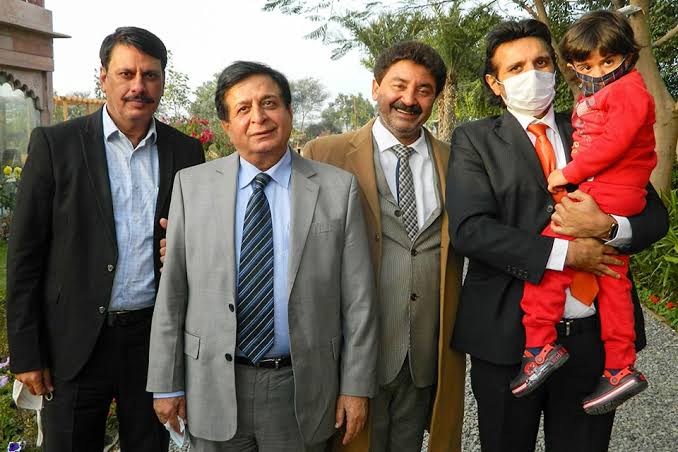
For thousands of homebuyers in Delhi and Gurugram, the wait for a home has stretched into years. Now, the Enforcement Directorate (ED) has brought a staggering financial dimension to their ordeal, alleging that ₹1,353.26 crore collected by Raheja Developers Ltd. from homebuyers and investors was diverted and laundered instead of being used to complete the projects for which the money was raised.
In a prosecution complaint filed on November 6 before the Special Prevention of Money Laundering Act (PMLA) court in Saket, the agency has named Raheja Developers, its promoters Navin M Raheja and Nayan N Raheja, along with 18 others. The complaint also names members of the Raheja family, including Navin Raheja’s wife and children.
According to the ED, the company collected approximately ₹2,699.13 crore from nearly 4,600 homebuyers and investors for residential and commercial developments across Delhi and Gurugram, promising timely delivery of the properties. However, the agency alleges that a substantial portion of these collections was diverted for purposes unrelated to construction, leaving several projects incomplete and buyers waiting for possession.
The latest complaint is significant not merely because of the amount involved, but because it brings together years of complaints, investigations and regulatory proceedings surrounding the developer.
For homebuyers who have spent years seeking possession or refunds, the ED’s allegations raise an uncomfortable question: while they continued waiting for the homes they paid for, where exactly was their money going?
Where Did The Homebuyers’ Money Actually Go?
The ED’s investigation alleges that the diversion of homebuyers’ funds was not limited to isolated transactions or delayed payments to contractors. Instead, the agency has identified a network of transfers involving project accounts, related entities, land purchases and individual bank accounts.
According to sources familiar with the investigation, approximately ₹1,175.86 crore was allegedly withdrawn from project, escrow and RERA-designated accounts for purposes other than construction. Another ₹177.40 crore, collected in cash from homebuyers outside registered agreements, was also allegedly diverted. Together, these amounts constitute the ₹1,353.26 crore cited in the prosecution complaint.
One of the largest transactions identified by the agency involved approximately ₹380 crore transferred to Arabtec Construction (India) Pvt Ltd, a joint venture between Raheja Developers and Dubai-based Arabtec LLC. The ED allegedly found that vendors to whom Arabtec claimed to have made payments for construction materials did not exist, raising questions about the actual utilisation of the money.
The investigation has also identified transfers to several other entities linked to the group. These allegedly included ₹124 crore to RIEPL, ₹100 crore each to Riyasat Palaces and Enkay Buildwell, ₹15 crore to RBPL and ₹63 lakh to Raheja Mall.
The agency suspects that funds routed through these entities were subsequently used to acquire land, repay loans and make payments to individual accounts, including transactions shown as salaries, rather than being deployed towards completing the projects.
In another significant allegation, ₹11.87 crore was transferred to the personal bank account of Navin M Raheja under the guise of salary, according to sources.
The ED has further alleged that companies controlled through employees and their relatives acting as nominee directors were used to acquire land and route funds. Money was also allegedly moved between the RERA accounts of different projects, effectively diverting collections raised for one development towards other purposes.
The allegations point to a financial trail extending well beyond the usual explanations of construction delays, cash-flow difficulties or disputes with contractors. The central issue now is whether money collected against specific housing commitments was systematically channelled elsewhere, and who ultimately benefited from those transactions.
The Homebuyers Who Paid, Waited And Kept Fighting
For the nearly 4,600 homebuyers and investors caught up in the Raheja Developers case, the allegations of money laundering are only one part of a much longer ordeal. The other part is considerably more personal: years of waiting for homes they paid for, repeated trips to courtrooms and regulatory authorities, and the financial burden of properties that, in several cases, remain undelivered.
Raheja Revanta in Gurugram is among the most prominent examples of the prolonged disputes surrounding the developer. Launched in 2011, the residential project was marketed with possession timelines of approximately 36–48 months. More than a decade later, the project has continued to feature in complaints, regulatory proceedings and insolvency litigation. Homebuyers have alleged prolonged construction delays and failure to deliver the units within the promised timelines.
The dispute eventually reached the National Company Law Tribunal (NCLT), with a group of 176 allottees representing 99 units approaching the tribunal over their grievances. The buyers reportedly claimed that more than ₹137 crore had been paid towards the project.
The proceedings brought into focus a familiar problem in India’s real estate sector: buyers may have paid substantial portions, or even the full value, of their homes, but obtaining possession or recovering their money can become a separate and prolonged legal battle.
The complaints against Raheja Developers have also found their way before consumer commissions and Haryana Real Estate Regulatory Authority (HRERA). Buyers have sought refunds, interest and compensation, while regulatory proceedings have examined the developer’s obligations and the status of its projects.
For those who financed their purchases through home loans, the consequences of delayed possession can extend well beyond the original booking amount. Loan repayments, interest costs, rent and the expenses of pursuing legal remedies can continue even when the promised property is unavailable.
The ED’s latest allegations add another dimension to these grievances. If the agency’s claims are ultimately established, the question will not simply be why projects were delayed, but what happened to the money entrusted to the developer to build them. For homebuyers, however, another question remains equally pressing: after years of complaints and litigation, when will they actually receive their homes or their money back?
The Raheja Developers Business, Revenue, Profits And The Corporate Web
To understand the allegations against Raheja Developers, it is necessary to look beyond the property launches, project brochures and promises of possession and examine the business itself. The developer’s financial position, its corporate structure, its borrowings and its dealings with associated entities are central to understanding how a company collecting thousands of crores from homebuyers operated.
The ED’s allegation that ₹1,353.26 crore was diverted from funds collected for residential and commercial projects makes the company’s financial disclosures particularly relevant.
There is also the question of the wider corporate structure. The ED has identified several entities allegedly involved in the movement of funds, including RIEPL, Riyasat Palaces, Enkay Buildwell, RBPL and Arabtec Construction (India). .
In the Revanta dispute, Raheja Developers reportedly maintained that it had spent approximately ₹1,119 crore against collections of around ₹826 crore, arguing that expenditure on the project had exceeded the money received from buyers.
The real question is what the company’s financial statements reveal about its business over the years: how much it earned, how much it borrowed, where its money went and whether its financial position reflected the commitments it had made to thousands of homebuyers.
A Decade Of Complaints, Regulatory Action And Unfinished Business
The ED’s November 6 prosecution complaint may be the latest and most significant development in the Raheja Developers case, but the grievances surrounding the company go back several years.
The investigation itself was initiated on March 31, 2022, following multiple FIRs registered by the Economic Offences Wing of Delhi Police and Gurugram Police on complaints from homebuyers who alleged that they had paid for residential flats and commercial units but received neither possession nor refunds.
The complaints eventually brought the company’s projects under the scrutiny of multiple regulatory and judicial authorities.
In April 2023, Haryana RERA ordered restrictions on the sale and purchase of units in Raheja Revanta, froze the project’s unsold inventory and related bank accounts, and directed a forensic audit. The action followed complaints by buyers who alleged that the project had remained incomplete despite substantial payments and years of waiting. Raheja Developers, however, blamed the delay on the absence of essential external infrastructure, including electricity, water supply, sewerage and access roads.
The ED subsequently escalated its investigation.
On June 27, 2025, it conducted searches at 13 locations across Delhi-NCR and Mohali. Further searches followed on April 25, 2026, at premises linked to the developer, its promoters, employees and associated entities. The agency subsequently issued three provisional attachment orders: ₹1,113.81 crore on April 28, ₹503.48 crore on June 15 and ₹782.36 crore on July 31, taking the estimated market value of attached properties to approximately ₹2,399.65 crore.
The November 6 prosecution complaint is the latest stage in this sequence. What makes the case particularly difficult to dismiss as a routine developer-buyer dispute is the length of time over which complaints, regulatory interventions and financial investigations have accumulated. Yet, for buyers, years of proceedings have not necessarily translated into possession, refunds or closure.
Revanta, Shilas And The Projects That Became Legal Battles
Raheja Developers’ troubles are best understood through the projects that have repeatedly surfaced in complaints, regulatory proceedings and insolvency litigation.
Raheja Revanta in Sector 78, Gurugram, is perhaps the most prominent example. Launched in 2011, the 61-storey residential development was marketed with possession commitments of approximately 36–48 months. Instead, the project became the subject of prolonged buyer disputes, regulatory scrutiny and eventually insolvency proceedings.
In 2023, Haryana RERA ordered a forensic audit to examine the total collections from allottees, project expenditure, statutory payments and possible diversion of funds. The authority’s scrutiny was particularly significant because it sought to establish whether money collected for Revanta had actually been deployed towards its construction.
The dispute subsequently moved into the insolvency framework. In June 2026, the NCLT admitted a petition filed by 176 homebuyers representing 99 units and initiated the Corporate Insolvency Resolution Process (CIRP) specifically in relation to the Revanta project. The buyers had reportedly paid more than ₹137 crore, while the developer contested the allegations and cited infrastructure deficiencies and other impediments to completion.
Revanta is not the only Raheja development to have entered insolvency proceedings.
Raheja Shilas (Low Rise), another Gurugram project, was admitted into CIRP by the NCLT in November 2024 following a petition by homebuyers. In March 2026, the National Company Law Appellate Tribunal (NCLAT) modified the scope of the proceedings, restricting them to the Shilas (Low Rise) project rather than allowing the insolvency process to extend across the developer’s entire business.
The Krishna Housing Scheme also became the subject of separate insolvency proceedings, with the NCLT admitting a homebuyers’ petition in August 2025. Subsequent appellate proceedings in April 2026 similarly restricted the process to that particular project.
The distinction is important. These are not simply isolated construction delays but separate legal battles involving different groups of buyers, individual projects and claims against the developer. Meanwhile, the ED’s prosecution complaint identifies projects including Revanta, Atlantis, Navin Minar and The Delhi Mall among those linked to the homebuyer complaints underlying its investigation.
For a developer with multiple projects and a sizeable portfolio, the repeated appearance of its developments before RERA authorities, consumer forums and insolvency tribunals raises a larger question about project execution, financial management and accountability. Each insolvency proceeding may offer a route towards resolution for a particular group of buyers, but it also underlines how far some of these housing commitments have moved from their original delivery schedules.
Navin Raheja And Nayan Raheja
Perhaps the most uncomfortable aspect of the Raheja Developers investigation is the question of what happens to the people at the centre of it.
The ED has identified an alleged diversion of ₹1,353.26 crore, provisionally attached properties with an estimated market value of ₹2,399.65 crore and named the company’s promoters, Navin M Raheja and Nayan N Raheja, in its prosecution complaint. Yet, as of the agency’s November 6 statement, the two promoters had not joined the investigation and the ED was still seeking to secure their presence.
The legal proceedings surrounding Nayan Raheja have been particularly revealing.
According to the Delhi High Court judgment dated October 15, 2026, the Enforcement Directorate had issued nine summonses to him between April and August 2026. The court examined his attendance record, including his earlier appearances in 2025, as well as his subsequent responses to summonses issued after the seizure of an iPad Pro from his wife’s residence during the April 25 searches.
Nayan’s defence maintained that he had responded to the summonses and had genuine reasons for not appearing physically, including being out of station. He had also sought permission to participate through video conferencing. The ED, however, argued that he had failed to comply with its requirements to appear in person.
The High Court found his explanations unjustified in the circumstances and noted that he had earlier undertaken before the court on July 30 to fully cooperate with the investigation.
The Special PMLA Court had already rejected his anticipatory bail application on September 19. The Delhi High Court subsequently dismissed his appeal on October 15, holding that he had failed to satisfy the statutory conditions for pre-arrest protection under the PMLA.
The court also examined the ED’s reliance on digital evidence recovered from the iPad, an employee’s statement and material concerning his alleged involvement in the company’s affairs.
Nayan’s defence disputed his operational role, pointing out that he had ceased to be a director of Raheja Developers in November 2010 and held only a 0.81% shareholding. The court did not accept these arguments as sufficient grounds for granting anticipatory bail, while making it clear that its order was not a determination of guilt.
The proceedings involving Navin Raheja also took a significant turn in August.
The ED had approached the Delhi High Court challenging interim protection granted to the promoters in proceedings concerning its application for open-ended non-bailable warrants. On August 13, the High Court stayed the operation of the interim protection granted by the lower court, leaving the matter subject to further orders in the anticipatory bail proceedings.
On November 6, alongside the prosecution complaint, the ED confirmed that it had filed an application before the Special PMLA Court seeking non-bailable warrants against four accused: Navin Raheja, Nayan Raheja, Nayana N. Singhania and Nirmal Raheja. The agency also sought custody of the promoters and family members as and when they were apprehended, alleging that they had not joined the investigation.
So Why Are The Promoters Still Out?
The legal distinction is important. Rejection of anticipatory bail removes the protection sought by an accused against arrest; it does not automatically direct the investigating agency to arrest that person.
Similarly, an application seeking non-bailable warrants is not the same as a court actually issuing and executing those warrants. The ED must follow the applicable legal process to secure the accused and pursue any custodial interrogation it considers necessary.
But that distinction does not make the larger question disappear. After years of investigation, repeated summonses, extensive searches, substantial property attachments and now a prosecution complaint, the agency must establish what steps it has taken to secure the presence of the accused and move the investigation forward.
For thousands of homebuyers who have already spent years waiting for possession or refunds, the distinction between an investigation being underway and accountability actually being delivered is not merely procedural. It is the difference between another round of legal proceedings and a case that finally moves towards resolution.
The Larger Question Of Accountability
The Raheja Developers case has now reached a stage where the allegations are no longer confined to delayed possession complaints or disputes over construction timelines. The ED has filed a prosecution complaint, identified an alleged money trail running through multiple companies and accounts, and sought to secure the presence of the promoters and other accused.
But for the thousands of buyers who have been caught in this dispute, the legal developments have yet to answer the most basic question: what happens to the money they paid?
The company’s history raises questions that go beyond the immediate money-laundering investigation.
There have been homebuyer complaints, RERA interventions, consumer commission orders, project-specific insolvency proceedings and repeated investigations. Each has addressed a different aspect of the dispute, but the cumulative picture is of a developer whose commitments to buyers have remained under scrutiny for years.
There is also the question of the business itself.
How did a company collecting thousands of crores from homebuyers manage its project finances? What do its accounts reveal about revenue, profits, borrowings and related-party transactions? And how do the company’s financial disclosures compare with the allegations that money collected for construction was moved elsewhere?
For the homebuyers, another investigation, another attachment order or another court hearing is not the outcome they have spent years waiting for. They want their homes, their money or a legally enforceable resolution.
After years of complaints and proceedings, the Raheja Developers case now needs more than another chapter in its long history. It needs answers, accountability and, above all, a resolution for the people who paid for homes they are still waiting to receive.