Adani Ports Is Building A Global Maritime Empire From Oman To Europe, Aiming For A Bigger Share Of Global Trade
Adani Ports is looking beyond India's coastline as it pursues a $3.3 billion bid for European terminal operator Evos and explores a possible entry into Oman's Port of Salalah. Backed by rising profits and cargo volumes, the company is expanding its international ambitions across global shipping and energy infrastructure.

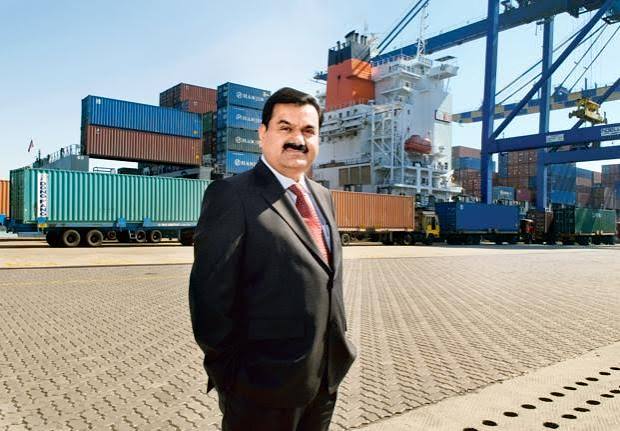
Adani Ports and Special Economic Zone (APSEZ) has submitted a binding offer of $3.3 billion (approximately €3 billion) to acquire Evos Terminals, a pan-European liquid-storage and terminal operator, as the company looks to expand its international presence beyond conventional port operations.
The proposed transaction would give the Gautam Adani-led company access to eight tank terminals spread across seven major ports in five European countries, with a combined storage capacity of 6.4 million cubic metres.
Headquartered in Amsterdam, Evos is owned by Igneo Infrastructure Partners, an infrastructure investment manager that is part of First Sentier Group. Its earnings before interest, taxes, depreciation and amortisation (EBITDA) were estimated at approximately €200 million in 2025.
Evos operates storage facilities for a range of liquid products, including conventional motor fuels such as gasoline, alongside bio-diesel, sustainable aviation fuel (SAF), green naphtha, bio-ethanol, e-methanol and bio-marine fuels.
This gives the proposed acquisition a presence in both established fuel supply chains and infrastructure catering to emerging energy products.
The offer comes as Evos’s owner, Igneo Infrastructure Partners, conducts a formal sale process. Morgan Stanley was appointed earlier this year to oversee the transaction, which has attracted interest from several international investors and infrastructure operators.
Among those reportedly involved in the process are private equity firms KKR and EQT, Macquarie, Goldman Sachs Alternatives, BlackRock and pension fund manager CPP Investments. Specialised terminal operators, including LBC Tank Terminals and Exolum, have also featured among the interested parties.
APSEZ submitted its binding offer earlier this week as part of the competitive bidding process, with a final decision expected in the coming weeks. The transaction, therefore, remains a proposal rather than a completed acquisition.
The bid follows APSEZ’s unsuccessful pursuit of Associated British Ports (ABP), the UK’s largest port operator, which was valued at approximately £10 billion. The company lost that contest to IFM Investors, a pension fund-backed infrastructure investor. The Evos bid represents another sizeable overseas opportunity, although it takes APSEZ into a different segment of maritime infrastructure, with liquid storage and energy-related terminals at its centre.
Adani Ports Sets Up An Oman Subsidiary As Salalah Opportunity Emerges
Europe is not the only overseas market drawing Adani Ports’ attention. The company has also established a presence in Oman through a newly incorporated subsidiary, a development that has coincided with the impending expiry of the existing operating concession at the Port of Salalah.
APSEZ incorporated Indian Ocean Gateway Terminal in Oman on October 21, 2026, and disclosed the development in a regulatory filing the following day. The new entity is wholly owned by Adani International Ports Holdings Pte Ltd, which is itself a subsidiary of APSEZ. According to the company, the subsidiary has been established to facilitate its offshore operations in Oman.
The regulatory filing did not identify any specific port or terminal that the new company would operate. However, the timing has drawn attention to Salalah, one of Oman’s principal maritime gateways and an important container transhipment hub along international shipping routes.
Salalah Port Services Company SAOG, the current operator of the port, disclosed on October 18 that it had received formal notification from Oman’s Ministry of Transport, Communications and Information Technology confirming that its existing concession agreements would not be extended beyond their contractual expiry date of November 1, 2028. The company has operated the port under a 30-year agreement dating back to 1998.
The Omani ministry has confirmed that a new operator will take over after the existing agreement expires, with its identity to be announced in due course. This has opened the possibility of a change in the port’s operating arrangement.
According to industry sources cited, APSEZ and the Omani government are believed to be in advanced discussions, with a possible agreement nearing completion.
Why Salalah is worth pursuing
The importance of the Port of Salalah lies largely in its location. Situated on Oman’s Arabian Sea coastline, the port sits along one of the major east-west maritime shipping routes connecting Asia with Europe.
It also provides access to markets across the Middle East, the Indian subcontinent and East Africa, making it an important transhipment point for international shipping companies.
The port has six container berths with a combined quay length of 2,197 metres and a draft of up to 18 metres. Following a $300 million upgrade completed in 2025, its annual container-handling capacity increased from 4.5 million twenty-foot equivalent units (TEUs) to 6 million TEUs. The facility handled approximately 4.3 million TEUs in 2025, representing a 31% increase over the previous year.
Salalah also has a substantial general cargo business, handling commodities including limestone, gypsum and other dry-bulk materials. Its general cargo terminal handled approximately 26.3 million tonnes in 2025. The port also has liquid-bulk facilities with a reported annual handling capacity of 6 million tonnes.
Its role in global shipping networks has also grown following the launch of the Gemini Cooperation between Maersk and Hapag-Lloyd. Salalah forms part of the network, serving as a major transhipment hub for container traffic moving across international routes.
For APSEZ, a potential operating arrangement at Salalah would provide access to an established shipping hub with existing infrastructure, international shipping connections and a sizeable cargo base. It would also extend the company’s presence along an important maritime corridor between Asia, the Middle East, Africa and Europe.
The Financial Engine Behind Adani Ports’ International Expansion
Adani Ports’ overseas expansion plans come at a time when the company is reporting higher profits and growing cargo volumes across its domestic and international operations.
Its September-quarter results for FY27, announced on October 28, showed a 16.5% year-on-year increase in consolidated net profit to ₹3,622 crore, compared with ₹3,109 crore in the corresponding quarter last year.
Revenue from operations rose 23.7% to ₹11,340 crore, against ₹9,167 crore a year earlier. Earnings before interest, taxes, depreciation and amortisation (EBITDA) increased approximately 23% to ₹6,807 crore from ₹5,550 crore in Q2 FY26.
The growth was supported by higher cargo volumes across the company’s port network. APSEZ handled 142 million metric tonnes (MMT) of cargo during the quarter, approximately 15% more than the 123 MMT handled in the corresponding period last year. In August, its monthly cargo handling touched a record 50 MMT, marking a 19% year-on-year increase.
The performance also prompted the company to revise its full-year FY27 financial guidance upwards. Revenue guidance was increased by ₹1,000 crore to ₹44,000-46,000 crore, while its EBITDA guidance was raised by the same amount to ₹26,000-27,000 crore.
However, the company is also preparing to spend more as it expands its operations. Its capital expenditure guidance for FY27 has been increased to ₹15,000-17,000 crore from the earlier estimate of ₹12,000-14,000 crore. The higher allocation reflects investments across its port network, logistics operations and marine business as it works towards its longer-term Ambition 2031 targets.
The results indicate that APSEZ’s expansion plans are being pursued alongside growth in its existing operations, rather than being driven entirely by overseas acquisitions. The company is seeking to increase its international presence while continuing to generate revenue and cash flows from its established domestic port business.
International Ports Emerge As A Significant Growth Driver
Adani Ports’ international operations are beginning to make a more substantial contribution to its financial performance, with overseas port revenue growing considerably faster than its domestic business during the September quarter.
Revenue from international ports increased 71% year-on-year to ₹1,839 crore in Q2 FY27, compared with ₹1,077 crore in the corresponding quarter last year. Earnings before interest, taxes, depreciation and amortisation (EBITDA) rose to ₹878 crore from ₹261 crore, while the segment’s EBITDA margin expanded to 47.7%, against 24.2% a year earlier.
The international portfolio handled 24 million metric tonnes of cargo during the quarter, compared with approximately 9.7 million tonnes in Q2 FY26. Australia contributed 10 million tonnes, followed by Colombo with 8 million tonnes. Tanzania handled 4 million tonnes, up from 3 million tonnes a year earlier, while operations at Haifa in Israel remained broadly unchanged at 2 million tonnes.
However, the sharp increase in international cargo volumes also reflects the addition of Australia’s North Queensland Export Terminal (NQXT) to the consolidated portfolio. APSEZ began consolidating the Australian asset in the fourth quarter of FY26, which means the year-on-year comparison includes the contribution of a newly consolidated business alongside growth in existing overseas operations.
Sri Lanka has also emerged as an important contributor. The Colombo West International Terminal (CWIT), in which APSEZ holds a majority stake, handled approximately 2 million TEUs within its first 18 months of operations. During the September quarter, the company inaugurated Phase II of the facility, taking its annual container-handling capacity from 1.6 million TEUs to 3.2 million TEUs.
In Tanzania, the company’s operations recorded their highest-ever quarterly container volume at 265,518 TEUs, including a monthly record of 91,625 TEUs in July.
The numbers show that APSEZ’s overseas investments are contributing to its earnings and cargo-handling operations. They also provide some context for why the company is continuing to evaluate additional international port and terminal opportunities.
From Indian Ports To A Wider International Network
Adani Ports’ overseas expansion is part of a broader effort to build an integrated maritime, logistics and transport business spanning multiple countries and cargo categories.
The company currently operates 15 ports and terminals in India, alongside international facilities in Israel, Sri Lanka, Tanzania and Australia. Its overseas portfolio includes the Haifa Port in Israel, Colombo West International Terminal in Sri Lanka, operations in Tanzania and North Queensland Export Terminal in Australia.
Its expansion is also extending beyond port ownership and terminal operations. APSEZ has been investing in logistics infrastructure, marine services and specialised offshore capabilities, allowing it to participate in more stages of the cargo transportation chain.
During Q2 FY27, its logistics business reported revenue of ₹1,273 crore, a 21% year-on-year increase. Revenue from its international freight network more than doubled to ₹289 crore, while trucking revenue grew 28%.
The marine business recorded revenue of ₹1,007 crore, up 57% from ₹641 crore in the corresponding quarter last year. EBITDA increased 32% to ₹447 crore. The company’s marine fleet expanded to 138 vessels from 127 a year earlier, with growth supported by fleet expansion and its entry into specialised subsea services.
APSEZ has also been evaluating more than 20 international assets for potential acquisitions. Chief executive Ashwani Gupta has indicated that the company assesses prospective investments on parameters including profitability, returns, geopolitical conditions, financing availability and the strength of local partners.
The company has made clear that acquisitions must meet its financial return requirements rather than simply increase the number of ports under its management.
The unsuccessful pursuit of Associated British Ports in the UK is one example of this approach. While APSEZ was interested in the asset, it ultimately did not secure the transaction.
The proposed Evos transaction and the potential Salalah opportunity represent two different kinds of infrastructure investments. Together with its existing overseas operations, they illustrate the range of international assets the company is considering as it expands beyond its established Indian port network.
Why Adani Ports Is Moving Into Energy Infrastructure
The proposed Evos acquisition also points to another aspect of Adani Ports’ international expansion: its growing interest in infrastructure linked to the storage and movement of energy products.
Unlike conventional container terminals, liquid-storage facilities cater to commodities that require specialised tanks, pipelines, handling systems and transportation infrastructure. These include petroleum products, chemicals, vegetable oils and various biofuels. Such facilities are important links between producers, commodity traders, refiners and end-users, allowing products to be stored before being transported to their final destinations.
Evos operates terminals that handle both conventional fuels and alternative energy products. Alongside gasoline and other petroleum-related commodities, its facilities cater to biodiesel, sustainable aviation fuel (SAF), bioethanol, green naphtha, e-methanol and bio-marine fuels.
The inclusion of these products is significant as shipping and aviation industries explore alternatives to conventional fossil fuels. Sustainable aviation fuel, for instance, is being developed as a lower-carbon alternative to conventional jet fuel, while methanol and biofuels are among the options being considered for reducing emissions in maritime transportation.
For Adani Ports, acquiring Evos would therefore mean entering a segment of the energy supply chain that extends beyond the movement of conventional cargo. Its existing port operations provide experience in handling different categories of commodities, while the proposed transaction could add specialised liquid-storage infrastructure across several European markets.
The proposed investment would also diversify the company’s international portfolio. While a potential Salalah arrangement would strengthen its presence in container transhipment and general cargo, Evos would provide exposure to storage and distribution infrastructure for liquid commodities.
The Cost Of Building A Global Maritime Business
Expanding across international ports, liquid-storage terminals, logistics and marine services also requires substantial capital. Adani Ports has already increased its investment plans for FY27, raising its capital expenditure guidance to ₹15,000-17,000 crore from the earlier estimate of ₹12,000-14,000 crore.
The company spent ₹10,521 crore on investments during the first half of FY27, against operating cash flow of ₹13,327 crore. This translated into free cash flow of ₹2,806 crore for the six-month period. Its cash balance stood at ₹12,502 crore as of September 30, while gross debt was ₹57,717 crore. The net debt-to-EBITDA ratio was 1.8 times.
APSEZ has maintained that its balance sheet provides room to support its investment programme. The company also reported that it had deployed ₹30,346 crore in capital expenditure over the preceding two years while maintaining its net debt-to-EBITDA ratio at 1.8 times.
Its longer-term investment programme is linked to Ambition 2031, under which APSEZ is targeting revenue of ₹91,500 crore and EBITDA of ₹52,000 crore by FY31. The company has described this as an expansion of its existing port, logistics and marine businesses into a larger integrated transport platform.
However, the increased capex guidance also means that investment requirements are rising. Any large overseas acquisition would add another layer of capital commitments, depending on the final transaction value, financing structure and integration costs.
The proposed $3.3 billion Evos transaction, in particular, would be a substantial investment. The Salalah opportunity could also involve significant operational and financial commitments, although its terms have not been disclosed.
For APSEZ, the challenge will be to expand its international footprint while ensuring that new assets generate sufficient earnings and cash flows to justify the capital deployed. The company’s stated acquisition criteria include profitability, returns, geopolitical conditions and the availability of suitable local partners.
The Last Bit, The Ambition To Become A Global Maritime Operator
Adani Ports’ latest overseas moves come as the company seeks to expand its role in international trade beyond operating individual port facilities. Its strategy increasingly encompasses container transhipment, bulk cargo, liquid storage, logistics, marine services and the infrastructure connecting these businesses.
The proposed Evos transaction and the possible Salalah opportunity represent two different additions to that strategy. One would provide access to an established European liquid-storage network, while the other could strengthen APSEZ’s presence along a major Indian Ocean shipping corridor.
The company is also continuing to expand its existing operations. Its investments in Colombo, Tanzania and Australia, alongside capacity additions at Indian ports, are part of a wider programme to increase cargo-handling capacity and develop its international logistics network.
APSEZ has set a target of handling 1 billion tonnes of cargo annually by FY31, against its current domestic port capacity of 671 million tonnes per annum. Its Ambition 2031 programme also envisages revenue of ₹91,500 crore and EBITDA of ₹52,000 crore.
Whether the company can achieve these targets will depend on its ability to expand capacity, secure new international operating opportunities and generate adequate returns from its investments.
For now, the Evos bid and the developments surrounding Salalah indicate the geographical and operational range of assets APSEZ is pursuing. Both opportunities remain subject to their respective processes, but they offer a glimpse into how the company is attempting to extend its business across some of the world’s important shipping and energy infrastructure markets.