Reliance Wins Court Relief In Campa Energy Drink Fight With FSSAI Why Was The Company Not Given A Hearing And What Happens To Millions Of Cans Already Made
Reliance’s Campa Energy Drink has become the latest flashpoint in a growing fight with India’s food regulator. After the Delhi High Court questioned why Reliance was not heard before FSSAI acted, the dispute now goes beyond a label: who bears the cost when regulation changes after millions of cans are already made?

Reliance Industries’ fight with India’s food regulator took a significant turn on October 6, after the Delhi High Court questioned why the company was not given an opportunity to be heard before the Food Safety and Standards Authority of India (FSSAI) moved against the use of the term “energy drink”.
The court granted Reliance temporary relief, allowing its Campa beverages to continue being marketed under the disputed description while the legal challenge proceeds.
The immediate issue may sound like a labelling dispute. It is considerably bigger for Reliance. The company told the court that the regulatory action had disrupted its business, with stock seized by state authorities and products removed from online platforms.
More importantly, Reliance says it is sitting on enormous quantities of products and packaging carrying the “energy drink” description. That includes 168 million cans and 120 million plastic bottles already manufactured, along with packaging material for hundreds of millions more units. Reuters
The court’s question therefore goes beyond whether FSSAI can regulate how a caffeinated beverage is described. It goes to how that regulatory decision was made in the first place. And for Reliance, the answer has potentially very expensive consequences.
What Exactly Did FSSAI Do?
The dispute began with an FSSAI direction issued on June 30, under which manufacturers of high-caffeine beverages were told to stop using the term “energy drink” for products that did not fall within the relevant regulatory framework.
FSSAI’s position was that “energy drink” was not itself a properly defined food category and that the description could create confusion about what these beverages actually are. The regulator’s concerns also relate to the high caffeine, sugar and other ingredients commonly associated with such products.
Indian food regulations already recognise and regulate caffeinated beverages. Under the applicable standard, such beverages must contain between 145 mg and 300 mg of total caffeine per litre, while their labels must carry a declaration that consumers should not consume more than 500 ml a day.
The regulatory fight is therefore about the description and positioning of the product, rather than simply whether caffeine is permitted in a beverage.
That distinction matters because FSSAI’s own earlier material shows that the terminology has never been quite as straightforward as the June 2026 action suggests. The regulator has been examining the “energy drink” category for years, including concerns that the name could give consumers the impression that the beverage is needed to provide energy.
And that brings us to the question sitting at the heart of the Reliance case: if FSSAI had concerns about the terminology, why was the industry allowed to operate under it for so long – and why were companies such as Reliance not given an opportunity to make their case before the June 30 direction was issued?
What Indian Food Rules Actually Say About Caffeine
The first thing to establish is that India does have a regulatory framework for high-caffeine beverages. The June 2026 intervention did not suddenly create rules governing caffeine. Under the Food Safety and Standards framework, “caffeinated beverages” are a recognised category, with total caffeine required to be between 145 mg and 300 mg per litre. The rules also require a declaration that consumers should not consume more than 500 ml a day.
The regulations go further on labelling. Caffeinated beverages must declare the amount of caffeine per serving, while the rules also prescribe a prominent caution that such products are not recommended for children, pregnant or lactating women, and people sensitive to caffeine.
So the regulatory question is not whether India permits caffeine in beverages. It clearly does, subject to specified limits and labelling requirements.
The complication comes from the words “energy drink.” FSSAI’s older expert-group work had already questioned the terminology, calling “energy drink” a misnomer because it could give consumers the impression that the beverage should be consumed to obtain energy. The group suggested that such products could instead be described as caffeinated drinks.
But that historical concern is precisely what makes the current dispute complicated. The terminology existed alongside an established regulatory framework for caffeinated beverages for years.
And, as we will see, FSSAI itself subsequently issued guidance that specifically permitted the use of “Energy” for certain products.
That is where the June 2026 action stops looking like a simple enforcement exercise and starts raising a much bigger question about what changed in the regulator’s interpretation and why.
The Question FSSAI Now Has To Answer
The most important document in understanding this dispute may not be the June 30 order at all. It is an FSSAI advisory issued in April 2024, which dealt with how food products were being categorised on e-commerce platforms.
That advisory said something rather significant: the term “Energy” was permitted for products licensed under specified food categories — specifically carbonated and non-carbonated water-based flavoured drinks covered by the caffeinated-beverage standard.
FSSAI’s concern at the time was that products were being incorrectly placed in online categories such as “Health Drinks” and “Energy Drinks”; it told platforms to put products into the appropriate regulatory category.
That creates an obvious question for the regulator in 2026. If “Energy” was permitted for qualifying products in 2024, what changed by June 2026?
FSSAI’s present position is that there is no separately notified food standard for an “Energy Drink” category and that the description, along with certain associated functional or therapeutic claims, can be misleading. The regulator therefore directed companies to remove the term from the affected products.
But the companies challenging the move are effectively asking whether FSSAI has changed its interpretation of the existing framework without a corresponding change in the underlying law or without giving the affected businesses a chance to explain why their products complied with the rules.
And that is not merely a theoretical objection anymore.
In September, the Delhi High Court set aside FSSAI’s order against Red Bull after finding that the company had not been given an opportunity to present its case. The Statesman
Now, with Reliance’s Campa products before the same court, the question of whether FSSAI followed due process has moved from being one company’s complaint to becoming central to the entire regulatory fight.
Why Was Reliance Not Heard First?
This is where Reliance’s case becomes more than a disagreement over a few words on a can. The company’s challenge goes to the process by which FSSAI imposed the June 30 direction in the first place.
If a regulator changes the permissible description of a product after it has already been manufactured, packaged and distributed at enormous scale, the affected company has an obvious interest in being heard before that decision takes effect.
The Delhi High Court has already confronted this issue in the challenge brought by Red Bull. In that case, the court set aside FSSAI’s direction after finding that the company had not been given an opportunity to present its case. The court did not decide that FSSAI had no authority to regulate the terminology.
Instead, it left the regulator free to reconsider the matter after following the required process. That distinction is important. The court was dealing with how the decision was made, not simply whether FSSAI was ultimately right about the label.
Reliance’s hearing therefore arrives against that backdrop. During the October 6 proceedings, the Delhi High Court questioned why Reliance had not been notified before the regulator acted against its products.
The company has argued that the consequences were not merely theoretical: its stock was seized and its products were removed from e-commerce platforms, while huge quantities of inventory and packaging remained tied to the disputed terminology.
For FSSAI, the answer will have to address an uncomfortable distinction. Regulatory authority and procedural fairness are not the same thing. A food regulator can decide that a particular label is misleading or does not fit within the applicable rules.
But where that decision has immediate consequences for a company’s manufactured inventory and commercial operations, the question of whether the company should first have been allowed to explain its position becomes difficult to avoid.
And in Reliance’s case, the potential consequences are unusually large.
The ₹ Crore Inventory Problem
Reliance has told the court that the Campa dispute involves quantities that make the word “label” sound deceptively insignificant.
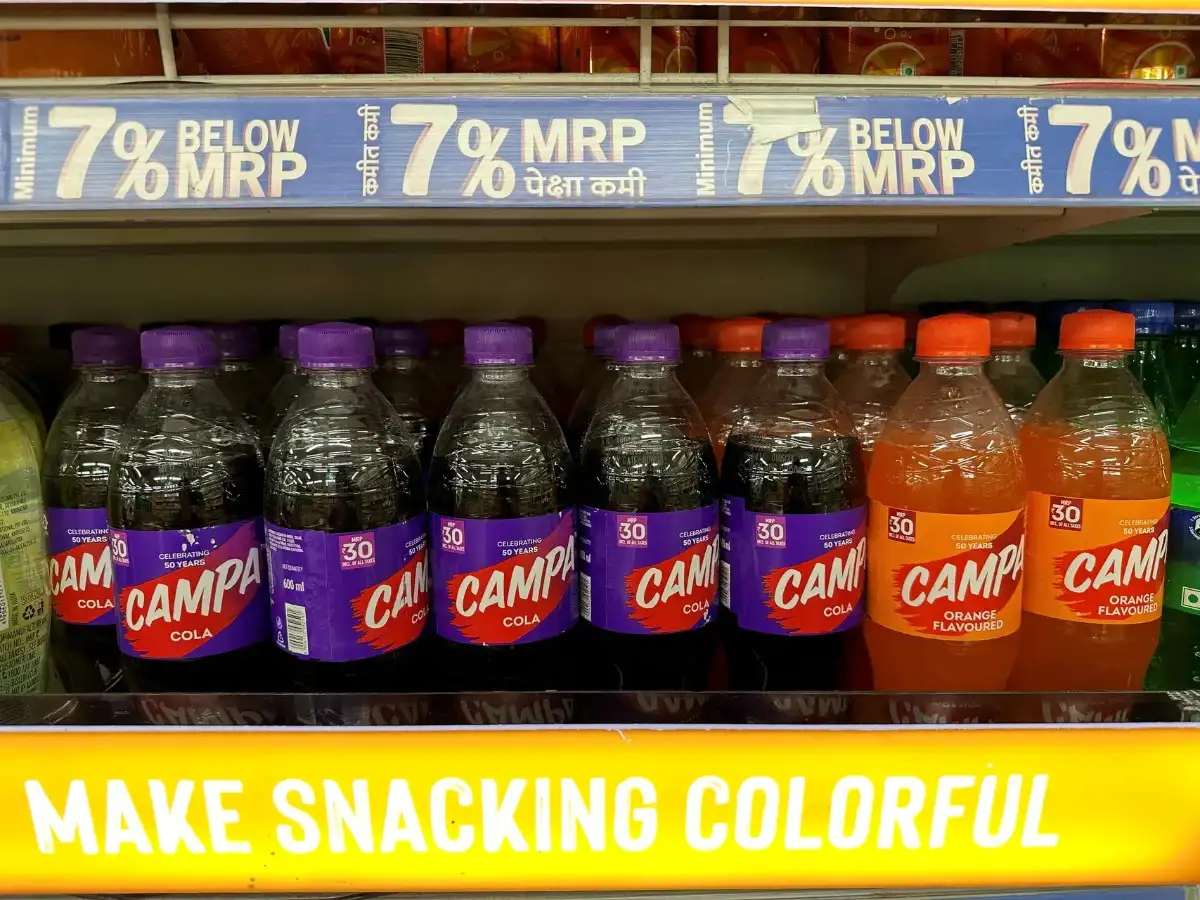
According to the company, it already has 168 million cans and 120 million plastic bottles carrying the disputed “Energy Drink” description. It also says packaging has already been printed for another 400 million cans and 360 million bottles.
Those numbers change the economics of the dispute.
If the only consequence of FSSAI’s direction were replacing a word on a website, the issue would be relatively straightforward. But packaging is manufactured long before a beverage reaches a supermarket shelf. Labels are printed, cans and bottles are produced, products are filled and sealed, shipments are dispatched and retailers put them into their own distribution systems.
Changing the regulatory position after that process has already happened can therefore create several layers of cost. Existing stock may need to be withdrawn, relabelled or otherwise dealt with. Printed packaging may become unusable. Products already moving through distribution channels may have to be stopped. Retailers and online platforms may also have to alter their listings.
Reliance has put the issue before the court not simply as a question of whether it is entitled to use the words “energy drink”, but as a question of what happens to a massive investment made on the basis of a regulatory position that the company says it had been operating under.
There is another reason the numbers matter. Reliance is not an established energy-drink specialist that can treat one product as a small part of a mature portfolio. Campa is part of the group’s broader push into consumer goods and beverages, where it is using its distribution reach and pricing strategy to challenge established players.
So the dispute has two very different costs.
There is the immediate cost of dealing with existing inventory.
And then there is the much harder question of regulatory certainty: if a company invests heavily in manufacturing and distribution after operating within the existing food framework, how much confidence can it have that the regulator’s interpretation of that framework will remain stable?
That is ultimately why the Reliance case matters beyond the fate of one Campa product.

This Is Bigger Than Campa
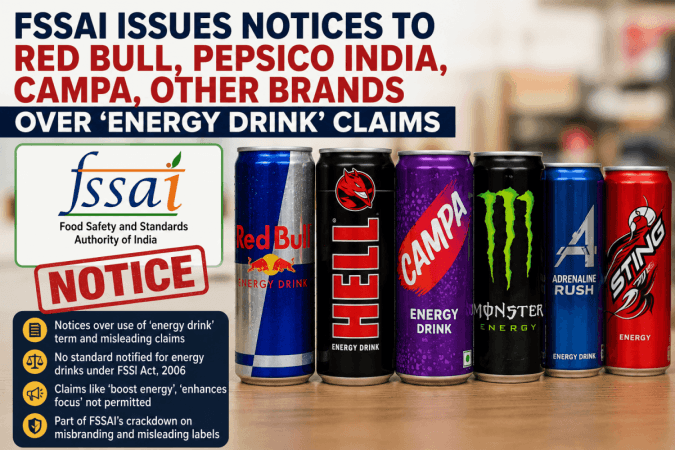
Reliance is not the only company caught in the dispute. The same June 30 intervention has drawn challenges from major players including Red Bull, PepsiCo and Monster, turning what might otherwise have been a dispute over one Campa product into a much broader question about how India intends to regulate and label the high-caffeine beverage market.
That matters because these companies are not necessarily disputing the underlying need to regulate caffeine. The existing rules already impose limits and labelling requirements.
The argument is increasingly about classification, terminology and procedure – and whether a regulatory interpretation that has existed for years can be changed in a way that immediately affects products already being sold.
For Reliance, however, there is an additional business dimension. Campa’s revival has been part of Reliance Consumer Products’ wider attempt to build a serious presence in India’s highly competitive beverages market. The company has been pushing Campa through Reliance’s extensive retail and distribution network, putting it into direct competition with much larger and longer-established beverage brands.
The timing therefore matters. A regulatory fight over whether a product can call itself an “energy drink” may appear narrow, but for a company trying to establish and scale a beverage brand, the terminology is part of how the product is positioned, marketed and understood by consumers.
And that is why the current court proceedings could have implications well beyond the disputed Campa cans.