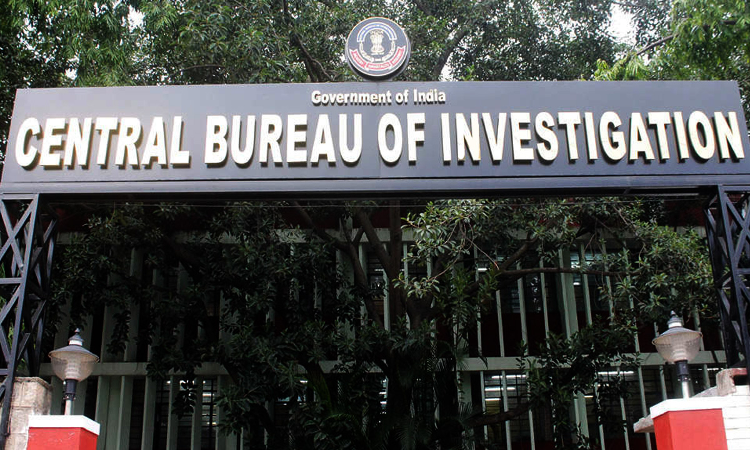
The Central Bureau of Investigation conducted searches at several locations in Mumbai on 29 October 2026 in connection with an alleged bank fraud involving Avaya Industries Limited, its directors and unidentified public servants and private individuals. The case stems from a complaint filed by the State Bank of India, Mumbai. According to the CBI press release, the company and its directors allegedly obtained credit facilities through misrepresentation, resulting in an alleged wrongful loss of ₹58.48 crore to the bank.
The allegations outlined in the complaint go beyond a simple failure to repay a loan. They describe a series of interconnected financial irregularities that include fictitious sales, inflated stock statements, fabricated debtor balances, non-recovery of export receivables, unsecured advances, unauthorised banking transactions and the alleged unauthorised sale or misrepresentation of mortgaged and hypothecated assets.
The CBI has stated that incriminating documents were recovered during the searches, including at residential premises linked to the company’s directors. These documents are under examination to establish the alleged conspiracy, diversion of funds and the individual roles of those involved.
The investigation remains ongoing. The ₹58.48 crore figure represents the alleged loss stated in the bank’s complaint. The press release does not establish that the directors have been convicted, that every allegation has been proved, or that the entire amount has been finally adjudicated as irrecoverable.
Avaya Industries Limited is an unlisted public limited company incorporated on 11 March 2010 and registered with the Registrar of Companies, Mumbai, under Corporate Identification Number U24100MH2010PLC200751. It was previously known as Avaya Industries Private Limited. Its registered office is at 1135/11, Thale Complex, Kalher Village, Bhiwandi, Thane, Maharashtra – 421302.
Company records list its authorised share capital at ₹4 crore and paid-up share capital at ₹3.8575 crore. The paid-up capital forms approximately 96.44 per cent of the authorised capital. The alleged loss of ₹58.48 crore is approximately 15.16 times the company’s paid-up capital. Paid-up capital is not the same as net worth, working capital, turnover or available assets, but the comparison illustrates the scale of the bank’s alleged exposure relative to the registered equity capital.
Company databases classify Avaya Industries under manufacturing and chemicals. Its corporate identification number relates to the manufacture of basic chemicals, and available records describe its business in the chemicals and materials sector, including chemical distribution and retail.
The precise product portfolio, manufacturing capacity, factory locations, export markets and operational status require verification from annual returns, financial statements, GST records and other statutory filings. This detail is relevant because the CBI allegations specifically refer to fictitious sales and export receivables.
Publicly available corporate records identify three directors on the company’s currently recorded board: Chirag Babubhai Patel, appointed on 19 December 2017; Tarak Natvarlal Mehta, appointed on 3 October 2019; and Sanjeev Ranjan Chauhan, appointed on 12 February 2020. The CBI press release refers to the company’s directors but does not identify them individually. The list reflects the corporate-record position and does not confirm that each person has been named as an accused in the FIR or that each participated in the alleged transactions.
Historical corporate records show a larger number of individuals associated with the board over the years, including Bharat Parshottamdas Mehta, Mahesh Madhukar Vaidya, Manish Jeevanlal Bhaliya, Arvind Surendra Chaturvedi, Hitesh Navinchandra Chalthanwala, Manish Kishorchandra Dhakan, Arvind Soni, Harish Pannalal Sharma, Wasil Mohammed Yakub Ansari, Narendra Milapchand Bohara, Hari Jagannath Datar, Shashikant Sharma, Vijay Babulal Bhansali, Milapchand Sagarmal Solanki, Tapas Champaklal Mehta, Ramesh Parshottamdas Mehta, Jeevan Popatbhai Bhaliya, Vijay Mahadu Gaikwad, Jayesh Ramanlal Desai, Daksh Gopiram Aggarwal, Jitendra Kanhaiyalal Jain, Navnath Anant Gothal, Ratna Priya and Kiran Ramesh Yedery.
These are historical corporate associations and not allegations of wrongdoing. Appointment and cessation dates would need to be compared against the dates of the underlying banking transactions to determine responsibilities for any specific period.
One of the most significant earlier findings in the company’s financial history dates to 16 November 2015, when CARE Ratings published a rating revision concerning Avaya Industries Limited’s bank facilities. The rating agency revised the company’s ratings on account of ongoing delays in debt servicing. The ratings were revised to CARE D and suspended. The report covered long-term bank facilities of ₹45 crore, previously rated CARE BB, and short-term bank facilities of ₹74.75 crore, previously rated CARE A4+, for a total of ₹119.75 crore.
CARE D is a default-category rating. In the context of the 2015 report, the downgrade indicated that the company was experiencing delays in servicing its debt obligations. The agency also disclosed that it had suspended the ratings because the company had not provided the information required for monitoring. The 2015 announcement did not accuse the company of fictitious sales, inflated stocks or fraudulent diversion of funds.
Separate from the rating action, a record from the Debt Recovery Tribunal, Ahmedabad, identifies Original Application No. OA/761/2015, filed by the State Bank of India against M/s Avaya Industries Ltd and others in 2015. The matter appeared in the DRT Ahmedabad cause list dated 6 April 2026 under matters more than 10 years old. The cause list alone does not disclose the complete amount claimed, the detailed allegations, the orders passed or the present adjudicatory status. It would be incorrect to claim that the DRT has found the company guilty of fraud merely because the bank filed an original application.
Corporate databases report an open charge in favour of the State Bank of India. The charge, with ID 10242225, was created on 16 September 2010 and modified on 11 November 2011 for a registered amount of ₹75 crore. No satisfaction date is recorded, and the database status is open. An open charge indicates that the charge has not been recorded as satisfied in the available corporate database. It does not, by itself, prove that the entire original loan remains outstanding, nor does it establish that the bank’s entire security is currently intact or that the charged assets have been sold.
The alleged wrongful loss of ₹58.48 crore in the CBI complaint is approximately 77.97 per cent of the registered charge amount. The ₹75 crore figure is a corporate security-registration amount from 2010, while the ₹58.48 crore is the alleged loss reported in the 2026 complaint. The latter could relate to outstanding amounts, a calculated loss or particular banking facilities. The precise composition is not disclosed in the press release.
A further historical record appears in a parliamentary answer. On 18 November 2019, the Ministry of Finance answered Lok Sabha Unstarred Question No. 52 concerning wilful corporate defaulters. The answer included an annexure containing the list of borrowers flagged as wilful defaulters by public sector banks under the RBI’s Central Repository of Information on Large Credits reporting framework as on 30 September 2019. Avaya Industries Limited appears in this annexure against the State Bank of India.
The entry records a funded amount outstanding of ₹59 crore, with no technically or prudentially written-off amount shown, for a total of ₹59 crore. This establishes that, as reported by SBI to the RBI, Avaya Industries was included among borrowers flagged as wilful defaulters as on 30 September 2019 with ₹59 crore in funded outstanding exposure. The 2019 figure is reported funded outstanding exposure, whereas the 2026 figure is the alleged loss in the CBI complaint. The numerical difference is ₹52 lakh. The similarity does not establish that the two figures represent the same debt, the same calculation or the same date of default.
The CBI press release identifies several principal methods through which the alleged bank fraud was said to have been perpetrated. One allegation is that the company used fictitious sales to obtain credit facilities. Banks often assess working-capital requirements by examining turnover, sales cycle, receivables, inventory and cash-flow position. If sales are fabricated, a bank could be led to believe that the company has a stronger business position and greater capacity to repay than it actually possesses. The press release does not disclose the individual invoices, customers or transaction values involved.
Another allegation concerns inflated stocks. Working-capital facilities, especially cash-credit and overdraft arrangements, are frequently linked to the value of a company’s inventory and receivables. Banks may permit borrowers to draw funds against the value of eligible stock and book debts, subject to agreed margins and drawing-power calculations. Inflated stock declarations could affect both the amount of credit made available and the bank’s assessment of the security supporting that credit. The CBI has not released details of the stock statements, physical verification reports or valuation methodologies under examination.
The release also refers to suppression and non-recovery of export receivables. Export receivables represent money owed to an Indian exporter by overseas buyers for goods supplied. Banks may consider eligible export receivables while assessing a company’s working-capital position. The allegation raises questions about whether genuine exports were made, whether export proceeds were received, whether outstanding receivables were disclosed accurately and whether funds received overseas were brought into the disclosed banking arrangements.
Relevant documents would include shipping bills, bills of lading, commercial invoices, export declaration records, foreign inward remittance certificates and bank realisation certificates. The investigation has not disclosed whether the alleged suppression involved genuine exports whose proceeds were not recovered or transactions that were themselves fictitious.
Funds were allegedly diverted through unsecured advances. A bank grants working-capital facilities for legitimate business requirements. If borrowed funds are transferred to unrelated entities or individuals through unsecured advances, the bank may lose control over how the money is ultimately utilised. The CBI has not disclosed the identities of the recipient entities or the amount allegedly diverted.
The complaint further alleges unauthorised routing of transactions through another bank. In working-capital lending, banks generally impose conditions concerning the routing of sales proceeds, maintenance of current accounts, operation of collection accounts and use of banking facilities. These arrangements enable lenders to monitor the movement of funds. The allegation concerns unauthorised routing under the specific terms of the lending arrangements. The precise restrictions allegedly violated would need to be established from the bank’s sanction letters and banking arrangements.
Fabrication of debtor balances is also alleged. A debtor balance represents money owed to a company by its customers. If the debtor was fictitious or if the outstanding amount was deliberately inflated, the company’s financial statements could overstate the value of its receivables. This could make the company appear financially stronger than it actually was.
The release additionally refers to the unauthorised sale or misrepresentation of mortgaged property and hypothecated assets. A mortgage creates an interest in specified immovable property as security for repayment of a debt. Hypothecation generally involves a charge over movable assets while possession remains with the borrower. If established, this could mean that the assets on which the bank relied as security were allegedly disposed of, misrepresented or otherwise dealt with contrary to the applicable lending arrangements. The CBI has not yet identified the properties, assets, buyers or transaction values in its press release.
According to company-information databases, the company’s last available balance sheet was for the financial year ended 31 March 2019, and its last recorded annual general meeting was held on 30 September 2019. The same databases report revenue of ₹1,397.41 crore, net profit of ₹99.09 crore and EBITDA of ₹127.52 crore for FY2019, with a net profit margin of approximately 7.1 per cent. There is a distinction between accounting profitability and the ability to service bank debt. A company can report profits but still face liquidity problems, particularly when money is tied up in inventory, overdue receivables or unpaid export invoices.
The FY2019 reported profit cannot be taken as evidence that the bank’s exposure had been repaid or that the company’s banking difficulties had ended. The absence of later annual financial statements in the public company-information records examined is a significant information gap. It does not automatically establish that the company has failed to make every statutory filing. The exact filing position must be verified directly from Ministry of Corporate Affairs records.
The available records establish a chronology that begins with the company’s incorporation on 11 March 2010. A ₹75 crore charge in favour of the State Bank of India was created on 16 September 2010 and modified on 11 November 2011. On 16 November 2015, CARE revised the company’s long-term and short-term bank facility ratings to CARE D because of ongoing delays in debt servicing, covering facilities totalling ₹119.75 crore. In 2015, recovery proceedings were instituted under OA/761/2015 before the Debt Recovery Tribunal, Ahmedabad.
As on 30 September 2019, the company appeared in the Ministry of Finance’s parliamentary annexure as an SBI-reported wilful corporate defaulter with ₹59 crore in funded outstanding exposure. Financial statements for the year ended 31 March 2019 are the last publicly surfaced figures in the databases examined. The DRT matter continued to appear in the cause list as of 6 April 2026. On 29 October 2026, the CBI conducted searches at several locations in Mumbai and recovered documents relevant to its investigation.
The CBI has stated that the seized material is being examined to establish the full extent of the alleged conspiracy, the alleged misappropriation and diversion of funds, and the role of all persons involved.
The press release does not disclose the number of locations searched, the individual names of the persons whose premises were searched, the number of documents seized, whether electronic devices were seized, whether bank account records or property documents were recovered, whether any cash, gold or other valuables were recovered, whether any arrests were made, or the FIR number and specific penal provisions invoked. A search is an investigative step. Recovery of documents does not, by itself, establish that the allegations contained in those documents are true.
The exact provisions invoked cannot be established from the CBI announcement. The FIR and case-registration documents must be examined before identifying the offences actually registered. Depending on the evidence and the applicable dates of the alleged transactions, provisions that may be relevant include those relating to criminal conspiracy, cheating and dishonestly inducing delivery of property, forgery for the purpose of cheating and use of forged documents, and criminal breach of trust, as well as the Prevention of Corruption Act, 1988, if evidence establishes involvement of public servants in offences covered by that Act.
Conduct occurring on or after 1 July 2024 would be assessed under the Bharatiya Nyaya Sanhita, 2023, subject to applicable transitional and savings provisions. The CBI has specifically referred to unknown public servants and private individuals. This indicates that the investigation is not confined to examining the company’s internal management. The presence of unknown public servants in the case description does not establish that any bank official or other public servant has been found guilty of misconduct.
The relationship between the State Bank of India and Avaya Industries has a documented history of financial distress and recovery proceedings that predates the latest criminal investigation. The precise connection between the 2015 DRT case, the 2019 wilful-default entry and the ₹58.48 crore CBI complaint remains to be established from the underlying records. The FIR, original bank complaint, detailed CARE rating rationale, DRT orders, charge instruments and the company’s complete financial statements would need to be examined together to determine how the banking exposure evolved over time and what information was available to the bank at different stages.