ED Attaches Land And Buildings Of Mohammad Ali Jauhar University In Rampur In PMLA

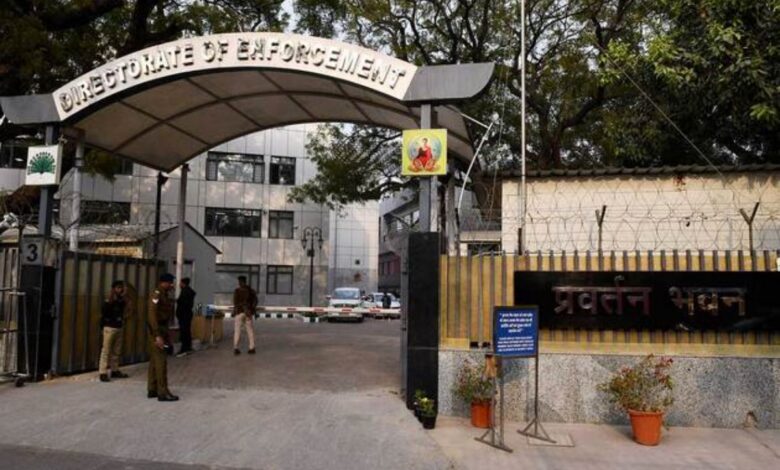
The Enforcement Directorate has provisionally attached land and buildings of Mohammad Ali Jauhar University in Rampur, Uttar Pradesh, in a money-laundering case. The action was announced on 28 October 2026 by the agency’s Lucknow Zonal Office. The attached properties have an estimated current market value of about ₹1,170 crore. The ED has identified ₹426.46 crore as the value of alleged proceeds of crime linked to these assets.
The university is run by the Maulana Mohammad Ali Jauhar Trust. Former Uttar Pradesh minister Mohammad Azam Khan founded and controls the trust. He also serves as the honorary Chancellor of the university. The campus is located at Jauhar Nagar in Village Singhankhera, Rampur.
According to the ED, the investigation centres on how the university campus was built and funded. A valuation report prepared by the District Valuation Officer on 10 November 2023 assessed the construction cost of 59 buildings at ₹494.46 crore. Land acquired through registered sale deeds was valued at ₹4.63 crore. The total assessed cost of the campus came to ₹499.09 crore.
The trust had disclosed capital expenditure of ₹78.32 crore in its income tax returns. The ED rejected donations worth ₹12.29 crore as non-genuine. After this adjustment and after identifying other legitimate sources, the agency said only ₹72.63 crore of the campus cost could be explained through legitimate funding. The remaining ₹426.46 crore was treated as unexplained and identified as alleged proceeds of crime.
The ED said the office-bearers of the trust could not substantiate the source of this amount. The agency linked the unexplained expenditure to several alleged irregularities involving land, government funds, contracts and donations.
One major element of the investigation involves donations received by the trust. The ED found ₹12.29 crore in donations to be non-genuine. Subsequent reporting based on the provisional attachment order provided further details. Om Prakash Agarwal, general secretary of two Meerut-based educational organisations, City Educational and Social Welfare Society and KSD Charitable Trust, told the ED that these entities had donated ₹5.23 crore and ₹1 crore respectively for university construction.
Agarwal stated that the contributions were made under the influence of former Samajwadi Party president and Uttar Pradesh Chief Minister Mulayam Singh Yadav after a gathering in Delhi in 2012. His wife, then a member of the Uttar Pradesh Legislative Council, had recommended university construction work from her MLC fund. These directions were reportedly conveyed through SRS Yadav on behalf of Mulayam Singh Yadav.
Azam Khan was questioned by the ED on 13 October 2026 inside Rampur District Jail. According to the attachment order, he acknowledged that Agarwal might have made the donation on Mulayam Singh Yadav’s advice. He described the contributions as being for a noble cause and expressed gratitude.
The attachment order also identified a donation of ₹5.6 crore from an individual who did not appear before the ED. The identity of this donor has not been made public in available reports. Another contribution of ₹40 lakh came from A&S Enterprises, a company that had received government contracts worth about ₹25 crore. The ED questioned the genuineness of this donation and its connection with the contracts.
The four reported donations total ₹12.23 crore, close to but not exactly matching the ED’s figure of ₹12.29 crore. The small difference remains unexplained in public reporting.
Another significant part of the investigation concerns government contracts. The ED said contractors based mainly in Rampur diverted funds and construction material from government works towards the university. One company received Public Works Department contracts worth approximately ₹186 crore. Its managing director admitted that 30 to 40 per cent of the contract value was used to buy construction material for the university. If applied to the full contract amount, this would suggest a diversion in the range of ₹55.80 crore to ₹74.40 crore. The ED has not named the company or its managing director in its press release.
The agency also examined the use of MLA and MLC local area development funds. Works worth ₹6.60 crore were executed on the private university campus through the Uttar Pradesh Jal Nigam. At the time, Azam Khan was chairman of the Jal Nigam. These funds are meant for public development works. The investigation is examining whether public money was used to create infrastructure on private property.
A separate set of government sanctions involved ₹23.41 crore for three projects on the university campus — a pandal, an OBC boys’ hostel and a hospital block. In 2015 the Uttar Pradesh government sanctioned ₹12.16 crore specifically for the pandal. The original order stated that ownership of the pandal would remain with the Culture Department, that it could not be sold or transferred, and that it would be available free of cost for use by the state government.
A subsequent government order in 2016 transferred ownership of the pandal to Jauhar University and removed the condition of free availability to the government. The ED has highlighted that Azam Khan held the Urban Development portfolio at the time and that the Jal Nigam, which executed the works, functioned under his department.
Land-related issues form another major part of the case. The ED referred to an inquiry report by the Rampur district administration concerning 45 plots of enemy property measuring about 34 acres in Village Singhankhera. A lease had been granted to the trust in 2007 but was cancelled about a month later at the request of the District Magistrate. Despite the cancellation, the land allegedly remained under the control of the university. The Custodian of Enemy Property later recovered possession through the district administration.
Reporting based on the attachment order also mentioned that about five hectares of government river land had been enclosed within the university’s boundary wall without proper authority. The ED’s valuation of ₹4.63 crore for land covered only the parcels acquired through registered sale deeds and did not include the enemy property or river land.
The money-laundering investigation was initiated on the basis of 26 FIRs registered at Azeem Nagar Police Station in Rampur. These cases alleged forcible acquisition of agricultural land belonging to farmers for the university and involved sections relating to extortion. Extortion is a scheduled offence under the Prevention of Money Laundering Act, which allows the ED to examine related proceeds of crime.
The ED also took up 28 additional FIRs registered by Rampur Police against Azam Khan and others. These cases relate to events in 2016 and allege demolition of houses using bulldozers, assault and intimidation of occupants, and transportation of debris from the demolished houses to the university. Some of the affected families were tenants of Waqf properties. The FIRs and chargesheets further allege that municipal cleaning machinery purchased for Rampur Nagar Palika was diverted to the university premises.
In parallel, the Income Tax Department took action against the trust. On 17 June 2026 it issued a show-cause notice. On 23 June 2026 it cancelled the trust’s registration under the Income-tax Act. The tax authorities raised questions about donations, government funds used for construction, and whether income was applied for charitable purposes or for a particular religious community. The department directed the trust to change its status to an association of persons.
Around the same period the university faced other regulatory notices. The Rampur Development Authority issued a demolition notice for 38 buildings covering about 82,309 square metres, citing lack of proper building approvals. The Fire Department sought building plans and fire safety clearances.
The Public Works Department asserted that a 3.5-kilometre road leading to the university had been built with government funds and installed a signboard declaring it a public road. The Jal Nigam issued a recovery notice of about ₹11.37 crore for a sewage treatment plant, claiming the facility was meant for adjoining villages but was being used exclusively by the university.
On 19 August 2026 the ED conducted searches at the university and related premises. Electronic devices and incriminating records were seized.
Before announcing the attachment, the ED shared information with the Uttar Pradesh Police under Section 66(2) of the Prevention of Money Laundering Act. Following this, FIR No. 0224/2026 was registered at Azeem Nagar Police Station on 13 October 2026. The FIR named Azam Khan, the trust and others. It invoked sections relating to criminal conspiracy, criminal breach of trust, cheating, and provisions of the Prevention of Corruption Act.
The provisional attachment under Section 5 of the Prevention of Money Laundering Act is an interim step. It is meant to prevent the property from being transferred or dealt with in a manner that could frustrate later confiscation proceedings. The ED must place the attachment before the Adjudicating Authority within the prescribed period. The affected parties will have an opportunity to present their case. The attachment does not by itself cancel the university’s academic recognition or require it to shut down operations.
The university has faced earlier land and regulatory disputes. Submissions made on behalf of Azam Khan in earlier High Court proceedings referred to FIRs involving the inclusion of enemy property within the university boundary wall. The July 2026 notices from the Rampur Development Authority, Fire Department, Public Works Department and Jal Nigam show that multiple state agencies were already examining different aspects of the university’s land, buildings and infrastructure before the ED’s attachment.
The ED’s case rests on the combination of the financial gap between the assessed campus cost and the explained funding, the alleged diversion of government contract material, questioned donations, government-funded construction on private land, occupation of enemy property and river land, and the underlying criminal cases of alleged land acquisition and demolition of houses.
Each of these elements is still at the stage of investigation and provisional attachment. The final determination of whether the attached property represents proceeds of crime will be made through the adjudicatory process under the Prevention of Money Laundering Act.