Fourteen Years, Zero Plots, and a Mercedes in the Raid: How ED Finally Knocked on Anil Bhalla and Gautam Bhalla’s Door

Gurugram’s real-estate brochure language has always been generous. Possession dates are “indicative.” Layouts are “subject to revision.” Buyer money is “utilised for development.” The Enforcement Directorate’s Gurugram Zonal Office has now put a colder vocabulary on the table: fraudulent inducement, criminal breach of trust, conspiracy, proceeds of crime.
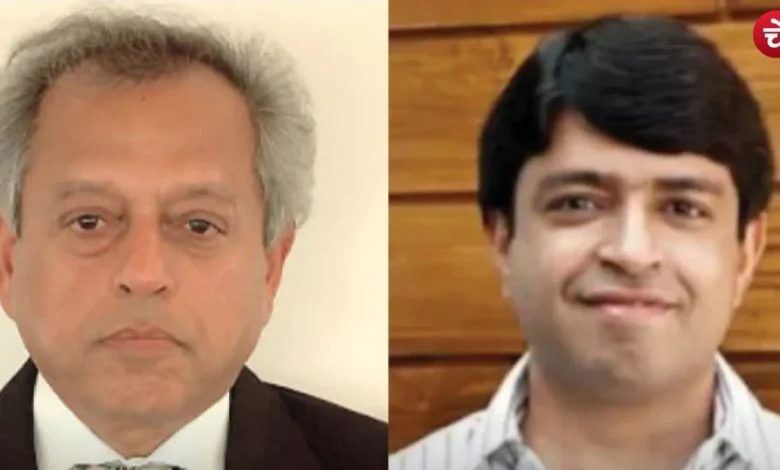
On 28 September 2026, ED arrested Anil Bhalla, Chairman-cum-Managing Director of M/s Vatika Limited, and Gautam Bhalla, promoter of the Vatika Group, under Section 19 of the Prevention of Money Laundering Act, 2002. A Special PMLA Court in Gurugram remanded them to ED custody till 3 October 2026.
That is the news. The insult, if the agency’s numbers survive a trial, is older. Buyers paid first. The plots, in one entire project slice, still have not arrived. Fourteen years later, ED is counting not houses but “proceeds of crime.”
This is an investigative opinion piece built on official ED press notes, contemporaneous reporting of those notes, court and tribunal records, and RERA/Supreme Court proceedings. It is deliberately harsh about delay, opacity and the gap between marketing and delivery. It is not a conviction.
The arithmetic ED says it can prove
Strip the press release of adjectives and the skeleton is brutal.
Between 2010 and 2012, seven purchaser entities paid about ₹260 crore — ED’s August search note put it at ₹260.30 crore — as the entire sale consideration, upfront, to Vatika Limited for residential plots in:
- Vatika India Next, Sectors 84/85, Gurugram
- Vatika India Next-2, Sector 88A, Gurugram
Plot-wise agreements came later, in 2014 and 2015. Then, ED says, the layouts were revised. Originally allotted plots were renumbered or relocated. The same project land continued to be allotted and sold to other purchasers.
Delivery, on the agency’s own ledger:
| Project | What buyers paid / bought (ED) | What ED says was delivered | Gap |
|---|---|---|---|
| Vatika India Next-2 | ~1.10 lakh sq. yds for ~₹90 crore | Not a single plot, even after ~14 years | Entire parcel |
| Vatika India Next | Part of the ₹260-crore pool | Only partial | Remainder of undelivered value |
| Combined undelivered value (arrest note) | — | — | ~₹140.73 crore |
| August 2026 search note | ₹260.30 crore received (2010–12) | Plots worth ~₹120 crore delivered | Balance still outstanding after 14 years |
| Proceeds of crime quantified so far | — | — | ~₹154.36 crore |
Sources: ED arrest note of 30.09.2026 as reported across national media; ED search note of 27.08.2026.
Read that again without the developer’s vocabulary. One project slice of about 1.10 lakh square yards, paid for at roughly ₹90 crore, produced zero delivered plots after a decade and a half. That is not a “construction delay.” That is a vanishing act with a file number.
The 2024 layer: Scaler Ventures, 165 plots, 15 bought back
ED has folded a later transaction into the same money-laundering narrative.
In 2024, Scaler Ventures paid ₹473.18 crore under an Agreement to Sell and a Buy-Back Agreement covering 165 plots. Only 15 were bought back. Of the remaining 150, ED alleges 14 plots were sold to third parties for about ₹13.62 crore without Scaler’s knowledge or consent.
The agency’s present proceeds-of-crime figure — about ₹154.36 crore — sits almost exactly on ₹140.73 crore of undelivered older plots plus ₹13.62 crore from those 14 third-party sales. Whether that arithmetic holds in a trial court is for a judge. On paper, it is not poetry. It is addition.
The August search note had already alleged that 14 plots in the same project cluster were “clandestinely sold to third parties without taking due consent from the victim company.” The September arrest note names the later counterparty and the rupee trail.
If the charge is true, the same land was being asked to perform two miracles at once: remain the original buyer’s plot, and become someone else’s saleable inventory.
Who, according to ED, pulled the levers
ED does not treat this as a clerk’s error.
- Anil Bhalla, it says, personally supervised the key decisions under investigation.
- Gautam Bhalla, it says, executed important agreements, held directorships in land-owning entities, exercised control over them, and continued to manage operations.
- “Major decisions were taken jointly by these two persons.”
Gaurav Bhalla is named in the ECIR alongside them. He has not been listed as arrested in the 30 September press note.
The corporate map ED describes is the familiar NCR special: land parked in a thicket of companies, control concentrated at the top. Project land, the agency says, was held through about 22 group companies. Those companies had no employees and no separate business. They existed, ED alleges, mainly to give corporate guarantees and to manage the land bank — including mortgaging it to financial institutions.
Purchaser money, the agency adds after examining Vatika Limited’s bank accounts, was not used only for the projects for which it was collected. It was moved to other group companies and promoter-linked entities that were not part of these projects.
That sentence is the entire morality play of Indian plotted development, compressed into one allegation: the customer paid for a pin on a layout; the cash went walking.
The raid inventory: a GLC 300, 1.3 kg of jewellery, frozen deposits
On 25 August 2026, ED searched seven residential and business premises linked to Vatika Limited and its promoter-directors across Delhi-NCR. It seized documents, digital devices, Tally data, audited statements, property papers and records of fund movement. It also seized or froze, in that operation, three high-end luxury vehicles, jewellery and bank accounts/securities with an aggregate value of about ₹33 crore.
The 30 September arrest note is more specific about one residence. From the residential premises of one accused, ED recovered and froze:
- a Mercedes-Benz GLC 300
- gold and diamond jewellery weighing over 1.3 kg, valued at about ₹1.55 crore
- bank accounts and FDRs of about ₹3.04 crore
None of that inventory, by itself, proves a predicate offence. Luxury cars are not a crime. Frozen jewellery is not a conviction. But the contrast writes itself, and ED clearly intended it to: undelivered plots on one side of the ledger, a German SUV and a kilo-plus of gold and diamonds on the other.
This arrest did not arrive from a vacuum
The plot case is the immediate trigger. It is not the only public file with the Bhalla names on it. Those other files are separate proceedings. Mixing them into one “guilt” is sloppy. Ignoring them is sloppier.
A different PMLA case: 659 investors, ₹248 crore, ₹176 crore attached
On 21 November 2025, ED Gurugram provisionally attached a 1.35-acre commercial plot valued at about ₹108 crore in a builder-investor investigation against Vatika Limited. That probe rests on multiple 2021 EOW Delhi FIRs under IPC Sections 120-B and 420 against Vatika Limited, Anil Bhalla, Gautam Bhalla and others.
ED’s finding in that case: the company allured investors into future projects with high assured returns till completion and lease-rent returns after completion; midway, it stopped the assured returns and did not hand over units. Licences from DTCP, the agency said, were not renewed as required; completion timelines slipped.
The four projects named:
- Vatika Inxt City Centre Towers D, E and F, Gurugram
- Vatika Mindscapes Tower-C, Faridabad
- Vatika Towers Tower-C, Gurugram
- Vatika High Street (part of V’Lante), Gurugram
659 investors. About ₹248 crore. No conveyance deed executed, ED said, even after several years. Projects were incomplete or deferred. Earlier attachments of ₹68.59 crore had been confirmed by the Adjudicating Authority. With the November plot, total provisional attachment in that case stood at about ₹176 crore. A prosecution complaint against Vatika Limited, Anil Bhalla, Gautam Bhalla and other group companies was filed before the Special PMLA Court, Gurugram, on 21 May 2025.
That complaint is a charge-sheet equivalent under PMLA. It is still not a verdict.
Insolvency: ₹274.13 crore claimed, CIRP confined to one project
On 3 February 2026, NCLT Chandigarh admitted a Section 7 petition by IDBI Trusteeship Services Limited against Vatika Limited. The claimed default was ₹274,13,45,241 — principal ₹146 crore on 2017 NCDs, plus interest, default interest and redemption premium — tied to the Aspirations project in Sector 88B / Village Harsaru, Gurugram. Jayant Prakash was appointed IRP.
On 27 March 2026, NCLAT (Justice Ashok Bhushan and Technical Member Barun Mitra) held that CIRP should be confined to Project Aspirations and not automatically swallow every Vatika project. Debt and default, the appellate tribunal said, were established for the proceeding; the company-wide sweep was not.
So the public record now holds, side by side: a money-laundering arrest over undelivered plots, a separate PMLA prosecution over investor products, and a project-specific insolvency over unpaid debentures. That is not a quiet year.
Supreme Court, September 2026: four buyers, ten years, RERA orders that would not move
A CJI Surya Kant-led bench this month ordered Vatika to deposit over ₹1 crore as compensation owed to four homebuyers who invested in Gurugram projects between 2009 and 2011. HRERA had already directed possession and interest — 10.75% or 10.85% from due dates stretching back to 2012–2014. Vatika did not challenge those orders. They still were not executed. Bailable warrants against directors, buyers’ counsel told the Court, could not even be served. Insolvency then stalled the RERA files. Three of the four buyers are senior citizens. One is 75 and has waited since August 2014.
That proceeding is about delayed flats and a broken execution machinery. It is not the plot ECIR. It is the weather system around it: a developer repeatedly told by a regulator to perform, and a buyer still standing in the corridor.
Other public scars, separately labelled
Haryana RERA records and consumer orders over the last two years have gone after Vatika on delayed possession, refunds, abandoned or de-registered projects and, in at least one India Next plot matter reported in 2026, an allotted unit that was not even part of the approved layout. A CBI preliminary enquiry following a Supreme Court order in connected builder matters has separately recorded allegations around Vatika Turning Point in Sector 88-B — subvention bookings, little work beyond excavation, licence migration to a plotted colony, and subsequent plot sales — and has treated those facts as disclosing cognizable offences at the enquiry stage. Those are allegations inside another agency’s paper. They are not this week’s PMLA conviction, because there is no PMLA conviction.
The pattern a critic is entitled to name is not “guilty on all counts.” It is this: across police FIRs, ED ECIRs, RERA files, NCLT and the Supreme Court, the same group name keeps returning with the same grievance — money collected, asset not delivered, enforcement arriving late.
What “Section 19 PMLA” actually means — and what it does not
Section 19 is an arrest power, not a hanging. ED must have material that gives reason to believe the person is guilty of an offence under the Act. A Special Court then examines production and remand. Custody till 3 October 2026 is a judicial order for investigation, not a finding that ₹154.36 crore was laundered.
The predicate offences cited are IPC 420, 406 and 120-B in EOW Delhi FIRs. PMLA rides on those predicates. If the predicates collapse, the laundering case is in trouble. If they stand, the 22-company web, the bank trails and the 14-plot sales become the heart of the trial.
That is why speed matters. A 2010–2012 collection, a 2014–2015 agreement, a 2024 buy-back, a 2025 prosecution complaint in another file, an August 2026 search and a September 2026 arrest: the clock has already been generous to the accused and cruel to the allottees.
The strategic question ED still has to answer in court
A smart defence will say: layout revision is normal; land-owning SPVs are normal; mortgages are normal; buy-backs fail; insolvency explains delay; RERA is the proper forum; PMLA is being used as a pressure tool; no court has convicted anyone.
A smart prosecution will have to show more than delay. It will have to show mens rea and a paper trail: that the same plots were sold twice in substance; that purchaser money was diverted to promoter-linked sinks; that the 22 companies were shells for control rather than development; that Anil Bhalla’s “supervision” and Gautam Bhalla’s signatures were not ceremonial.
Until that evidence is tested, the harshest accurate sentence is still this: ED has alleged a 14-year non-delivery, a diverted cash trail, and a second sale of plots that were already spoken for — and a court has only remanded two promoters for five days.
Demand: stop treating homebuyer time as a free raw material
EOW, ED, RERA, NCLT and the Supreme Court have now all touched some part of the Vatika story. The missing product is not another press release. It is a clock with teeth.
- EOW should complete the predicate investigation on a published timetable and file or close.
- ED should quantify the full proceeds of crime, not a working ₹154.36 crore, and attach property that actually maps to the alleged trail — including the 22 land-owning entities if the shell allegation holds.
- The Special PMLA Court should treat this remand as the start of a trial calendar, not another chapter in Gurugram’s endless “further investigation is under progress.”
- HRERA execution should not die the moment an insolvency petition is filed against one project. The Supreme Court has already seen what that collapse does to 75-year-old allottees.
- Gaurav Bhalla’s status in the ECIR should be clarified in public: arrested, not arrested, or not required. Ambiguity is a luxury buyers did not get.
Indian real estate does not suffer from a shortage of laws. It suffers from a shortage of endings. Anil Bhalla and Gautam Bhalla are entitled to every defence the statute gives them. The seven purchaser entities of 2010–12, the Scaler file of 2024, the 659 investors in the other PMLA case, and the four buyers who had to reach the Chief Justice of India for a crore that RERA could not collect, are entitled to something plainer: a verdict while they are still alive to hear it.
Disclaimer
This article is an investigative opinion based on Enforcement Directorate press releases dated 27 August 2026, 21 November 2025 and 30 September 2026 (as published by ED and reported by national media), contemporaneous news reports, NCLT/NCLAT orders in the IDBI Trusteeship–Vatika Limited matter, Supreme Court coverage of HRERA compensation proceedings, and other publicly reported regulatory or police records. All references to cheating, criminal breach of trust, criminal conspiracy, fraudulent inducement, diversion of funds, clandestine sale of plots, money laundering and proceeds of crime are allegations made by investigating agencies or complainants, unless a court judgment is specifically cited.
No court of law has convicted Anil Bhalla, Gautam Bhalla, Gaurav Bhalla or M/s Vatika Limited in the plot-related PMLA case that led to the 28 September 2026 arrests. Arrest, search, attachment, remand and even the filing of a prosecution complaint are not findings of guilt. The accused are entitled to the presumption of innocence and to contest every allegation at trial. Separate proceedings (the 2021-FIR investor PMLA case, project-specific CIRP, RERA/consumer matters, and any CBI enquiry) are distinct from one another and must not be read as a single adjudicated fraud.
Readers should not treat this article as a substitute for court records. If the Special Court or any appellate court records an acquittal, discharge or contrary finding, that judicial result will prevail over every sentence above.