Nine Notices Withdrawn In Gurugram Sex Racket Probe As Questions Mount Over Central Park Group. Did The Phones Start Ringing Behind The Scenes?
Nine notices issued, nine notices withdrawn within 24 hours. As Gurugram Police retreats from its own decision, a far more troubling set of questions emerges around Central Park Group, allegations of an international sex racket, foreign women, earlier police investigations and an alleged nexus with influential government officials.

Nine people were reportedly called for questioning in an investigation involving allegations of an international sex racket and individuals associated with Central Park Group. Within 24 hours, the notices were withdrawn.
The explanation reportedly given was administrative and technical errors. But when a case involves allegations of trafficking, foreign women, multiple properties and an alleged VIP connection, a sudden police reversal deserves more than a one-line explanation.
According to a report by Royal Bulletin, the notices were issued on November 14, 2026, and withdrawn shortly afterwards. The communication reportedly told the nine individuals that they were not required to appear before the police for the time being. Swati Chaudhary, director of the Vanshni Foundation, which filed the complaint, questioned the sudden withdrawal.
The timing raises an obvious question.
—What exactly was wrong with the notices?
—Who authorised their withdrawal?
—And why did the police move from calling nine individuals for questioning to telling them, almost immediately, that their appearance was no longer required?
This is not a routine procedural detail in an otherwise ordinary complaint. The NGO has alleged an organised network involving foreign women, properties in Gurugram and possible connections with influential people.
Police had also confirmed the formation of an SIT to investigate the allegations. Yet, before the questioning could proceed, the notices were reportedly taken back.
Did the phones start ringing behind the scenes? Was there pressure from somewhere, or was this genuinely an administrative blunder? There is no publicly established evidence of intervention, but the police have a responsibility to explain the reversal. The question is not simply why the notices were withdrawn. It is what happened in those 24 hours.
Nine Names At The Centre Of The Investigation And The Central Park Group Connection
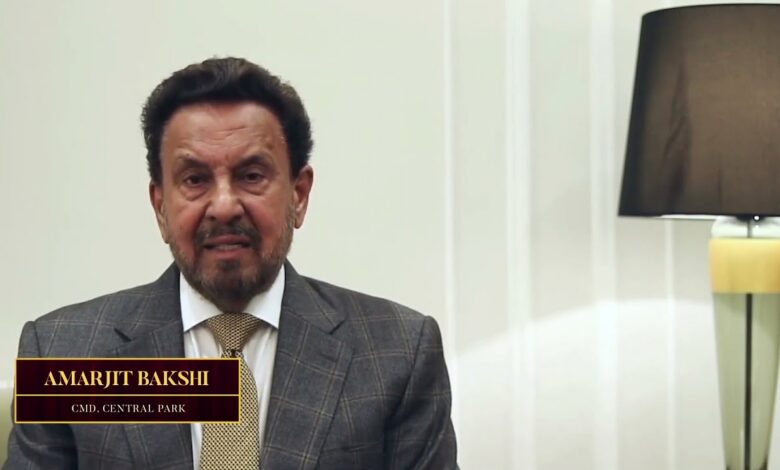
The nine individuals named in reporting on the complaint are Amarjit Bakshi, Kawaljit Bakshi, Noor Bakshi, Sanam Bakshi, Sanjit Bakshi, Shiv Bakshi, Chirag Gehlot, Ashok Agrawal and Saurabh Bhardwaj. Royal Bulletin identified them in connection with the allegations involving Central Park Group.
The police notices reportedly covered a company director and eight associates. The individuals were being called in connection with allegations submitted by the Vanshni Foundation, which has claimed that properties associated with the group were used as part of an alleged network involving foreign women.
The identities matter because the investigation now needs to establish the nature of each individual’s association with the company, the properties mentioned in the complaint and the alleged activities. Were they involved in ownership, management, operations or something else entirely? What specific role, if any, does the complaint attribute to each person?
There is also a larger question about the company connection. The allegations refer to multiple properties and an organised operation, not simply an isolated incident involving one individual. Establishing who controlled these premises, who managed them and who may have facilitated the alleged activities will be central to determining how much of the complaint can be substantiated.
For now, all nine names have surfaced in reporting on a serious police investigation. What remains unclear is the precise role attributed to each of them, and why the notices calling them for questioning were withdrawn almost as soon as they were issued.
Women From Russia, Tunisia And Dubai – What Exactly Is The Alleged International Sex Network?
The complaint filed by Gurugram-based Vanshni Foundation alleges that women from Russia, Tunisia, Dubai and other locations were brought into India through an organised network and accommodated at properties associated with Central Park Group. The women were allegedly forced into prostitution, with the NGO raising concerns about possible trafficking and the exploitation of minors.
The complaint was submitted by Swati Chaudhary, Director of Vanshni Foundation, with the organisation’s authorised representative, Sanjana Yadav, also outlining allegations relating to earlier police investigations. According to The Tribune, the foundation claims that the alleged operation extended across multiple properties and involved arrangements for bringing women into the country, accommodating them and facilitating their exploitation.
The allegations go beyond the movement of women and the use of properties.
The complaint reportedly refers to the circulation of photographs and the alleged provision of sexual services to influence government officials. It also points towards digital material recovered from mobile phones and laptops seized in two earlier cases registered at Sohna City police station in 2023 and 2024.
The question, therefore, is not limited to whether women were allegedly being forced into prostitution. The complaint raises the possibility of an organised network involving international movement, accommodation arrangements, intermediaries and people who may have benefited from the operation.
The foundation has also flagged the possibility that some of the women could have been minors. This remains an allegation requiring verification; there has been no public confirmation that minors were identified or rescued in the present investigation.
Gurugram Police has confirmed that an SIT is examining the complaint. Whether the allegations can be substantiated, who was responsible for the alleged activities and whether the earlier digital evidence supports the NGO’s claims are now central to the investigation.
Central Park Group, The Bakshi Family And The Properties Under Scrutiny
The company at the centre of the allegations is identified in subsequent reporting as Central Park Group, the real estate and hospitality business associated with the Bakshi Group.
The group’s own website identifies Amarjit Bakshi as its Founder, Chairman and Managing Director. It also lists Kanwaljit Singh Bakshi, Sanjit Bakshi and Shiv Bakshi as directors of Central Park.
This is significant because the names appearing in the complaint are not limited to one individual. The nine people identified by Royal Bulletin are Amarjit Bakshi, Kawaljit Bakshi, Noor Bakshi, Sanam Bakshi, Sanjit Bakshi, Shiv Bakshi, Chirag Gehlot, Ashok Agrawal and Saurabh Bhardwaj.
Corporate records provide further context to some of these names.
—Noor Bakshi and Sanam Bakshi are listed as directors of Centralpark Estates Private Limited and Central Park Santushti Homes Private Limited.
—Amarjit Singh Bakshi and Chirag Gehlot are listed as directors of Centralpark Forts Private Limited.
—The group’s website, meanwhile, identifies Sanjit and Shiv Bakshi as directors of Central Park. Kawaljit, as named in the police-related reporting, is spelt Kanwaljit Singh Bakshi on the company’s official website.
The other two individuals named, Ashok Agrawal and Saurabh Bhardwaj, have also been identified in the reporting on the complaint, although their precise corporate positions have not been independently established from the records reviewed.
The property connection is equally important. According to reports, the complaint refers to the group’s townships in Sohna, Bhondsi and Gurugram, along with hotels and other properties allegedly associated with the individuals named. The NGO claims that these premises were used to accommodate women brought from other countries.
There is, however, an important corporate distinction. Central Park is the group’s business brand, while individual developments are operated through separate legal entities. For instance, Haryana RERA records identify St. Patricks Realty Private Limited as the promoter of certain Central Park projects in Gurugram. The published reports have not established which specific legal entity or property is alleged to have been used in the activities described in the complaint.
That is precisely what investigators need to establish. Which properties are actually being referred to? Who owns and operates them? What is the connection between the individuals named and the premises in question? And did the alleged activities take place without the knowledge of the management, or was there a wider arrangement involving people responsible for running these properties?
These are questions that cannot be answered simply by identifying the Central Park brand or listing its directors. The investigation needs to establish the actual links between individuals, companies, properties and the alleged network.
The 2023 And 2024 Cases, Earlier Raids And The Digital Trail – Was This Network Already On The Police Radar?
The Vanshni Foundation’s complaint does not present the allegations as an entirely new development. It specifically refers to two cases registered at Sohna City police station in 2023 and 2024, claiming that digital evidence recovered during those investigations could point towards a much larger network.
Sanjana Yadav, the foundation’s authorised representative, has alleged that mobile phones and laptops seized from individuals arrested in the earlier cases contained information about the movement of women, accommodation arrangements and the circulation of photographs. The NGO claims that the material indicated activities extending beyond the individuals arrested in those cases, including the alleged use of sexual services to influence government officials.
The complaint also refers to police raids conducted in 2024 at properties allegedly associated with Central Park Group, claiming that a racket involving foreign women was uncovered. Cases registered at Bhondsi police station have also been mentioned, adding another set of earlier investigations that the SIT may now have to examine.
Thus, what is particularly important here is the digital evidence.
If the devices seized in 2023 and 2024 contained information about the movement of women, accommodation arrangements and intermediaries, what action followed? Were the devices forensically examined? Were the people and properties allegedly identified through this material investigated? Did the earlier cases lead to any further arrests or proceedings?
The foundation’s allegations suggest that the present complaint may have connections to activities that were already under police scrutiny. However, the available reports do not establish the outcomes of the earlier cases or independently confirm what the seized devices contained.
The SIT will now have to examine those records and determine whether the earlier cases have any demonstrable connection to the present allegations. If there are common individuals, properties or digital links, they could be important to understanding how the alleged network operated and whether its activities continued over a period of time.
Why Did The Investigation Change Hands, And Who Is Actually Running It?
The sequence of events surrounding the investigation has not been entirely straightforward. Different reports have described different officers and investigating arrangements, making it important to establish exactly how the complaint was handled before the notices were issued and subsequently withdrawn.
According to reports, the complaint submitted by Vanshni Foundation was initially being examined by ACP Badshahpur Kuldeep Kumar after the NGO approached DCP South.
Kuldeep Kumar reportedly issued notices to the individuals named in the complaint as well as the NGO, seeking information and supporting material. The officer subsequently confirmed that the investigation had been transferred to an SIT already examining fraud-related FIRs against the individuals concerned.
The report also identified the earlier cases as matters registered at Sohna and Bhondsi police stations. The SIT handling those cases was subsequently assigned the investigation into the new complaint.
However, the police account reported on November 15 identified ACP Udyog Yashwant as the officer leading the SIT constituted to investigate the alleged international sex racket.
A senior police officer confirmed that notices had been served on a company director and eight associates, while cautioning that the allegations could only be verified after the investigation was completed.
There are therefore two aspects that need to be distinguished. One is the transfer of the complaint from ACP Badshahpur Kuldeep Kumar to an existing SIT investigating fraud cases. The other is the police confirmation that ACP Udyog Yashwant was leading the SIT examining the alleged international sex racket.
This becomes particularly relevant when viewed alongside the withdrawal of the notices issued on November 14. Who was responsible for the decision to issue them, who authorised their withdrawal and which officer is now accountable for the investigation?
The police cannot leave the chain of responsibility unclear in a case involving allegations of trafficking, exploitation and possible official involvement. The investigation needs to establish not only what happened at the properties mentioned in the complaint, but also whether the earlier fraud investigations and the present allegations are being examined together for any substantiated links.
The Government Officials Angle – Were Sexual Services Allegedly Being Used To Influence Those In Power?
Perhaps the most explosive allegation in the Vanshni Foundation’s complaint is not simply that foreign women were allegedly being trafficked and forced into prostitution, but that sexual services were also being used to influence government officials.
The complaint refers to two cases registered at Sohna City police station in 2023 and 2024, claiming that digital material recovered from mobile phones and laptops seized from arrested individuals contained information about the movement of women, accommodation arrangements and circulation of photographs. The NGO alleges that the material pointed towards the use of sexual services to influence government officials.
This raises a much larger set of questions. Who were these officials? Which departments, if any, were involved? Were intermediaries arranging access to them? Were the photographs being circulated as part of an arrangement to secure favours or influence official decisions? And did the earlier investigations identify anyone in a position of authority?
The allegations are serious, but the publicly available reports do not identify any specific government official as an accused person or establish that such an arrangement existed. That is precisely why the digital evidence cited by the foundation needs to be examined rather than simply referred to in passing.
If the material recovered in the earlier cases contains information about the alleged use of women to influence officials, investigators need to establish who was involved, whether the material is authentic and whether any public servant received favours or participated in an unlawful arrangement.
The issue also raises questions about the earlier investigations. If such material was recovered in 2023 and 2024, was the possibility of official involvement examined at the time? Were the people allegedly connected to these arrangements questioned? Or did the investigation stop with the individuals arrested in those cases?
An alleged trafficking network is one serious matter. The possibility that it was also being used to influence people in government positions takes the allegations into an entirely different territory. The SIT needs to establish whether there is evidence to support this claim and, if there is, how far the alleged connections extend.
Could Properties Linked To Central Park Group Have Been Used To Facilitate An Alleged Criminal Network?
The other major question concerns the properties themselves. The complaint refers to townships, residential societies, hotels and other establishments associated with Central Park Group across Gurugram, Sohna and Bhondsi. The NGO alleges that these properties were used to accommodate women brought from abroad and facilitate the alleged prostitution network.
This raises an uncomfortable question about how such an operation could allegedly function across multiple locations. Residential townships and commercial establishments have management structures, security arrangements, visitor records and administrative systems. They do not operate in a vacuum. There are people responsible for managing premises, overseeing access and maintaining day-to-day operations.
What Did The Earlier Police Investigations Reveal, And Were The Leads Ever Followed?
The present complaint raises an uncomfortable possibility: that the allegations now being examined by the Gurugram Police may have connections to material and cases that were already on the radar of investigators.
The Vanshni Foundation has specifically referred to the two cases registered at Sohna City police station in 2023 and 2024, claiming that mobile phones and laptops seized during those investigations contained information about the movement of women, accommodation arrangements and the circulation of photographs. It has also referred to alleged police raids at properties associated with the group in 2024 and cases registered at Bhondsi police station.
The question is what happened after those earlier investigations. Were the digital devices examined in detail? Did investigators identify people who were arranging accommodation or facilitating the movement of women? Were the properties mentioned in the present complaint examined at the time? And did any of the earlier investigations lead to further action against individuals allegedly connected to the wider network?
The fact that the present complaint refers to earlier cases does not establish that the allegations are connected. But it does make the outcome of those investigations relevant. The SIT must examine the original FIRs, seizure records, forensic reports and statements to determine whether there are common links.
There is also the question of why the present complaint has been transferred to an SIT that was already investigating separate fraud-related cases involving the individuals concerned. If the earlier investigations contain material relevant to the alleged exploitation network, that information needs to be examined independently and not lost within the financial fraud proceedings.
The real issue is whether the present investigation is starting with a fresh set of allegations or revisiting leads that may have been available to the police for some time. That distinction could prove crucial to understanding how much was known, what was investigated and whether anything was left unexplored.
What The Gurugram SIT Must Establish As The Investigation Widens
The Gurugram Police investigation now involves several interconnected allegations, but the SIT will have to separate what can be established through evidence from what has so far been claimed in the NGO’s complaint.
It must establish whether women were trafficked into India, whether they were coerced into prostitution, who arranged their movement and accommodation, and which properties were allegedly used. It must also determine the precise roles, if any, of the nine individuals named in the complaint, the intermediaries involved and the legal entities operating the properties.
The alleged government officials connection requires equally serious scrutiny. If the digital material cited by the foundation contains evidence of sexual services being used to influence officials, investigators will have to identify the individuals involved and establish whether any unlawful favour or arrangement took place.
But the investigation also needs to answer questions about its own handling.
Why were the notices issued on November 14 withdrawn within approximately 24 hours? What were the administrative and technical reasons cited by the police? Who authorised the reversal? And what is the status of the earlier cases and evidence referred to by the NGO?
The investigation cannot be confined to the nine names that have surfaced in the complaint. If the allegations point towards a network operating through multiple properties and intermediaries, the entire chain of ownership, management, accommodation, financial transactions and alleged facilitation needs to be examined.
Ultimately, this case is about establishing who did what, who knew what was happening and whether anyone used their position or influence to facilitate the alleged activities.
The SIT now has to provide answers not only about the allegations against those named, but also about the sudden reversal of the police action that has brought the investigation under further scrutiny.