Pancard Clubs: ₹9,577 Crore Collected, ₹4,387 Crore Identified as Proceeds of Crime, 51 Lakh Investors — Yet Only ₹700.89 Crore Attached
The “Holiday” Business That Regulators Say Looked Like an Investment Machine: A Decade-Plus Trail of Schemes, Properties, Group Companies, Overseas Assets and a Chilling Allegation of a Dead Director’s Signature

There are businesses that sell hotel rooms.
There are businesses that sell holiday memberships.
And then there are business models that, according to regulators and investigators, use the language of hospitality while creating the financial mechanics of an investment scheme.
The Pancard Clubs saga belongs firmly in the third category according to the findings and allegations recorded by Indian regulators and investigative agencies.
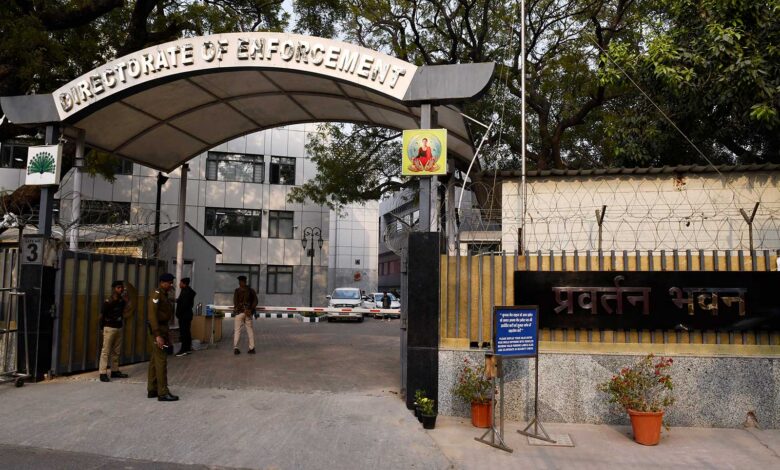
On 1 October 2026, the Enforcement Directorate (ED) announced its latest action in the Pancard Clubs Limited and others money-laundering case: 211 immovable properties valued at approximately ₹646.58 crore were provisionally attached under the Prevention of Money Laundering Act, 2002. The assets include commercial offices, luxury hotels, resorts, agricultural land and residential properties across several states and a Union Territory. The agency said the properties were held not only by Pancard Clubs Limited and Panoramic Universal Limited, but also by subsidiaries, family members and beneficial owners. 41a59528-3aac-4428-b5cd-2532884…
That latest action takes the total value of properties provisionally attached under the PMLA in the case to approximately ₹700.89 crore. 41a59528-3aac-4428-b5cd-2532884…
But here is where the numbers become uncomfortable.
The ED says Pancard Clubs had collected ₹9,577 crore from investors between 1997-98 and 2017-18. Of that, ₹2,858 crore was returned to depositors, ₹2,332 crore was paid as agent commissions, and ₹4,387 crore was retained and diverted as alleged proceeds of crime. 41a59528-3aac-4428-b5cd-2532884…
So after a mobilisation figure of ₹9,577 crore and an alleged proceeds-of-crime figure of ₹4,387 crore, the asset net now publicly disclosed by ED is about ₹700.89 crore.
That is not closure. It is not restitution. It is not recovery of the money itself. It is an asset-attachment trail that remains dramatically smaller than the sums at the centre of the investigation.
And that is precisely why the Pancard Clubs story is no longer merely about a failed holiday business.
It is about how an enormous pool of public money was raised, how regulators characterised the underlying scheme, how assets moved across a corporate network, how overseas property entered the picture, why recoveries have taken years, and why ordinary investors remain stuck in the wreckage.
The Most Brutal Number: ₹50 Lakh Capital Against More Than ₹7,000 Crore Mobilisation
The story becomes difficult to dismiss as an ordinary hospitality dispute when one looks at the financial architecture examined by SEBI.
In its 2016 order, later upheld by the Securities Appellate Tribunal (SAT) in 2017, SEBI recorded that Pancard Clubs had share capital of only about ₹50.12 lakh, while it had mobilised approximately ₹7,035 crore under its holiday schemes. SAT itself highlighted this contrast and noted that more than ₹1,000 crore had been deployed in acquiring hotels and resorts. Indian Kanoon
Read that again.
A company with roughly half a crore rupees of share capital was handling a public mobilisation running into thousands of crores.
The mathematical imbalance is extraordinary.
This was not a modest club membership enterprise collecting annual subscriptions from affluent holidaymakers. The amounts under scrutiny were on the scale of a financial institution — except that SEBI said the company was operating the arrangements without the registration required for a Collective Investment Scheme.
SEBI’s 2016 final order directed Pancard Clubs and its directors to wind up the schemes and refund investors. The SAT subsequently upheld the order and dismissed the appeals. Indian Kanoon
The SAT went further than simply looking at the name printed on the brochure.
It examined what the money actually did.
And that is where the “holiday package” defence began to look considerably less comfortable.
A Holiday Membership With a Financial Exit Door
Pancard Clubs’ central argument was essentially straightforward: customers were buying room nights and hospitality services, not making investments.
But the contractual machinery contained something far more consequential — a “surrender value.”
The SAT noted that customers could surrender unused room nights at the end of the plan in exchange for a monetary amount higher than their initial payment. Indian Kanoon
Then came the number that became particularly damaging to the service-contract argument:
97% of investors had opted for surrender value rather than the hospitality services.
SAT expressly relied on that figure in concluding that a substantial portion of the customers had a pecuniary interest in the scheme and intended to receive financial returns from it. Indian Kanoon
That finding deserves to be placed in plain English.
If a product is genuinely being sold primarily to provide holidays, the obvious economic purpose should be to take the holiday.
But according to the record considered by SAT, 97% of investors chose the money instead.
At that point the question practically writes itself:
Was the hotel room really the product — or was the financial return the product wearing a hotel-room costume?
SAT concluded that the schemes satisfied the statutory ingredients of a Collective Investment Scheme.
The Tribunal also noted that the company retained control over the money after it was collected and that investors had no day-to-day control over how their contributions were deployed. Indian Kanoon
The brochure itself reportedly allowed the company to modify, alter, amend or revoke benefits and terms at its discretion. SAT considered that provision significant in determining who actually controlled the scheme. Indian Kanoon
The linguistic trick was therefore not enough.
Changing “investment” to “holiday plan” did not, in the regulator’s view, change the underlying economics.
The Regulator Was Already Looking at Pancard Clubs More Than a Decade Ago
This was hardly an overnight regulatory discovery.
In November 2010, SEBI publicly warned investors that websites and blogs affiliated with Pancard Clubs and associated entities were claiming to be a division of the Panoramic Group and describing schemes as “Approved by SEBI.” SEBI made clear that it had not approved those schemes/products and said it was examining whether the activities violated the Collective Investment Scheme regulations. Securities and Exchange Board of India
Then came the 31 July 2014 interim order.
SEBI directed Pancard Clubs and its directors, among other things, not to collect fresh money, not to launch new schemes, to provide an inventory of assets acquired through money raised from the public, not to dispose of or alienate such assets, and not to divert public funds. SEBI stated that the company had launched collective investment schemes without obtaining the necessary certificate of registration. Securities and Exchange Board of India
That is a significant historical fact.
The regulatory alarm did not begin in 2026.
It did not begin in 2025.
The concerns were already on the official record years earlier.
And yet the financial consequences for investors continued to unfold for years.
SEBI’s ₹7,035 Crore Order Was Not a Mere Regulatory Slap
On 29 February 2016, SEBI ordered Pancard Clubs to refund approximately ₹7,035 crore collected through the schemes and directed winding-up measures. The recovery proceeding subsequently became formalised through Recovery Certificate No. 1020 of 2016. SEBI records state that the amount due under that recovery certificate was ₹7,035 crore plus applicable returns, costs and expenses. Securities and Exchange Board of India
SAT heard Pancard Clubs’ challenge and dismissed the appeals on 12 May 2017.
The Tribunal found that the holiday schemes fell within the statutory definition of a CIS and rejected the argument that the company’s plans were simply ordinary service contracts. Indian Kanoon
The Tribunal also rejected the company’s attempt to obtain the benefit available to certain “existing” CIS structures. Importantly, it recorded that Pancard Clubs had only been incorporated in 1997, while the schemes under examination began around 2001-02. Indian Kanoon
The distinction mattered legally.
But financially, the message was simpler:
The money had to be returned.
And Then the Recovery Machinery Had to Chase the Money
The recovery did not end with an order.
It became another long chapter.
SEBI began attaching assets under Recovery Certificate No. 1020. Its public records show successive attachment orders, shareholding attachments and e-auction processes involving properties belonging to Pancard Clubs and related defaulters. Securities and Exchange Board of India
SEBI’s 2018 recovery material even recorded that properties such as Hotel United–21 in Thane, offices and commercial units were being put through auction procedures. Securities and Exchange Board of India
In one 2018 recovery order concerning a Goa hotel, SEBI recorded that after its attachment, the property had allegedly been leased without prior permission. The agency proceeded with sale confirmation after an e-auction in which the property fetched approximately ₹5.21 crore. Securities and Exchange Board of India
The regulator also continued issuing recovery orders and confirming sales of properties, including United 21 properties in Maharashtra. Securities and Exchange Board of India
The sheer length of the recovery trail tells its own story:
Finding the alleged wrongdoing was one problem. Turning regulatory orders into actual money for investors was another.
The Corporate Maze: 46 Entities
The latest ED investigation adds another layer.
According to the agency, persons involved in the case established a network of 46 corporate entities under the Panoramic Group. ED says the group entities allegedly operated schemes under the façade of “Sale of Room Nights” and timeshare holiday memberships, attracting more than 51 lakh investors across India. 41a59528-3aac-4428-b5cd-2532884…
This matters because modern financial wrongdoing rarely needs a villain sitting in one office with a suitcase of cash.
Money can travel through companies.
Then subsidiaries.
Then associates.
Then investments.
Then property.
Then overseas subsidiaries.
Then family-linked ownership structures.
The corporate chart becomes a fog.
And according to ED, that is broadly what investigators encountered here.
The agency says funds were systematically layered through shell or dummy companies including Shagun Tradelinks Pvt. Ltd., before being injected into Panoramic Universal Limited and domestic and overseas subsidiaries. The money was allegedly then used to acquire high-value real estate, resorts and commercial properties which could be presented as apparently legitimate assets. 41a59528-3aac-4428-b5cd-2532884…
That allegation changes the character of the story.
This is no longer simply:
“Investors did not get their holidays.”
It becomes:
“Where did the investor money travel after it entered the system?”
₹9,577 Crore: The New ED Accounting
The 2026 ED press release introduces a larger historical number than the ₹7,035 crore figure used in SEBI’s 2016 proceedings.
According to ED, Pancard Clubs fraudulently collected ₹9,577 crore between 1997-98 and 2017-18. Of this:
₹2,858 crore — returned to depositors
₹2,332 crore — paid as agent commissions
₹4,387 crore — identified by ED as proceeds of crime retained and diverted by accused entities and key individuals. 41a59528-3aac-4428-b5cd-2532884…
These numbers should not be lazily conflated with the ₹7,035 crore figure in the SEBI order.
They arise from different investigative and regulatory contexts and periods.
But the discrepancy itself is worthy of examination.
A scheme examined by SEBI at roughly ₹7,035 crore appears in ED’s wider reconstruction at ₹9,577 crore.
That is not a rounding error.
That is a difference of approximately ₹2,542 crore.
The public deserves a clean reconciliation of the two figures: what years each figure covers, what categories are included, how redemptions are counted, and why the investigative accounting differs.
That is precisely the kind of question an investigative newsroom should keep asking.
The ₹4,387 Crore Question
ED says the alleged proceeds of crime were ₹4,387 crore.
Against that, the total PMLA attachment disclosed so far is ₹700.89 crore.
That means the assets provisionally attached under PMLA represent roughly 16% of the ₹4,387 crore figure identified by ED as proceeds of crime, based on the figures publicly disclosed by the agency.
They represent approximately 7.3% of the ₹9,577 crore collection figure.
And the latest domestic attachment of ₹646.58 crore alone represents only about 6.8% of the ₹9,577 crore collected figure.
Those ratios are not evidence of what the ultimate recoverable amount will be.
But they illustrate the enormous distance still separating money allegedly collected, money allegedly diverted, and assets presently caught in the enforcement net.
That distance is the central financial mystery of Pancard Clubs.
The Overseas Trail: New Zealand, USA, UAE, Thailand, Singapore
The Pancard Clubs affair also stopped being purely domestic.
In a May 2025 press release, ED said it had provisionally attached 30 overseas properties — 22 in Thailand, six in the UAE and two in the USA — valued at approximately ₹54.32 crore. Enforcement Directorate
The agency said its investigation had found approximately ₹99 crore diverted from Pancard Clubs to Panoramic Universal Limited, in addition to alleged diversion into personal accounts of family members of deceased accused Sudhir Moravekar. Enforcement Directorate
ED also said an overseas hotel in New Zealand was acquired through overseas direct investment around 2002, later sold, and the New Zealand subsidiary closed without duly reporting to the RBI/bank. The agency further reported ODI-related investments in the USA, UAE, Thailand and Singapore, with remittances of approximately ₹100 crore between 2002 and 2014. Enforcement Directorate
The 2025 ED search action had already unearthed documents concerning overseas assets allegedly being operated by family members and noted that such assets were generating lease-rental income. Enforcement Directorate
So the modern question is no longer merely:
“How many hotels did the group own?”
It is:
“How much money left India, through which entity, under what regulatory reporting, into which asset, ultimately controlled by whom?”
That is a forensic question, not a marketing question.
And Then Comes the Most Disturbing Allegation: A Dead Director’s Signature
The latest ED release contains perhaps the most startling allegation in the entire saga.
ED says an immovable property measuring 7.08 hectares at Village Kalhe, Panvel, Raigad, was sold despite pre-existing attachment orders from SEBI and the MPID Competent Authority. 41a59528-3aac-4428-b5cd-2532884…
The agency further alleges that the transaction used a forged Board Resolution bearing the signature of Usha Arun Tari, a director who had died on 11 September 2018, and that the resolution was executed on behalf of a struck-off entity. 41a59528-3aac-4428-b5cd-2532884…
The allegation is extraordinary.
Because if established in the appropriate criminal and judicial proceedings, it would not simply concern a disputed commercial transfer.
It would raise a far more basic question:
How can a corporate document purporting to authorise a property transaction bear the signature of someone who was already dead?
And the second question is even more uncomfortable:
How did a transaction involving property reportedly already subject to regulatory attachment reach the point of sale at all?
ED says it invoked Section 5(1) of the PMLA to stop further unlawful transfers or alienation of the property. 41a59528-3aac-4428-b5cd-2532884…
These are allegations by the investigating agency, not findings of guilt. They must ultimately be tested in the relevant proceedings.
But they are sufficiently serious to demand scrutiny rather than polite corporate silence.
A Case That Entered Criminal Investigation Too
The criminal-law trail is not new either.
ED says its investigation originated from an FIR registered by Dadar Police Station, Mumbai, later taken over by the Economic Offences Wing of Mumbai Police. ED’s October 2026 release records that the EOW subsequently filed a chargesheet on 31 December 2021 before the Special MPID Court in Mumbai. 41a59528-3aac-4428-b5cd-2532884…
ED’s May 2025 release adds that the chargesheet covered Pancard Clubs Limited, Panoramic Universal Limited and 44 other related companies, six directors and five marketing representatives under various IPC provisions and the Maharashtra Protection of Interest of Depositors Act. Enforcement Directorate
Again, a crucial distinction must be maintained:
A chargesheet is an accusation by the prosecution, not a conviction.
But equally, a chargesheet is not an internet rumour.
It is part of the formal criminal-investigation record.
Then Came Insolvency: ₹8,933.92 Crore in Admitted Claims
If the regulatory history was not complicated enough, Pancard Clubs entered the insolvency regime.
The NCLT admitted the corporate insolvency resolution process on 9 September 2022. IBBI records show the subsequent approval of a resolution plan on 25 April 2024. IBBI
The insolvency proceedings provide perhaps the clearest illustration of how far the company’s financial liabilities had travelled.
Publicly available insolvency records report admitted claims of approximately ₹8,933.92 crore, against a liquidation value of roughly ₹346.51 crore and a fair value of approximately ₹459.66 crore. The realisable amount associated with the approved process has been reported at approximately ₹697.32 crore. stressed.in
Even taking the realisable amount as approximately ₹697.32 crore, that works out to only around 7.8% of the admitted claims.
That is the arithmetic of financial collapse in its starkest form.
Nearly ₹9,000 crore of admitted claims.
Less than ₹700 crore of realisable value.
A recovery hole exceeding 92% of admitted claims on that measure.
And this is precisely where the scandal becomes bigger than one company.
When the claims become enormous and the recoverable asset pool becomes tiny, the victims are not abstract numbers.
They are the people sitting at the end of every unpaid claim.
Chemhub Tradelink and the Corporate Reset
On 25 April 2024, the NCLT approved the resolution plan submitted by Chemhub Tradelink Private Limited for Pancard Clubs. An NCLT order records that the plan had been approved by the Committee of Creditors and that the plan had been implemented, with the new resolution applicant stepping into the corporate debtor’s position. National Company Law Tribunal
The company’s own current website similarly states that the CIRP began pursuant to the NCLT order of 9 September 2022, the resolution plan was approved on 25 April 2024 and subsequently implemented, with the implementing entity becoming part of Pancard Clubs and the erstwhile shareholders’ shares being cancelled. Pancard Clubs
Legally, insolvency can provide a mechanism for restructuring a distressed company.
But there is an unavoidable human question:
What does “resolution” mean to an investor who is owed thousands or lakhs but ultimately receives only a small fraction of the admitted claim?
A company may be “resolved” on paper.
A balance sheet may be reconstructed.
A new management may arrive.
A corporate structure may be reset.
But the victim’s bank account does not care about corporate terminology.
Money either comes back — or it doesn’t.
Even SEBI’s Recovery History Shows How Difficult the Chase Became
SEBI’s own public material makes clear that the Pancard Clubs recovery process was substantial and protracted.
SEBI issued Recovery Certificate No. 1020 of 2016, attached assets and shareholdings, conducted property auctions and continued recovery proceedings over subsequent years. Securities and Exchange Board of India
SEBI’s 2018 material also made clear that it had not yet called for investor claim applications and warned outside groups against collecting claim forms from investors on its behalf. Securities and Exchange Board of India
That detail matters.
Because in a case involving tens of lakhs of investors, even the recovery ecosystem itself can become confusing and vulnerable to misinformation.
SEBI’s public guidance was therefore another reflection of the chaos surrounding the aftermath.
The Supreme Court Trail: Important — But Often Misreported
The Pancard Clubs litigation has also reached the Supreme Court in matters connected with the insolvency/recovery disputes.
In January 2025, the Supreme Court recorded that SEBI did not press Civil Appeals Nos. 408-409/2025 because it intended to return to the NCLAT with a review application; the appeals were accordingly dismissed. Supreme Court of India
Then, in May 2026, the Supreme Court heard Civil Appeal No. 558/2026, in which SEBI challenged an NCLAT order concerning a recall application. The Supreme Court found no good ground to interfere with the NCLAT order and dismissed the appeal. Indian Kanoon
The legal point must be stated accurately.
These later Supreme Court proceedings do not amount to the Supreme Court conducting a fresh merits trial of the entire Pancard Clubs controversy.
The core regulatory finding that the holiday schemes constituted an unregistered CIS was made by SEBI and upheld by SAT in 2017. Indian Kanoon
Precision matters, particularly in a case already drowning in numbers and legal proceedings.
The Real Victims Are Hidden Behind the Corporate Vocabulary
“Corporate Debtor.”
“Successful Resolution Applicant.”
“Financial Creditor.”
“Provisional Attachment.”
“Proceeds of Crime.”
“Collective Investment Scheme.”
“Recovery Certificate.”
“Beneficial Owner.”
These are useful legal terms.
But they can also sterilise the human reality.
Behind the words were more than 51 lakh investors, according to ED.
SEBI’s earlier proceedings recorded 51,55,516 investors in the scheme universe it examined and mobilisation of ₹7,035 crore. CaseMine
The average mobilisation per investor, using the ₹7,035 crore and 51,55,516-investor figures from the SEBI record, was roughly ₹13,646 per investor.
On the wider ED collection figure of ₹9,577 crore and an approximate 51 lakh investors, the arithmetic rises to roughly ₹18,800 per investor.
The averages conceal the real distribution, because some investors would necessarily have put in much more and others much less.
But they illustrate an uncomfortable truth:
For millions of ordinary households, this was not a rounding error.
The Most Damning Contrast: 51 Lakh Investors vs 46 Corporate Entities
One of the starkest contrasts in the record is the scale of the public on one side and the complexity of the corporate structure on the other.
On one side:
51 lakh-plus investors.
On the other:
46 corporate entities, according to ED’s latest investigation.
Then came subsidiaries.
Group companies.
Shell/dummy entities.
Domestic assets.
Overseas subsidiaries.
Family-linked ownership.
Commercial properties.
Hotels.
Resorts.
Agricultural land.
Residential properties.
And, according to ED, alleged layering and integration of funds into these structures. 41a59528-3aac-4428-b5cd-2532884…
This is exactly why forensic financial investigation matters.
The money does not have to disappear.
It can simply change its clothes.
From “Room Nights” to Real Estate
The phrase “Sale of Room Nights” may sound harmless.
It is, after all, a hospitality expression.
But SEBI and SAT looked past the label to the economic substance.
The Tribunal noted that money collected from customers was used by the company in its business, including acquisitions and development of hotels and resorts. It found that customers had little or no control over the actual management of those funds. Indian Kanoon
That principle is much wider than Pancard Clubs.
It exposes a recurring weakness in financial regulation:
A business does not necessarily become non-financial simply because the brochure calls the investment something else.
Call it a room night.
Call it a membership.
Call it a service plan.
Call it a holiday benefit.
Call it a reservation.
The regulator can still ask:
Where did the money come from?
What was promised in exchange?
Was the money pooled?
Who controlled it?
Who received the economic benefit?
Where did the assets go?
Those are the questions that ultimately matter.
And the System? It Has Some Explaining To Do Too
There is an obvious temptation to put every question exclusively at the feet of the promoters and management.
That would be too easy.
A sophisticated investigative report has to ask the institutional questions as well.
SEBI publicly raised concerns in 2010. Securities and Exchange Board of India
SEBI passed an interim order in 2014. Securities and Exchange Board of India
SEBI issued its final order in 2016. Securities and Exchange Board of India
SAT upheld the order in 2017. Indian Kanoon
Recovery proceedings followed.
Auctions followed.
The EOW chargesheet came in 2021.
Insolvency proceedings commenced in 2022.
The resolution plan was approved in 2024.
ED searches and overseas asset actions came in 2025.
And in 2026, 211 more properties worth ₹646.58 crore were still being provisionally attached. 41a59528-3aac-4428-b5cd-2532884…
That chronology should make policymakers uncomfortable.
Because the central question is not simply:
“Did the regulators eventually act?”
It is:
“How quickly did they manage to convert action into protection and recovery?”
Regulation that arrives after capital has evaporated is not the same thing as prevention.
A decade-long recovery battle is not the same thing as immediate investor protection.
An attachment order is not the same thing as money in an investor’s bank account.
And a successful insolvency resolution is not necessarily synonymous with restitution.
The ₹700.89 Crore Figure Must Not Be Sold as ₹700.89 Crore Recovered
This distinction is critical.
ED’s latest release says the total value of proceeds of crime provisionally attached is approximately ₹700.89 crore. 41a59528-3aac-4428-b5cd-2532884…
A provisional attachment is a legal restraint over property.
It is not equivalent to cash already realised and distributed.
The ultimate fate of those properties depends on the statutory adjudication and confiscation/recovery process and applicable litigation.
So headlines suggesting that “₹700.89 crore has been recovered for investors” would be misleading.
The accurate statement is:
₹700.89 crore of assets have so far been provisionally attached under PMLA, according to ED.
That distinction may sound technical.
For a victim waiting for his money, it is everything.
The Bigger Mystery: Where Exactly Did the Money Go?
This is now the heart of the investigation.
The regulatory record establishes that vast sums were mobilised.
The regulatory record establishes that the holiday schemes were treated as an unregistered CIS.
The record establishes extensive recovery proceedings.
The ED says money was diverted and layered through other corporate entities.
ED says approximately ₹99 crore was diverted to Panoramic Universal Limited, with other alleged diversions to family-linked personal accounts. Enforcement Directorate
ED says overseas assets were acquired through subsidiaries.
ED says around ₹100 crore in remittances went abroad over the period 2002-2014.
ED says real estate assets were subsequently acquired and held through companies, directors and family members. 41a59528-3aac-4428-b5cd-2532884…
ED now says it has identified ₹4,387 crore as proceeds of crime.
So the question is no longer speculative.
It is embedded in the agency’s own investigation:
Can every significant rupee of the alleged proceeds be followed from the investor to its final destination?
And, more importantly:
Can every asset acquired with those proceeds be identified, frozen, adjudicated and ultimately monetised for legitimate recovery?
That is the unfinished business.
A Holiday Brochure. A Corporate Web. A Financial Black Hole.
There is something almost painfully ironic about the evolution of this story.
The original language was about holidays.
Room nights.
Hotels.
Resorts.
Leisure.
Memberships.
But years later, the official record speaks of:
collective investment schemes, investor refunds, recovery certificates, EOW chargesheets, proceeds of crime, shell/dummy companies, overseas subsidiaries, asset attachment, money laundering, insolvency, beneficial ownership and alleged fraudulent alienation.
That journey itself is the story.
What was marketed as a lifestyle proposition has become a multi-agency forensic investigation.
And the irony gets sharper when one remembers SAT’s finding that approximately 97% of customers opted for surrender value rather than the underlying holiday services. Indian Kanoon
A holiday product where almost everyone wanted the money instead of the holiday was always going to raise eyebrows.
This Is Not Yet the End. It Is the Part Where the Numbers Become Impossible to Ignore
The latest ED action is substantial.
211 properties.
₹646.58 crore in fresh domestic attachments.
₹54.31–54.32 crore in previously attached overseas properties.
₹700.89 crore total provisional PMLA attachment.
₹9,577 crore total collections cited by ED.
₹4,387 crore identified as alleged proceeds of crime.
More than 51 lakh investors.
46 entities in the Panoramic network.
41a59528-3aac-4428-b5cd-2532884… Enforcement Directorate
And beneath those numbers sits another statistic:
₹8,933.92 crore of admitted insolvency claims, with the available realisable value only a small fraction of that amount. stressed.in
This is why the Pancard Clubs saga should not be reduced to another routine “ED attaches properties” headline.
That would be the easiest — and least useful — version of the story.
The real story is about the distance between money collected and money returned; regulatory warning and regulatory intervention; corporate ownership and beneficial ownership; domestic assets and overseas assets; legal attachment and actual recovery; and paper resolution and investor restitution.
The Final Question Is Not About Hotels
It is about accountability.
Who raised the money?
Who controlled it?
Who received it?
Which companies benefited?
Which directors authorised what?
Which properties were acquired and when?
Which assets were transferred?
Which funds went overseas?
Which transactions happened after regulatory attachment?
Who actually benefited from those assets?
And, finally:
How much money can still be traced, frozen, sold and returned to the people from whom it was collected?
The ED says further investigation is still underway. 41a59528-3aac-4428-b5cd-2532884…
That sentence may be the most important sentence in the entire press release.
Because despite years of regulatory orders, litigation, recovery proceedings, insolvency, property sales, criminal investigation and international asset tracing, the financial story is still not fully closed.
And until the money trail is fully reconstructed, the assets finally adjudicated, and the legitimate claims of investors meaningfully addressed, declaring the Pancard Clubs matter “resolved” would be little more than changing the signboard.
The hotels may have names.
The companies may have CINs.
The properties may have title deeds.
The schemes may have glossy brochures.
But money leaves a trail.
And in the Pancard Clubs case, the trail is now large enough, old enough and complicated enough that the public deserves every major link exposed.
Because ₹9,577 crore is not a small business mistake.
₹4,387 crore of alleged proceeds of crime is not a bookkeeping discrepancy.
51 lakh investors are not a footnote.
And ₹700.89 crore under provisional attachment is not the end of the story.
It is the latest chapter.
The real investigative question remains brutally simple:
Where did the rest of the money go?
Editorial / Legal Note
This report distinguishes between established regulatory and court records and allegations/findings attributed to ED, SEBI, EOW or other authorities. Provisional attachment, investigation, a chargesheet or an agency allegation does not by itself establish criminal guilt. Claims about alleged diversion, layering, forged documents or money laundering remain subject to the applicable adjudicatory and judicial processes.
Primary records and key source trail
The 1 October 2026 ED press release is the principal source for the latest ₹646.58 crore attachment, ₹700.89 crore cumulative attachment, 46-entity network, ₹9,577 crore collection, ₹4,387 crore alleged proceeds of crime and Kalhe property allegation. 41a59528-3aac-4428-b5cd-2532884…
SEBI’s regulatory history includes its 2010 public warning, 2014 interim action, 2016 final order and continuing recovery proceedings. Securities and Exchange Board of India
SAT’s 12 May 2017 judgment upheld SEBI’s classification of the Pancard Clubs holiday schemes as an unregistered CIS and discussed the 97% surrender-value statistic, the ₹50 lakh share-capital figure and the scale of mobilisation. Indian Kanoon
ED’s May 2025 release documents the overseas asset trail, alleged ₹99 crore diversion to Panoramic Universal Limited and approximately ₹100 crore of overseas remittances. Enforcement Directorate
The IBBI/NCLT record documents the 2022 CIRP and 25 April 2024 resolution-plan approval; NCLT’s subsequent order records implementation. IBBI
The Supreme Court orders of January 2025 and May 2026 concern subsequent procedural/review litigation connected with the insolvency proceedings and should not be mischaracterised as a new Supreme Court merits determination of the entire Pancard Clubs regulatory case.