Iran War: The War India Didn’t Fight But Is Paying The Price
How a conflict 2,000 kilometres away is quietly dismantling India's economic miracle?

On February 28, 2026, US and Israeli air strikes against Iran triggered what the International Energy Agency would later describe as “the largest supply disruption in the history of the global oil market.” The Strait of Hormuz, a 30-kilometre sliver of water between Iran and Oman through which roughly 20–25% of the world’s seaborne oil normally flows every single day, was effectively shut. Tankers turned back. Shipping insurers cancelled war risk coverage. QatarEnergy declared force majeure on all exports.
India did not fire a single shot in this war. It did not vote for it, ask for it, or benefit from it in any measurable way. And yet, of all the world’s major economies, India finds itself among the most brutally exposed to its consequences. A Moody’s Analytics report estimated India’s GDP could drop by as much as 4% if the conflict drags on — a number that would erase years of carefully accumulated growth momentum in a matter of months. This is the story of how a war India has no part in is becoming India’s problem to solve.
The Artery India Forgot It Depended On
Let us start with geography, because geography is destiny and India’s energy geography is terrifyingly concentrated. The Strait of Hormuz accounted for approximately 41% of India’s crude oil imports, 55% of its LNG imports, and 88% of its LPG imports in the months leading up to the conflict. In January 2026 alone, that share of crude imports spiked to 53% as Indian refiners had aggressively increased Gulf purchases. The Middle East, as a broader region, accounts for nearly 55% of India’s total crude oil supply. India imports over 85% of its crude requirements from abroad.

India has spent years building an economic engine that runs almost entirely on fuel it does not produce, sourced from a region it cannot stabilise, routed through a chokepoint it cannot protect.
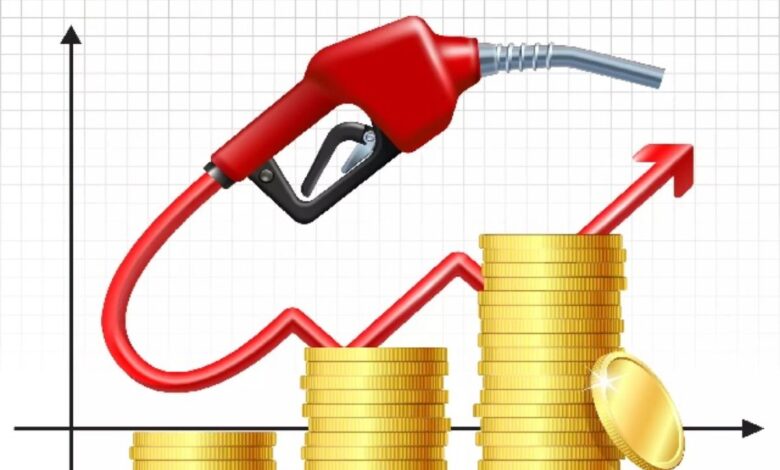
India’s crude basket peaked at $113.57 per barrel in March 2026, up 72% since January. Every $10 rise in crude costs India an additional $12–14 billion annually in import bills. At current prices, that is a fiscal haemorrhage running in real time. Oil marketing companies, HPCL, BPCL, IOC, are bleeding up to Rs 1,000 crore per day as the government keeps pump prices artificially suppressed to shield consumers from the full force of the shock. The gap between what these companies pay for crude and what they charge at the pump is being quietly absorbed by the public exchequer. The fiscal deficit, which the government had so proudly been narrowing, is widening again.
This is not a crisis that arrived without warning. The vulnerability of India’s energy supply chain through Hormuz has been documented, debated, and ultimately ignored for at least two decades. Every government from UPA to NDA has committed, in varying degrees of seriousness, to diversifying energy sources, building strategic reserves, and accelerating the renewable transition.
India’s strategic petroleum reserves provide roughly 50 days of coverage, adequate for a short-term disruption, insufficient for a prolonged blockade. The government has now claimed that 70% of crude imports are being rerouted outside Hormuz, including resuming purchases from Iran for the first time in seven years after US sanctions waivers. But rerouting adds weeks to delivery timelines and billions to freight costs. The structural exposure remains.
The Kitchen Table Crisis: LPG and Food Inflation
If crude oil is the macro crisis, LPG is the one that hits every household directly. India imports about 60% of its LPG consumption. Of that, approximately 91% originates from Gulf producers and travels through the Strait of Hormuz. When the strait closed, India’s most acute pressure point was not petrol prices or aviation fuel — it was cooking gas. The government invoked emergency powers to prevent a shortage, ordering refineries to stop producing petrochemicals and divert all propane and butane to domestic LPG production. Prices jumped Rs 60 per cylinder almost immediately.
For India’s 300 million households that cook on LPG, many of them brought onto the Ujjwala scheme in precisely the decade that was supposed to symbolise energy access for the poor- this is not an abstract statistic. This is whether the cylinder arrives next month, and at what price. The cruel irony of a government scheme designed to liberate women from firewood now being threatened by a war in the Persian Gulf is not lost on anyone paying attention.
The fertilizer dimension compounds the problem further. Approximately 40% of India’s fertilizer imports originate from the Middle East. With supply chains disrupted, farmers in key agricultural states have begun stockpiling fertilizers in panic. If the Kharif crop cycle, which runs through mid-2026, is disrupted by input shortages, the food inflation consequences will extend well beyond the energy sector.
Ernst & Young has already estimated that if the war persists through FY26-27, India’s retail inflation could rise by 1.5 percentage points above baseline. Moody’s projects average inflation of 4.8% in FY27, up sharply from 2.4% in FY25-26. The RBI, which had been cutting rates aggressively, cumulatively by 125 basis points since February 2025, now faces the prospect of having to hold or even reverse course.
A central bank that was beginning to deploy monetary stimulus to support a slowing economy now finds itself caught between two fires- tightening to fight imported inflation would choke domestic demand; staying loose risks a currency spiral. There is no good option. There is only the least bad one.
The Remittance Economy: India’s Hidden Vulnerability
Here is the number that most commentary on this crisis has underweighted: $51.4 billion. That is the approximate value of remittances that flow into India from Gulf Cooperation Council countries annually, representing roughly 38% of India’s total remittance inflows, which themselves stood at $135.4 billion in FY25, making India the world’s largest recipient of remittances. According to a Citi analysis, this entire stream is now at risk.
Out of nearly 19 million Indians working overseas, approximately 9 million are employed in Gulf countries- in construction, hospitality, oil services, and retail. These are not software engineers working remotely from climate-controlled offices. These are people whose livelihoods are directly tied to the physical infrastructure of Gulf economies, which in turn are entirely dependent on oil revenues that are currently being disrupted by the same conflict.
The World Bank estimates economic growth in the Gulf will slow to 1.3% in 2026, down from 4.4% in 2025. Recruiters across UP, Bihar, Kerala, and Andhra Pradesh, the states that are among the largest suppliers of Gulf labour, report a sharp freeze in hiring.
At Hayat Placement Services in Kanpur, a recruiter described placements falling from five to ten candidates per month to barely one or two. Thomas Cherian, a Kerala worker who spent 18 years in Saudi Arabia, was due to return in March but found his company had halted projects and laid off 600 Indian workers. About 1.1 million Indians returned from the region between the start of hostilities and end of April, according to government figures.

If the conflict persists and large-scale repatriation materialises, the consequences will not merely be economic, but they will be deeply social. Kerala’s economy, in particular, is structurally dependent on Gulf remittances in a way that has shaped its housing markets, educational institutions, and consumer demand patterns for generations. A sustained reverse migration would be an economic shock with no easy policy antidote.
The Market’s Verdict
Capital markets, which are rarely wrong about the direction of pain even when they are wrong about its magnitude, have delivered their judgment clearly.
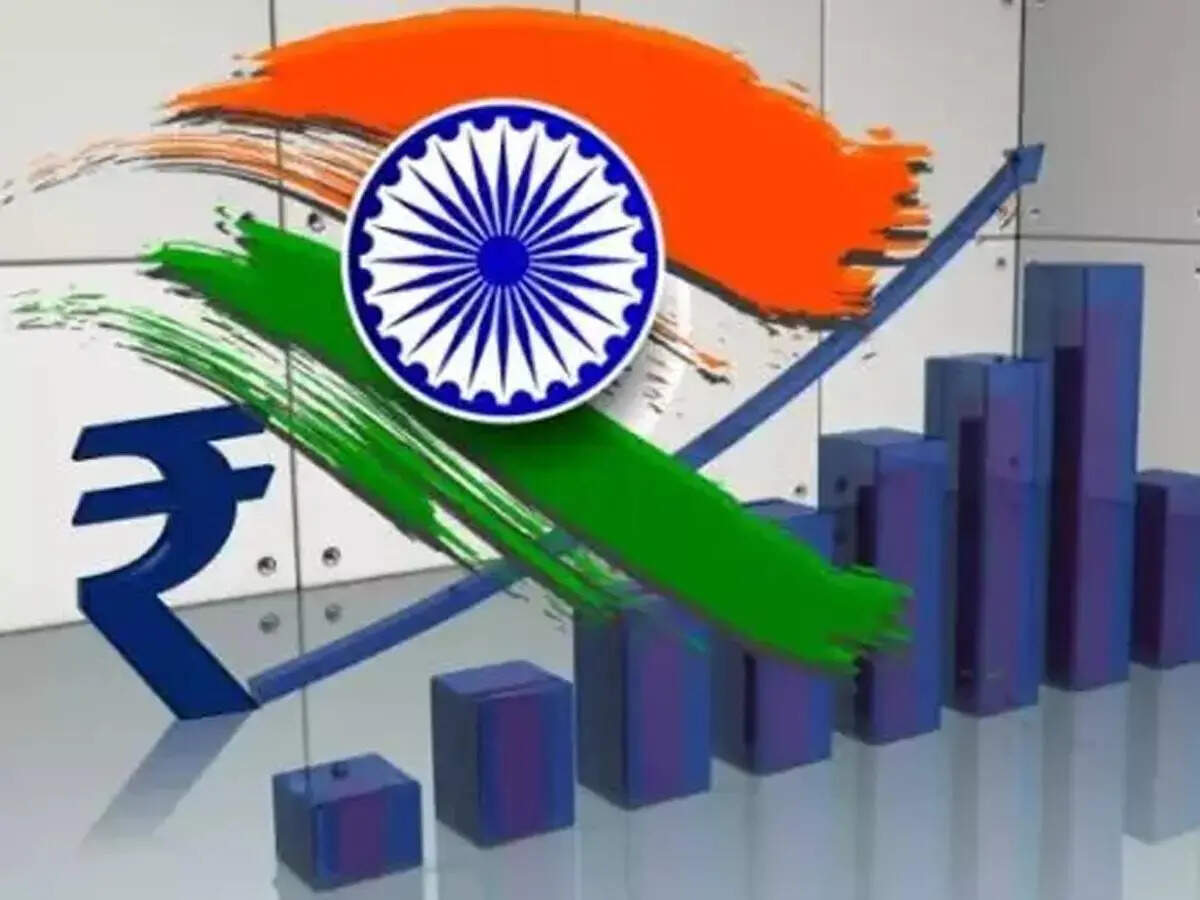
The BSE Sensex shed 2.3% in a single session in late March 2026, closing at 73,583, reversing two sessions of gains in a day. Goldman Sachs cut India’s GDP growth estimate for 2026 by 1.1 percentage points to 5.9% and raised its CPI forecast by 70 basis points, simultaneously downgrading Indian equities from “overweight” to “market weight.” Foreign investors had already pulled more than $20 billion from Indian equities in the first four months of 2026, surpassing the full-year record for outflows set just the prior year. The rupee hit a new all-time low.
The sectoral breakdown of the market selloff is instructive. Reliance Industries fell 4.6%. IndiGo dropped 4.5%. Energy companies, airlines, paint manufacturers, chemical companies, and financials exposed to consumer credit took the heaviest blows. Defensive names like TCS, Bharti Airtel, Power Grid held. The market was essentially drawing a map of India’s structural vulnerabilities in real time: anything that depends on cheap fuel, cheap imports, or consumer spending with disposable income is under pressure.
Brent crude hovering at $110–120 per barrel does not merely affect petrol pump prices. It runs through the entire cost structure of the Indian economy. Aviation fuel costs hit airlines, which raise ticket prices, which depress travel demand, which hits hospitality. Petrochemical feedstock shortages hit paint companies and plastic manufacturers. Diesel price pressure hits logistics companies and farmers. The second and third-order effects of an energy shock in a commodity-importing economy like India’s are broad, deep, and slow to reverse.
The Policy Response: Adequate or Cosmetic?
The Indian government’s response to the crisis has been a mix of the pragmatic and the politically convenient.
On the energy front, the resumption of Iranian crude imports, suspended for seven years under US sanctions pressure is sensible realpolitik. India has always maintained that its energy security interests cannot be entirely subordinated to Western geopolitical preferences, and the current crisis has given New Delhi the cover it needed to act on that principle. The rerouting of crude supply chains, building of alternative LPG import terminals, and emergency diversion of refinery capacity to cooking gas are all operationally reasonable responses.
What is harder to defend is the longer-term pattern these emergency measures reveal. India has known for decades that its energy supply chain runs a single point of failure through the Strait of Hormuz. The renewable energy programme, while genuine in its ambition, has not progressed at a pace that meaningfully reduces oil import dependence for transportation and cooking fuels on any near-term horizon. Strategic petroleum reserves remain at approx. 50 days of cover, a figure that looks thin when the disruption has already lasted over three months with no clear end in sight.
The RBI’s predicament is similarly revealing. A central bank that had begun to signal an easing cycle must now decide whether to protect growth or price stability. The OECD has already projected India’s GDP growth moderating to 6.1% in FY27 from 7.6% in FY26. The government’s own January projection of 6.8–7.2% growth now looks optimistic by any honest assessment.
The Deeper Question India Must Confront
There is a broader and more uncomfortable question lurking beneath the immediate crisis- What does it mean for India’s great power ambitions that a war it has no hand in can threaten to wipe 4% off its GDP?
India has spent the better part of the last decade positioning itself as the world’s next great economic power, the fastest-growing major economy, the manufacturing alternative to China, the demographic dividend nation. That story is real, and its foundations are genuine. But the Iran crisis has exposed a structural brittleness that does not fit comfortably within that narrative: India is, in energy terms, one of the most dependent large economies on the planet. It imports 85% of its crude, 60% of its LPG, large fractions of its fertilizer and LNG, and routes enormous shares of all of these through a single maritime chokepoint over which it has zero influence.
The aspiration to be a Vishwaguru, a global leader, a permanent UN Security Council member, a voice of the Global South, all of this sits awkwardly alongside an energy profile that makes India profoundly vulnerable to distant conflicts fought by other powers for other reasons. The Iran war was triggered by US-Israeli decisions over Iranian nuclear facilities. India had no seat at that table, no leverage over that decision, and no ability to insulate itself from its consequences.
This is not a counsel of despair. India’s growth story remains structurally intact. The domestic consumption engine, the digital infrastructure, the manufacturing push, the demographic base, none of these have been destroyed by a Middle East war. But the crisis is a blunt reminder that economic resilience, in the twenty-first century, requires energy sovereignty. Not the sovereignty of isolation, but the sovereignty of optionality, the ability to source energy from multiple geographies through multiple routes, so that no single conflict, no single chokepoint, no single political decision made in Washington or Tel Aviv or Tehran can threaten 4% of your GDP.
India has the ambition. It has the talent. It has the policy frameworks, however imperfect. What it has consistently lacked is the urgency to treat energy diversification not as a long-term aspiration, but as an immediate strategic imperative. The Strait of Hormuz is now closed. The gas cylinders are getting more expensive. The remittances are slowing. The rupee is falling. The forecast has been cut. The warning could not be louder.
The question is whether, when the war eventually ends and the prices stabilise and the headlines move on, India will do what it has never quite managed before: use the memory of pain to build the architecture of resilience. History suggests the answer will be a qualified, costly, insufficient yes. The Iran war of 2026 deserves to make it an unqualified one.