Access control systems have become an essential component of modern security infrastructure in India. From corporate offices and IT parks to manufacturing facilities, hospitals, educational institutions, residential complexes, data centres and government buildings, organisations increasingly rely on electronic access management to protect people, property, equipment and confidential information. These systems help determine who can enter a particular location, which areas they can access, and when they are permitted to enter.
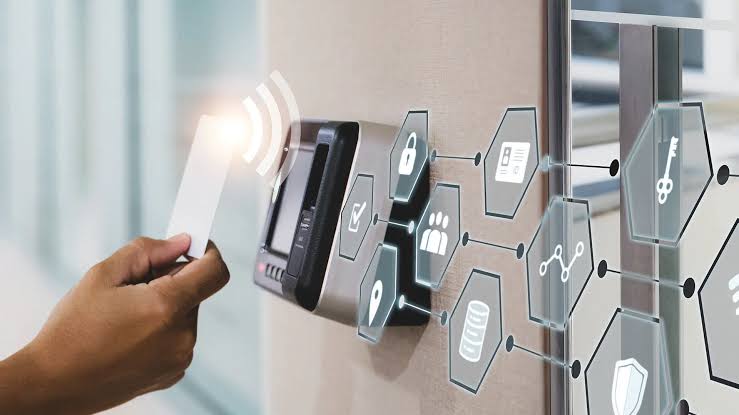
Traditional locks and keys remain useful for many applications, but electronic access control offers more sophisticated capabilities. Depending on the configuration, a system can use RFID cards, PIN codes, biometric authentication, mobile credentials, facial recognition, smart locks and visitor-management software. It can also maintain digital entry records, enforce time-based permissions, integrate with CCTV surveillance and alarm systems, and generate reports for security audits.
India’s access control market serves a wide range of customers. Small businesses may require a straightforward biometric attendance and door-access solution, whereas large enterprises often need centralised management across multiple offices. Industrial facilities may prioritise rugged hardware, restricted-zone permissions and integration with existing security infrastructure. Residential developers, meanwhile, may seek convenient entry systems for residents, staff, delivery personnel and visitors.
The following companies offer access control products, technologies or integrated security solutions relevant to the Indian market. Their offerings cover different combinations of hardware, software, biometric authentication, credentials, enterprise integration and installation support. The most suitable provider depends on the size of the facility, security requirements, existing infrastructure, budget and long-term maintenance needs.
1. Matrix Comsec
Matrix Comsec is an Indian technology company specialising in enterprise communication, video surveillance, and access control solutions. Based in Vadodara, Gujarat, the company serves businesses and institutions seeking integrated security infrastructure that can be adapted to different organisational requirements. Its COSEC range of access control products combines authentication hardware, controllers, management software and attendance-related capabilities.
Matrix COSEC access control systems are designed for environments where organisations need to manage employee movement, restrict access to sensitive areas and maintain records of entry and exit. The product portfolio includes biometric readers, card-based authentication devices, door controllers and software platforms that can support installations ranging from individual doors to large, multi-location facilities.
One of the key features of Matrix’s portfolio is its support for different authentication methods. Depending on the selected model, users can authenticate through fingerprints, RFID cards, PINs or facial recognition. Combining these methods can help organisations introduce stronger security procedures for server rooms, laboratories, administrative departments, warehouses and other restricted areas. The availability of multiple authentication options also allows businesses to select a configuration that reflects their security policies and employee requirements.
The COSEC platform supports centralised access management, allowing authorised administrators to manage credentials and permissions through software rather than relying entirely on manual changes at individual doors. Organisations can define which employees can enter particular areas, establish access schedules and maintain electronic records. This can simplify the management of large workforces and reduce the administrative burden associated with physical keys.
Matrix also offers solutions that bring access control and workforce attendance management into the same operational environment. This is useful for manufacturing companies, IT organisations, educational institutions and offices that need to monitor attendance alongside physical entry. Depending on the configuration, attendance records and access events can be used to support reporting, workforce administration and internal security reviews.
Another important consideration is the ability to integrate access control with other security infrastructure. Businesses may need to connect their access management systems with video surveillance, alarm systems, communication platforms or existing enterprise applications. Matrix’s broader security portfolio can be relevant to organisations that prefer to coordinate several security functions through a connected technology environment. The actual integrations available depend on the selected products, software versions and installation design.
Matrix products can be deployed in different configurations depending on the number of doors, expected traffic, authentication requirements and management preferences. A smaller office may require a limited number of readers and controllers, whereas a corporate campus may need centralised administration across several buildings. Buyers should assess the capacity of the proposed configuration, the number of supported users, software licensing and expansion options before finalising a purchase.
Matrix Comsec is worth considering for organisations seeking an Indian access control technology provider with an established enterprise-oriented product portfolio. Its solutions are relevant to commercial buildings, industrial premises, corporate offices, educational facilities and other environments where access management and attendance monitoring need to work together.
2. Honeywell
Honeywell is a global technology company with a substantial presence in building automation, industrial technology and electronic security. Its access control solutions are relevant to organisations that require controlled entry as part of a broader building security and management strategy. In India, Honeywell’s security portfolio can serve commercial offices, healthcare facilities, industrial premises, institutional buildings and large corporate campuses.
Honeywell’s access control offerings include electronic access hardware, credential readers, controllers, management software and integrated security capabilities. Depending on the product family and deployment, systems can support card-based entry, biometric authentication and other credential technologies. These components help organisations manage access permissions while maintaining records of security-related events.
A central feature of enterprise access control is the ability to manage permissions across a building or an entire organisation. Honeywell systems can be configured to allow administrators to assign different access rights to employees, contractors, visitors and security personnel. For example, general employees may enter office areas during working hours, while authorised technical personnel may receive additional permissions for equipment rooms or other sensitive locations.
Honeywell also offers hosted and managed access control approaches within its broader security portfolio. Cloud-connected or remotely administered arrangements can help authorised personnel manage access permissions without being physically present at every facility. The suitability of these arrangements depends on the particular solution, network architecture, security policies and the customer’s preference for cloud-based or locally managed infrastructure.
Integration is an important aspect of Honeywell’s offering. Access control can form part of a larger security environment that includes CCTV, intrusion detection, alarms and building management systems. In a commercial building, for instance, a security team may need to investigate an unauthorised entry attempt using access-event records and corresponding camera footage. Properly configured integrations can help operators correlate these events and respond more efficiently.
Large facilities may also benefit from centralised reporting, event monitoring and permission management. Security administrators can use these capabilities to review access activity, investigate incidents and support internal audits. Organisations operating multiple offices or buildings should examine how the proposed architecture handles central administration, local operation during network interruptions and the addition of new sites.
Honeywell’s enterprise-oriented approach makes it relevant to buyers who require more than a standalone fingerprint reader or electronic lock. Its solutions may be suitable for corporate headquarters, hospitals, industrial plants, office complexes and other facilities with interconnected security requirements.
Implementation planning is particularly important for larger deployments. Buyers should confirm compatibility with existing door hardware, fire-safety arrangements, emergency exits, visitor-management procedures and video surveillance systems. They should also establish who will provide installation, commissioning, maintenance and technical support.
For Indian businesses seeking access control within a wider building-security ecosystem, Honeywell offers a broad range of technologies and integration possibilities. The final selection should be based on the specific product platform, deployment requirements, support arrangements and total cost of ownership.
3. Johnson Controls
Johnson Controls is a global provider of building technologies, automation and security systems. Its portfolio includes electronic access control solutions designed to help organisations manage entry, monitor security events and coordinate access permissions across their premises. In India, its solutions are relevant to commercial properties, industrial facilities, institutional buildings and large enterprises.
The company’s access control portfolio covers hardware, software and services, including electronic access devices, controllers, credential technologies, hosted systems and integrated security platforms. Johnson Controls also operates through established security technology brands, including solutions associated with the Tyco security portfolio. This gives customers options for different building sizes and security requirements.
Electronic access control helps organisations move beyond traditional key-based arrangements. Instead of distributing physical keys and replacing locks whenever permissions change, administrators can assign credentials and modify access rights electronically. A lost or compromised credential can be deactivated, while a departing employee’s access permissions can be revoked through the relevant management platform.
Johnson Controls supports access management approaches that can be adapted to different operating environments. A small commercial property may require basic electronic entry controls, while a large industrial facility may need several levels of restricted access, central monitoring and coordinated incident response. The selected system’s capabilities depend on the product range and installation configuration.
Cloud-hosted access control can be particularly useful for organisations with distributed facilities. Where supported, authorised administrators can manage permissions remotely, review activity and maintain oversight of several locations through a central interface. Such deployments can reduce dependence on separate management arrangements at every site, although customers must evaluate internet connectivity, cybersecurity, data handling and service continuity.
Biometric access control is another relevant component of the company’s wider portfolio. Fingerprint or other supported biometric technologies can provide identity verification without relying solely on a physical card. For sensitive areas, organisations may combine multiple authentication factors, such as a card and a PIN, to strengthen access procedures. The appropriate method depends on the level of risk, employee convenience and operational conditions.
Johnson Controls solutions can also be integrated with broader building and security infrastructure. For example, access events may be associated with video surveillance, intrusion alarms or other building systems to support a more coordinated response. In complex facilities, integration can help security teams understand whether an attempted entry corresponds to an authorised activity or a possible security incident.
Organisations considering Johnson Controls should evaluate the number of doors and users, the required credential technologies, reporting capabilities and compatibility with existing infrastructure. It is also important to understand licensing arrangements, installation costs, maintenance requirements and the availability of trained service partners.
The company is relevant to organisations that regard access control as part of a wider security and building-management strategy rather than an isolated hardware purchase. Its offerings can support corporate campuses, hospitals, manufacturing plants, commercial buildings and other environments where access permissions must be managed systematically.
4. HID Global
HID Global is a security technology company known for identity credentials, access control readers, authentication technologies and secure identity solutions. Its products are used in commercial buildings, educational institutions, healthcare facilities, industrial environments and enterprise security installations. In India, HID technologies can be relevant to organisations that require dependable credential management and compatibility with established access control infrastructure.
A major part of HID’s portfolio is its credential technology. Access credentials can take the form of physical cards, key fobs and supported mobile credentials. These credentials communicate with compatible readers installed at entry points, allowing a system to determine whether a user has permission to enter a particular area.
HID offers multiple reader and credential technologies, including solutions designed for different security requirements. Organisations should distinguish between basic proximity technologies and more advanced secure credential platforms. The choice affects credential protection, compatibility, migration options and the level of security available. A facility planning a new installation should consider the risks associated with credential cloning, unauthorised duplication and the management of lost cards.
Mobile access is another important part of the modern access control landscape. Where supported, compatible smartphones can function as access credentials, reducing the need to issue physical cards to every user. This can simplify credential distribution for businesses with mobile workforces or frequent employee changes. However, mobile access requires compatible readers, supported devices and an appropriate credential-management platform.
HID’s portfolio also includes identity and authentication technologies that can be used in more specialised security environments. Depending on the product, these may support stronger authentication practices, secure identification and integration with wider identity management systems. Organisations handling sensitive information or operating restricted facilities should assess whether their requirements extend beyond ordinary door-entry credentials.
Interoperability is an important consideration for buyers. Many organisations already operate access control software and controllers from established manufacturers. HID readers and credentials may be suitable for such environments when the relevant products are compatible with the existing system. Compatibility should be verified at the level of the specific reader, credential technology, controller and software rather than assumed from the brand name alone.
HID is also relevant for organisations planning phased upgrades. A company may want to replace older readers while retaining some existing controllers or credentials. A migration assessment can establish whether such an approach is technically practical and financially sensible. In other cases, upgrading the entire system may be preferable to avoid maintaining incompatible technologies.
The company’s solutions can be used in offices, universities, healthcare institutions, data centres and large commercial properties. In these environments, secure credentials and consistent identity management are important components of physical security.
Buyers should evaluate credential security, reader compatibility, mobile access requirements, the availability of replacement components and the long-term management of credentials. They should also confirm local implementation and support arrangements through the chosen supplier or integration partner.
For Indian organisations that place considerable importance on identity credentials and interoperability, HID Global provides technologies that can form a key part of an electronic access control system.
5. Godrej Security Solutions
Godrej Security Solutions is part of the Godrej enterprise and provides a range of physical security products for residential, commercial and institutional customers in India. Its broader portfolio includes safes, locks, electronic security products and access-related solutions. The company’s presence in the Indian market makes it relevant to organisations seeking security equipment through established domestic distribution and service channels.
Access control requirements vary considerably between residential buildings and large commercial facilities. An apartment complex may need controlled entry at the main gate, access for residents and staff, and a system for managing visitors. A corporate office, by comparison, may require individual credentials, restricted departments, electronic logs and integration with surveillance infrastructure. Buyers should therefore identify the intended use before selecting a product or installation package.
Godrej’s wider electronic security and locking portfolio can be relevant to projects involving electronic locks, controlled doors and entrance security. Depending on the specific product, solutions may use PIN codes, cards or other supported electronic authentication methods. Product availability and functionality vary across models, so organisations should verify the precise capabilities of the equipment being proposed.
Electronic locking solutions can be particularly useful in smaller offices, meeting rooms, storage areas and residential settings. They can reduce reliance on conventional keys and make it easier to manage access when staff or occupants change. However, electronic locks should be selected with attention to door construction, power requirements, emergency access and the conditions in which the equipment will operate.
For larger deployments, the distinction between a standalone electronic lock and a complete access control system is important. A standalone lock may provide local authentication, while an enterprise system generally includes readers, controllers, management software and centralised administration. Customers should establish whether their requirements can be met by individual locking products or whether they need a coordinated system covering multiple entry points.
Integration with CCTV and other security equipment may also be relevant to commercial properties and housing societies. A coordinated installation can help security staff verify visitors, monitor entry points and investigate incidents. The actual integration options depend on the chosen products and the system integrator’s design.
Godrej’s established consumer and institutional presence may appeal to buyers who prefer a recognised Indian security brand for physical security equipment. Residential developers, small businesses, property managers and institutions may consider its products when planning entry security or upgrading conventional locks.
Before purchasing, customers should verify the product’s authentication methods, access capacity, battery or power requirements, emergency-opening arrangements and suitability for the intended door. For multi-door installations, they should also check whether centralised management and event reporting are supported.
Godrej Security Solutions is worth evaluating for projects where electronic locking and physical security equipment are important components of the overall access strategy. Larger facilities with complex identity management requirements should compare the specific capabilities of its proposed solution against those of enterprise access control platforms.
6. eSSL Security
eSSL Security is an Indian security technology provider known for biometric attendance devices, access control equipment and related workforce-management solutions. Its products are relevant to offices, factories, educational institutions, retail establishments and other organisations that need to manage employee attendance and control entry.
Biometric access control is a central area of interest for organisations seeking to associate entry permissions with individual users. Depending on the device, eSSL products can support fingerprint recognition, facial recognition, RFID cards and PIN-based authentication. Some devices combine attendance functions with access control, allowing organisations to use compatible terminals for workforce monitoring and physical entry management.
Fingerprint-based systems remain useful in many workplaces because they can provide a straightforward method of identity verification. Facial recognition terminals may be considered in environments where contactless authentication or faster processing is desirable. RFID cards can offer convenience for employees who need to move through entry points quickly. The choice should reflect the number of users, environmental conditions, security requirements and the possibility of credential sharing or misuse.
For small and medium-sized businesses, the ability to combine attendance tracking with entry management can simplify routine administration. A company may use biometric terminals to record employee arrival times while restricting entry to designated areas. In larger organisations, the system may need separate permission rules for departments, shifts and restricted facilities. The precise functionality depends on the device, software and installation.
Access control software is important because the reader itself is only one part of the system. Administrators need tools to enrol users, assign credentials, set schedules and review records. Organisations with several branches should check whether the chosen software supports centralised management, synchronisation across locations and consolidated reporting.
eSSL products may be particularly relevant for factories, warehouses and offices that need a practical combination of attendance monitoring and basic-to-intermediate access control. Educational institutions can also use compatible systems to manage access to staff-only areas, laboratories or administrative departments. In each case, the configuration must be designed around the institution’s operating procedures.
Customers should examine how the system handles power interruptions, network failures and the temporary unavailability of its management software. They should also determine how long event records are retained, whether data can be exported and which safeguards protect biometric information. Where cloud services are involved, data access, storage arrangements and account security deserve particular attention.
The purchase price is only one part of the total cost. Buyers should consider software licensing, installation, training, warranty coverage, replacement hardware and ongoing support. A low-cost reader may not be the most economical option if the software does not meet future requirements or the installation cannot be expanded easily.
eSSL Security offers a practical option for Indian organisations that want biometric-enabled entry management and workforce attendance functionality. Before committing to a system, buyers should request a demonstration and confirm that the proposed hardware and software provide the necessary access permissions, reporting and integration features.
7. ZKTeco
ZKTeco is an international technology company known for biometric verification, time-attendance products, access control terminals and entrance management equipment. Its products are available in the Indian security market and can serve organisations ranging from small offices to larger commercial and institutional facilities.
The company’s portfolio includes fingerprint readers, facial recognition terminals, RFID devices, access controllers and related management technologies. Depending on the product family, customers may also find solutions for turnstiles, speed gates and other entrance-control arrangements. This broad range allows organisations to consider different forms of authentication and physical entry management within the same supplier’s portfolio.
Biometric authentication can help organisations reduce dependence on shared PIN codes and physical keys. Fingerprint systems are widely used for employee verification, while facial recognition may be appropriate for selected installations that require contactless authentication. Some devices support multiple methods, giving administrators flexibility to establish different access procedures for different users or locations.
ZKTeco’s entrance management products are relevant to buildings with significant pedestrian movement. Turnstiles and related equipment can help channel people through designated entry points while working with compatible readers and access control software. Such installations may be useful in office campuses, industrial facilities, educational institutions and other environments where entry needs to be organised systematically.
The company’s products can also be considered for attendance-linked applications. In a factory, for example, a biometric terminal may record employee attendance while allowing authorised personnel to enter designated areas. More advanced installations may require dedicated controllers and software to manage multiple doors, access groups and security events.
Buyers should pay attention to the differences between standalone terminals and networked enterprise systems. A standalone device may be adequate for one entry point, but a multi-building installation often needs centralised administration, role-based permissions, event reporting and a clearly defined method for synchronising users across devices.
Integration capabilities should also be assessed carefully. Organisations may want access events to be associated with CCTV footage, visitor-management software or existing building systems. These integrations depend on the relevant product models, protocols, software interfaces and system design. Compatibility should be demonstrated before the purchase is finalised.
As with any biometric system, environmental performance and privacy need consideration. Lighting, camera placement, user movement and the quality of enrolment can affect facial recognition performance. Fingerprint readers may require additional attention in workplaces where users have worn or damaged fingerprints. Alternative authentication methods should be available where appropriate.
ZKTeco can be considered by businesses looking for a broad selection of biometric and entrance-control hardware. The final decision should take into account software capabilities, local technical support, security updates, warranty conditions and the cost of expanding the system over time.
8. Suprema
Suprema is a South Korean security technology company specialising in biometric access control, identity authentication and related security solutions. Its products are used in enterprise, commercial and institutional environments where identity verification and controlled entry are important. In India, Suprema technology may be relevant to organisations seeking advanced biometric readers and integrated access control capabilities.
The company’s portfolio includes biometric access readers, controllers, credentials and management software. Depending on the product, supported authentication methods may include fingerprint recognition, facial recognition, RFID cards and PIN codes. This variety allows organisations to match authentication methods to different areas of a facility.
Biometric readers can be especially valuable in locations where access permissions must be closely tied to an individual’s identity. Data centres, research facilities, corporate offices and industrial premises may use such devices to control entry into restricted zones. In higher-security applications, administrators may combine biometrics with a card or another authentication factor to establish additional checks.
Suprema’s BioStar platform is associated with access control management and biometric security. Depending on the version and deployment, management functions can include user administration, access permissions, event monitoring and system configuration. Organisations should assess the particular platform’s capabilities, licensing, supported devices and integration options rather than assuming that every feature is available in every installation.
Networked management can be useful for facilities with multiple entry points. Instead of configuring each reader independently, authorised personnel can manage users and permissions through a central system. This can simplify the process of updating employee access, disabling lost credentials and reviewing entry events. For large organisations, it is important to verify the maximum supported scale and how the system behaves during network interruptions.
Integration with other security technologies can extend the value of access control. Depending on compatibility, an installation may connect with video surveillance, visitor-management platforms or other enterprise systems. Buyers should confirm the availability of required interfaces and determine whether integration will require additional licences or third-party development.
Biometric security also requires responsible data management. Organisations should understand how biometric templates are stored and protected, which administrators can access them, how enrolment and deletion are handled, and what happens when an employee leaves. Privacy safeguards, restricted administrative privileges and appropriate retention policies should be built into the deployment.
Suprema products may be appropriate for organisations seeking specialised biometric access control rather than basic attendance terminals. The company is particularly relevant to buyers evaluating advanced authentication, centralised management and integration with enterprise security infrastructure.
Before selecting Suprema, organisations should request a technical assessment covering reader performance, authentication speed, compatibility with existing controllers, software support and the availability of qualified installation partners in India. These factors are important to ensuring that an advanced biometric system remains practical and supportable throughout its service life.
9. Mantra Softech
Mantra Softech is an Indian technology company specialising in biometric devices, identity authentication and related security products. Its portfolio has relevance across enterprise access control, workforce attendance and identity verification applications. The company is also associated with biometric technologies used in specialised identification environments.
Access control applications can use biometric readers to verify users before granting entry to a designated area. Depending on the product, Mantra’s offerings may support fingerprint recognition, facial recognition, RFID cards and other authentication technologies. These devices can be deployed in offices, factories, educational institutions, healthcare facilities and selected institutional environments.
Fingerprint authentication is useful where organisations need a relatively straightforward way to verify employees and manage access permissions. Facial recognition may be considered for contactless entry applications, subject to the capabilities of the selected terminal and the environmental conditions. RFID cards can provide an alternative for users who cannot conveniently use a biometric method or where an organisation prefers credential-based entry.
A complete access control deployment requires more than authentication hardware. The organisation must enrol users, assign access rights, establish schedules and maintain records of entry events. Depending on the product range and system configuration, these functions may be managed through dedicated software or connected platforms.
Mantra’s biometric technology background can be relevant to projects where identity verification is a significant requirement. Organisations should nevertheless distinguish between devices designed for attendance recording, devices intended for access control and equipment developed for other identity-related applications. A product suitable for one purpose may not provide all the functions needed for another.
For larger installations, buyers should check whether the proposed configuration supports centralised user management, multi-door access policies, integration with existing controllers and reporting across several locations. They should also confirm the maximum user capacity, authentication methods and software compatibility of each device.
Security and privacy should be part of the selection process. Biometric information requires careful handling, and organisations should establish how templates are stored, who can access them, how data is secured and how records are removed when no longer needed. Access control policies should also provide a suitable alternative when biometric authentication fails.
Installation and maintenance arrangements are equally important. Customers should confirm the availability of local technical assistance, replacement components, firmware updates and software support. A demonstration under realistic operating conditions can help assess whether the chosen device is suitable for the site’s expected traffic and environmental conditions.
Mantra Softech is worth evaluating for Indian organisations seeking biometric technology from a domestic provider. Its suitability depends on the specific product, the complexity of the installation and the software capabilities required. Buyers should compare the proposed system against their operational needs before making a purchase.
10. Bosch Security Systems
Bosch Security Systems, part of the Bosch group, provides technologies for video surveillance, intrusion detection, communications and integrated security. Its access control-related offerings can be relevant to organisations that want to coordinate controlled entry with a broader security infrastructure. In India, Bosch’s wider security portfolio serves commercial, industrial and institutional applications.
Access control installations commonly combine readers, controllers, credentials and management software. These components determine whether a person is authorised to enter a particular door or restricted area. Depending on the selected platform and compatible equipment, systems may support card-based credentials, biometric devices and other authentication methods.
A major consideration in enterprise security is the relationship between access control and surveillance. If a restricted door is opened outside permitted hours, security personnel may need to examine associated camera footage or check an alarm notification. When compatible systems are properly integrated, event information can help operators investigate incidents and understand what happened at a particular entry point.
Bosch’s broader security portfolio can be relevant to facilities that already use its surveillance or security technologies. Organisations may prefer to coordinate several components within a carefully designed installation, although integration with third-party access control equipment should be confirmed for each project. A brand’s presence in video surveillance does not automatically mean that every access control feature is natively supported.
Commercial buildings, industrial premises, healthcare facilities and large institutional sites may have varied access requirements. General office areas may need employee credentials and basic entry logs, while server rooms, laboratories or equipment areas may require tighter permission controls. A well-planned deployment defines these access levels before hardware is installed.
Another important consideration is operational resilience. Access control equipment must be configured to respond appropriately to power failures, network disruptions and emergencies. Door-release arrangements must be coordinated with applicable fire-safety and building requirements, ensuring that security measures do not interfere with safe evacuation.
Buyers should also examine software administration, user capacity, event retention, system expansion and maintenance requirements. If a facility expects to add more doors or buildings, the proposed platform should accommodate future growth without requiring an unnecessarily disruptive replacement. Technical support and spare-parts availability should be confirmed before implementation.
Bosch Security Systems is relevant to buyers looking for an integrated security approach that can coordinate access events with other protective technologies. The suitability of a particular solution depends on the access control platform, the required hardware and the integration design.
Organisations considering Bosch should obtain a detailed technical proposal specifying readers, controllers, credentials, software, integration interfaces, installation responsibilities and ongoing support. This makes it easier to compare complete system costs rather than evaluating hardware prices in isolation.
What to Consider When Choosing an Access Control System Company in India
Selecting an access control provider requires an understanding of the facility’s security risks and everyday operating needs. A small office with one entrance may be adequately served by a basic electronic lock or biometric reader. A large corporate campus may require a centralised platform that manages hundreds of doors, several buildings and thousands of credentials.
Authentication methods should be among the first considerations. RFID cards are convenient, PINs are straightforward to administer, and biometrics can help link access permissions to an individual. Mobile credentials may suit organisations seeking smartphone-based entry. Sensitive areas may require two-factor authentication, depending on the system’s capabilities and the organisation’s security policies.
Software and scalability are equally important. Buyers should determine whether administrators can manage users centrally, define schedules, create access groups and review entry records. They should also establish how easily new doors, users and locations can be added as the organisation expands.
Integration capabilities can make a substantial difference to operational efficiency. Access control may need to work with CCTV cameras, alarms, visitor-management platforms, attendance software and building automation systems. The vendor or integrator should identify supported interfaces and demonstrate compatibility with the existing infrastructure.
Data security and privacy deserve careful consideration, particularly when biometric information is collected. Organisations should review data storage, administrator permissions, encryption, retention policies, software updates and incident-response procedures. Biometric data should be collected and processed only in accordance with applicable legal requirements and the organisation’s stated purpose.
Reliability and emergency procedures must be considered during installation. Buyers should ask how the system behaves during power outages or network failures, whether local controllers continue operating, and how emergency exits are handled. Access control should complement, not compromise, fire safety and safe evacuation.
Finally, organisations should compare the total cost of ownership rather than the initial equipment price alone. Installation, cabling, software licences, maintenance, credential replacement, training and future upgrades can affect the overall expenditure. The availability of qualified local technicians and reliable after-sales support is particularly important for systems that protect critical facilities.
India’s access control market includes domestic manufacturers, international technology providers and specialist biometric companies. Matrix Comsec, Honeywell, Johnson Controls, HID Global, Godrej Security Solutions, eSSL Security, ZKTeco, Suprema, Mantra Softech and Bosch Security Systems offer different capabilities across this landscape. Evaluating their specific products against the facility’s security requirements, technical infrastructure and long-term operating needs will help organisations select a system that delivers reliable and manageable access protection.