Nexa Evergreen Investment Fraud Case: How Did A Scheme Promising 3 Percent Weekly Returns On Dholera Plots Collect 2676 Crore And Leave 47664 Investors With A 93254 Crore Shortfall?
The Enforcement Directorate has now placed before a special court in Jaipur its findings that approximately 2676 crore was collected from investors between 2019 and 2023 through promises of land in Dholera Smart City and weekly returns of 3 percent for 60 weeks. Software records show 47664 investors received less than they put in creating an aggregate shortfall of 93254 crore. Assets worth roughly 52 crore have been seized frozen or attached yet the scale of the shortfall and the human cost raise urgent questions about how such a structure operated for years what happened to the bulk of the money and whether ordinary investors will ever see meaningful recovery. The prosecution complaint filed on 7 October 2026 against Subhash Chandra Bijnoriya and others forces a hard look at the entire sequence of events from the early police cases to the latest attachment order.

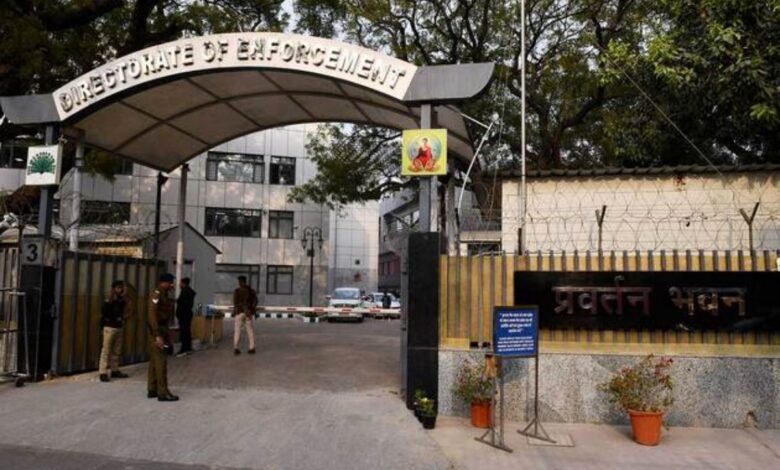
The Enforcement Directorate Jaipur Zonal Office filed a prosecution complaint on 7 October 2026 before the Special Court under the Prevention of Money Laundering Act in Jaipur against Subhash Chandra Bijnoriya alias Subhash Chandra Bijarnia and other accused persons and entities. The complaint rests on the finding that approximately 2676 crore was collected from investors through the Nexa Evergreen group between 2019 and 2023. That figure alone demands sustained scrutiny. How does a single group of entities draw in such a volume of money over four years while promising returns that no ordinary real estate project could sustain.
The agency states that investors were lured by claims that their funds would be invested in land development and plotting projects at Dholera Smart City in Gujarat. They were offered assured weekly returns of 3 percent for 60 weeks or the allotment of plots. Additional rewards including laptops motorcycles and cars were held out for enrolling new investors under a multi level referral scheme. The mathematics of a 3 percent weekly return on an unchanged principal produce 180 percent over 60 weeks.
On an investment of 1 lakh the weekly payment would be 3000 and the total returns over the period would reach 18 lakh leaving the investor with 28 lakh if the principal were also returned. Such numbers were dangled before people who in many cases were retired personnel or ordinary savers. The Enforcement Directorate press release of 13 October 2026 records these terms and the collection figure. What operating income from actual land sales or development could ever have supported those weekly payouts. The absence of any public accounting of genuine project revenue leaves the question hanging over every rupee collected.
In January 2023 the payments stopped. The website the mobile application and the offices were shut down. Investors who had been receiving returns suddenly found silence. The Enforcement Directorate notes that initial payments to some participants had reinforced trust and encouraged further deposits. Once the flow reversed the entire structure collapsed. Software data of the company showed that 47664 investors received less than the amount they had invested. The aggregate shortfall stood at 93254 crore.
That shortfall figure is not the total amount collected. It is the measured deficit for those 47664 people according to the internal records examined by the agency. The difference between 2676 crore collected and 93254 crore shortfall is 174346 crore. That difference is a mathematical gap not a verified statement of money spent on land returned as profit or still held somewhere. No complete investor by investor ledger has been placed in the public domain. No reconciliation of every bank transfer against every promised plot has been published.
The shortfall of 93254 crore therefore stands as a stark measure of recorded loss yet it does not answer how much each of those 47664 people actually put in how much each received or how many received nothing at all. The human impact is immediate. Families that diverted savings loans or retirement funds into the scheme faced an abrupt end to the expected weekly inflow. The Enforcement Directorate release of 13 October 2026 states the shortfall and the investor count. The same document is the source for the collection figure.
The earlier police investigations in Rajasthan had already registered multiple FIRs. A Times of India report dated 12 March 2023 described a Sikar Police probe into an alleged fraud then estimated at 1200 crore. Four persons Subhash Birjaniya Ranvir Birjaniya Opendra Birjaniya and Amarchand Dhaka were reported arrested. More than 75 FIRs had been registered against 13 accused at that stage. The later Enforcement Directorate figure of 2676 crore is substantially higher. The increase cannot be dismissed as mere refinement.
It raises the question of how many additional complainants accounts or entities were brought into the financial analysis between March 2023 and the October 2026 complaint. The Rajasthan High Court order dated 11 February 2026 in Ranveer Singh alias Ranveer Bijarnia versus State of Rajasthan recorded that the petitioners connected with Nexa Evergreen Energy faced more than 100 FIRs registered in different districts of Rajasthan relating to alleged investment and real estate transactions. More than 100 FIRs represent a volume of litigation that itself signals the breadth of the grievances.
Yet the existence of that many cases does not by itself produce recovery for the investors. Each FIR stands as a separate procedural track and the High Court proceeding concerned only the request for video conference participation in trials. The scale of the criminal proceedings therefore underscores the number of people who felt wronged while leaving open the practical question of restitution.
On 12 June 2025 the Enforcement Directorate conducted searches at 25 premises in Jaipur Sikar Jhunjhunu and Ahmedabad under Section 17 of the Prevention of Money Laundering Act. Cash of 204 crore was seized along with records and digital devices. Approximately 15 crore in bank and cryptocurrency accounts linked to Nexa Group entities and associates was frozen. The agency reported these figures in its contemporaneous release and the October 2026 complaint release confirms the earlier action with the cash figure stated as 205 crore and the frozen amount as 1531 crore.
The search locations span the districts where many investors lived and the city where some of the land related claims were centred. The seizure of cash and the freezing of accounts represent the first tangible interception of money associated with the scheme. Yet 204 crore in cash and 15 crore frozen against a collection of 2676 crore and a shortfall of 93254 crore is a fraction. What portion of the overall flow those seized and frozen sums represent remains unclear from the public material.
The digital devices and records seized during the searches presumably supplied the software data that later produced the 47664 investor count and the 93254 crore shortfall. The process of extracting and analysing that data is not described in detail in the press releases. The gap between the volume of material seized and the still incomplete public accounting of every transaction continues to invite interrogation.
Subhash Chandra Bijnoriya was arrested on 10 August 2026 under Section 19 of the Prevention of Money Laundering Act. He was produced before the Special Court in Jaipur and remanded to Enforcement Directorate custody for four days. The October 2026 release states that he remains in judicial custody. The agency describes him together with Ranveer Singh alias Ranveer Bijarnia as persons who exercised complete control over the operation. They are said to have floated a network of companies limited liability partnerships partnership firms and proprietorship concerns in the names of associates and investors.
Those entities and their bank accounts were used to collect funds pay returns to earlier investors in the nature of a Ponzi scheme and acquire immovable properties thereby layering the proceeds and concealing their true source and ownership. The language of complete control and of a web of entities raises the further question of how the beneficial ownership was structured. Who signed the account opening forms. Who authorised the transfers that moved money from one entity to another. Who held the registered title to the land parcels later attached.
The public releases do not supply an entity by entity list or a transaction schedule that would allow an independent reader to trace each rupee. The arrest itself is a coercive step in the investigation. It does not conclude the judicial process. The prosecution complaint filed on 7 October 2026 under Sections 44 and 45 of the Act places the allegations before the court. The complaint is the formal vehicle through which the case proceeds yet its full text has not been released publicly. Without that document the precise charges against each named person and entity remain summarised rather than fully set out.
On 6 October 2026 a provisional attachment order covered 69 immovable properties and balances in 26 bank accounts and term deposits collectively valued at 3491 crore. The attached assets include land parcels and plots at Dholera and Dhandhuka in Gujarat residential flats at Ahmedabad and Sikar and a 45 percent shareholding in a resort company at Calangute Goa. With this attachment the cumulative value of assets seized frozen or attached reached approximately 52 crore. The Enforcement Directorate release of 13 October 2026 states these figures. The attachment is provisional. It restricts dealing with the property pending further proceedings. It is not final confiscation.
The 3491 crore valuation of the October attachment is itself a small fraction of the 93254 crore shortfall. Land at Dholera sits at the centre of the original investment proposition. Investors were shown pictures of Dholera projects and told their money would be used for development there. The later attachment of some of those land parcels creates a direct link between the advertised location and the assets now under restriction.
Yet the public material does not identify each parcel by survey number registered owner purchase date or funding source. Without that detail it is impossible to know whether every attached plot was bought with investor money or whether any plot was ever legally transferred to an investor as promised. The 45 percent shareholding in a Goa resort company extends the asset trail beyond Gujarat and Rajasthan.
A shareholding is an interest in a company not direct ownership of the resort itself. The company name the full share register and the chain of acquisition are not set out in the press release. The cumulative 52 crore figure must be understood as the total of different enforcement measures. It is not cash already available for distribution to the 47664 investors. The distinction between seizure freezing provisional attachment and actual restitution is critical. Until the attached assets are adjudicated realised and distributed the investors remain in the same position of shortfall.
The referral structure added another layer of inducement. Investors were encouraged to bring in new participants in exchange for commissions and physical rewards. The multi level character of the arrangement meant that the pool of money expanded as long as recruitment continued. Early recipients of returns became living advertisements for the scheme. When recruitment slowed or when the volume of withdrawals exceeded fresh deposits the structure became unsustainable. The Enforcement Directorate characterises the payment of returns to earlier investors as having been in the nature of a Ponzi scheme.
That characterisation rests on the investigation of the flow of funds through the network of entities. A genuine land development business would generate revenue from plot sales development margins or other commercial activity sufficient to meet its obligations. No audited financial statements establishing such revenue have been placed in the public domain. The absence of that evidence leaves the promised returns without a demonstrated commercial foundation. The collapse in January 2023 is therefore not an isolated event. It is the point at which the inflow of new money could no longer support the outflow of promised payments.
The Rajasthan High Court order of 17 July 2025 in a bail application relating to FIR No 71 of 2024 registered at Karwar Police Station Jodhpur City East records allegations against a person described as an agent of Nexa Evergreen. The order notes charges under Sections 420 406 and 120B of the Indian Penal Code and Sections 4 5 and 6 of the Prize Chits and Money Circulation Schemes Banning Act 1978.
The existence of cases against agents illustrates that the litigation extends beyond the principal controllers. Each such case requires its own evidence and outcome. The broader pattern however is one of multiple FIRs multiple accused and a financial trail that the Enforcement Directorate has now sought to reconstruct through searches attachment and prosecution.
What remains unanswered is the complete financial reconstruction. The total collections the payments made the expenditure on any genuine land acquisition the acquisitions of residential properties and the shareholding and the amounts still outstanding cannot be fully reconciled from the aggregate figures alone. The 2676 crore collection figure and the 93254 crore shortfall figure describe different measures. Adding or subtracting them does not produce a verified statement of money recovered or money lost by every investor.
The cumulative 52 crore in enforcement action is the amount under restriction not the amount returned. The prosecution complaint of 7 October 2026 advances the case into the judicial phase. The Special Court will examine the evidence. Until that process concludes and until a full accounting is available the investors who contributed the 2676 crore and who face the 93254 crore shortfall continue to wait. The scale of the shortfall the number of people affected and the modest size of the attached assets relative to the losses compel continued scrutiny of every stage of the investigation and of every remaining question about where the money went and how much of it can ever be restored.