Arrest Of Ex-Congress Treasurer Ram Gopal Agarwal In Chhattisgarh Custom Rice Milling Scam
The Enforcement Directorate states that Ram Gopal Agarwal was arrested on 9 October 2026 under Section 19 of the Prevention of Money Laundering Act in connection with the alleged illegal collection of approximately 147 crore from rice millers in Chhattisgarh. The agency links the collection to an increase in the special custom milling incentive from 40 to 120 rupees per quintal during the 2021 to 22 Kharif season and describes a network involving office bearers of the Chhattisgarh State Rice Millers Association and MARKFED officials. Cash at the rate of 20 rupees per quintal was allegedly demanded against release of incentive payments while bills of non paying millers were withheld. The investigation originated from an Income Tax Department complaint and an ACB EOW FIR. Years of searches arrests attachments and court proceedings have still left critical questions about calculation of the sum final recipients and full recovery unanswered. The human cost falls on millers who depended on timely payments and on public trust in agricultural support mechanisms.

How Did a Government Incentive Scheme in Chhattisgarh Turn Into a Pipeline for Alleged Cash Extraction From Rice Millers?
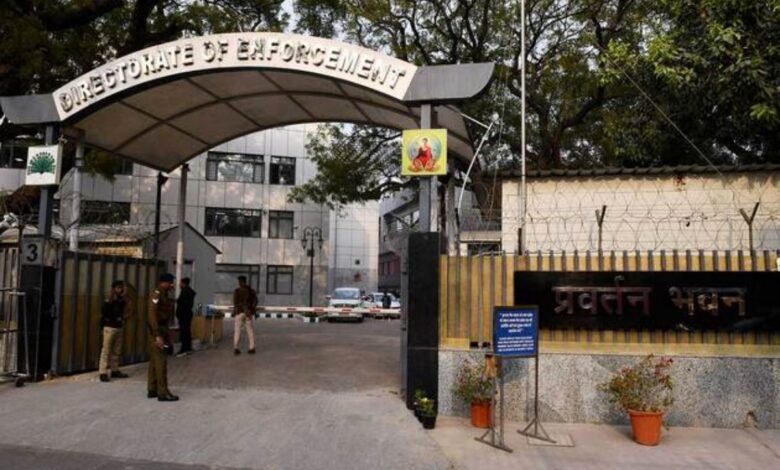
The Enforcement Directorate Raipur Zonal Office announced on 12 October 2026 that it had arrested Ram Gopal Agarwal on 9 October 2026 under Section 19 of the Prevention of Money Laundering Act, PMLA Act 2002. The agency stated that the arrest related to the Chhattisgarh Custom Rice Milling Scam involving illegal collection of approximately 147 crore from rice millers. The Special Court under the PMLA in Raipur granted five days of ED custody. The same release asserted that the special incentive for custom rice milling was increased from 40 to 120 rupees per quintal for the 2021 to 22 Kharif season.
Thereafter a syndicate comprising office bearers of the Chhattisgarh State Rice Millers Association and officials of MARKFED allegedly collected cash from rice millers at the rate of 20 rupees per quintal against the release of their incentive payments. Bills of those who refused were deliberately withheld. In this manner approximately 147 crore was illegally collected during December 2022 to July 2023 constituting proceeds of crime under the PMLA. Further investigation according to the ED revealed that Ram Gopal Agarwal played a key role in organising supervising and controlling the illegal collection. He conveyed instructions through association office bearers.
Cash collected from different districts was reported to Roshan Chandrakar then treasurer of the Association who regularly furnished district wise collection details to Ram Gopal Agarwal for verification. The illegally collected cash was thereafter delivered to persons nominated by him. During investigation Ram Gopal Agarwal was found evasive and non cooperative and failed to disclose relevant information regarding collection handling and utilisation of the proceeds of crime. Further investigation remains under progress.
The figure of approximately 147 crore demands immediate and sustained scrutiny. How precisely was this sum calculated across an entire state over a period of eight months. What district wise quantities of paddy milled under the custom milling arrangement formed the base for the 20 rupee demand. Did every miller who received incentive payments contribute or only those whose bills were processed after payment. The ED release presents the number as the amount illegally collected yet provides no public schedule of quantities paid amounts or recovered cash. Without that schedule the public is left to accept an aggregate that could represent demanded sums actual receipts or an investigative estimate refined over time.
Earlier public accounts spoke of different magnitudes including references near 140 crore in related court submissions and higher figures in earlier agency statements about generated kickbacks. The gap between those numbers and the latest 147 crore figure is not explained in the October 2026 release. Each unexplained crore represents potential extraction from millers whose working capital depended on timely government payments. The human impact is not abstract.
A rice miller operating on thin margins who delayed wages or bank interest because an incentive bill was held up faced real cash flow pressure. When the alleged demand stood at 20 rupees per quintal the cumulative burden on a mill handling thousands of quintals became substantial. The absence of a transparent district wise ledger leaves open the question whether the 147 crore figure captures the full extent of pressure exerted or merely the portion the agency has so far quantified.
The increase from 40 to 120 rupees per quintal itself requires exhaustive examination. The ED states that the special incentive was raised for the 2021 to 22 Kharif season. An earlier ED release of 10 October 2024 recorded that the State Government abruptly hiked the incentive fixed for rice milling from 40 per quintal to 120 per quintal. The same release described how officials of MARKFED as well as district marketing officers connived with office bearers of the Chhattisgarh State Rice Millers Association to extract money from rice millers. To put pressure the accused persons kept bills pending without justification.
Rice millers across Chhattisgarh were forced to pay cash at the rate of 20 rupees per quintal for payment of their incentive bills. Properties worth 19 crore belonging to Roshan Chandrakar had been provisionally attached by that date. The 2024 release also recorded that a prosecution complaint had been filed on 28 June 2024 against Manoj Soni then Managing Director of MARKFED and Roshan Chandrakar and that the Special Court took cognizance on 5 October 2024.
The arithmetic difference between 40 and 120 is 80 rupees. The alleged cash demand of 20 rupees per quintal sits inside that expanded margin. Yet the public still lacks the original government order the file noting the competent authority the financial justification and any internal MARKFED circulars that governed bill clearance after the hike. Without those documents it remains impossible to determine whether the policy change was accompanied by safeguards against precisely the kind of leverage the ED now describes.
Custom milling operates as a critical link in the public procurement chain. Paddy procured under government supported arrangements is allocated to rice millers. The millers process it into rice and deliver the prescribed quantity to agencies including the Food Corporation of India and Nagrik Aapurti Nigam. MARKFED processes payments including the milling incentive. The High Court of Chhattisgarh in its order dated 18 July 2025 in the matter of Roshan Chandrakar versus State of Chhattisgarh recorded the allocation process and the subsequent delivery of milled rice.
The same order discussed the procedural history that began with Income Tax Department searches and a prosecution complaint followed by registration of an FIR by ACB EOW. When bill clearance becomes contingent on an alleged side payment the entire mechanism turns into an instrument of pressure. Millers who refused payment according to the ED saw their bills deliberately withheld. That allegation if established means that a legitimate entitlement was converted into a bargaining chip.
The consequence for a miller is not merely delayed revenue. It is disrupted working capital delayed payments to labourers and transporters and possible interest burden on borrowed funds. The ED releases do not publish the number of millers who paid the number who refused or the average delay suffered by non paying millers. Those details would allow the public to measure the scale of coercion. Their absence leaves the human impact described only in aggregate.
Roshan Chandrakar appears throughout the investigative record as the then treasurer of the Chhattisgarh State Rice Millers Association. The October 2024 ED release identified him as a person against whom the prosecution complaint was filed and whose properties worth 19 crore had been provisionally attached. The October 2026 release states that district wise collection details were regularly furnished by him to Ram Gopal Agarwal for verification.
The High Court order of 18 July 2025 examined his bail application in the ACB EOW case registered as Crime Number 01 of 2024 under provisions of the Prevention of Corruption Act and sections of the Indian Penal Code. The court recorded the prosecution narrative of collection and the defence objections. Subsequent proceedings including further bail applications continued into 2025. The attachment of 19 crore in provisional form raises its own set of questions. What portion of that sum has been confirmed as proceeds of the alleged milling collections. What assets remain under attachment years later. Has any amount been returned to millers who paid the alleged demand.
The ED releases speak of provisional attachment and of proceeds of crime yet do not publish a reconciliation that shows how much of the 147 crore has been traced recovered or restored. Until that reconciliation appears the millers who paid remain without public confirmation that their money has been accounted for.
Manoj Kumar Soni then Managing Director of MARKFED is named in the 2024 ED release as an accused against whom the prosecution complaint was filed. The agency described him as an Indian Telecommunication Service officer. The release alleged that MARKFED officials and district marketing officers participated in keeping bills pending to force payment of the 20 rupee demand. The High Court records also refer to allegations concerning the role of MARKFED leadership in the processing of bills.
The institutional position of MARKFED as the body clearing incentive payments placed its officials at a critical control point. If bill clearance was manipulated as the ED asserts then the very agency entrusted with supporting millers became the instrument of extraction. The public is entitled to know which internal circulars governed bill scrutiny after the incentive hike and whether any contemporaneous complaints from millers were recorded and acted upon. The absence of those records in the public domain means that the institutional failure remains described only at the level of individual accusations rather than systemic process.
The investigation timeline stretches across years. Income Tax Department searches began in July 2023 according to court records. A prosecution complaint by the Income Tax Department followed. The ED registered an ECIR in October 2023. An FIR by ACB EOW was registered in January 2024. Searches continued into May and June 2024. Arrests of Manoj Soni and Roshan Chandrakar occurred. A prosecution complaint under PMLA was filed in June 2024 and cognizance taken in October 2024. High Court bail proceedings occupied 2025.
In January 2026 the High Court considered a bail application by Anil Tuteja in the connected ACB EOW matter and recorded the broader allegations while granting bail subject to conditions and expressly limiting its observations to the bail decision. Only in October 2026 did the ED announce the arrest of Ram Gopal Agarwal. Each stage produced new details yet the core questions about calculation of the 147 crore the identity of every nominated recipient and the quantum of recovery remain incompletely answered in public documents.
The length of the timeline itself becomes a matter of concern. Millers who paid in late 2022 and early 2023 have waited years for clarity on whether their money will be restored. The slow pace of public disclosure raises the question whether the investigative machinery prioritises successive arrests over full transparency and restitution.
The role attributed to Ram Gopal Agarwal centres on organisation supervision and control. The October 2026 release states that he conveyed instructions for collection through association office bearers that district wise details reached him via Roshan Chandrakar and that cash was delivered to persons nominated by him. The same release records that he was found evasive and non cooperative. These assertions place him at a supervisory level above the district collection machinery. Yet the public release does not name the persons to whom the cash was ultimately delivered.
It does not publish the communications or statements that establish the chain of nomination. It does not disclose bank or cash movement records that would allow independent verification of the final destination of the 147 crore. Without those particulars the allegation of control remains framed at a high level of generality. The public interest demands more than an assertion of key role. It demands the documentary trail that links specific instructions specific collections and specific deliveries. Until that trail is placed in the public domain the claim of supervisory control cannot be fully evaluated by citizens whose taxes and whose agricultural support schemes are implicated.
The multi agency character of the case adds further layers of complexity. The ED investigation rests on a predicate offence investigated first by the Income Tax Department and then by ACB EOW under the Prevention of Corruption Act and Indian Penal Code provisions. Money laundering under the PMLA is a distinct offence that focuses on the proceeds of crime. The separation is legally sound yet operationally it multiplies the number of charge sheets cognizance orders and bail proceedings that must be tracked.
The public cannot easily determine which allegations remain live against which accused or whether overlapping proceedings have produced consistent findings on the quantum of proceeds. The High Court in the Anil Tuteja matter of 13 January 2026 recorded submissions referring to the broader custom milling allegations while granting bail and limiting its observations. That decision illustrates how individual liberty applications proceed while the larger factual picture stays contested. The risk is that the fragmentation of proceedings obscures the overall picture of how much was collected from how many millers and where the money ultimately went.
Unanswered questions accumulate. Who approved the increase from 40 to 120 rupees per quintal and on what financial justification. How was the 147 crore figure derived from district wise milling volumes and actual collections. Which millers paid and which refused and what documentary evidence shows deliberate withholding of specific bills. Who were the persons nominated by Ram Gopal Agarwal to receive the cash and what evidence traces delivery to each of them.
What amounts have been seized attached or returned to millers after years of investigation. What is the current status of every prosecution complaint charge sheet and bail order affecting each named individual. Each of these questions remains only partially addressed in the public releases and court orders available as of 13 October 2026. The ED states that further investigation is under progress. That statement is accurate yet incomplete. Progress without corresponding public disclosure of calculation schedules recipient lists and recovery figures leaves the millers and the public in a position of continued uncertainty.
The human impact of the alleged scheme extends beyond the numbered crores. Rice millers in Chhattisgarh operate within a procurement system that is meant to support farmers and ensure food security. When incentive payments become contingent on side cash the system itself is compromised. A miller who paid 20 rupees per quintal to secure release of a legitimate entitlement suffered a direct reduction in margin. A miller who refused faced delayed payment and the associated commercial risk.
Labourers transporters and input suppliers downstream from the millers also felt the cash flow strain. Public trust in MARKFED and in the association that purportedly represented millers is eroded when both are described as participants in the collection network. The provisional attachment of 19 crore linked to Roshan Chandrakar in 2024 has not been publicly reconciled with the later 147 crore figure. Citizens are left without a clear accounting of how much of the alleged proceeds has been secured for potential restitution.
The arrest of Ram Gopal Agarwal in October 2026 after years of investigation is presented as a significant step. Yet without the underlying calculation schedules and recipient trails the step remains one more procedural event rather than a full resolution.
The legal framework under the PMLA requires the authorised officer to have reason to believe that the conditions for arrest are met. The ED asserts that Ram Gopal Agarwal was evasive and non cooperative. That characterisation is the agency’s assessment. The Special Court granted five days of custody. Custody is a procedural stage not a determination of guilt. The underlying predicate offences remain under investigation and trial.
The public interest lies in ensuring that the full evidentiary record eventually reaches open court so that the allegations of organisation supervision and control can be tested against documents statements and financial trails. Until that occurs the narrative remains one sided. The ED has published its version of events. The court records have reproduced prosecution allegations and defence submissions. What is still missing is the complete set of original government orders MARKFED circulars district wise ledgers and final recipient identities that would allow independent evaluation.
Consider the arithmetic once more. An increase of 80 rupees per quintal in the incentive created a larger pool of government money flowing toward millers. An alleged demand of 20 rupees per quintal extracted a portion of that pool before the miller could use it. If the ED’s 147 crore figure is accurate the volume of paddy involved must have been large. Yet the public has not been shown the corresponding volume data.
Without volume data the 147 crore figure floats free of its quantitative foundation. Critique of that figure is not denial of the investigation. It is insistence that a sum of this magnitude requires transparent derivation. The same insistence applies to the 19 crore provisional attachment. Years after attachment the public still lacks a statement of how much of that value has been confirmed linked to the milling collections and made available for potential return to affected millers. The gap between attachment and restitution is itself a matter of public concern.
The High Court proceedings of 2025 and 2026 illustrate the tension between individual liberty claims and the ongoing investigation. Bail applications were argued on grounds of delay parity and absence of flight risk. Courts recorded the allegations while limiting their observations. Those limitations are proper in bail jurisprudence. They also mean that the broader factual questions about the scheme remain unresolved at the appellate level.
The millers who paid or whose bills were delayed do not appear as parties in those bail matters. Their experience is mediated through the prosecution narrative. The absence of direct miller testimony in the public record is another gap. Statements recorded by investigators exist but are not published. Until those statements or a representative sample become part of the open record the human texture of the alleged coercion remains second hand.
The institutional roles of the Chhattisgarh State Rice Millers Association and MARKFED require continued interrogation. An association that represents millers is described as the vehicle for collecting cash from its own members. A marketing federation that clears payments is described as participating in the withholding of bills. If these descriptions are established the conflict of interest is profound. Representation and regulation both failed the millers they were meant to serve.
The public is entitled to know whether internal governance of the association contained any contemporaneous objection to the collection practice and whether MARKFED audit or supervisory mechanisms detected the pattern of delayed bills. The ED releases do not address those internal accountability questions. Their silence leaves open the possibility that the alleged network operated without effective internal resistance.
Further investigation is said to be under progress. That phrase has appeared in successive ED releases across years. Progress must eventually produce a complete public accounting. The original incentive sanction the district wise collection ledgers the list of nominated recipients the statements of millers who paid and who refused the reconciliation of attached assets with the 147 crore figure and the current status of every related prosecution must all enter the public domain.
Until they do the arrest of Ram Gopal Agarwal remains one more procedural step in a long investigation whose full dimensions are still partially hidden. The millers of Chhattisgarh and the citizens whose resources support the procurement system deserve the complete picture rather than successive partial disclosures. The questions that remain are not technicalities. They go to the heart of whether a government support scheme was systematically diverted for private extraction and whether the investigative response has matched the scale of the alleged harm.
The discrepancy between earlier reported magnitudes and the latest 147 crore figure continues to demand explanation. Court submissions in related proceedings referred to figures near 140 crore. Earlier agency statements spoke of higher generated kickbacks linked to the incentive expansion.
The October 2026 release settles on approximately 147 crore for the period December 2022 to July 2023. Investigative refinement can produce revised estimates yet each revision without published methodology leaves the public guessing about the underlying data. A transparent schedule showing quintals milled incentive paid alleged demand collected and amount recovered would resolve the uncertainty. Its absence is a continuing deficit in public accountability.
The role of district marketing officers alleged in the 2024 release adds another layer. These officers operate at the interface between MARKFED and the millers. If they participated in the pressure tactics as asserted then the collection network extended into the field level bureaucracy. The public has not been shown the specific instructions or correspondence that would demonstrate coordinated action across districts.
Without that documentation the claim of a statewide syndicate rests on the agency’s summary rather than on visible primary records. Millers in different districts may have experienced the alleged demand differently. Uniformity or variation across districts is itself a material fact that remains unpublished.
The Prevention of Corruption Act provisions invoked in the ACB EOW FIR target the misuse of official position. The PMLA targets the laundering of the resulting proceeds. Both frameworks are engaged yet the public still lacks a clear statement of the final charges framed against each individual and the evidence relied upon for each element. Cognizance was taken in 2024.
Framing of charges and trial progress have not been comprehensively reported in the materials reviewed. Delay in trial is itself a form of injustice both to the accused and to the millers who await resolution. The High Court has noted delay in the course of bail proceedings. That recognition has not yet translated into accelerated public disclosure of the full evidentiary picture.
In the end the case of Ram Gopal Agarwal and the alleged custom rice milling collections stands as a test of investigative transparency. The ED has published its narrative of organisation supervision and control. Court records have preserved the procedural history and the competing submissions. What remains missing is the exhaustive documentary foundation that would allow citizens to evaluate every link in the chain from incentive hike to cash demand to final delivery.
Until that foundation is made public the concern remains that a scheme intended to support milling operations became a vehicle for extraction while the full measure of accountability stays incomplete. The millers who faced the alleged 20 rupee demand and the public that funds the procurement system are entitled to nothing less than complete clarity.