NSEL Case: Court Allows Monetisation Of ₹3,464 Crore ED-Attached Assets for ₹1,950 Crore Settlement
A Mumbai Special PMLA Court has permitted the Enforcement Directorate to monetise assets valued at approximately ₹3,464 crore to facilitate a ₹1,950 crore settlement for 5,682 specified creditors of National Spot Exchange Limited. The order dated October 8, 2026, advances the implementation of a settlement approved by the NCLT in November 2025. However, payment remains conditional on the scheme’s trigger event and the realisation of proceeds from the attached properties. The settlement also does not, by itself, bring the separate criminal proceedings arising from the 2013 payment crisis to an end.

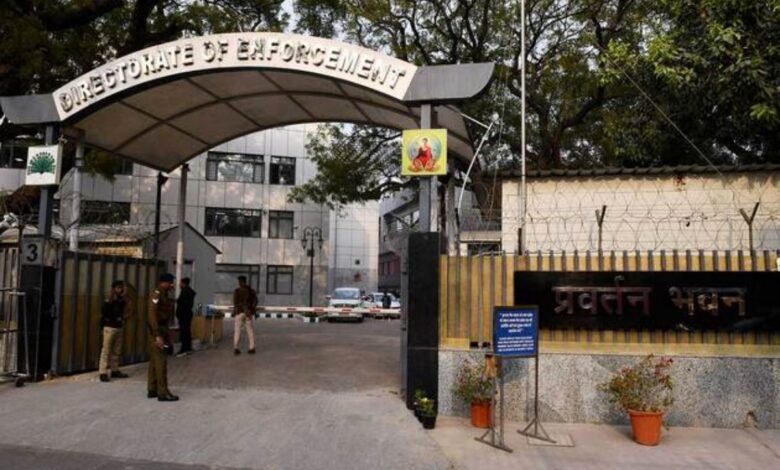
NSEL: A ₹5,600 Crore Default and a New Development in the Recovery Process
More than 13 years after the National Spot Exchange Limited (NSEL) payment crisis, a Mumbai Special Court under the Prevention of Money Laundering Act (PMLA) has permitted the monetisation of assets attached by the Enforcement Directorate (ED), valued at approximately ₹3,464 crore, to facilitate a ₹1,950 crore settlement for 5,682 specified creditors.
The order, dated October 8, 2026, concerns the implementation of a one-time settlement scheme approved by the National Company Law Tribunal (NCLT), Mumbai, on November 28, 2025.
Under the arrangement, proceeds realised from the monetisation of attached properties are to be used towards the settlement amount of ₹1,950 crore, payable to 63 Moons Technologies Limited as assignee of the specified creditors’ claims. The payment is subject to the occurrence of the settlement trigger event specified in the approved scheme.
The court has also directed that monetisation be carried out in consultation with the competent authority under the Maharashtra Protection of Interest of Depositors (in Financial Establishments) Act, 1999, because the properties are subject to proceedings under both the MPID Act and the PMLA. Any proceeds exceeding ₹1,950 crore are to remain in the custody of the Special Court, subject to the final outcome of the proceedings.
The ED has reported 35 provisional attachment orders covering assets valued at approximately ₹3,464 crore in the NSEL case.
The distinction between an asset valuation and money actually recovered is central to understanding the latest development. The court’s permission allows the monetisation process to proceed; it does not establish that all the properties have already been sold or that every eligible creditor has received payment.
What the Numbers Establish
The NSEL case involves several figures that describe different aspects of the default, the investigation and the settlement. These figures should not be treated as interchangeable.
The original payment default was reported at approximately ₹5,600 crore and affected thousands of traders. The present settlement covers 5,682 specified creditors and provides for a total settlement amount of ₹1,950 crore. Separately, the ED has attached assets valued at approximately ₹3,464 crore.
The settlement scheme provides for payment in proportion to the specified creditors’ outstanding claims as of July 31, 2024. Its synopsis uses an assumed claims base of approximately ₹4,650 crore.
On that basis, ₹1,950 crore represents approximately 41.9 per cent of the stated claims base. This is the arithmetic behind the frequently cited recovery figure of around 42 per cent.
However, this percentage should not be described as a payment already received by each creditor. Actual payments remain subject to the scheme’s conditions, the occurrence of the settlement trigger event and the monetisation of the attached properties.
The settlement also applies to a defined class of specified creditors. Its terms do not, by themselves, establish the recovery position of every person affected by the original NSEL default.
How the NSEL Crisis Unfolded
NSEL operated as a spot exchange intended to facilitate trading in commodities. Its trading arrangements and the regulatory conditions governing its operations subsequently became central to the legal proceedings arising from the 2013 crisis.
The exchange had received an exemption from the Department of Consumer Affairs in 2007, subject to conditions. The later investigations examined whether transactions conducted through the exchange complied with the applicable regulatory requirements and whether the commodities represented in the trading records were actually available.
In July 2013, the exchange’s payment crisis emerged when it failed to meet payment obligations to traders. The resulting default was widely reported at approximately ₹5,600 crore.
The crisis led to criminal investigations, proceedings against alleged defaulters, regulatory scrutiny and litigation involving NSEL, its trading members, investors and other parties.
The ED subsequently investigated suspected money laundering connected with the default. Its investigations included allegations that certain transactions were not backed by the represented commodities, that warehouse receipts and other records were used improperly, and that funds were diverted through various entities.
These claims must be understood in their proper legal context. An allegation made by an investigating agency is not, by itself, a final judicial finding of guilt against every individual or company named in an investigation.
The broader legal history of the exchange and the regulatory issues surrounding the crisis were also examined by the Supreme Court in its judgment in NSEL v. Union of India, dated May 15, 2025.
The ED’s Investigation and Attachment of Assets
The ED’s investigation has involved tracing the alleged movement of funds, identifying assets linked to suspected transactions and initiating proceedings under the PMLA.
Property attachment is intended to secure assets while the legal process continues. An attachment order, however, should not be treated as equivalent to a final conviction or as proof that the full attached value has already been recovered.
The ED’s latest reported total of approximately ₹3,464 crore reflects the value of assets covered by its attachment action in the NSEL case. The monetisation order now provides a route for using realised proceeds towards the approved settlement, subject to the court’s conditions.
The LOIL Group
In a press release dated March 27, 2026, the ED described its investigation into the LOIL Group in connection with the NSEL matter.
According to the agency, the group had a reported gross liability of approximately ₹720.30 crore to NSEL. The ED alleged that approximately ₹569.04 crore had been siphoned from settlement accounts through transactions involving fictitious paddy sales.
The agency further alleged that funds were routed through group entities, including Lakshmi Energy & Foods, and used for purposes such as repayment of bank loans, working capital and property acquisition.
These figures represent the agency’s account of the alleged transactions. They should not be presented as a final judicial determination of the criminal liability of every person or entity involved.
Mohan India, Vimladevi Agrotech, Yathuri Associates and Lotus Refineries
The ED has also reported attachment action involving properties linked to Mohan India Group, Vimladevi Agrotech Limited, Yathuri Associates and Lotus Refineries.
In its April 2, 2025, press release, the agency reported the attachment of 15 immovable properties valued at approximately ₹115.86 crore in connection with its NSEL investigation.
These properties form part of the agency’s wider effort to secure assets allegedly connected with the transactions under investigation. The reported value of this particular attachment should not automatically be added to the consolidated attachment figure, because the relationship between individual attachment orders and later totals must first be established.
The Brokerage Entities
The investigation has also extended to brokerage firms and their directors.
In a press release dated February 5, 2025, the ED reported filing a prosecution complaint against 19 broking entities and their directors. The complaint concerned allegations involving the manner in which clients were induced to trade and trading arrangements described by the agency as illegal pair trades.
The ED also reported attachment of brokerage earnings amounting to approximately ₹34.74 crore, which it said had been confirmed by the Adjudicating Authority.
A prosecution complaint is a procedural step in a criminal investigation. It does not, on its own, establish that every accused person or entity has been convicted.
How the ₹1,950 Crore Settlement Was Approved
The current settlement is the result of a separate legal process intended to resolve the claims of a defined group of creditors.
On November 28, 2025, the NCLT, Mumbai, approved a scheme of arrangement between NSEL and its specified creditors under Sections 230–232 of the Companies Act, 2013.
The scheme provides for a ₹1,950 crore settlement, distributed proportionately according to the covered creditors’ outstanding claims as of July 31, 2024. It also provides for assignment of the specified creditors’ claims to 63 Moons in accordance with the scheme’s terms and the occurrence of the settlement trigger event.
NSEL and 63 Moons reported that 92.81 per cent of specified creditors by number and 91.35 per cent by value voted in favour of the scheme. These are the reported voting figures for the scheme and should not be interpreted as proof that every person affected by the original default participated in the vote.
The scheme was subsequently challenged. The National Company Law Appellate Tribunal dismissed a challenge on January 15, 2026, and a challenge before the Supreme Court was subsequently dismissed.
On April 13, 2026, the Supreme Court directed the relevant courts and authorities to pass appropriate orders expeditiously to facilitate implementation of the scheme and payments to eligible investors.
The October 2026 PMLA Court order is a further step in this process. It permits the monetisation of ED-attached assets to facilitate the settlement, subject to the conditions governing payment.
Why the ₹3,464 Crore Asset Valuation Is Not the Same as Recovery
The latest order addresses a practical obstacle in the settlement process: turning attached property into money that can be used for payment.
The ED’s reported attachment valuation is approximately ₹3,464 crore. The settlement amount currently identified for the specified creditors is ₹1,950 crore. These are two different figures: the first is the stated value of attached assets, while the second is the amount payable under the approved settlement.
The actual proceeds will depend on the monetisation process. A property valuation does not establish the price at which the property will ultimately be sold, and the value of attached assets cannot be treated as cash already available for distribution.
The court has directed that the monetisation process be coordinated with the competent authority under the MPID Act because several properties are subject to both MPID and PMLA proceedings.
The order also addresses the treatment of excess proceeds. Any amount realised above ₹1,950 crore is to remain in the custody of the Special Court, subject to the final outcome of the proceedings.
The applicants have limited their immediate claim to ₹1,950 crore while reserving the right to seek excess amounts at a later stage, according to the reported court proceedings.
The arrangement therefore provides a route towards implementing the approved settlement, but it does not settle every question about the ultimate treatment of all attached assets or the total recovery available across the wider NSEL case.
The Earlier ₹179 Crore Payment and ₹17.47 Crore Restitution
Two earlier recovery-related figures are relevant to the history of the case, but they relate to different processes.
NSEL and 63 Moons have reported that approximately ₹179 crore was paid in August 2013 to 7,053 smaller traders whose outstanding dues were below ₹10 lakh.
Separately, the ED’s October 2026 announcement referred to an earlier restitution exercise involving assets valued at approximately ₹17.47 crore. The assets included shares of Timber Trail Travel Today Private Limited and profits earned on those shares, which were placed before a Supreme Court-appointed committee headed by former judge Pradeep Nandrajog for distribution among investors.
The two figures should not be combined or treated as interchangeable. The ₹179 crore figure relates to payments reported for smaller traders in August 2013, while the ₹17.47 crore figure relates to a separate restitution exercise.
The ₹1,950 crore settlement is considerably larger than the ₹17.47 crore restitution amount. However, that comparison alone does not establish the total amount recovered through all processes since 2013 or the final recovery of each individual creditor.
Who Is Covered by the Settlement?
The settlement scheme concerns 5,682 specified creditors. That is the relevant number when describing the group covered by the ₹1,950 crore arrangement.
The original NSEL crisis was widely reported to have affected approximately 13,000 traders or investors. But subtracting 5,682 from approximately 13,000 does not establish that the difference represents a definitive group excluded from every recovery process.
The earlier payment reported for 7,053 smaller traders illustrates why the original affected population and the later specified-creditor class should not be treated as identical. The figures relate to different stages and categories of the case.
Determining the position of every individual creditor would require examining the relevant creditor lists, the scheme’s eligibility provisions, verified claim amounts and records of earlier payments. The aggregate figures alone do not establish the status of every person affected by the original default.
Accordingly, the settlement should be described as an arrangement for a defined class of specified creditors, rather than a final resolution of every claim arising from the 2013 crisis.
The Settlement Does Not Automatically End Criminal Proceedings
The settlement process must be distinguished from the criminal proceedings arising out of the NSEL crisis.
The ED has filed prosecution complaints in connection with its investigation, including complaints concerning alleged money laundering and the roles of various entities and individuals. The filing of such complaints, and a court’s taking cognisance of them, are procedural stages; neither should be described as a conviction unless a court has actually convicted the relevant accused.
The Bombay High Court addressed the relationship between the NSEL settlement scheme and criminal proceedings in its judgment dated March 9, 2026.
The court clarified that approval of the scheme did not override subsisting attachment orders or automatically terminate criminal proceedings. It did not permit the scheme to be treated as a basis for quashing, compounding, dismissing or discharging criminal cases.
This distinction is important because the settlement scheme has provisions concerning the assignment of creditors’ claims and the settlement of specified claims against NSEL and 63 Moons. Those provisions do not, by themselves, establish that separate criminal proceedings have ended.
The implementation of the settlement and the determination of criminal liability therefore remain distinct legal processes.
What Happens Next?
The October 2026 order moves the settlement process forward, but the next developments will depend on implementation.
First, the attached properties must be monetised in accordance with the court’s directions and the applicable legal requirements. Their stated valuation should not be mistaken for money already realised.
Second, the settlement trigger event must occur in accordance with the approved scheme. The payment mechanism is conditional on this event, and the order does not establish that all individual payments have already been completed.
Third, the settlement amount must be applied according to the scheme’s terms, including the proportionate calculation of specified creditors’ claims as of July 31, 2024.
Fourth, the treatment of proceeds exceeding ₹1,950 crore remains subject to the Special Court’s directions and the final outcome of the proceedings.
Finally, the separate criminal cases must proceed according to law. The settlement order does not establish the guilt or innocence of individual accused persons and does not automatically dispose of criminal proceedings.
Conclusion: A Route to Recovery, Not Yet a Final Accounting
The October 8, 2026, order represents a significant development in the long-running NSEL payment-default case. It permits the ED to monetise attached assets valued at approximately ₹3,464 crore towards a ₹1,950 crore settlement for 5,682 specified creditors.
The settlement amount is equivalent to approximately 42 per cent of the claims base cited in the scheme documents. But that calculation should not be confused with a completed recovery, a guarantee that every covered creditor has already been paid, or a final accounting of all losses arising from the 2013 default.
The implementation of the settlement depends on the occurrence of the trigger event, the monetisation of attached properties and the operation of the approved payment mechanism. Any excess proceeds remain subject to the court’s directions, while criminal proceedings continue independently.
For creditors covered by the scheme, the order establishes a route towards payment. For the wider NSEL case, the amounts actually realised, the payments ultimately made and the outcome of the separate legal proceedings will remain essential parts of the final record.