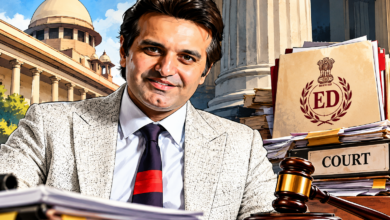
Manoj Gaur Of Jaypee Group Faces A Crucial Bail Question As ED Alleges ₹13,833 Crore Diversion. Will The Courts Give Him Another Break? As Cases Drag On, Who Is Fighting For The Homebuyers?
₹32,825 crore collected, ₹13,833 crore allegedly diverted, and thousands of homebuyers still waiting. As Manoj Gaur fights his bail battle, the Jaypee case raises a bigger question: after years of investigations, court battles and institutional intervention, who will finally deliver justice to the people who paid for homes they never received?

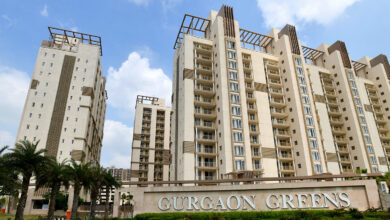
For thousands of families who booked apartments in Jaypee group’s residential projects in Noida and Greater Noida, a home purchase turned into a wait lasting more than a decade. Projects launched around 2010–11 were supposed to deliver homes by 2014–15. Instead, buyers faced repeated delays, incomplete construction and years of legal uncertainty.
The scale of the crisis is enormous. According to figures presented by the Enforcement Directorate (ED) before the Delhi High Court in August 2026, Jaypee Infratech Limited (JIL) and Jaiprakash Associates Limited (JAL) collected ₹32,825 crore from approximately 25,000 homebuyers. Thousands paid substantial amounts towards apartments in developments such as Jaypee Wish Town, expecting to eventually take possession.
For many, that meant continuing to pay rent while servicing home loans on properties they could not occupy. Others found their savings locked into unfinished apartments, with refunds and possession both uncertain.
The crisis raises a question that goes beyond delayed construction. How did a major real estate group collect such substantial sums from buyers, yet leave so many without the homes they paid for?
The ED’s investigation has since brought the handling of those funds under scrutiny. Its allegations, the legal proceedings that followed and the continuing efforts to revive the projects have made Jaypee’s homebuyers’ ordeal a question of financial accountability as well as construction failure.
The Insolvency Battle That Took Years To Resolve
Jaypee Infratech’s financial troubles came to a head in August 2017, when IDBI Bank initiated insolvency proceedings before the National Company Law Tribunal (NCLT), citing a loan default of approximately ₹526 crore. The case quickly became more complicated because thousands of homebuyers had already paid for apartments that remained undelivered.
The Supreme Court intervened in September 2017 in proceedings brought by homebuyers, addressing their position in the insolvency process. The dispute exposed a central problem: buyers had committed substantial sums to the company, but the insolvency framework had to accommodate their claims alongside those of banks and other creditors.
The resolution process subsequently faced competing proposals, legal challenges and prolonged delays. For homebuyers, each stage offered the possibility of a solution without guaranteeing when their apartments would be completed.
In March 2023, the NCLT approved a resolution plan submitted by Suraksha Realty and Lakshdeep Investments and Finance to acquire Jaypee Infratech. The NCLAT upheld the plan in May 2024, subject to conditions including compensation for farmers. Suraksha took control of the company that month, with the completion of stalled projects forming a central part of the revival effort.
The takeover offered buyers a route out of years of uncertainty. But it did not erase the original crisis or automatically deliver possession.
This is important to note for the wider case. Insolvency was intended to provide a way forward for the company and its creditors. It could not, by itself, answer the separate questions about how homebuyer funds had been handled before the takeover – or guarantee that every buyer would finally receive a completed home.
Manoj Gaur And The ₹13,833 Crore Allegation
The most serious allegations in the Jaypee case concern what happened to the money collected from homebuyers. The Enforcement Directorate (ED) has alleged that ₹13,833 crore out of the ₹32,825 crore collected from approximately 25,000 buyers was diverted to other entities and projects. The agency presented these figures before the Delhi High Court in August 2026, describing the alleged diversion as approximately 42 paise of every rupee collected.
According to the ED, the money did not remain confined to the residential projects for which buyers had paid. Its investigation has examined transactions involving entities associated with the Jaypee Group, including Jaypee Sports International, Jaypee Healthcare and Jaypee Sewa Sansthan. The agency alleges that funds were channelled towards other ventures, including the Formula One circuit, a hospital and the Yamuna Expressway.
The central issue is whether money collected for residential construction was diverted in ways that left the projects without the resources needed to complete them, and who authorised or benefited from those transactions.
Manoj Gaur, the former chairman and managing director of Jaypee Infratech and a senior figure in Jaiprakash Associates, is accused by the ED of playing a central role in the alleged diversion and laundering of funds. The agency’s case concerns transactions involving group companies and associated entities, rather than simply the fact that construction deadlines were missed.
The investigation has also raised questions about the movement of money through related entities and trusts.
There is also an important distinction between the figures cited in different proceedings. The ED’s August 2026 submission referred to ₹32,825 crore collected from homebuyers, while earlier proceedings and agency statements have cited ₹14,599 crore in admitted claims. These figures have different contexts and should not be treated as interchangeable.
The ₹13,833 crore figure remains an allegation by the ED, not a final judicial finding that the entire sum was stolen or personally misappropriated by Gaur. For homebuyers, the question is whether the investigation will eventually establish accountability for the funds they paid and help resolve a crisis that has already lasted years.
Arrest, Bail And The ₹500 Crore Asset Attachments
The investigation took a significant turn on November 13, 2025, when the ED arrested Gaur under the Prevention of Money Laundering Act (PMLA). The agency’s case centres on the alleged diversion of homebuyer funds and Gaur’s purported role in transactions involving Jaypee Group entities.
Gaur subsequently received interim bail for a limited period in January 2026. He surrendered after that relief expired in February. His regular bail application in the money-laundering case was rejected by the trial court that month, and he approached the Delhi High Court for relief. These proceedings must be distinguished from a separate cheating case in which he also sought bail.
During the High Court proceedings in August 2026, the ED argued that the scale of the alleged diversion and the number of affected homebuyers weighed against granting bail. The court proceedings brought the ₹13,833 crore allegation into sharper public focus.
The ED has also moved to secure assets it believes are linked to the alleged proceeds of crime. In June 2026, it announced the provisional attachment of properties worth ₹100 crore linked to JC World Hospitality and Investors Clinic Infratech. The agency said the properties had estimated market values of ₹40 crore and ₹60 crore, respectively, taking the total value of assets attached in the Jaypee investigation to approximately ₹500 crore.
The agency alleged that funds had reached JC World Hospitality and that land linked to the alleged proceeds of crime had been parked in Investors Clinic Infratech. These are the ED’s allegations, and the attachments remain subject to the applicable legal process.
The gap between the alleged diversion and the value of attached assets is substantial. But an attachment is not the same as a completed recovery, and the value assigned to a property does not establish how much money will ultimately be realised or whether it will be available to compensate homebuyers.
For buyers who have waited years, the investigation and attachment orders are significant steps. They are not, however, the same as receiving a refund or taking possession of a completed home. The question now is whether the legal process will establish responsibility and produce meaningful recoveries, while the stalled projects themselves are finally completed.
The Supreme Court Steps In, But Will It Deliver Relief?
By 2026, the Jaypee crisis had become a question not just of criminal investigation but also of whether the authorities could provide meaningful relief to homebuyers who had spent years seeking answers.
Vandana Sabharwal, a Jaypee homebuyer, approached the Supreme Court seeking a time-bound investigation into the alleged diversion of funds and measures to protect assets that could help complete stalled projects. Her petition raised questions about the handling of homebuyer money, the pace of the investigation and whether the interests of buyers were receiving adequate protection.
In May 2026, the Supreme Court issued notice to the Centre and the Enforcement Directorate, seeking their responses. The petition sought closer scrutiny of the alleged financial transactions and measures to ensure that any assets recovered could contribute to resolving the homebuyers’ predicament.
The intervention brought the issue before the country’s highest court, but issuing notice is not the same as accepting the allegations as proven or ordering that the investigation be completed in a particular way.
The larger question raised by the case is straightforward. When buyers allege that funds intended for their homes were diverted, who ensures that the investigation moves forward, the evidence is examined and the eventual outcome benefits those who suffered the loss?
Recovering The Money, And For Whom?
The ED’s asset attachments are one part of a wider effort to identify funds and property that may be connected to the alleged diversion. Separately, the National Asset Reconstruction Company Limited (NARCL) has reportedly retained guarantees issued by former promoters of Jaiprakash Associates as part of efforts to recover lenders’ dues. Reports in May 2026 said these included guarantees associated with former promoter Manoj Gaur and vice-chairman Sunil Kumar Sharma.
These developments matter, but they raise a distinction often lost in the wider Jaypee story: recovering money for lenders is not necessarily the same as recovering money for homebuyers.
Banks and other creditors pursue claims through the insolvency framework and any enforceable guarantees. The ED, meanwhile, seeks to trace alleged proceeds of crime and secure assets through the process provided by law. Homebuyers want a different, immediate outcome: completed homes, possession, refunds where applicable or compensation.
Even when assets are identified, several steps remain. The authorities must establish the relevant ownership and legal connections, resolve competing claims and determine what can lawfully be recovered or distributed. A provisional attachment does not guarantee that a property will be sold or that its value will reach affected buyers.
The scale of the Jaypee case makes this distinction particularly important. The ED’s alleged diversion figure runs into thousands of crores, while the reported value of attached assets is much smaller. Those numbers alone do not establish the amount ultimately recoverable, but they underline why tracing the money is only part of the task.
For homebuyers, accountability cannot end with identifying transactions or securing assets. The question is whether the legal and insolvency processes can translate those steps into an outcome that addresses the loss of money, time and housing security they have endured.
Suraksha’s Takeover And The Crisis That Continued
Suraksha’s takeover of Jaypee Infratech was supposed to provide a way forward after years of insolvency proceedings. The NCLT approved its resolution plan in March 2023, and the NCLAT upheld it in May 2024, subject to conditions. The change in management raised hopes that stalled residential projects would finally be completed.
However, the revival has faced scrutiny of its own. An NCLT-appointed committee examined the status of construction and compliance with the resolution plan. Its report, submitted in August 2026 and reported in October, raised concerns about delays, construction quality, labour availability and funding. Reports also highlighted questions about the working-capital arrangements contemplated under the plan.
Separately, the Uttar Pradesh government initiated a review of compliance at Jaypee Wish Town, including construction progress, approved plans and the use of funds. These developments indicate that the takeover has not ended questions about when buyers will receive their homes.
There have also been reports of a police FIR concerning the alleged diversion of funds intended for the completion of stalled projects under the new management.
The allegations against Jaypee’s original management concern the events that led to the crisis and the handling of homebuyer funds. Questions about Suraksha concern the implementation of the approved revival plan and whether its commitments are being met.
For homebuyers, the change in ownership was meant to bring an end to years of uncertainty. The continuing scrutiny shows why the real measure of the revival must be construction completed, homes made fit for occupation and possession actually delivered.
The details of Suraksha’s performance and the questions facing its management deserve a separate examination. For the wider Jaypee story, the immediate point is that insolvency produced a new owner, but it has not yet resolved every homebuyer’s problem.
The Last Bit, Who Is Fighting For The Homebuyers?
The Jaypee case has passed through insolvency proceedings, criminal investigations, asset attachments, court hearings and a change in management. Yet the central question remains: why has it taken so long for thousands of buyers to obtain the homes they paid for?
The responsibilities are spread across institutions. The ED must establish its allegations and pursue the money trail. Courts must adjudicate the cases before them. Insolvency authorities must ensure that the approved resolution plan is implemented, while regulators must examine compliance with applicable construction and real estate requirements.
The original management must answer the allegations through the legal process. The new management must demonstrate that it can meet its commitments. And the institutions overseeing the revival must ensure that buyers are not left indefinitely waiting for the promised outcome.
These are different responsibilities, but they converge on the same group of people: homebuyers who have spent years paying for properties they cannot occupy.
There is a difference between legal proceedings moving forward and justice producing a tangible result. An arrest does not establish guilt, an asset attachment does not guarantee recovery, and an approved resolution plan does not mean a home is ready for possession.
The final measure of accountability will be whether the allegations are properly investigated, any established wrongdoing is dealt with under the law, recoveries are pursued where possible and stalled homes are completed.
For Jaypee Group’s homebuyers, another hearing or another assurance cannot undo the years already lost. What they need now is a credible path to possession, financial relief where justified and clear answers about what happened to their money.
After years of proceedings and repeated promises of resolution, the question is no longer simply who will take responsibility for Jaypee’s past. It is whether the institutions involved can finally deliver an outcome for the people who have paid the price.