Did Delhi Police Have “Gunda Brothers” Helping From Inside the Protests? Who Were the Men Accused of Attacking CJP Protesters, and Who Brought Them There?
More than 25,000 security personnel were reportedly deployed in Delhi. Yet men accused of assaulting CJP protesters and threatening journalists were moving around the demonstrations. A video makes a far more disturbing allegation: were these “gunda brothers” operating alongside the police, and if so, who brought them there?

What if the men accused of attacking CJP protesters in Delhi were not just random troublemakers? These are the questions now being asked around the CJP protests in Delhi.
Many allege that “Gunda Brothers” – violent enforcers allegedly linked to the Delhi Police – were brought in to intimidate protesters and discredit demonstrations. These men are apparently local troublemakers who happen to show up when demonstrations turn tense, or is there something more organised at play? The allegations suggest that some may be violent political enforcers with links to the Delhi Police, allegedly called upon for specific operations. If so, who summons them, and what role are they expected to play?
Several accounts allege that these men are mobilised from areas around the National Capital Region, including Ghaziabad, Bulandshahr and Loni. The allegations further suggest that similar tactics have been used at protests over the years, citing Shaheen Bagh, the farmers’ protests, the Delhi riots and demonstrations at Jantar Mantar as examples where such elements were allegedly deployed.
If the allegations are true, the implications would extend well beyond the conduct of a few men at a protest. A group of outsiders entering a demonstration, provoking confrontations and attacking participants could change the entire character of the event. The original demands risk being pushed aside; images of violence take over; protesters become the subject of scrutiny rather than the grievances that brought them onto the streets. A protest that began as a political challenge can end up being discussed primarily as a law-and-order problem.
The timing of these allegations makes them difficult to dismiss without examination. On October 10, 2026, reports emerged of men threatening journalists and assaulting CJP protesters in Delhi, despite a substantial security deployment. Four men were subsequently apprehended in connection with one reported assault, and police said they claimed links to the Hindu Raksha Dal.
So the central question’s are – were these men acting on their own? Were they operating on behalf of an organisation? Did anyone bring them to the protest sites, and did the police know they were there?
The Men Who Allegedly Attacked CJP Protesters
On October 10, the question of who was operating around the CJP protests was no longer confined to allegations circulating online. Reports from Delhi described groups of men threatening journalists and assaulting demonstrators at Connaught Place and near the Municipal Corporation of Delhi’s Civic Centre. The incidents unfolded even as more than 25,000 police and paramilitary personnel were reportedly deployed across the capital.
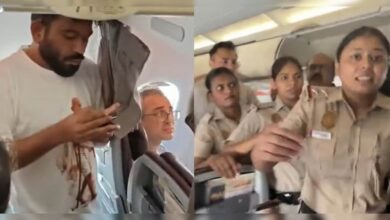
At Palika Bazaar, a group of more than 30 men who identified themselves as members of the Bajrang Dal reportedly confronted journalists, accusing them of publishing false reports about CJP. One man was quoted as saying that the group would protect Delhi Police because the police could not use weapons against journalists.
According to Hindustan Times, police chased the group away and detained some of its members later. The statement is significant not because it proves a police connection, but because it raises an obvious question: why were these men presenting themselves as protectors of the police while confronting reporters covering a political protest?
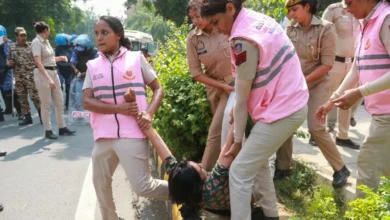
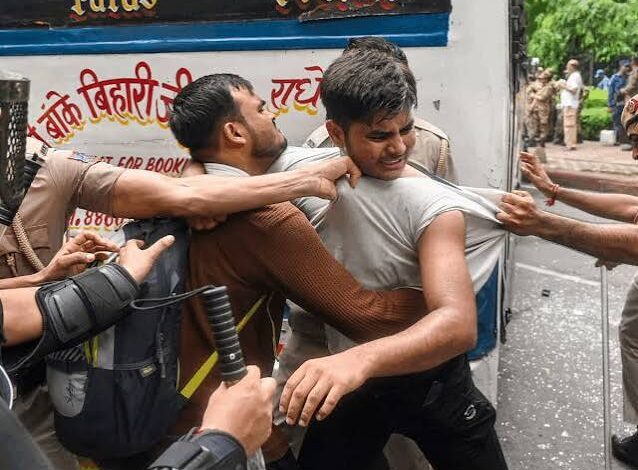
A separate incident near the Civic Centre involved men who allegedly dragged, slapped, kicked and assaulted protesters. The footage circulating afterwards drew particular attention to an assault involving a minor.
On October 11, Delhi Police said they had apprehended four men in connection with the incident. They were identified as Raman Saini, 50, and Vivekanand, 32, from Delhi, and Kapil Kumar, 27, and Ravinder Singh, 35, from Ghaziabad in Uttar Pradesh. Police said the men claimed to be members of the Hindu Raksha Dal, a right-wing organisation. A case was registered after police took suo motu cognisance of the footage.
The reported affiliations became harder to ignore when Hindu Raksha Dal chief Bhupendra Tomar, also known as Pinky Chaudhary, subsequently posted messages supporting the accused, referring to them as his “warriors” and threatening CJP. A Navbharat Times report also said he had claimed responsibility for the assault.
But the circumstances demand answers. Why were groups of politically affiliated men confronting protesters and journalists during a major security operation? Who knew where the demonstrators would gather? And if the men were acting independently, why did some appear so confident about their role in relation to the police?
The arrests may identify some of the alleged assailants. They do not yet answer the larger question of who, if anyone, brought them into the protests.
Who Brought Them There?
The four men apprehended after the reported assaults are a starting point, not the end of the investigation. Their reported links to the Hindu Raksha Dal, along with the statements attributed to the organisation’s leadership, raise questions about whether the violence was simply the work of individuals who happened to turn up at the protest – or whether there was a wider organisational dimension to their presence.
Those distinctions are precisely why the question of mobilisation matters.
If the allegations of violent men being called upon for particular operations and claims that some have connections with the Delhi Police are indeed true – who contacted the men, how did they learn where to assemble, whether they communicated with one another before the confrontations, and whether anyone coordinated their movements?
These are not minor details. They are the difference between an assault committed by individuals and a potentially organised effort to intimidate a protest. The distinction can only be established through evidence, including witness accounts, verified recordings, communications and the findings of a credible investigation.
There is also a question of access.
If people unaffiliated with the police were able to move around a heavily secured protest and confront demonstrators and journalists, how did that happen? Did the men simply exploit gaps in crowd control, or were there other circumstances that allowed them to operate?
The central allegation, therefore, remains unresolved. Who brought these men to the protests, if anyone did, and what evidence exists to identify the person or organisation responsible? Until that question is properly examined, the public has only fragments of an explanation: the reported assaults, the identities of some of the accused, their claimed affiliations and a broader allegations about the use of violent enforcers.
The next question is unavoidable. Whatever brought these men to the protest sites, what did the police do when the confrontations took place in their presence?

The Police Were There. What Happened Next?
A protest can be heavily policed and still leave a basic question unanswered: who is policing the people who turn up to confront the protesters?
The reported assaults on October 10 took place amid an extensive security deployment. Yet journalists reported being threatened by groups of men, while footage of a separate confrontation near the Civic Centre showed protesters being physically attacked. Four men were subsequently apprehended in connection with the latter incident.
Simultaneously, CJP has alleged that police personnel were present when protesters were attacked and raised concerns about an officer’s apparent response to people recording the incident. A petition filed by NSUI president Vinod Jakhar has sought a fair, independent and time-bound investigation into the October 10 assaults.
According to The Indian Express, the petition referred to footage showing men in civilian clothing confronting people arriving at protest locations and alleged that bystanders and journalists had intervened to protect victims.
There is also relevant recent history. In July 2026, after videos showed personnel described as policemen in plain clothes wielding lathis against demonstrators at Jantar Mantar, Delhi Police reportedly directed personnel deployed there to attend duty in uniform.
When Violence Becomes The Story
There is a reason assaults around a protest deserve attention beyond the injuries inflicted on individual demonstrators. Violence can change what the public sees, what the media reports and what the authorities are asked to explain.
A demonstration begins with a demand. In the case of CJP, protesters were challenging the conduct of the Chief Election Commissioner and raising allegations concerning voter-list revisions. But when confrontations and assaults dominate the coverage, the original demands can be pushed aside. The argument becomes about disorder, security and the conduct of protesters rather than the grievance that brought them to the streets.
That shift can have consequences even without a coordinated plan to produce it. People who see demonstrators being attacked may decide not to attend future protests.
Journalists who are threatened may find it harder to report freely. Participants may become more cautious, while public discussion focuses increasingly on the scenes of violence rather than the questions being raised by the movement.
If individuals deliberately provoke confrontations, intimidate reporters or attack demonstrators, the effect may be to make the protest itself appear to be the problem.
The distinction is especially important when competing political groups offer sharply different explanations of events. The allegations must be tested through evidence, not accepted or dismissed according to which side benefits from them.
The essential questions remain concrete. Were the assaults spontaneous or coordinated? Did the men act independently or at someone else’s direction? Did anyone in authority facilitate their presence, fail to intervene or subsequently protect them from accountability? And will the investigation examine the circumstances in which the violence occurred, rather than stopping with the people seen throwing punches?
Until those questions are answered, the public is left with an incomplete picture. The danger is not merely that violence can overshadow a protest. It is that, without a credible account of how it happened, the public may never learn whether the disorder was an isolated series of assaults or part of something more organised.
Have Similar Questions Surfaced At Earlier Protests?
The allegations made in the video do not begin and end with the CJP protests. They question Shaheen Bagh, the Delhi riots, the farmers’ protests and demonstrations at Jantar Mantar to suggest that the alleged use of violent enforcers around political gatherings is not an isolated phenomenon.
There is, however, a documented history of controversy over how protests in Delhi have been policed. In July 2026, videos from Jantar Mantar prompted questions about personnel in plain clothes using lathis against demonstrators.
Delhi Police reportedly instructed personnel deployed at the site to attend duty in uniform. Police sources had also previously described the deployment of plain-clothes personnel as part of intelligence-gathering and security arrangements.
These are legitimate policing functions, but they can make accountability harder when people cannot readily distinguish officers exercising official powers from private individuals operating in the same space.
The broader question is therefore not whether every protest-related confrontation belongs to one grand design. It is whether authorities investigate each incident thoroughly enough to establish who acted, under whose instructions, and with what consequences. If the same kinds of questions keep arising, the answer should be better documentation and greater accountability – not an assumption that every allegation is true, or that none deserves scrutiny.
The Courts, The Authorities And The Unanswered Questions
The dispute over the CJP protests has also reached the courts, where the immediate concerns have extended beyond the alleged assaults to the right to demonstrate, restrictions on movement and the handling of the protests by the authorities.
The Supreme Court issued directions concerning the protests, including preventing unlawful detentions, allowing movement subject to traffic regulations, maintaining normal metro and rail services, and reviewing barricading and restrictions on internet access within the applicable legal framework.
The Court’s intervention placed the administration’s handling of the protests under scrutiny, although it should not be mistaken for a judicial finding that the allegations in the video are true.
Separately, a petition seeking an independent, time-bound investigation into the October 10 assaults raises the question of whether the inquiry will examine the wider circumstances surrounding the incidents.
Ultimately, accountability cannot depend on political affiliation. If the evidence points to individual assaults, those responsible must face the law. If it establishes organised intimidation or official misconduct, responsibility must extend to those who directed, enabled or knowingly facilitated it. The public is entitled to an investigation that follows the evidence wherever it leads.

The Last Bit, Who Answers For What Happened?
The October 10 assaults make the questions surrounding that allegation harder to ignore. But the central issue remains unresolved.
Who were the men confronting CJP protesters? Who brought them to the protest sites, if anyone did? Were they acting independently, on behalf of an organisation or under someone else’s instructions? And what did the police know about their presence and conduct?
The answers cannot be supplied by suspicion, political accusations alone. They require evidence, a transparent investigation and an account from the authorities responsible for maintaining order.
There is also a larger democratic question. Protesters should not have to wonder whether the people confronting them are fellow citizens, organised political actors or individuals operating with some form of unofficial backing.
Journalists should be able to document a demonstration without being threatened. And police deployment should mean that people are protected from violence, not left uncertain about who is entitled to exercise authority.
Until the unanswered questions are investigated, the public is being asked to draw conclusions from fragments. The responsibility now lies with the authorities to establish what happened – and who, if anyone, made it possible.