ED Arrest Rajan Singh Katodiah, Partner Of Sawan Jewellers In Haryana IDFC First Bank Scam

The Shadow Over Chandigarh Jewellers: How Sawan Jewellers’ Rajan Singh Katodiah Absorbed 332 Crore in Alleged Diversions from Government Bank Holdings
In a sequence of transactions spanning 6 November 2024 to 18 February 2026, approximately 332 crore moved into the bank accounts of Sawan Jewellers, a jewellery business operating from SCO 97 in Sector 35-C Inner Market, Chandigarh. The Enforcement Directorate states that these receipts originated from eight entities and one individual linked to Ribhav Rishi, identified by the agency as the alleged mastermind of a wider scheme involving the misappropriation of government funds held with IDFC First Bank and AU Small Finance Bank.
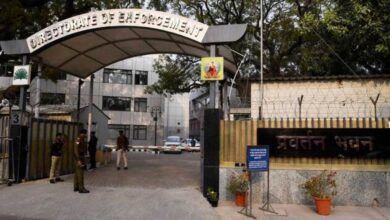
The overall scale of that scheme is placed by the Directorate at 645 crore. Rajan Singh Katodiah, described as the active managing partner of Sawan Jewellers and the person in sole operational charge, was arrested and produced before the Special Court under the Prevention of Money Laundering Act on 22 October 2026. The court granted four days of Enforcement Directorate custody. The official press release documenting these developments is dated 23 October 2026.
The pattern raises immediate questions about the commercial rationale for such volumes of money entering a jewellery firm over a compressed period of roughly fifteen months. According to the Enforcement Directorate, the eight sources of the 332 crore were Capco Fintech Services, Swastik Desh Projects, RS Traders, Chandigarh Mega Store, SRR Planning Gurus Private Limited, Vistamed Solutions, Maa Vaibhav Laxmi Interior and Divya Arora.
Divya Arora is identified as the wife of Ribhav Rishi. The agency asserts that these entities and the individual were controlled or managed by Rishi. Earlier reporting based on Central Bureau of Investigation material placed the total receipts into Sawan Jewellers at approximately 329.57 crore according to the firm’s own chartered accountant, a figure that sits close to but does not precisely match the Enforcement Directorate’s rounded total of 332 crore. Three of those entities alone accounted for 314 crore of the reported inflow, leaving a residual of roughly 15.57 crore that remains unitemised in the public material.
The Enforcement Directorate further states that Sawan Jewellers’ bullion purchases rose drastically after the firm’s association with Rishi. This spike is presented as evidence of a prior understanding between the parties. In the wider account given by the agency in its 13 March 2026 press release, government funds were allegedly diverted into intermediary or shell entities and then channelled through jewellers’ accounts to create the appearance of gold purchases through billing that the investigation characterises as questionable.
The same March release recorded searches conducted on 12 March 2026 at 19 premises across Chandigarh, Mohali, Panchkula, Gurgaon and Bengaluru. Those premises included locations linked to Sawan Jewellers, former bank employees, family members, shell entities and real-estate interests associated with Vikram Wadhwa. More than 90 bank accounts were frozen and documentary and digital evidence seized.
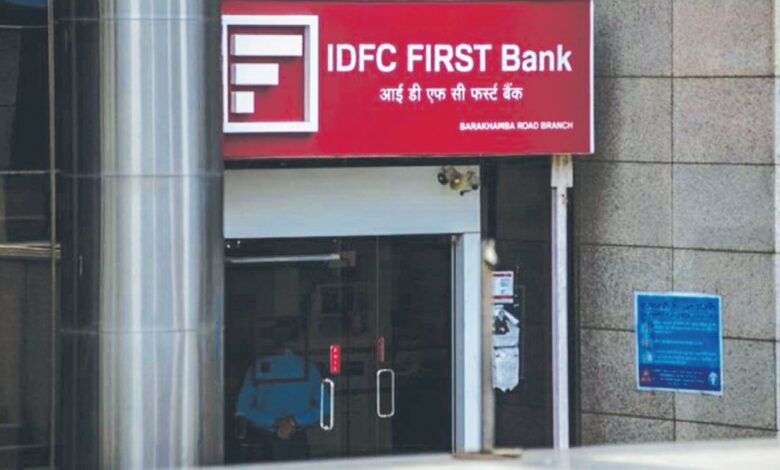
Ribhav Rishi is described as a former IDFC First Bank employee who resigned in June 2025. The transaction window into Sawan Jewellers begins in November 2024, well before that resignation, and continues into February 2026, months after his departure from the bank. The Enforcement Directorate’s investigation was triggered by an FIR registered by the Haryana State Vigilance and Anti-Corruption Bureau in February 2026 concerning mismatches in government account balances maintained with IDFC First Bank and AU Small Finance Bank.
The initial figure under scrutiny was approximately 597 crore. Subsequent official statements have placed the overall alleged fraud at 645 crore. Parallel Central Bureau of Investigation proceedings named Rajan Katodiah and Vikram Wadhwa in a chargesheet concerning the alleged misappropriation of Haryana government funds, describing them as recipients of proceeds of crime. That chargesheet reporting appeared in June 2026.
The alleged sequence begins with the movement of funds from government accounts into entities such as Swastik Desh Projects and Capco Fintech Services. From those entities the money is said to have moved into the accounts of Sawan Jewellers. Once inside the jewellery firm’s banking system, the funds are alleged to have been layered through business activities and projected as legitimate commercial receipts. The sharp increase in bullion purchases is cited as the mechanism that converted bank balances into physical commodity holdings.
Reporting based on Central Bureau of Investigation papers describes a further step in which gold purchased through Sawan Jewellers was sold in the open market to generate cash that was then returned to Rishi and associates. Invoices are said to have been issued in the names of shell entities without corresponding delivery of gold to those entities. The public record does not reproduce the complete set of purchase invoices, stock registers, delivery notes or cash-sale records that would allow independent reconstruction of every kilogram of metal or every rupee of cash generated.
Separate media accounts have referred to an alleged gold-trading component of approximately 200 crore. That figure sits alongside the 329.57 crore and 332 crore receipt totals and the 645 crore overall case size. The three numbers measure different things and cannot be added together without creating a misleading aggregate. The 332 crore represents gross receipts into Sawan Jewellers’ accounts over the stated period. It is not a statement of net profit retained by the firm, nor is it a proven quantum of recoverable proceeds of crime.
The Enforcement Directorate reports that assets worth approximately 225 crore have been attached, seized or frozen across the wider investigation and that a prosecution complaint has been filed against 14 accused persons before the Special Prevention of Money Laundering Act Court in Panchkula. The October 2026 release does not list those 14 accused or clarify whether Katodiah formed part of the original complaint or became the subject of a later supplementary filing.
The business profile of Sawan Jewellers itself is sparse in the public material. The Enforcement Directorate identifies the firm as M/s Sawan Jewellers at the Sector 35-C address and places Katodiah in sole operational control. No detailed partnership deed, authorised-signatory list or historical turnover figures appear in the press releases.
The absence of those foundational documents leaves open the question of how a jewellery concern of ordinary market presence could absorb and process inflows of the magnitude recorded between November 2024 and February 2026 without attracting internal or external scrutiny at an earlier stage. The agency’s interpretation is that the firm functioned as a placement and concealment vehicle. That interpretation rests on the volume of receipts, the identity of the senders, the timing relative to Rishi’s bank employment and the subsequent bullion-purchase pattern.
Vikram Wadhwa, described as a hotelier and real-estate developer, appears in the March 2026 Enforcement Directorate account as a recipient of diverted funds who transferred money to entities including Prisma Residency Limited Liability Partnership, Kinspire Realty Limited Liability Partnership and Martell Buildwell Limited Liability Partnership. Documents concerning real-estate investments were seized during the March searches. The jewellery route and the property route therefore stand as parallel alleged channels for the conversion or distribution of the same underlying pool of government money.
A transfer into a property-related entity does not by itself establish that any specific asset was acquired with illicit funds; that determination requires tracing the precise source of each payment against the asset acquired. The same limitation applies to the gold transactions: the existence of purchase records does not automatically confirm physical movement of metal, resale for cash, or the ultimate destination of that cash.
The chronology of enforcement action stretches from the first recorded receipts in November 2024 through Rishi’s resignation in June 2025, the vigilance FIR in February 2026, the multi-city searches on 12 March 2026, the Central Bureau of Investigation chargesheets reported in June 2026, further detailed reporting on the gold trail in July 2026, and the arrest of Katodiah on 22 October 2026. Each stage has produced incremental figures and incremental descriptions of the same underlying set of relationships.
The Enforcement Directorate’s own numbers have moved from an initial focus on approximately 597 crore to the later stated total of 645 crore. Media accounts have used 504 crore, 590 crore and other intermediate values. These variations may reflect expanding scopes of inquiry or successive refinements of the calculation; they cannot be treated as interchangeable without the underlying schedules.
What remains absent from the public record is the complete bank-statement extract for Sawan Jewellers across the fifteen-month window, the transaction-level mapping of each credit to its originating account, the corresponding invoices and ledger entries, the reconciliation of those entries against GST returns and stock registers, and the documentary trail of any subsequent cash withdrawals, inter-account transfers or reversals.
Without those records it is possible to describe the alleged flow but not to reconstruct the final destination of every rupee. The Enforcement Directorate states that the funds were placed and concealed through the jewellery business, layered into ordinary commercial activity and projected as untainted. That statement is an allegation requiring proof through the formal process. The four-day custody order permits the investigation to continue; it does not constitute a finding on the merits.
The same caution applies to the characterisation of the eight sending entities. The Enforcement Directorate asserts that they were controlled or managed by Rishi. The public material does not reproduce the beneficial-ownership filings, board resolutions, authorised-signatory mandates or bank-account opening forms that would independently demonstrate that control.
Capco Fintech Services and Swastik Desh Projects appear repeatedly as both sources of funds into Sawan Jewellers and as earlier recipients of government money. Chandigarh Mega Store is noted as a business whose transactions were separately examined. Maa Vaibhav Laxmi Interior and SRR Planning Gurus Private Limited are said to have received government funds and then routed money onward. Each of these entities therefore occupies an intermediate position in the alleged chain. The precise commercial justification for payments of tens or hundreds of crore from those entities into a jewellery firm remains a central unresolved element of the investigation.
The gold-conversion step, if established, would represent a classic layering technique: bank credit is exchanged for a high-value, easily transportable commodity; the commodity is liquidated for cash; the cash leaves a thinner documentary trail. The Enforcement Directorate’s October release does not itself set out a complete gold-purchase and resale ledger for Sawan Jewellers. The more detailed description of open-market sales and cash return to associates appears in reporting that draws on Central Bureau of Investigation papers.
That reporting attributes receipts of 329.57 crore to the firm and links those receipts to the gold mechanism. Whether the entire sum, a portion of it, or none of it was converted into physical metal and then into cash is a question that can be answered only by matching the bank credits against supplier invoices, delivery confirmations, stock movements, resale bills and cash-book entries. The public documents stop short of providing that match.
Katodiah’s position is framed by the Enforcement Directorate as that of an operational controller who conspired with Rishi and others to misappropriate government funds and who used the jewellery business to facilitate placement and concealment. The agency further links him to the sharp rise in bullion purchases that followed the association with Rishi. These are the specific allegations advanced in the 23 October 2026 press release.
The earlier Central Bureau of Investigation chargesheet naming also places him among alleged recipients of proceeds of crime. The two proceedings are related but distinct. Neither has yet produced a judicial determination of guilt. The Enforcement Directorate notes that a prosecution complaint against 14 accused is already before the Special Court in Panchkula. The identity of those 14 and the precise charges framed against each remain outside the four corners of the October press release.
The wider case therefore rests on a chain of alleged relationships: government accounts to intermediary entities, intermediary entities to Sawan Jewellers, Sawan Jewellers to bullion purchases, and, according to some reporting, bullion to cash returned to the originating circle. Parallel movements into real-estate vehicles associated with Vikram Wadhwa form a second alleged channel.
The Enforcement Directorate has frozen more than 90 bank accounts, attached or seized assets valued at approximately 225 crore, and arrested multiple individuals including Katodiah. Four other accused had been arrested before the October action against the jewellery partner. The volume of money, the identity of the senders, the timing relative to a former bank employee’s tenure, and the subsequent commodity activity together constitute the core of the agency’s case against the firm and its managing partner.
The numbers themselves demand careful separation. The 645 crore figure is the Enforcement Directorate’s stated size of the overall alleged fraud. The 332 crore figure is the approximate value of receipts into Sawan Jewellers’ accounts over the defined period. The 329.57 crore figure is the total attributed to the firm by reference to its chartered accountant in Central Bureau of Investigation-related reporting.
The 200 crore figure is a separately reported estimate of the gold-trading component. The 225 crore figure is the value of assets attached, seized or frozen. The 597 crore figure is the initial quantum under scrutiny when the Prevention of Money Laundering Act investigation began. Each of these numbers appears in official or reported material; none of them is interchangeable with any other. Treating them as cumulative or equivalent would distort the scale of both the overall case and the specific role attributed to Sawan Jewellers.
The commercial activity of a jewellery business ordinarily involves the purchase of bullion, the manufacture or trading of ornaments, and the receipt of customer payments. An inflow of more than 300 crore from a narrow set of entities over fifteen months sits far outside the ordinary pattern of such a business. The Enforcement Directorate interprets that departure from ordinary pattern as evidence of placement and concealment.
The agency further interprets the coincident rise in bullion purchases as evidence of a prior understanding with the alleged mastermind. Those interpretations form the foundation of the money-laundering allegations against Katodiah and the firm. They remain allegations pending adjudication. The four-day custody period that began on 22 October 2026 allows the Directorate to continue its examination of the records that have not yet been placed in the public domain.
The addresses, the entity names, the dates and the rupee figures are drawn directly from the Enforcement Directorate’s own releases of 13 March 2026 and 23 October 2026 and from contemporaneous reporting that cites Central Bureau of Investigation papers. The Sector 35-C location, the partnership role of Katodiah, the list of eight sending entities, the 6 November 2024 to 18 February 2026 window, the 332 crore receipt total, the bullion-purchase spike, the 19-premise search operation, the 90-plus frozen accounts, the 225 crore of attached or seized assets, the prosecution complaint against 14 accused, and the four-day custody order are all statements appearing in those primary materials.
The additional detail concerning gold resale for cash and the 329.57 crore chartered-accountant figure appears in the July 2026 reporting that draws on Central Bureau of Investigation documentation. Together these materials construct a detailed but still incomplete picture of how government funds are alleged to have moved from bank accounts into a jewellery firm and, potentially, into physical gold and cash.
The investigation continues. The records that would permit a full forensic reconstruction of every transaction remain, for the most part, outside public view. What is already visible is a concentrated flow of more than 300 crore into a single jewellery business from a limited circle of entities over a defined period, a sharp subsequent increase in bullion activity, and the arrest of the managing partner on allegations that the firm served as a vehicle for the placement and concealment of diverted public money.
The numbers are large, the relationships are tightly described by the investigating agency, and the commercial explanation for the volume of receipts has not been publicly established. That combination of scale, concentration and timing is what places Sawan Jewellers at the centre of the 645 crore case.