Prosecution Complaint Against History Sheeter Ratikanta Rout For Illegal Quarrying, Theft, Dacoity And Supply Of Explosives.
The Enforcement Directorate Bhubaneswar Zonal Office has placed before the Special Court under the Prevention of Money Laundering Act a first supplementary prosecution complaint against Ratikanta Rout after establishing that unauthorised quarrying excess excavation illegal explosives procurement and mineral theft generated proceeds of crime exceeding 341 crore. Drone and satellite surveys by the Odisha Space Applications Centre documented activity inside and across seven patches outside sanctioned boundaries including government land. Funds moved through multiple associated entities while properties stood in personal family and corporate names. The pattern of 27 FIRs spanning illegal quarrying theft dacoity and explosives supply reveals a sustained operation whose financial dimensions and concealment methods demand continuous scrutiny of both the extraction chain and the institutional response that allowed it to expand over years.

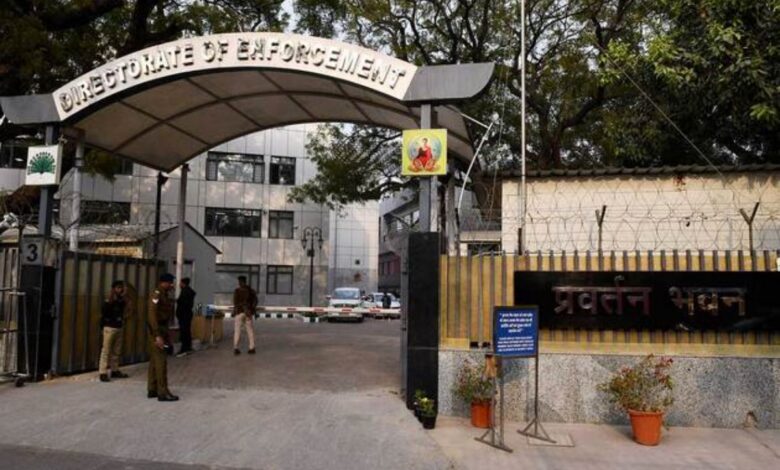
The Directorate of Enforcement Bhubaneswar Zonal Office has filed a prosecution complaint on 16.10.2026 against Ratikanta Rout before the Honble Special Court PMLA Bhubaneswar in the case of illegal quarrying theft dacoity and supply of explosives. This is the 1st Supplementary Prosecution Complaint in the case wherein the main Prosecution Complaint was filed on 07.07.2026 against Laxmipriya Prusty wife of Ratikanta Rout and others.
The accused Ratikanta Rout was arrested by the Directorate of Enforcement Bhubaneswar Zonal Office on 20.08.2026 under the provisions of the Prevention of Money Laundering Act 2002 for his involvement in the offence of money laundering including the acquisition possession and concealment of proceeds of crime in the form of movable and immovable properties held in his own name in the names of his family members and through his associated entities.
Ratikanta Rout is a history sheeter against whom as many as 27 FIRs have been registered at various police stations across Odisha relating to inter alia illegal quarrying theft dacoity and the supply of explosives.
Following his arrest Ratikanta Rout was produced before the Honble Special Court PMLA Bhubaneswar on 21.08.2026 which remanded him to ED custody for five days till 26.08.2026. Thereafter the court rejected his bail application and remanded him to judicial custody. On 07.09.2026 the court granted the agency further custody of four days after presentation of additional material. The court observed that prima facie the accused is involved in the offence of money laundering. ED investigation has revealed that Ratikanta Rout and his associated entities generated and acquired Proceeds of Crime estimated at more than 341 Crore.
Ratikanta Rout generated extensive proceeds of crime through illegal mining illegal procurement and use of explosives and theft adulteration of minerals. He held minor mineral quarry leases in Dhenkanal but conducted rampant excavation beyond permissible limits and extracted minerals from unauthorized areas. Drone and satellite surveys by the Odisha Space Applications Centre ORSAC revealed excess excavation within lease boundaries and illegal excavation across seven patches outside the sanctioned lease boundary including on government land and land owned by his company M s Assurance Condev Pvt Ltd.
Searches conducted on 08.01.2025 at premises linked to Ratikanta Rout and associated entities helped identify the proceeds. The proceeds of crime were layered and concealed through entities including Maa Tarini Stone Crusher RLR Mercantile Sai Sambhu Infrastructure Pvt Ltd SSIPL and Assurance Metalloyd Exim Pvt Ltd. Further investigation remains in progress.
The scale of the operation exposed by the Enforcement Directorate forces a series of uncomfortable questions about how such extensive unauthorised extraction could continue for so long in a regulated sector. Ratikanta Rout held minor mineral quarry leases in Dhenkanal district yet the physical footprint of activity extended far beyond those limits. The Odisha Space Applications Centre deployed drone and satellite surveys that mapped both excess excavation inside the leased areas and illegal excavation at seven distinct patches lying outside the sanctioned boundaries.
These external patches included government land as well as land owned by Assurance Condev Pvt Ltd a company linked to the network. The surveys provide objective spatial evidence of terrain alteration volume displacement and activity timelines that cannot be dismissed as minor boundary disputes. When excavation occurs outside the lease the entire quantity extracted becomes unauthorised by definition. When the same operator simultaneously exceeds the permitted volume inside the lease the cumulative excess multiplies.
The monetary value attached to that excess now stands estimated by the investigating agency at more than 341 crore. That figure is not an abstract turnover number. It represents the value of minerals removed without lawful authority processed through crushing operations and converted into commercial proceeds that then entered the banking and property systems.
The role of family linked assets intensifies the concern. The Enforcement Directorate states that proceeds were held in movable and immovable properties standing in the name of Ratikanta Rout himself in the names of family members including Laxmipriya Prusty and in the names of the associated entities. The main prosecution complaint filed on 07.07.2026 already named Laxmipriya Prusty and others. The supplementary complaint of 16.10.2026 brought Rout into the formal prosecution after his arrest. Property standing in a relatives name is not automatically proceeds of crime.
The statutory test under the Prevention of Money Laundering Act requires demonstration that the property was derived or obtained directly or indirectly as a result of criminal activity relating to a scheduled offence. When the same investigation that maps excess excavation also maps the acquisition of assets contemporaneous with the period of excess extraction the inference of derivation becomes stronger.
The agency has traced the chain from the physical removal of minerals through the commercial sale and into the acquisition of assets. The volume of assets identified and the estimated value of the underlying proceeds both point to a systematic rather than incidental pattern of conversion.
The 27 FIRs registered across various police stations in Odisha supply the foundation for the money laundering investigation. These FIRs cover illegal quarrying theft dacoity and the supply of explosives. An FIR is the formal recording of information about an alleged cognisable offence. The existence of 27 such records indicates repeated complaints and repeated police registrations over a sustained period. The Enforcement Directorate has treated the scheduled offences arising from these FIRs as the predicate activity that generated the proceeds of crime. Not every FIR necessarily produces a completed chargesheet or a conviction.
The collective pattern however cannot be ignored. A single isolated excess extraction might be treated as a local regulatory violation. Twenty seven separate registrations spanning quarrying theft and explosives supply suggest a continuous mode of operation that local policing alone proved insufficient to halt. The central agency stepped in under the Prevention of Money Laundering Act precisely because the financial proceeds of that continuous activity required specialised tracing and attachment powers.
The sequence of enforcement actions itself raises institutional questions that cannot be avoided. Searches took place on 08.01.2025. The arrest of Ratikanta Rout occurred on 20.08.2026. In the intervening period a separate criminal investigation unfolded. In May 2025 the Central Bureau of Investigation arrested the then Deputy Director of the Enforcement Directorate Chintan Raghuvanshi on the basis of a complaint lodged by Ratikanta Rout alleging demand of illegal gratification for relief in the money laundering investigation. The complaint described an initial demand of 5 crore later negotiated downward with an intermediary facilitating contact. A trap operation resulted in the recovery of 20 lakh as the first instalment.
That bribery case stands as an independent prosecution concerning the conduct of an enforcement official. Its existence does not erase the underlying mining investigation. It does however force examination of whether successive attachment orders and investigative steps remained insulated from extraneous influence. The Orissa High Court in its order of 21.01.2026 examined a second provisional attachment order concerning immovable properties and recorded the concession by counsel for the Enforcement Directorate that the order was not tenable in law.
The court quashed that particular attachment while leaving the earlier confirmed attachment of bank accounts containing approximately 25.09 lakh and the broader investigation intact. The procedural history therefore contains both a judicial correction of an attachment and the continuation of the core investigation that ultimately produced the supplementary prosecution complaint of October 2026.
The valuation methodology that produces the figure of more than 341 crore requires transparent reconstruction. The estimate rests on the volume of excess excavation identified by the Odisha Space Applications Centre surveys the applicable rates for the mineral extracted and the commercial value realised through the crusher and trading entities. Satellite and drone imagery can establish the spatial extent and approximate volume of material removed.
Conversion of volume into monetary value depends on the grade of mineral market rates prevailing during the relevant periods and the deduction of any legitimate costs that might still attach. The Enforcement Directorate has not released a public transaction by transaction ledger. Independent assessment would require access to the survey reports the lease documents the royalty and dispatch records the sales invoices and the bank statements of every named entity.
Until those primary records are examined in open court the headline figure remains an investigative estimate rather than a judicially quantified recovery. The magnitude of the estimate however is itself a measure of the seriousness of the case. An operation capable of generating proceeds on that scale is not a marginal regulatory breach. It is a systematic diversion of public mineral resources into private commercial channels.
The involvement of explosives adds a further layer of gravity. Illegal procurement and use of explosives for quarrying constitutes a distinct scheduled offence under the Explosive Substances Act and related provisions. The Enforcement Directorate has included this activity within the generation of proceeds of crime. Explosives enable rapid large volume extraction that would otherwise require slower mechanical methods. Their unauthorised use therefore both accelerates the physical crime and multiplies the volume of material available for commercialisation.
When the same network that extracts the mineral also controls the processing and sale the explosives become an integral input into the money generating process. The 27 FIRs include references to supply of explosives indicating that the issue was not confined to a single incident but formed part of the repeated complaints that eventually reached the central agency.
The concealment of proceeds through family and corporate structures is a classic money laundering technique yet its appearance in a mining case underscores how resource extraction crimes feed into broader financial crime. Movable assets such as bank balances and vehicles can be transferred quickly. Immovable assets such as land and buildings provide longer term parking of value and can be held in the names of relatives or shell companies to distance the beneficial owner from the original crime. The Enforcement Directorate has identified both categories.
The presence of Assurance Condev Pvt Ltd as the owner of land on which unauthorised excavation occurred and the separate appearance of Assurance Metalloyd Exim Pvt Ltd in the fund layering network illustrate how corporate vehicles can serve dual purposes physical and financial. Distinguishing legitimate commercial activity of these companies from the portion of their accounts that carried proceeds of crime is a task for the trial process. The investigative finding that the network as a whole functioned to acquire and conceal the proceeds already places the burden of explanation on those who controlled the entities.
The arrest custody and prosecution timeline demonstrates the progressive hardening of the case. After the January 2025 searches the agency continued investigation. The main prosecution complaint against Laxmipriya Prusty and others was filed on 07.07.2026. Ratikanta Rout was arrested on 20.08.2026 produced the next day and remanded to agency custody. Bail was rejected on 26.08.2026 with the court recording a prima facie finding of involvement in money laundering. Additional custody was granted on 07.09.2026.
The supplementary complaint naming Rout followed on 16.10.2026. Each of these steps required the presentation of material before a judicial authority. The cumulative effect is that the Special Court under the Prevention of Money Laundering Act now has before it a formal accusation that Ratikanta Rout generated acquired and concealed proceeds exceeding 341 crore through the combination of unauthorised mining explosives offences and financial layering. The further investigation that the agency states remains in progress will determine whether additional accused or additional assets enter the case.
The larger institutional concern is whether the regulatory and policing systems that oversee minor mineral leases in Odisha possess the capacity to detect and interrupt such operations at an earlier stage. Lease boundaries are known. Royalty and transport records are required to be maintained. Local police stations registered 27 FIRs. Yet the physical excess and the financial accumulation continued until central agency intervention supported by technical surveys quantified the scale.
The gap between repeated local complaints and effective disruption of the economic model suggests structural weaknesses in monitoring of lease compliance real time volume measurement and inter agency sharing of financial intelligence. When an operator can extract from seven external patches including government land process the material through controlled crushers and move the proceeds through a web of entities the regulatory perimeter has been breached comprehensively.
The case also illustrates the dual nature of proceeds of crime investigations in the natural resources sector. On one side stands the physical crime the unauthorised removal of minerals that belong either to the state or to private owners whose consent was never obtained. On the other side stands the financial crime the conversion of those minerals into money and the subsequent efforts to disguise the origin of that money.
The Prevention of Money Laundering Act is designed to attack the second side while relying on the scheduled offences that constitute the first side. In the present matter the Enforcement Directorate has assembled both. The satellite evidence addresses the physical excess. The entity analysis and asset tracing address the financial concealment. The 27 FIRs supply the predicate offences. The resulting estimate of more than 341 crore represents the quantified intersection of the two.
As the Special Court proceeds with the supplementary complaint the evidentiary demands will intensify. The prosecution must establish the precise volumes extracted outside authority the rates applied the receipts realised the transfers between entities and the acquisition of specific properties with those funds. The defence will be entitled to challenge every link in that chain. The public interest however lies in ensuring that the full factual matrix is placed on record. An operation of this magnitude cannot be allowed to remain partially reconstructed.
The seven patches outside the lease boundaries the excess within the leases the explosives the layered entities and the family linked assets together form a coherent narrative of systematic diversion. The question that remains is whether the judicial process will succeed in recovering the value and deterring similar operations or whether the same pattern of excess extraction and financial layering will reappear under different names in other districts.
The Enforcement Directorate has placed the material before the court. The scale of the proceeds estimated and the technical evidence of the surveys leave little room for treating the matter as a routine regulatory lapse. It is a case of organised conversion of public mineral resources into private wealth through sustained violation of lease conditions and the subsequent laundering of the resulting proceeds.