‘Plant Some Ganja On The Boy’: Jaykant Shikre Is Back, This Time In Uniform!
In a grotesque inversion of the Singham climax, where gangster-politician Jaykant Shikre framed an honest inspector into suicide, a Madhya Pradesh police officer is now caught on camera instructing subordinates to plant marijuana in a young man’s bag. The couple were consenting adults of the same caste who said they planned to marry. Their refusal to unlock a phone and summon parents triggered the alleged threat of fabricated narcotics charges. Hotel owner claims the raid followed unpaid monthly extortion demands. When the institution meant to stop crime openly discusses manufacturing it, the rule of law itself stands accused.

Recall the scene from the 2011 film Singham. Inspector Rakesh Kadam, played by Sudhanshu Pandey, is framed by the powerful gangster-politician Jaikant Shikre on false corruption and smuggling charges. Broken by the machinery of the state turned against him, he takes his own life. The audience feels righteous fury: the protector has been destroyed by the predator who wears the mask of power. Cut to November 2026. The predator no longer needs a political mask. He arrives in khaki.
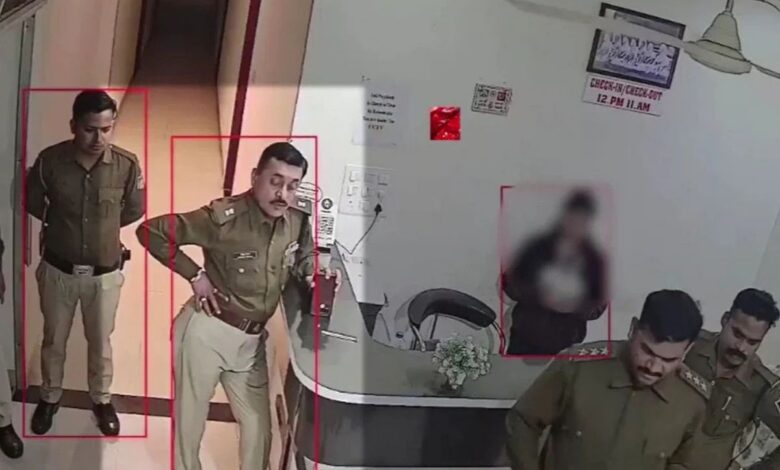
At Hotel Siddharth (also referred to as Sidarth Hotel) on Babariya Road in Seoni district, Madhya Pradesh, Additional Superintendent of Police Deepak Mishra, accompanied by SDOP Chanchalesh Markam and Kotwali TI Satish Tiwari, confronted an unmarried adult couple on 13 November. The woman told the officers they were both adults, belonged to the same caste, and intended to marry. That should have ended the matter.
Consenting adults of marriageable age sharing a hotel room is not a crime under Indian law. The officers, however, insisted the couple contact their parents. When the woman refused to unlock her phone and make the call, the footage allegedly captures Mishra instructing colleagues to plant marijuana on the young man:
“Plant some ganja on the boy.”
This is not moral policing. This is the open discussion of evidence fabrication. The distinction matters. An officer who lectures adults about parental permission is overreaching and paternalistic. An officer who, on camera, directs the planting of a prohibited substance so that a criminal case can be manufactured has crossed into the territory of criminal conspiracy. The consequences of such a frame-up are not abstract.
Under the NDPS Act, even a small quantity of ganja can lead to arrest, prolonged investigation, bail battles, social stigma, loss of employment, and years of court appearances. The mere registration of a narcotics case becomes a life-altering weapon. That a senior police officer is alleged to have contemplated deploying that weapon against two adults whose only “offence” was declining to perform a parental phone call should alarm every citizen.
The hotel owner’s allegations deepen the rot. Sanju Sanodiya has claimed that local police, including the Kotwali TI, the SDOP, and a traffic inspector, had been demanding a monthly payment of ₹25,000. When the demand was not met, the hotel was raided and the couple became convenient collateral. If true, the ganja threat was not an isolated outburst of moral outrage but an instrument of extortion enforcement. The same institution that is supposed to investigate organised crime is itself accused of running a protection racket, then using the threat of planted narcotics to discipline both the businessman who refuses to pay and the private citizens who happen to be present.
The comparison with Jaikant Shikre is not rhetorical flourish. In the film, the villain needed intermediaries, forged documents, and political cover to destroy a single honest officer. In Seoni, the alleged method is simpler and more brazen: walk into a hotel, issue a verbal order to plant contraband, and watch the machinery of the state do the rest. The uniform that once signalled protection has become the delivery system for the frame-up. What happens when the very institution entrusted with preventing crime allegedly threatens to manufacture one?
Action has been taken, but the response itself invites scrutiny. Kotwali TI Satish Tiwari was line-attached and an inquiry ordered. Later reports indicated that proposals for the suspension of Mishra and Markam had been sent to the state government. Departmental action is necessary. It is also insufficient. The core issue is not whether one inspector is suspended. The core issue is the culture that makes an Additional SP feel entitled to discuss planting drugs as a routine enforcement tool when adults assert autonomy.
That culture does not appear overnight. It is the cumulative product of weak internal accountability, political protection of “strong” officers, and a public discourse that still treats hotel rooms occupied by unmarried adults as legitimate sites of police intervention.
Privacy of consenting adults is not a western import. It is a constitutional value repeatedly affirmed by the Supreme Court. The right to be left alone by the state, especially in intimate choices, is not suspended because an officer believes parents should be informed. The insistence on parental contact, followed by the threat of a fabricated case, converts the police from neutral enforcers of law into moral guardians with the power of the criminal justice system behind them. When that power is then allegedly leveraged for monthly payments from hotels, the line between law enforcement and organised predation dissolves.
The integrity of search, seizure, and recovery is foundational to any criminal justice system. Once officers are captured discussing the deliberate introduction of contraband into a person’s bag, every subsequent recovery becomes suspect. How many previous “successful” NDPS cases now look different under this light? How many young men from less privileged backgrounds have been told, off-camera, that cooperation is the only alternative to a planted case? The Seoni footage is not merely evidence against one ASP. It is a window into a possible operational method.
Critics will say one viral video does not indict an entire force. Correct. It does, however, demand that the force treat the video as a diagnostic, not a public-relations inconvenience. The same Madhya Pradesh Police that can mobilise quickly against ordinary citizens must now demonstrate equal speed and seriousness against its own officers when the allegation is the manufacture of crime. Anything less confirms the inversion: the saviour has become the threat, and Jaykant Shikre no longer needs to leave the force. He is already wearing the uniform.