How Odisha’s Mining Scam Unfolded Over The Years?
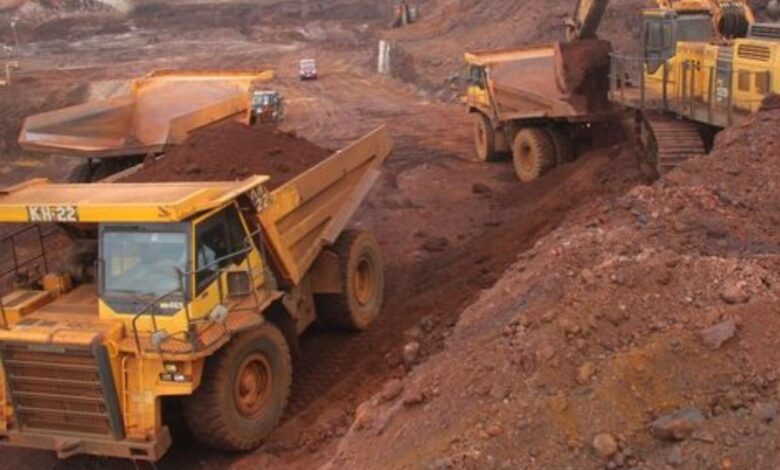
The Enforcement Directorate Bhubaneswar Zonal Office has filed its first supplementary prosecution complaint against Ratikanta Rout after establishing that unauthorised quarrying excess excavation illegal explosives use and mineral theft generated proceeds of crime exceeding 341 crore. Drone and satellite surveys documented activity inside and across seven patches outside sanctioned boundaries. Funds moved through interconnected entities while properties stood in personal family and corporate names. The case sits against the longer history of Odisha mining where excess extraction across iron ore and manganese circles once reached valuations measured in tens of thousands of crore. The same structural questions of lease compliance volume measurement and proceeds tracing remain unresolved.

How Did Odisha Allow Excess Extraction Valued in Tens of Thousands of Crore Across Iron Ore and Manganese Circles Before Minor Mineral Quarrying in Dhenkanal Generated Over 341 Crore in Proceeds Through Layered Entities?
The Directorate of Enforcement Bhubaneswar Zonal Office has filed a prosecution complaint on 16.10.2026 against Ratikanta Rout before the Honble Special Court PMLA Bhubaneswar in the case of illegal quarrying theft dacoity and supply of explosives. This is the 1st Supplementary Prosecution Complaint in the case wherein the main Prosecution Complaint was filed on 07.07.2026 against Laxmipriya Prusty wife of Ratikanta Rout and others.
The accused Ratikanta Rout was arrested by the Directorate of Enforcement Bhubaneswar Zonal Office on 20.08.2026 under the provisions of the Prevention of Money Laundering Act 2002 for his involvement in the offence of money laundering including the acquisition possession and concealment of proceeds of crime in the form of movable and immovable properties held in his own name in the names of his family members and through his associated entities.
Ratikanta Rout is a history sheeter against whom as many as 27 FIRs have been registered at various police stations across Odisha relating to inter alia illegal quarrying theft dacoity and the supply of explosives. ED investigation has revealed that Ratikanta Rout and his associated entities generated and acquired Proceeds of Crime estimated at more than 341 Crore through illegal mining illegal procurement and use of explosives and theft adulteration of minerals. He held minor mineral quarry leases in Dhenkanal but conducted rampant excavation beyond permissible limits and extracted minerals from unauthorized areas.
Drone and satellite surveys by the Odisha Space Applications Centre ORSAC revealed excess excavation within lease boundaries and illegal excavation across seven patches outside the sanctioned lease boundary including on government land and land owned by his company M s Assurance Condev Pvt Ltd. The proceeds were layered through entities including Maa Tarini Stone Crusher RLR Mercantile Sai Sambhu Infrastructure Pvt Ltd and Assurance Metalloyd Exim Pvt Ltd. Further investigation remains in progress.
The filing of the supplementary prosecution complaint against Ratikanta Rout on 16.10.2026 forces a deeper examination of how Odisha has repeatedly failed to contain unauthorised mineral extraction across successive decades and mineral categories. The Rout investigation concerns black stone quarrying in Dhenkanal district and the conversion of excess material into financial proceeds estimated above 341 crore. Yet the case cannot be understood in isolation from the longer record of excess production environmental violations and recovery shortfalls that defined Odisha mining governance from 2000 onward.
The same structural vulnerabilities measurement of actual extraction reconciliation with authorised limits and tracing of commercial proceeds reappear in both the historical major mineral scandal and the present minor mineral prosecution. The question is not merely whether one operator exceeded lease boundaries but why the regulatory architecture has allowed such excess to reach valuations measured first in tens of thousands of crore and later in hundreds of crore without earlier effective interruption.
Odisha holds substantial reserves of iron ore manganese chromite bauxite coal and minor minerals used in construction. The mineral economy underpins steel production infrastructure and export revenue. At the same time mineral extraction creates a governance problem of unusual intensity. The resource is physically removed from land. Its commercial value can far exceed the cost of extraction.
A functional regulatory system must therefore determine who holds the legal right to extract set enforceable lease conditions measure actual production collect royalty and other dues control transport documentation and recover the value of any unauthorised removal. Weakness at any of these stages creates opportunities for excess extraction and subsequent concealment of proceeds. The historical record shows that those weaknesses were not theoretical.
Between 2000 and 2010 the period examined by the Justice M B Shah Commission the value of excess iron ore and manganese extracted in violation of applicable requirements across several mining circles was estimated at approximately 59203.33 crore. The reported distribution placed 44452.50 crore in the Joda circle 13188.13 crore in Koira 1064.93 crore in Keonjhar 467.75 crore in Baripada 29.56 crore in Bolangir and 0.43 crore in Koraput.
These figures represented the Commission valuation of excess production rather than a final judicial determination of criminal proceeds recovered from every leaseholder. The Commission mandate extended beyond operators working without any lease. It examined extraction beyond permitted quantities mining without required clearances violations of mining plans and the systems that failed to deter detect and punish unlawful activity. The environmental and social consequences for forests tribal communities and local livelihoods formed part of the same inquiry.
The Supreme Court judgment of 02.08.2017 in the Common Cause litigation converted those historical findings into a concrete recovery direction. The Court described the material before it as evidence of a mining scandal of enormous proportions. The Central Empowered Committee assessment placed the notional value of minerals produced without environmental clearance or in excess of clearance limits at approximately 17091.24 crore for iron ore and 484.92 crore for manganese giving a combined figure of 17576.16 crore.
The Court directed recovery of 100 percent of the value of minerals extracted unlawfully rather than the lower percentage that had been proposed. By the end of the December 2017 deadline approximately 8223 crore had been collected against the 17576 crore recovery figure with 72 of 131 leaseholders having paid and the state moving to attach properties of the remainder. The gap between identified liability and actual recovery illustrated the practical difficulty of converting findings of excess extraction into realised public revenue.
The Rout case operates at a different scale and in a different mineral segment yet raises identical questions of measurement and accountability. The Enforcement Directorate registered ECIR No ECIR BBSZO 20 2020 on 31.03.2020 following a letter dated 04.11.2019 from the Superintendent of Police Dhenkanal seeking action under the Prevention of Money Laundering Act on the basis of FIRs and chargesheets alleging scheduled offences. The investigation therefore began years before the later custody proceedings and the 2026 prosecution complaint. The underlying police cases concerned illegal quarrying theft dacoity and supply of explosives. The central agency examined the financial proceeds generated by that activity.
Official environmental clearance records for Karanda Black Stone Quarry No 12 provide a concrete point of comparison. The quarry area measured 8.40 acres or approximately 3.40 hectares. Environmental clearance was originally issued on 18.09.2021 in favour of the Tahasildar Hindol. Operations were reported to have commenced on 31.12.2021 with an initial extraction figure of 37670 cubic metres. On 09.09.2022 the Tahasildar forwarded a proposal to transfer the clearance to Ratikanta Rout as the highest bidder or lessee.
The State Environment Impact Assessment Authority examined the transfer in meetings during 2023 and recorded a certified project cost of 15235617 reported turnover of 11171583 and an extraction figure of 43948 cubic metres for the period 2021 22 to 2023 24. The authority treated the continued operation without transfer of the clearance as a violation case and kept the existing clearance in abeyance until compliance including applicable penalty was addressed.
The production figures recorded in different parts of the minutes cannot be added without establishing whether they represent overlapping or sequential periods. The reported turnover remaining lower than the stated project cost raises further questions about the commercial viability and the completeness of the financial disclosures supplied to the authority.
The first property attachment occurred on 21.08.2024 when the Enforcement Directorate provisionally attached three bank accounts containing total deposits of 2508935. The Adjudicating Authority confirmed the attachment on 30.12.2024. An appeal against that confirmation was filed before the Appellate Tribunal. This attachment represented a specific sum identified in particular accounts rather than a comprehensive valuation of all alleged proceeds.
On 08.01.2025 searches were conducted at premises linked to Rout and associated entities. The agency states that the searches helped identify proceeds of crime. On 23.03.2025 a second provisional attachment order No 05 2025 was issued covering immovable properties associated with Rout his wife and his brother. The order alleged additional proceeds of crime amounting to approximately 35.14 crore arising from excavation beyond the leased areas of Karnada Black Stone Quarry Nos 9 and 12.
The properties themselves were valued at approximately 14.09 crore. The second attachment was later challenged. The Orissa High Court on 21.01.2026 recorded the concession by counsel for the Enforcement Directorate that the order was not tenable in law and quashed it. The first attachment and the pending appeal against its confirmation remained distinct proceedings.
The sequence of events in 2025 introduced an additional dimension. In May 2025 the Central Bureau of Investigation arrested the then Deputy Director of the Enforcement Directorate Chintan Raghuvanshi following a complaint by Rout. Contemporary accounts described an initial demand of 5 crore later reduced with a trap operation involving a payment of 20 lakh. The bribery investigation stands as a separate criminal process concerning the conduct of an enforcement official. Its existence does not dispose of the underlying mining and money laundering case.
It does however require examination of whether successive investigative and attachment steps remained free from extraneous influence. The High Court order that quashed the second attachment recorded the contention that the order was connected to the alleged demand. The judicial correction of the attachment and the continuation of the core investigation must therefore be assessed as parallel rather than identical developments.
The arrest of Rout on 20.08.2026 the subsequent custody proceedings and the filing of the supplementary prosecution complaint on 16.10.2026 mark the transition from investigation to formal prosecution. The agency produced him before the Special Court on 21.08.2026. He was remanded to ED custody for five days. Bail was rejected on 26.08.2026 with the court recording a prima facie finding of involvement in money laundering. Further custody of four days was granted on 07.09.2026.
The supplementary complaint of 16.10.2026 named Rout after the main complaint of 07.07.2026 had already named Laxmipriya Prusty and others. The estimate of proceeds exceeding 341 crore was publicly announced on 19.10.2026. Reporting on 22.10.2026 confirmed that the chargesheet had been filed.
The criminal chain described by the Enforcement Directorate begins with physical extraction beyond permitted quantities or outside sanctioned lease areas continues through commercial handling of the material and culminates in the movement of funds through interconnected entities and the acquisition of assets. The named entities include Maa Tarini Stone Crusher RLR Mercantile Sai Sambhu Infrastructure Pvt Ltd and Assurance Metalloyd Exim Pvt Ltd.
The agency also refers to land owned by Assurance Condev Pvt Ltd among the seven patches of unauthorised excavation identified by the Odisha Space Applications Centre surveys. The distinction between the two Assurance entities must be preserved. One appears in the physical footprint of excavation the other in the financial layering network. The surveys themselves establish excess activity within lease boundaries and illegal activity across seven external patches including government land. The monetary valuation of that excess now stands at more than 341 crore.
The relationship between the earlier figure of 35.14 crore cited in the quashed second attachment and the later estimate of more than 341 crore remains one of the most significant open questions. The 25.09 lakh sum covered by the first bank account attachment the 35.14 crore alleged in the second attachment the 14.09 crore value of the properties covered by that order and the 341 crore wider estimate measure different things at different stages.
The environmental clearance record for Karanda Black Stone Quarry No 12 and the Enforcement Directorate findings of excess extraction must be read together. The SEIAA minutes establish an authorised area a sequence of transfer applications reported production volumes and a formal compliance violation arising from continued operation without transfer of the clearance. The central agency findings establish that excavation extended beyond the leased areas of both Quarry Nos 9 and 12 and across seven additional patches.
The two sets of records address different aspects of the same operational history. One records the regulatory permissions and the compliance issues identified by the environmental authority. The other records the spatial extent of excavation identified by technical surveys and the financial consequences attributed to the excess. A rigorous account must reconcile the same quantities and the same time periods across both.
The longer history of Odisha mining demonstrates that the problems of measurement valuation and recovery are not new. The Shah Commission examined the failure of systems intended to deter prevent detect and punish unlawful mining storage transport trade and export. The Supreme Court insisted that possession of a lease does not render every extraction lawful and directed full recovery of the value of minerals extracted without the required clearances or in excess of authorised limits. The recovery experience after 2017 showed that identifying a liability is only the first step.
Actual collection proved slower and incomplete. The Rout case raises the same issues at the level of minor mineral quarrying. Satellite and drone surveys can map terrain change. Lease maps can define authorised boundaries. Bank statements can reveal the movement of funds. The critical task is to connect the physical excess to the commercial proceeds and the commercial proceeds to specific assets with a degree of precision that withstands judicial scrutiny.
The institutional questions are equally pressing. The original investigation began in 2020. A second attachment order issued in 2025 was later conceded to be legally unsustainable. A separate bribery investigation arose from a complaint by the same individual who is now the subject of the money laundering prosecution. The High Court corrected the attachment. The core investigation continued and produced a supplementary prosecution complaint estimating proceeds above 341 crore. Each of these developments must be assessed on its own evidence.
The existence of a bribery case does not extinguish the mining investigation. The quashing of one attachment order does not dispose of the wider estimate of proceeds. The filing of a prosecution complaint does not constitute a final determination of guilt. What the sequence does establish is that the exercise of investigative and attachment powers in this matter has already required judicial intervention and has already generated a parallel criminal process concerning official conduct.
The accountability demanded by the case therefore operates at two levels. The first concerns the physical and financial conduct attributed to the operator and the associated entities. The second concerns the reliability of the evidence and the propriety of the powers used to identify and attach alleged proceeds. Both levels require the same standard of proof. The public interest lies in ensuring that the full evidentiary bridge between the seven patches of unauthorised excavation the excess within the leases the layered entities and the assets held in personal family and corporate names is placed on the record and tested.
An operation capable of generating proceeds estimated above 341 crore is not a marginal regulatory lapse. It is a systematic conversion of mineral resources into private commercial value through sustained departure from lease conditions and the subsequent movement of the resulting funds through a network designed to obscure their origin. The same pattern of excess extraction and incomplete recovery that characterised the earlier iron ore and manganese scandal reappears here in a different mineral category and at a different scale.
The question that remains is whether the present prosecution will finally close the gap between identification of excess and effective recovery of its value or whether the structural weaknesses that allowed both the historical scandal and the present case to develop will continue to permit similar operations under different names.