
₹73 Crore Bank Loan Fraud: ED Arrests Balbir Singh Malhotra as Questions Mount Over ₹55.67 Crore Brewforce Transaction
The Enforcement Directorate’s arrest of Balbir Singh Malhotra in an alleged ₹73 crore bank loan fraud has brought renewed attention to a brewery project in Bihar that, according to investigators, never materialised despite substantial public-sector bank financing. The ED’s Bhubaneswar Zonal Office arrested Malhotra on November 12, 2026, alleging that his firm, Brewforce Technologies, received approximately ₹55.67 crore from the loan proceeds of Odisha-based S R Alcobev Private Limited under the guise of supplying machinery and equipment.
The agency claims that the purported supplies were either not made or were grossly disproportionate to the payments, with the materials and equipment eventually fetching only ₹8 lakh when auctioned by the bank. The allegations raise serious questions about how a substantial industrial loan obtained from two public-sector banks could allegedly be diverted through machinery-supply transactions while the proposed brewery project remained unestablished.
The arrest is not the beginning of the investigation. The ED had conducted searches across Odisha, Delhi, Uttarakhand and Punjab on October 29, 2025, and subsequently disclosed that it had recovered documents indicating the systematic diversion of loan funds to Brewforce Technologies, other associated companies, entities and business associates.
The agency also reported recovering documents concerning properties worth several crores of rupees, which it suspected had been acquired using diverted funds. The latest arrest therefore brings an additional accused into an investigation that appears to extend beyond a failed industrial project and raises questions about the movement of money through multiple entities and the possible acquisition of assets.
According to the ED, S R Alcobev Private Limited obtained a term loan of ₹73 crore during 2013–14 from a consortium comprising Punjab National Bank and Indian Bank, formerly Allahabad Bank. The stated purpose was to establish a brewery plant in Nalanda, Bihar. The agency alleges that the project was never established, despite the substantial financing.
Instead, approximately ₹55.67 crore, nearly 80 per cent of the loan amount, was transferred to Brewforce Technologies against the purported supply of machinery and equipment required for the brewery. The ED claims that the equipment was either never supplied or that the actual supplies were grossly disproportionate to the amount paid.
This is the central issue in the investigation. A project loan is sanctioned for a specified commercial purpose, and the borrower is expected to deploy the funds in accordance with the agreed conditions. When a substantial portion of such financing is transferred to a supplier, the transaction should ordinarily be supported by purchase orders, invoices, delivery records, transportation documents and evidence that the machinery has reached the project site.
The allegation that the proposed brewery was never established, combined with the ED’s claim that the purported equipment supplies were disproportionate to the payments, raises serious questions about whether the transactions represented genuine commercial activity or were used to divert the loan proceeds.
Balbir Singh Malhotra, son of late Pritam Singh Malhotra, has been identified by the ED as the managing partner of Brewforce Technologies. His arrest on November 12 was made under the Prevention of Money Laundering Act, 2002. The agency’s case against him is connected with the alleged receipt of ₹55.67 crore by Brewforce for machinery and equipment that were purportedly intended for the Nalanda brewery project. The ED has also alleged that the materials and equipment supplied by Malhotra eventually fetched only ₹8 lakh when auctioned by the bank.
The difference between the amount paid and the reported auction realisation is striking. If ₹55.67 crore was transferred against machinery and equipment, the subsequent realisation of only ₹8 lakh raises questions about what was actually supplied, where it was installed, whether it was operational and whether the invoices corresponded to genuine purchases.
However, the auction figure alone cannot establish the original value of the machinery or prove that the entire amount was diverted. The equipment inventory, auction catalogue, independent valuation reports and original purchase invoices would be necessary to understand the discrepancy. The ED’s allegation nevertheless makes the machinery-supply transactions one of the most important aspects of the investigation.
The wider picture had already begun emerging in October 2025. On October 29, the ED conducted searches at multiple locations across Odisha, Delhi, Uttarakhand and Punjab under Section 17 of the PMLA. In its November 3, 2025 press release, the agency stated that it had recovered and seized incriminating documents indicating systematic diversion of loan funds from S R Alcobev to Brewforce Technologies, other associated companies, entities and business associates. It also reported recovering documents relating to properties worth several crores of rupees, which allegedly indicated that assets had been acquired using diverted funds.
The reference to associated companies and business associates is particularly significant. It suggests that the agency was examining a wider financial network rather than restricting its investigation to the initial transfer from S R Alcobev to Brewforce. The movement of money after it reached Brewforce, the identity of subsequent recipients and the possible acquisition of properties could be crucial in establishing who ultimately benefited from the alleged diversion.
The ED has not publicly disclosed the names of all the associated companies, the individuals behind them, the property locations or the precise amounts allegedly used for individual acquisitions. Nevertheless, its earlier disclosure makes the financial trail beyond Brewforce an important area of scrutiny.
The investigation originated from an FIR registered by the Central Bureau of Investigation’s Anti-Corruption Branch in Bhubaneswar against S R Alcobev Private Limited, Brewforce Technologies and others. The CBI investigation concerns the alleged underlying bank fraud, while the ED is examining the handling and laundering of the suspected proceeds of crime under the PMLA. Media reporting has identified 2021 as the year in which the CBI registered its case, although the complete FIR and its detailed allegations have not been established from the publicly available documents examined here.
The distinction between the two investigations is important. The CBI examines whether the loan was fraudulently obtained, whether the funds were diverted and who was responsible for the alleged fraud against the banks. The ED examines whether proceeds generated through the alleged criminal activity were concealed, possessed, acquired or used in a manner that constitutes money laundering under the law. The two proceedings are connected, but they involve different legal questions and investigative responsibilities.
Malhotra was produced before the Special Court under the PMLA in Bhubaneswar following his arrest. According to the ED’s November 17 announcement, the court granted the agency custody until November 19, 2026. The custodial interrogation could be relevant to establishing the circumstances surrounding the transactions, the identity of the suppliers, the movement of funds and the possible involvement of other entities and individuals. However, the detailed remand order and the defence’s submissions have not been independently examined, and the arrest must not be treated as a judicial finding of guilt.
There is also a discrepancy in the financial figures appearing in media reports. While the ED’s two press releases identify the original term loan as ₹73 crore, a PTI report published by ThePrint on November 13, 2026, described the broader bank fraud as involving more than ₹180 crore. These figures may relate to different measures of exposure, additional facilities or accumulated liabilities, but the available material does not establish the reason for the difference. The ₹73 crore figure remains the amount specifically identified by the ED for the S R Alcobev brewery project. The higher figure should not be presented as the established amount of this particular loan or as a proven loss without supporting bank and CBI records.
The ED’s earlier reference to other associated entities and properties makes the last question especially important. If the loan proceeds were transferred through multiple companies before being used to acquire assets, the complete transaction trail could reveal the ultimate beneficiaries. Property registration documents, bank statements, financial statements and related-party transaction records would be essential to establish those connections. The agency has not yet disclosed enough information in its press releases to identify all the alleged beneficiaries or quantify the complete proceeds of crime.
The role of the lending banks also deserves examination. The press releases do not accuse any named official of Punjab National Bank or Indian Bank of collusion. Nevertheless, the sanction and monitoring of a ₹73 crore industrial project loan involve appraisal documents, supplier verification, disbursement conditions, inspection reports and assessments of project progress. These records could help establish how the money was released, what safeguards were imposed and when the lenders became aware of the alleged irregularities. Examining the banking process is not an allegation against bank officials; it is necessary to understand how a substantial public-sector loan could allegedly be diverted without the proposed project being established.
The case is particularly concerning because the allegations involve financing intended for an industrial project but allegedly routed through machinery-supply transactions that the ED considers suspicious. A brewery that was supposed to be established with public-sector bank financing allegedly never materialised, while a company linked to the arrested businessman received approximately ₹55.67 crore. The reported auction realisation of ₹8 lakh adds another troubling dimension, although the precise evidentiary significance of that figure remains to be established.
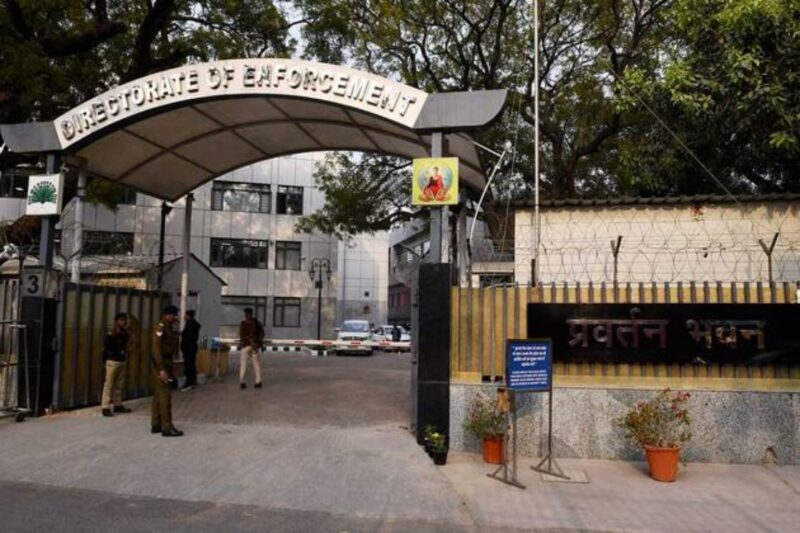
The ED’s November 2025 searches and November 2026 arrest announcements together indicate that the investigation has been examining a potentially wider network of financial transactions and assets. The eventual findings will depend on whether investigators can establish the original disbursement of the loan, the authenticity of the machinery transactions, the subsequent movement of funds and the identity of those who allegedly benefited.
At the centre of the case is a question that remains unanswered: how did a ₹73 crore loan meant to establish a brewery in Nalanda allegedly turn into a ₹55.67 crore payment to a machinery supplier when the project itself was never established? More importantly, where did the money ultimately go, and who benefited from it? Until the complete financial trail and the identities of the alleged beneficiaries emerge, the arrest of Balbir Singh Malhotra will remain one significant development in a much larger investigation into the alleged diversion of public-sector bank funds.
The allegations against Malhotra, Brewforce Technologies and other entities remain subject to investigation and judicial determination. No final finding of guilt has been established by the ED press releases examined in this report.