ED Files Prosecution Complaint In Karnataka Public Service Commission (KPSC) Recruitment Scam

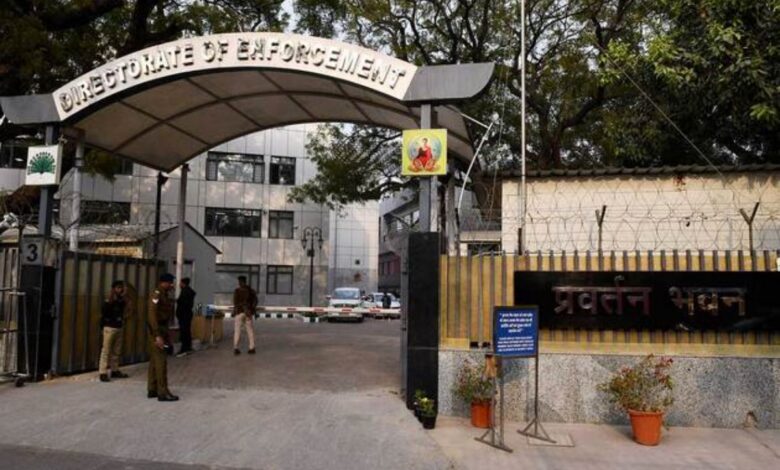
The Enforcement Directorate’s Bengaluru Zonal Office has filed a prosecution complaint under the Prevention of Money Laundering Act, 2002, against four individuals in connection with the Karnataka Public Service Commission recruitment for 400 Veterinary Officer posts. The complaint, placed before the Special Court for PMLA Cases (CCH-4), Bengaluru, names former KPSC Chairman Shivashankarappa Sahukar, KPSC member B.V. Geetha Shivamurthy, former Controller of Examinations Gyanendra Kumar Gangwar (IAS), and intermediary Basavaraj Kannale. The ED announced the filing in its press release dated 16 November 2026.
The case centres on the KPSC conducted on 9 January 2026 for the Department of Animal Husbandry and Fisheries.
According to the ED, senior KPSC officials conspired with an outside intermediary to sell access to confidential examination papers, provide candidate-specific answer keys and manipulate the recruitment process in exchange for illegal payments. Money collected from candidates was channelled through bank accounts, cooperative financial institutions, third parties, business concerns and relatives, and used to acquire jewellery and immovable properties.
The ED identifies three principal methods used in the recruitment. The first was the leakage of question papers with correct answers already marked. The second was the leakage of candidate-specific answer keys. The third was the exploitation of the 1:3 eligibility list. The agency states that further investigation into the role of other KPSC officials and middlemen in exploiting the eligibility list is continuing.
Gyanendra Kumar Gangwar, then Controller of Examinations, handled the confidential Veterinary Officer question papers. The ED states that he copied the papers together with the correct answers while they were still at the final draft stage. He transferred the material to Basavaraj Kannale on a pen drive. The device used for copying was subsequently destroyed.
Kannale printed the question papers and distributed them among selected candidates at villas booked off the record on the outskirts of Bengaluru one day before the examination. He demanded a total of ₹3.20 crore from ten candidates and collected ₹1.52 crore, of which ₹92 lakh came through banking channels and ₹60 lakh in cash. The remaining ₹1.68 crore was not collected. Kannale later destroyed the pen drive and burnt the printed question papers.
A second arrangement involved Sahukar, Gangwar and Geetha. Sahukar instructed Gangwar to provide correct answer keys for six candidates to Geetha immediately before the Veterinary Officer examination. In return, Sahukar assured higher interview marks in the Karnataka Administrative Service examination for a candidate chosen by Gangwar. The ED records two cash collections under this arrangement. Sahukar collected ₹10 lakh from one candidate against a negotiated amount of ₹20 lakh. Geetha collected ₹20 lakh from another candidate in her car on 8 January 2026 against a negotiated amount of ₹40 lakh.
The ED attributes total proceeds of crime of ₹8.69 crore across the four accused. Sahukar accounts for ₹4.17 crore. He possessed and concealed ₹3.99 crore in cash between August and December 2025. He had earlier possessed ₹8 crore to ₹10 crore, which was parked outside the books with a real-estate developer. Funds were transferred to Geetha and her daughter. Sahukar planned to use proceeds of crime to construct a school, convention hall and restaurant on his land at Madraki, Shahapur, through a front.
Geetha accounts for ₹1.48 crore. She acquired approximately ₹1 crore in the guise of unsecured loans through accounts in her name and her daughter’s name. The funds moved through structured cash deposits, accounts of family members of another KPSC member, and transactions described as unsecured loans that carried no agreement, security or repayment.
Gangwar accounts for ₹1.52 crore received in cash from Kannale. Of this, ₹52.30 lakh was used to purchase gold and diamond jewellery in the name of his fiancée and ₹13.31 lakh was spent on air travel paid through third-party accounts.
Kannale accounts for the same ₹1.52 crore collected from the ten candidates. He routed the money through bank accounts of his accountant, friends and associates, and his proprietorship concern M/s Bhagavati Enterprises. Unexplained cash was introduced as business receipts, layered in the form of loans, and concealed in immovable properties registered in his name and the names of relatives. Illegal gratification also moved through the bank accounts of M/s Om Laxmi Souharda Sahakari Sangha Niyamita, Bhalki, Bidar, and other third-party and bogus savings accounts.
The ED initiated its investigation on the basis of three FIRs registered by Vidhana Soudha Police Station, Bengaluru, under Sections 318(3), 318(4), 336(2), 336(3) and 340(2) of the Bharatiya Nyaya Sanhita, 2023, concerning cheating, forgery and use of forged documents in the Veterinary Officer recruitment and related KPSC processes. Kannale was arrested on 17 September 2026 under Section 19 of the PMLA. Gangwar was arrested on 18 September 2026.
Sahukar and Geetha were arrested on 6 October 2026. The ED searched 37 premises, including the KPSC office, under Section 17 of the PMLA. On 13 November 2026 it issued Provisional Attachment Order No. 43/2026, attaching properties worth ₹1.22 crore. When the prosecution complaint was announced, Sahukar, Gangwar and Kannale remained in judicial custody.
Approximately 1,400 candidates appeared for the 400 posts and 328 were selected. Reporting linked to the complaint records that approximately 19 candidates obtained leaked question papers or answer keys through the network, and that 16 of those candidates secured the top 16 ranks.
The ED’s complaint lays out a closed circuit in which confidential material was removed from the Commission’s custody by the officer responsible for it, distributed through an intermediary for payment, supplemented by candidate-specific keys and eligibility-list manipulation, and followed by the systematic movement of the proceeds into jewellery, property and proposed construction. The individuals named held the positions of Chairman, Member and Controller of Examinations of the body charged with conducting fair recruitment. The financial routes identified, including cooperative accounts in Bidar, third-party accounts, relatives, a proprietorship concern and unsecured loans, converted the payments into assets. The prosecution complaint now places these facts before the Special Court.