Falling Plaster, Rising Fear: BPTP Sector 88 Residents Accuse Builder of Neglect, Substandard Construction and Playing with Lives
Despite repeated hikes in maintenance charges, no repairs; residents live under constant threat of collapsing ceilings and walls in Faridabad’s B Block BPTP Colony

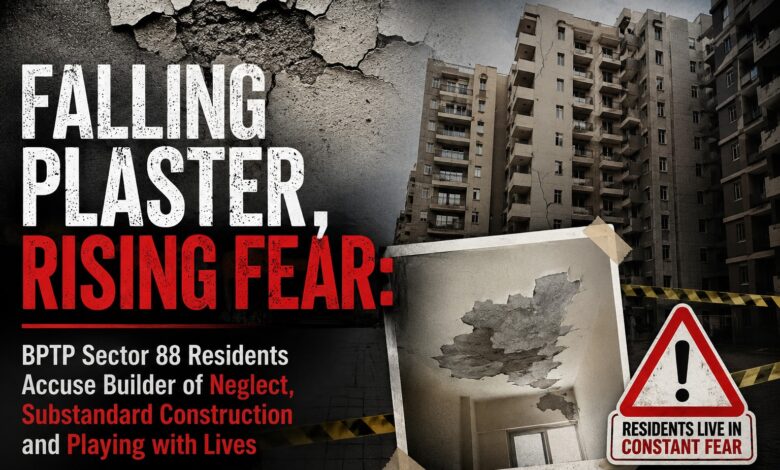
Faridabad, July 29, 2026 — In the B Block of the BPTP colony in Sector 88, Faridabad, the walls and balconies of residential flats are literally crumbling. Chunks of plaster are falling without warning, raining down on common areas where children play and elderly residents walk. What was once sold as a dream of secure, modern living has turned into a daily nightmare of fear and helplessness. Residents say they are trapped in buildings so poorly constructed that their very lives are at risk — while the builder continues to extract higher and higher maintenance fees without delivering even the most basic upkeep.
The crisis came into sharp focus through recent video reports and resident complaints. Plaster is peeling and dropping from multiple flats and balcony walls across B Block. “It falls suddenly. One day it will fall on someone’s head,” residents have repeatedly warned. Children play in the open spaces below; senior citizens use the same pathways for their evening walks. A single heavy piece of falling debris could cause a fatal accident. The atmosphere inside the colony is one of constant anxiety.
What makes the situation more galling is the financial burden residents continue to bear. Maintenance charges have been increased two to three times a year. Yet, according to those living there, not a single meaningful repair or maintenance work has been carried out since the flats were handed over. When residents approach the builder seeking urgent plaster repairs, they are allegedly told to pay extra money. “We feel as if we are living in rented houses,” one resident sentiment captured in reports states. “We keep paying large amounts in the name of maintenance, but receive nothing in return — no facilities, no safety, no repairs.”
This is not an isolated case of poor upkeep. Residents and homebuyers have long accused BPTP of delivering flats built with sub-standard materials despite charging premium prices. The pattern is consistent and alarming. Just weeks earlier, in June 2026, a seven-year-old boy sustained a head injury at BPTP Amstoria in Sector 102, Gurugram, when a chunk of plaster fell from a second-floor balcony. Residents there openly blamed the use of inferior construction materials. The Sector 88 incident in Faridabad fits the same disturbing template: structural decay, falling plaster, and a builder seemingly indifferent until tragedy strikes.
A previous near-miss in the same broader area underlines the danger. In Royal Heights Society, plaster was about to fall on a delivery boy; he escaped by a few inches. Residents of Sector 88 now say the same neglect is visible in their buildings. Complaints have been filed with the administration and the builder, yet no meaningful action has followed. “Until a major accident happens, neither the builder nor the authorities will wake up,” is the bitter consensus among those living under these crumbling structures.
The allegations against BPTP go far deeper than the current maintenance failure. Over the years, the company has faced repeated accusations from homebuyers of delivering poor-quality construction despite collecting substantial sums. Several allottees have claimed that sub-standard materials were used, compromising the structural integrity of the buildings and putting residents’ lives in perpetual danger. Beyond quality issues, BPTP has a documented history of possession delays. Homebuyers have approached RERA authorities and courts alleging that the builder took large amounts of money and then failed to hand over flats within promised timelines. In multiple cases, allottees waited years — sometimes more than a decade — only to receive incomplete or substandard units, or in some instances, no allotment at all. Those who eventually received possession often discovered that the flats were so poorly finished and structurally weak that living in them felt like a daily gamble with safety.
Critics and affected buyers argue that this pattern reveals a deeper problem: a business model that prioritises collection of money over delivery of safe, durable homes. By hiking maintenance charges while refusing to invest in repairs, and by allegedly cutting corners on construction quality, the builder is accused of treating residents’ safety as secondary to profit. “They play with the lives of people to generate more money,” is how several homebuyers have characterised the company’s approach over the years.
The human cost is visible every day in Sector 88. Families who invested their life savings in these flats now live with the constant fear that the next piece of falling plaster could cause irreversible harm. Parents hesitate to let children play outside. Elderly residents curtail their walks. The psychological toll of living in buildings that appear to be slowly disintegrating is profound.
Local administration and regulatory bodies have a clear responsibility. Structural audits, mandatory repairs at the builder’s cost, and strict enforcement of maintenance obligations under RERA and municipal laws are urgently required. The recent inspection ordered at BPTP Amstoria after the child injury incident shows that authorities can act when public pressure mounts. The same urgency is needed in Sector 88 before a near-miss turns into a tragedy.
For the residents of B Block, BPTP Sector 88, the demand is simple and non-negotiable: immediate repair of the falling plaster, a halt to unjustified maintenance hikes without corresponding services, and a thorough independent structural assessment of the entire colony. Until then, every falling chunk of plaster serves as a damning indictment of a system that allowed substandard construction to be sold as premium housing, and that continues to extract money while the walls themselves begin to give way.
The question that now hangs over Sector 88 is no longer whether the buildings are safe. It is whether the builder and the authorities will act before the next piece of plaster falls — and this time, does not miss.